
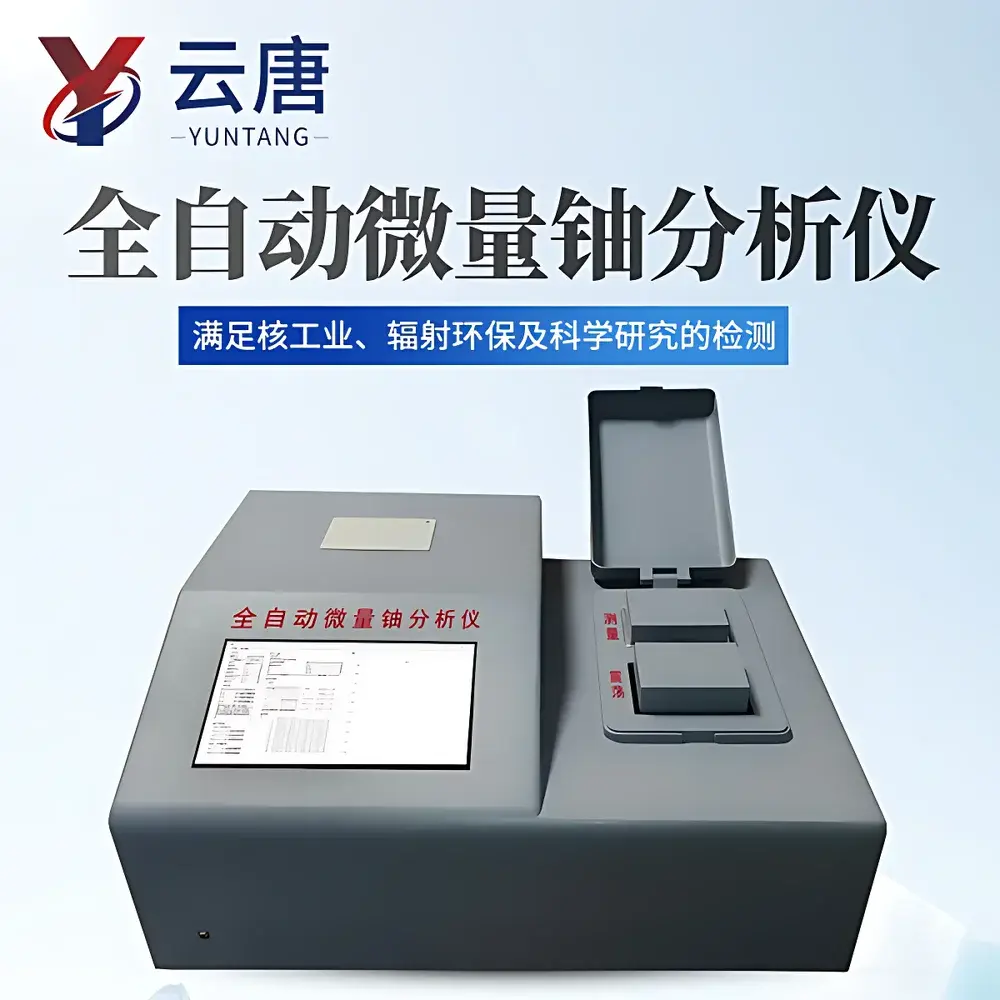
Yuntang YT-WLY Automated Uranium Trace Analyzer
| Brand | Yuntang |
|---|---|
| Origin | Shandong, China |
| Manufacturer Type | Direct Manufacturer |
| Country of Origin | China |
| Model | YT-WLY |
| Pricing | Available Upon Request |
| Detection Limit | ≤0.01 ng/mL (3σ definition) |
| Uranium Measurement Range | 0–20 ng/mL (extendable to 100 ng/mL via dilution) |
| Linearity | R² ≥ 0.999 |
| Precision | RSD ≤ 5% |
| Stability | ≤7% RSD over 8 h at 2 ng/mL post 1-h warm-up |
| Data Storage | 4,000 measurement records |
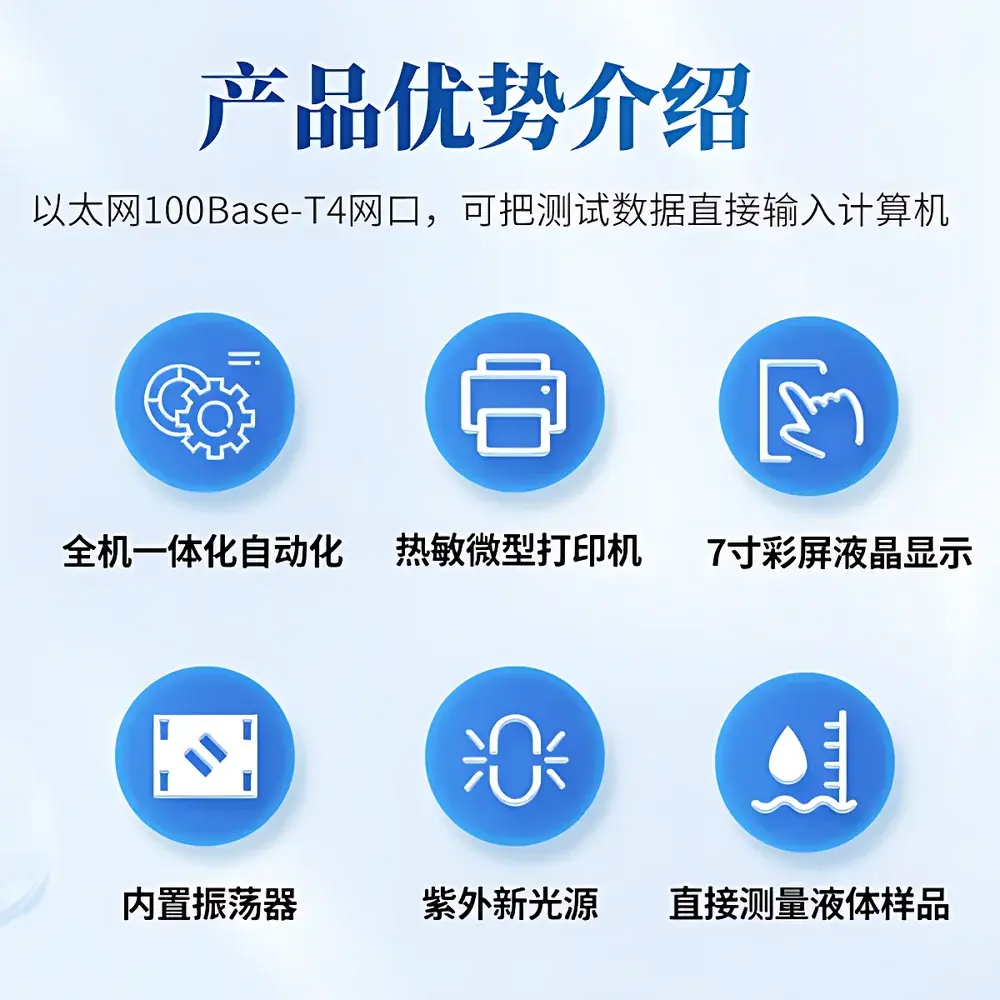
| Interface | USB 2.0, 100Base-T4 Ethernet |
| Display | 7-inch color TFT touchscreen |
| Printer | Integrated thermal printer (57 mm × 40 mm paper) |
| Power Supply | 220 V ±10%, 50 Hz |
| Dimensions | 450 × 350 × 185 mm |
| Net Weight | 10 kg |
Overview
The Yuntang YT-WLY Automated Uranium Trace Analyzer is a benchtop fluorometric instrument engineered for quantitative determination of uranium in aqueous matrices at trace concentrations. It operates on the principle of uranium-specific fluorescence enhancement—where uranyl ions (UO₂²⁺) form highly fluorescent ternary complexes with aromatic ligands (e.g., arsenazo III or similar fluorogenic chelators) under controlled acidic conditions and UV excitation. The system employs a high-stability pulsed UV light source (λex ≈ 365 nm), optimized optical path geometry, and temperature-compensated photodetection to ensure reproducible signal acquisition. Designed for laboratories requiring regulatory-grade data integrity in environmental monitoring, nuclear safeguards, and geochemical research, the YT-WLY integrates sample agitation, reagent addition, incubation, and quantification into a single automated workflow—eliminating manual vortexing, external shakers, and multi-step calibration protocols.
Key Features
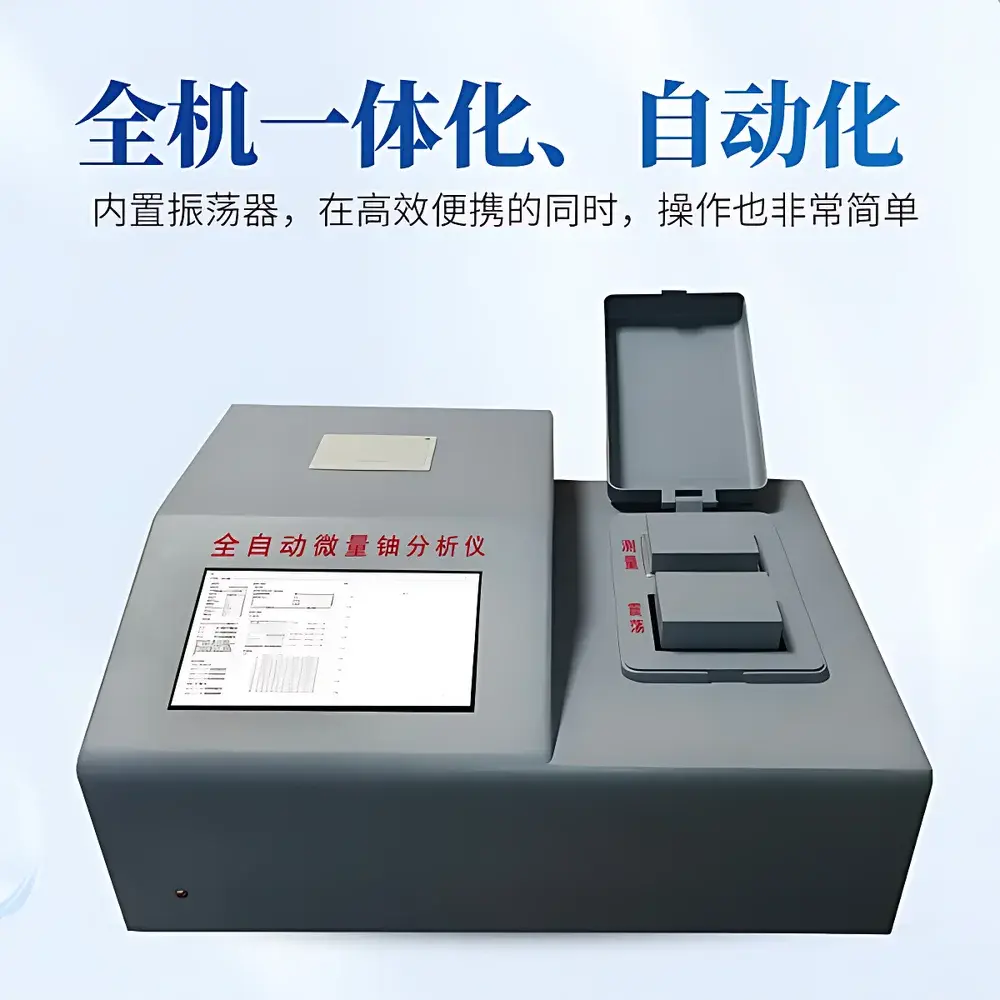
- Integrated micro-vibration module: Built-in programmable oscillator ensures homogeneous complex formation without reliance on external equipment—reducing cross-contamination risk and operator variability.
- Adaptive range selection: Automatically adjusts gain and integration time based on preliminary signal intensity, enabling accurate quantification across 0.01–100 ng/mL without manual dilution series.
- Full automation with embedded intelligence: Single-chip microcontroller manages all analytical sequences—including standard addition, multi-point calibration, linear regression (y = mx + b), and uncertainty estimation per IUPAC guidelines.
- Dual-output reporting: Real-time results displayed on 7-inch capacitive touchscreen; simultaneous hardcopy output via integrated thermal printer using ISO-standard 57 mm thermal paper.
- Robust connectivity architecture: Equipped with USB 2.0 host/device port for flash drive data export and 100Base-T4 Ethernet interface compliant with IEEE 802.3u for seamless integration into LIMS or centralized data servers.
- Long-life excitation source: Industrial-grade pulsed UV lamp with ≥5-year operational lifetime (rated for ≥80,000 analyses under typical usage).
Sample Compatibility & Compliance
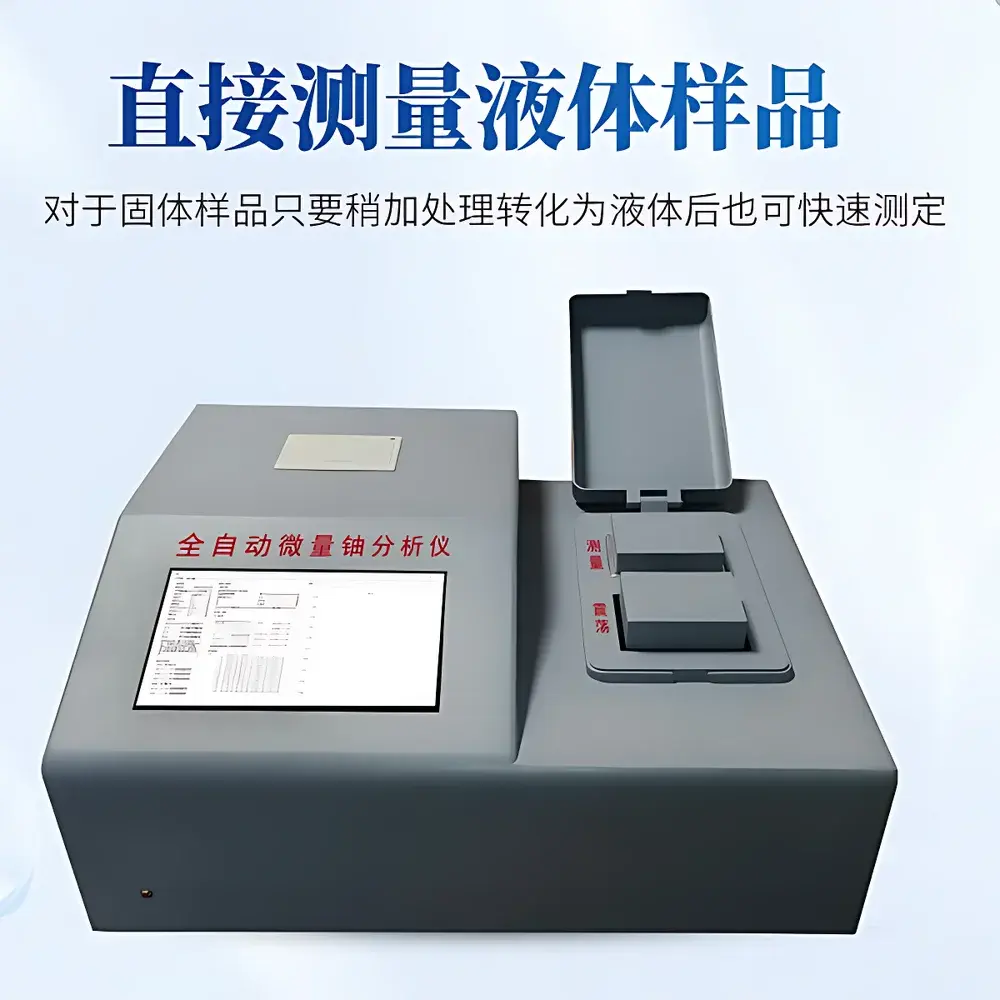
The YT-WLY accepts clarified liquid samples—including groundwater, seawater, acid-digested soil leachates, spent nuclear fuel process streams, and biological fluids—provided they meet pH < 2.5 and are free of particulates > 0.45 µm. Solid samples require standardized acid digestion (e.g., EPA Method 6020B or ASTM D5673) prior to analysis. The instrument supports method validation per ISO/IEC 17025:2017 requirements, including limit of detection (LOD) verification (3σ criterion), precision assessment (RSD ≤ 5%), and linearity evaluation (R² ≥ 0.999 over stated range). While not pre-certified for FDA 21 CFR Part 11, its audit-trail-capable firmware architecture permits configuration to support GLP/GMP-compliant workflows when deployed with validated SOPs and electronic signature controls.
Software & Data Management
All data handling occurs within the embedded real-time operating system (RTOS) environment. Measurement metadata—including date/time stamp, operator ID (manually entered), sample ID, calibration curve parameters, raw fluorescence counts, and calculated concentration with propagated uncertainty—is stored locally in non-volatile memory (4,000-record capacity). Export formats include CSV and XML, compatible with Microsoft Excel, LabArchives, and Thermo Fisher SampleManager LIMS. Ethernet connectivity enables remote firmware updates, scheduled data synchronization, and centralized backup via SMB/CIFS protocols. No cloud dependency or proprietary software installation is required for basic operation.
Applications
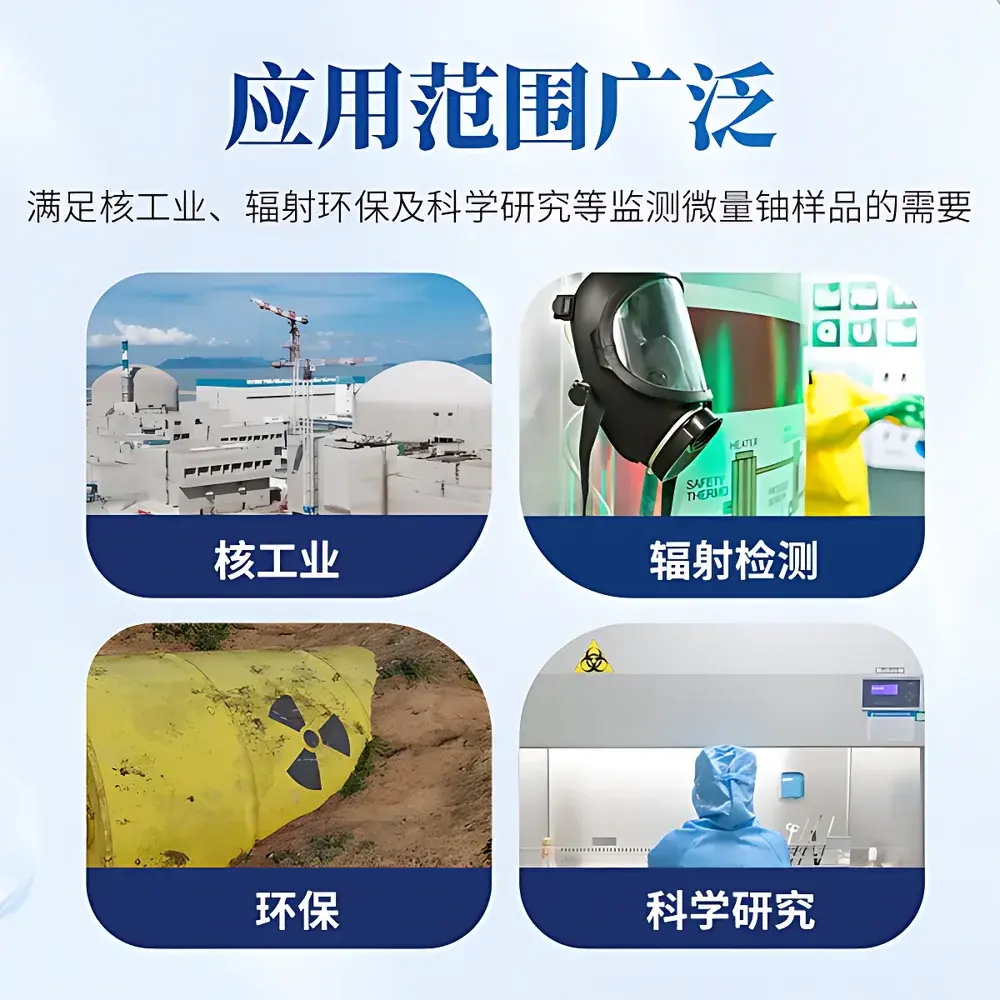
- Environmental compliance monitoring: Quantification of uranium in drinking water sources per WHO guideline value (30 µg/L) and U.S. EPA MCL (30 µg/L), with sub-ng/mL sensitivity enabling early trend detection.
- Nuclear facility effluent control: Routine analysis of low-level liquid discharges from uranium enrichment plants, fuel fabrication facilities, and decommissioning sites.
- Geological prospecting support: Field-deployable screening of groundwater and surface water near suspected mineralized zones.
- Radioecological studies: Bioaccumulation assessment in aquatic organisms following controlled exposure experiments.
- Quality assurance in nuclear medicine: Verification of uranium impurity levels in radiopharmaceutical synthesis reagents.
FAQ
What sample preparation is required for solid matrices?
Solid samples must undergo microwave-assisted acid digestion (HNO₃/HF/HClO₄) per EPA 3052 or equivalent, followed by filtration through 0.45-µm PTFE membranes and pH adjustment to ≤2.0 with concentrated HNO₃.
Does the instrument support standard addition for complex matrices?
Yes—the YT-WLY includes dedicated standard addition mode with up to six incremental spikes, automatically calculating final concentration using slope-intercept regression while compensating for matrix quenching effects.
Is spectral interference from thorium or rare earth elements addressed?
The fluorescence enhancement chemistry exhibits >10⁴-fold selectivity for UO₂²⁺ over Th⁴⁺ and lanthanides under optimized acidity and ligand excess conditions; interferences are further minimized via temporal gating of the pulsed excitation signal.
Can historical calibration curves be recalled and reused?
Yes—up to 100 user-named calibration sets (including date, operator, and reference material IDs) are retained in non-volatile memory and may be loaded for retrospective analysis or QC verification.
What maintenance is required beyond routine cleaning?
No optical alignment or lamp recalibration is needed during normal operation; annual verification of detector dark current and lamp output stability is recommended using NIST-traceable uranium standards.
Related Products







