
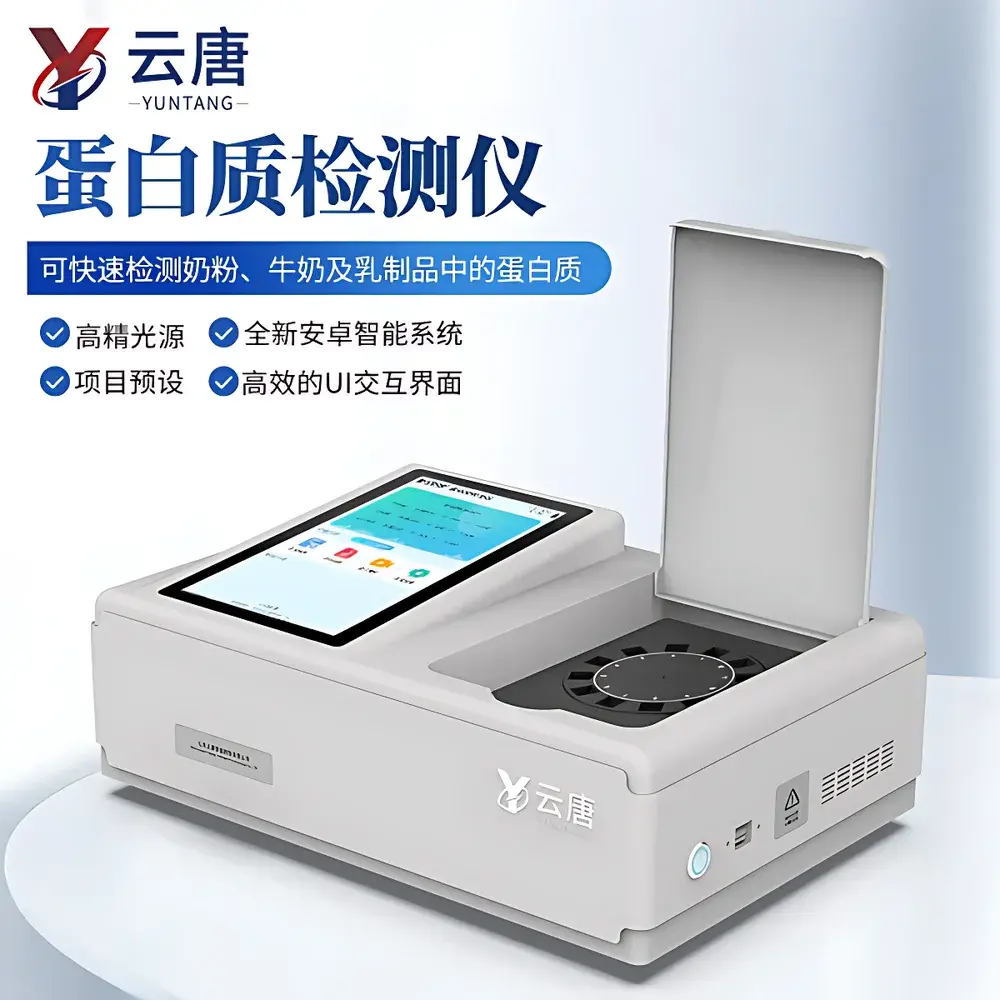
Yuntang YT-Z12T Milk Protein Rapid Analyzer
| Brand | Yuntang |
|---|---|
| Origin | Shandong, China |
| Manufacturer Type | Direct Manufacturer |
| Product Category | Domestic |
| Model | YT-Z12T |
| Detection Principle | Colorimetric Protein Assay (Biuret/Lowry-type adapted for dairy matrices) |
| Sample Types | Liquid milk, powdered milk, reconstituted infant formula, and other liquid/soluble dairy products |
| Repeatability | ±1% RSD |
| Limit of Detection | 0.1 mg protein per test |
| Recovery Rate | >99.5% |
| Optical System | Quadruple-wavelength cold LED光源 (410, 520, 590, 630 nm), with patented optical path switching enabling up to 64 effective wavelengths |
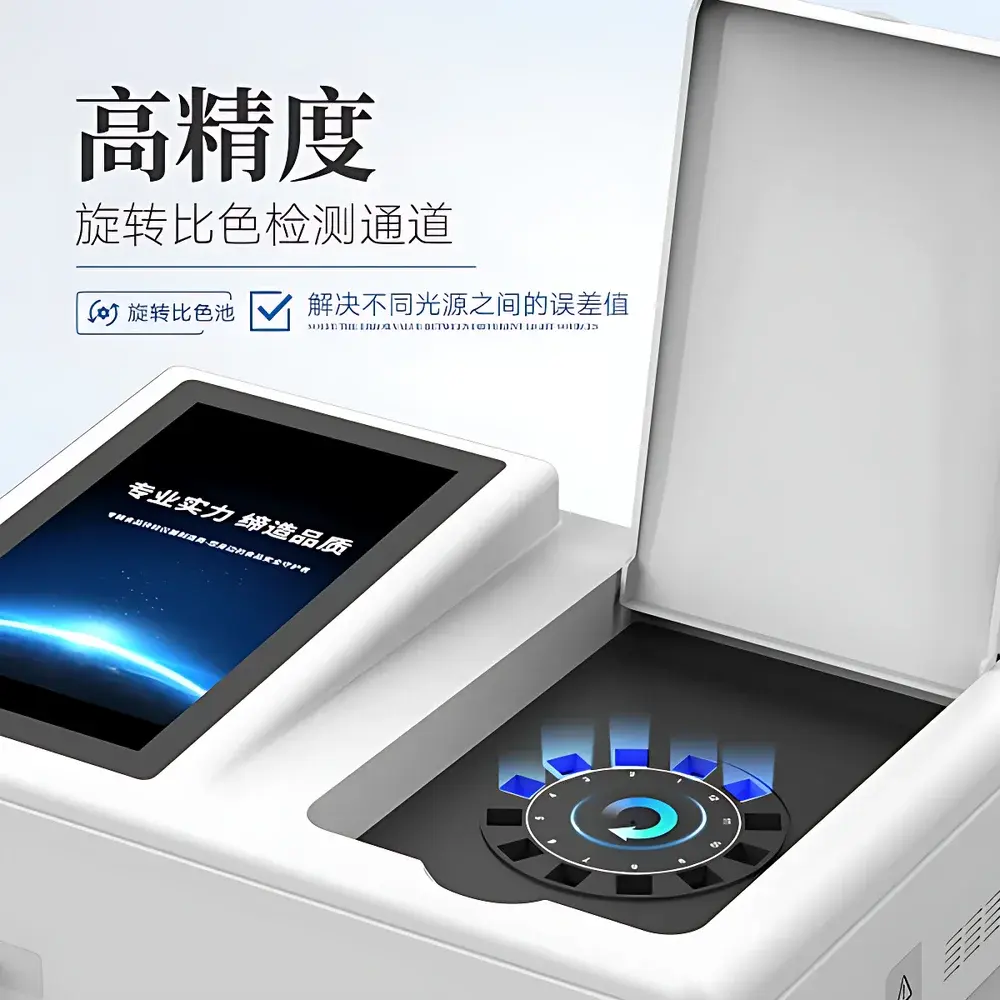
| Detection Channels | ≥12 independent cuvette-based channels with precision rotary photometric cell design |
| Data Storage Capacity | >200,000 records, supporting USB export in Excel-compatible CSV format |
| Operating System | Android-based UI on ARM Cortex-A7 (RK3288, quad-core, 1.88 GHz) |
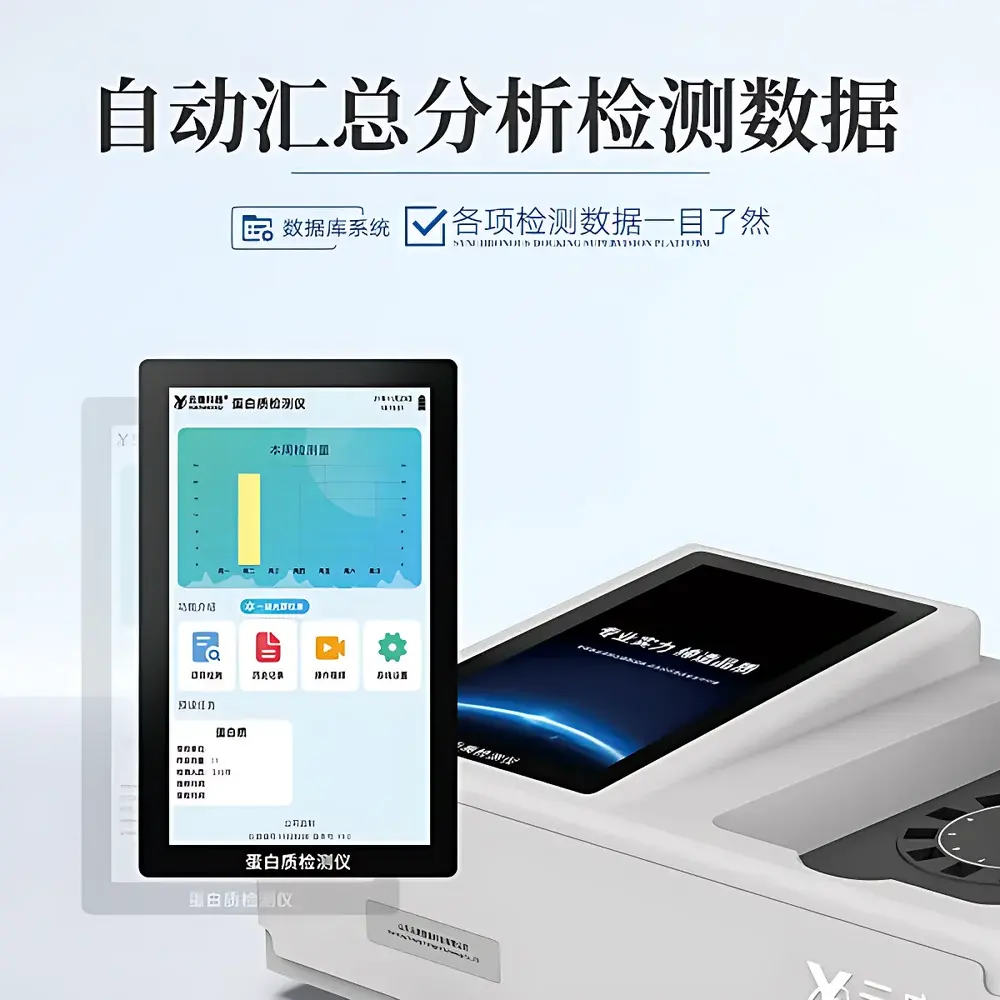
| Display | 10.1-inch vertical capacitive touchscreen |
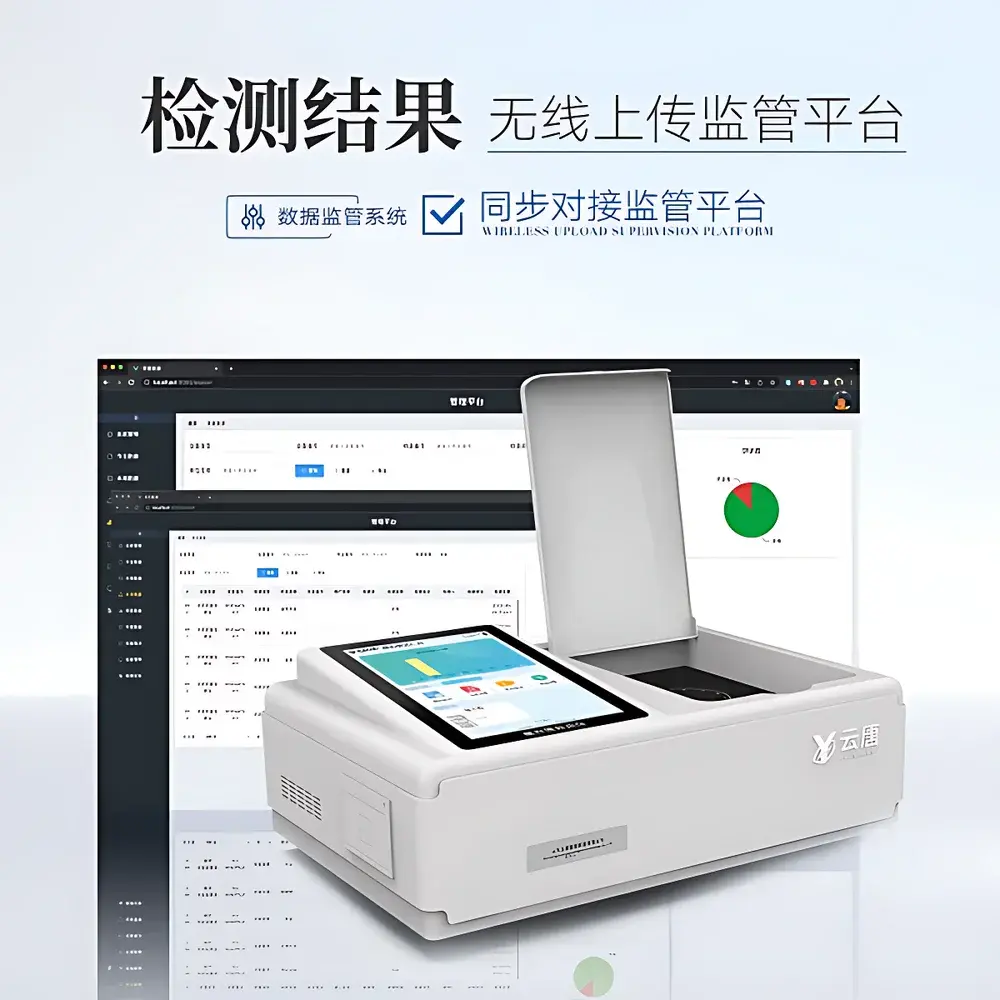
| Connectivity | Dual-band Wi-Fi, 4G (APN), Bluetooth 5.0, dual USB 2.0, RJ45 Ethernet |
| Power Supply | AC/DC dual mode |
| Remote Firmware Update | OTA-enabled, client-specific, zero-downtime automatic update on boot |
Overview
The Yuntang YT-Z12T Milk Protein Rapid Analyzer is a benchtop, integrated photometric analyzer engineered for high-throughput, regulatory-compliant protein quantification in dairy matrices. It implements a standardized colorimetric assay—optimized for the Biuret reaction principle—where peptide bonds in denatured milk proteins (casein, whey) react with copper(II) ions under alkaline conditions to form a violet-colored complex, measurable at precisely controlled wavelengths (410–630 nm). Unlike standalone spectrophotometers requiring manual calibration and method setup, the YT-Z12T embeds pre-validated dairy-specific calibration curves, matrix-matched blank compensation, and temperature-stabilized optical paths to minimize inter-sample drift. Its architecture conforms to foundational principles of ISO 8968-1 (milk protein determination) and aligns with AOAC Official Method 984.27 adaptations for rapid screening workflows. Designed for deployment in decentralized testing environments—including mobile food safety labs, dairy processing QC floors, and municipal regulatory laboratories—the instrument delivers laboratory-grade reproducibility without reliance on centralized wet chemistry infrastructure.
Key Features
- 12-channel rotary photometric cell system with patented optical alignment (ZL202022821055.2), ensuring inter-channel deviation ≤0.1%—critical for parallel batch analysis of raw milk, UHT, pasteurized, and reconstituted powder samples.
- Quadruple-wavelength cold LED light source per channel (410, 520, 590, 630 nm), coupled with a mechanical optical path switcher enabling up to 64 discrete wavelength combinations—supporting multi-analyte extension beyond protein (e.g., nitrate, sulfite, melamine) without hardware modification.
- Embedded Android OS (ARM Cortex-A7, RK3288, 1.88 GHz) with 10.1-inch vertical touchscreen interface—enabling intuitive workflow navigation, multi-user role-based access control, and real-time data visualization without external PC dependency.
- Comprehensive data governance stack: triple-mode storage (local database + SP cache + flat-file backup), audit-trail enabled logging, and automated GLP-compliant metadata tagging (operator ID, sample ID, timestamp, instrument serial, calibration status).
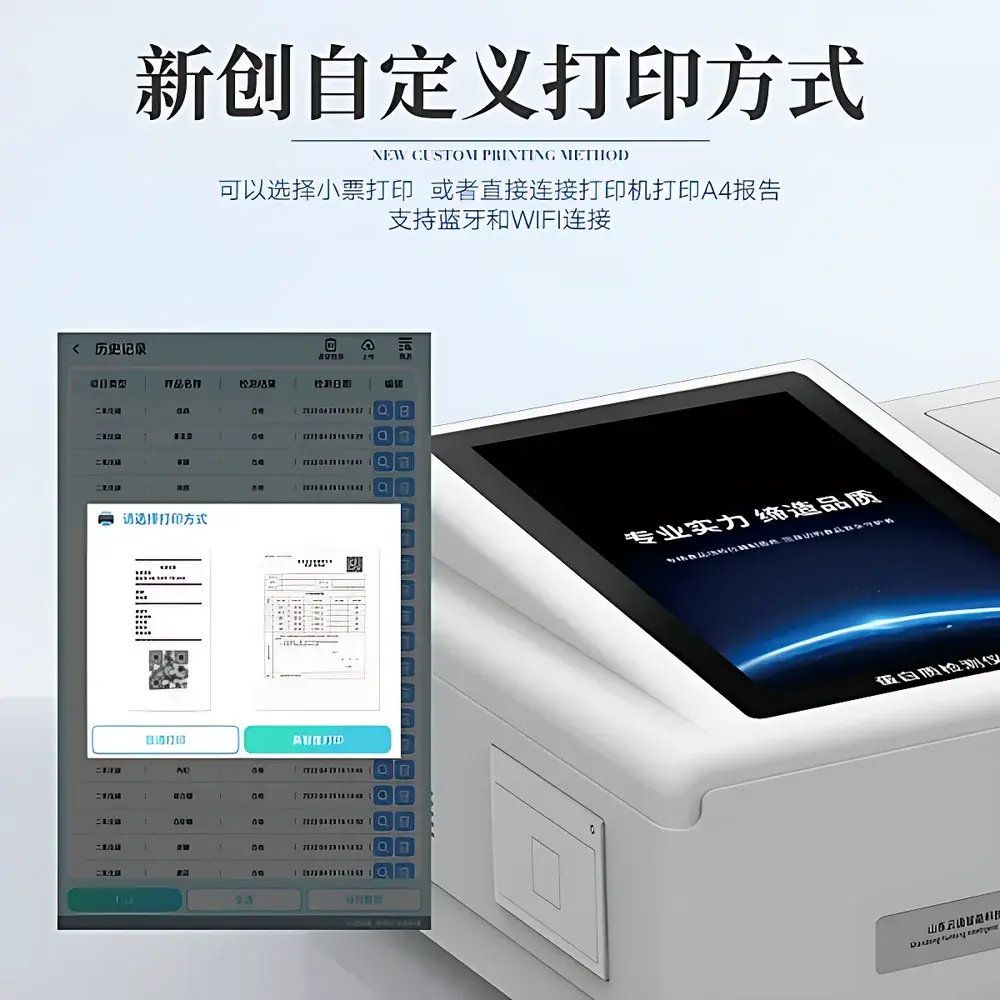
- Regulatory-ready reporting engine: auto-generation of A4-format PDF reports and thermal receipt-style printouts—both embed QR-coded traceability links to full raw absorbance datasets, calibration logs, and compliance flags against China GB 5009.5–2016 and Codex Alimentarius STAN 206–1999 thresholds.
- Field-deployable power architecture: 12 V DC input compatible with vehicle power systems; optional 6 Ah Li-ion battery with state-of-charge monitoring—validated for ≥8 hours continuous operation during unpowered inspections or roadside surveillance.
Sample Compatibility & Compliance
The YT-Z12T is validated for direct analysis of liquid bovine milk (raw, pasteurized, UHT), skim and whole milk powders (including instant and agglomerated grades), and reconstituted infant formula (per GB 10765–2021 specifications). Sample preparation requires only dilution and reagent addition—no digestion, distillation, or filtration. All internal calibration protocols reference NIST-traceable protein standards (BSA, casein) and undergo quarterly verification against certified reference materials (CRMs) from CNAS-accredited providers. The system supports compliance with Chinese national standards GB 5009.5–2016 (Food Safety National Standard – Determination of Protein), GB 19301–2010 (Raw Milk), and GB 19644–2010 (Milk Powder), while its data structure adheres to requirements for electronic record retention under China’s SAMR Food Safety Supervision Regulations (Order No. 11).
Software & Data Management
The embedded software suite implements a tiered data architecture: raw absorbance values are stored with 16-bit resolution alongside contextual metadata (sample origin, operator credentials, ambient temperature, reagent lot number). All modifications trigger immutable audit trails compliant with FDA 21 CFR Part 11 principles (electronic signatures, event logging, version-controlled firmware). Data synchronization supports both local area network (LAN) push to internal LIMS and secure HTTPS upload to provincial food safety cloud platforms (e.g., Shandong Provincial Market Supervision Platform). Advanced filtering enables cross-temporal analysis—e.g., trending protein variance across supplier batches over 90 days—with automated outlier detection using Grubbs’ test (α = 0.05). Historical curve libraries are versioned and digitally signed to prevent unauthorized tampering.
Applications
- Routine QC in dairy processing plants: real-time verification of protein content pre-packaging to meet label claims (GB 28050–2011 nutrition labeling requirements).
- Regulatory field screening: rapid assessment of adulteration (e.g., nitrogen spiking with melamine or urea) when paired with complementary assays on the same platform.
- Supply chain verification: on-site testing at collection centers to enforce contractual protein minimums (e.g., ≥3.0 g/100 mL for Grade A raw milk).
- Public health surveillance: integration into municipal food safety monitoring networks for early detection of regional contamination events.
- Research & development: formulation optimization for high-protein dairy beverages and functional infant nutrition products.
FAQ
Is the YT-Z12T compliant with international food safety standards such as ISO/IEC 17025?
The instrument itself is not accredited—but its measurement methodology and validation documentation support laboratory accreditation under ISO/IEC 17025:2017 when operated within a qualified quality management system.
Can the device store and export raw spectral data for third-party reanalysis?
Yes—absorbance values at all four primary wavelengths (410/520/590/630 nm) per channel are stored in CSV format and exportable via USB or network transfer.
What is the maximum sample throughput per hour?
With 12-channel parallel processing and automated reagent dispensing (external pipette required), typical throughput is 48–60 samples/hour for single-parameter protein analysis.
Does the system support multi-language interfaces for export markets?
The current firmware supports English and Simplified Chinese; additional language packs (Spanish, Arabic, Vietnamese) are available upon OEM agreement.
How frequently must optical calibration be performed?
Automatic daily self-calibration is triggered at startup; full NIST-traceable recalibration using supplied standard kits is recommended every 30 days or after 200 tests—whichever occurs first.





