
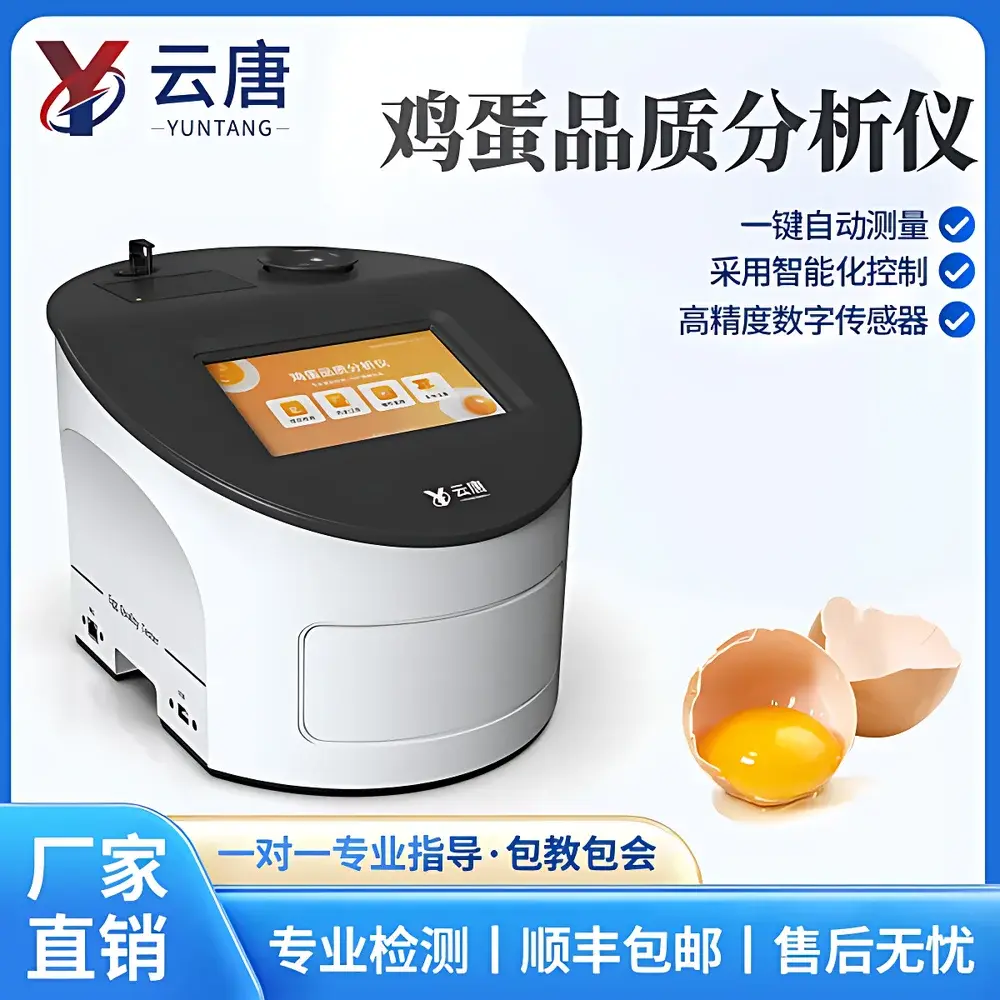
Yuntang YTD-EGGPRO Fully Automated Egg Quality Analyzer with Haugh Unit Measurement
| Brand | Yuntang |
|---|---|
| Origin | Shandong, China |
| Manufacturer Type | Direct Manufacturer |
| Model | YTD-EGGPRO |
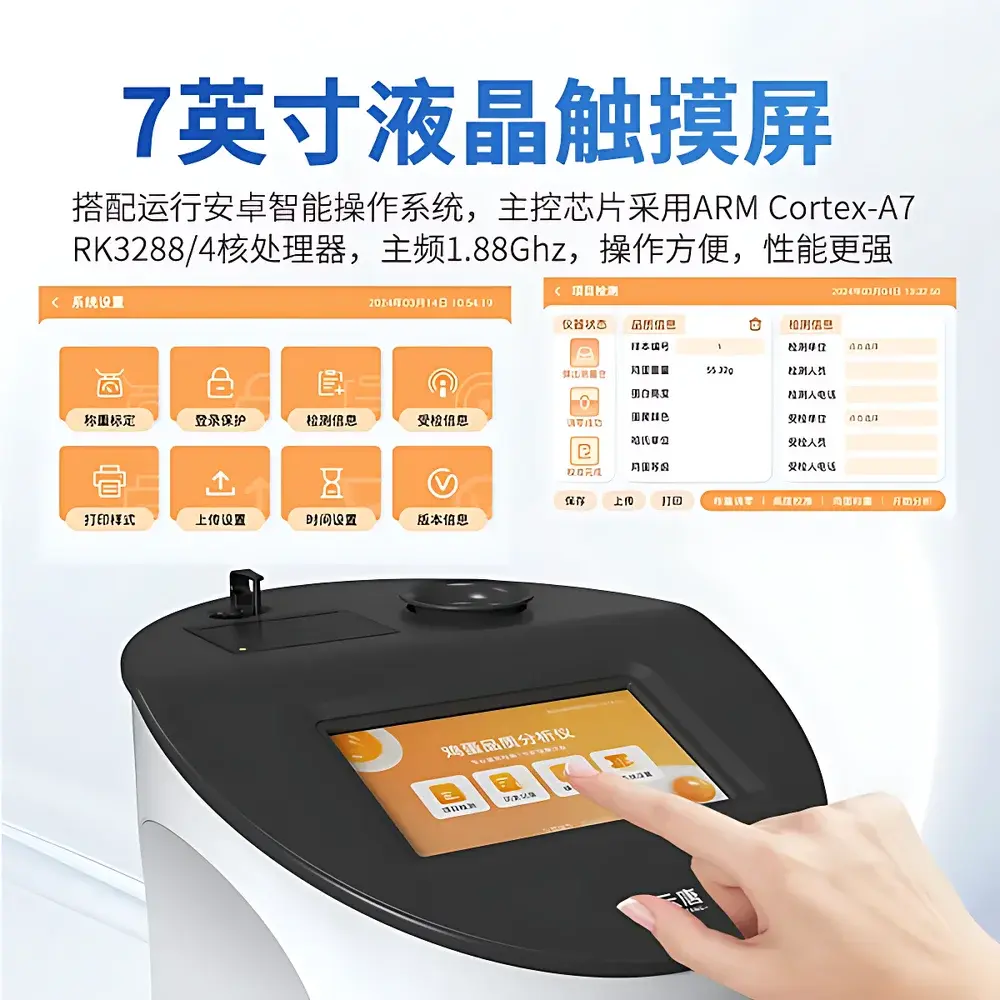
| Display Screen | 7-inch Android-based touchscreen (ARM Cortex-A7, RK3288 quad-core, 1.88 GHz) |
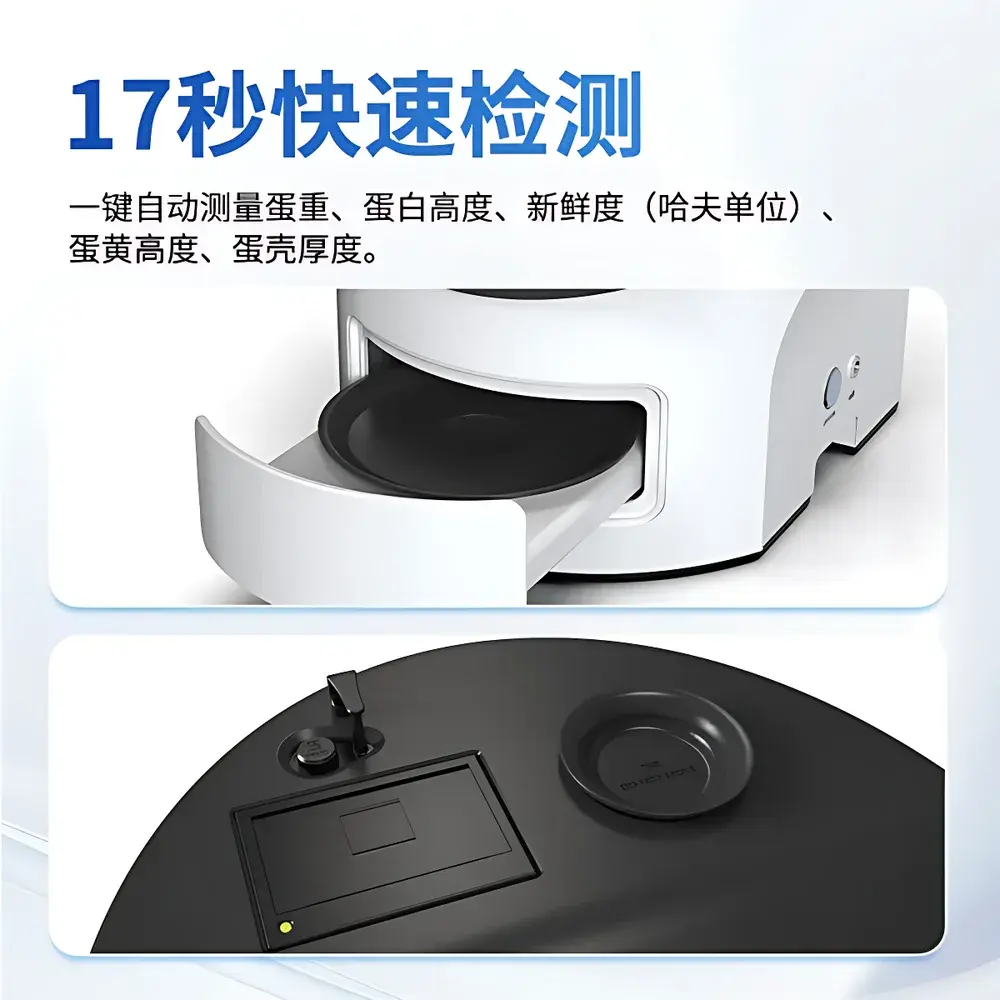
| Measurement Speed | ≤17 seconds per egg |
| Egg Weight Range | 0–250 g (±0.1 g) |
| Albumen Height Range | 0.0–40.0 mm (±0.1 mm) |
| Haugh Unit Range | 0–130 HU |
| Eggshell Thickness Range | 0.00–4.00 mm (±0.01 mm) |
| Egg Yolk Color Measurement | Non-contact spectral sensing |
| Data Connectivity | Wi-Fi, RJ45 Ethernet, USB export |
| Power Supply | DC 12 V (standard) |
| Dimensions | 340 × 290 × 238 mm (L×W×H) |
| Net Weight | 5.05 kg |
Overview
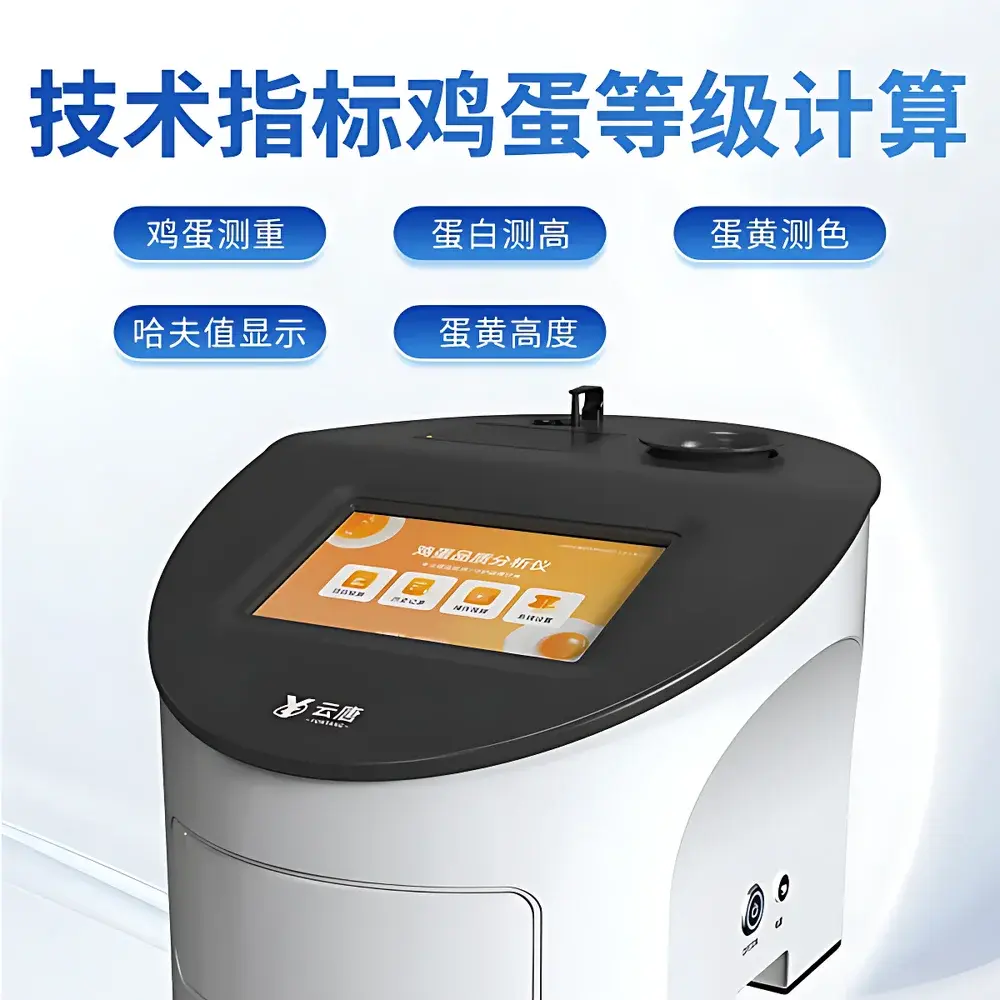
The Yuntang YTD-EGGPRO Fully Automated Egg Quality Analyzer is an industrial-grade, non-destructive inline inspection system engineered for objective, repeatable, and regulatory-compliant assessment of table egg quality parameters. It operates on a multi-sensor fusion architecture integrating ultrasonic transduction for albumen height, precision load-cell weighing, optical reflectance spectroscopy for yolk color quantification (CIE L*a*b* or Roche Yolk Color Fan equivalent), and calibrated mechanical indentation for eggshell thickness measurement. All measurements are synchronized and processed in real time to compute the Haugh Unit (HU)—a standardized metric defined by USDA AMS and widely adopted under ISO 6560:2022 and Codex Alimentarius Standard CXS 228-2001 for evaluating albumen viscosity as a proxy for egg freshness. The instrument is designed for continuous operation in hatchery grading lines, commercial egg packing facilities, and food safety laboratories requiring GLP-aligned documentation and traceability.
Key Features
- Fully automated single-egg analysis cycle completed in ≤17 seconds—no manual alignment, no operator-dependent interpretation.
- Non-contact ultrasonic sensor for albumen height measurement eliminates cross-contamination risk and ensures consistent probe standoff distance across varying egg shapes.
- Dual-mode power architecture: standard 12 V DC input compatible with mobile lab vehicles; optional 6 Ah rechargeable lithium-ion battery enables field-deployable operation without grid dependency.
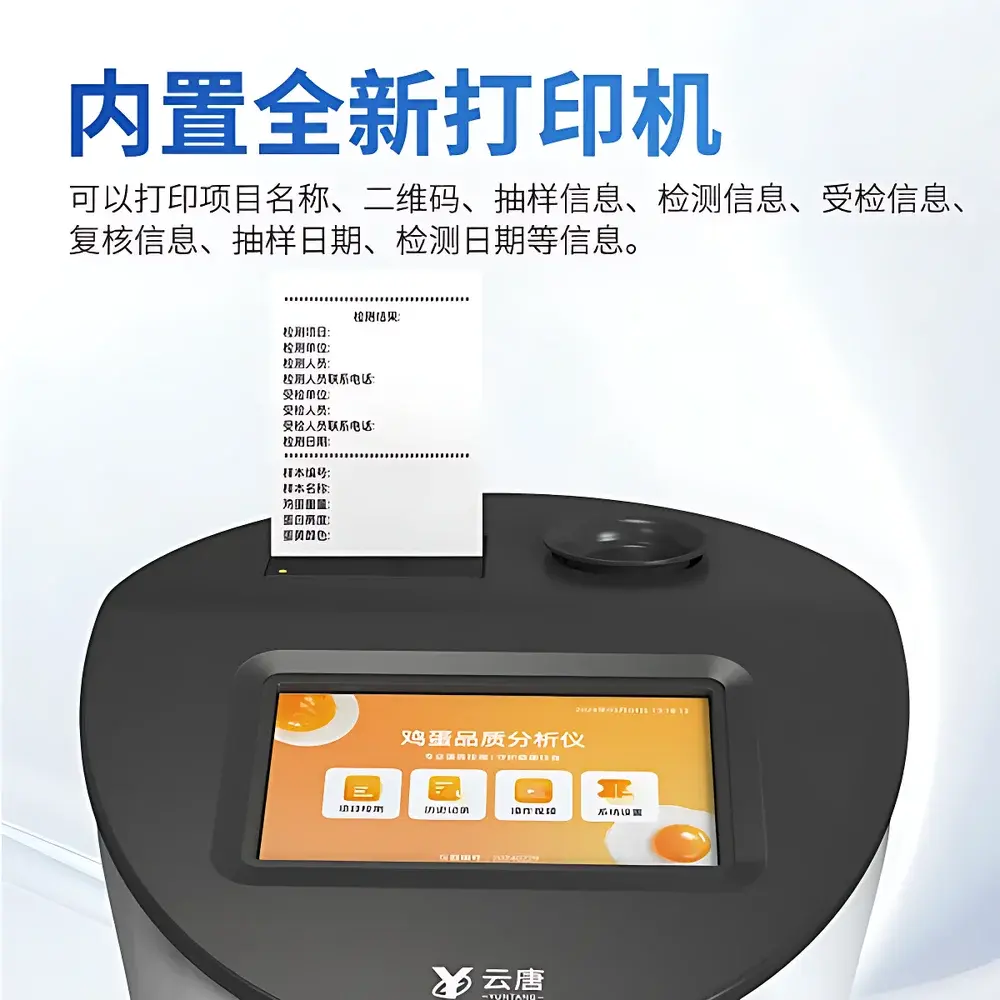
- Integrated thermal line printer supporting customizable label output—including sample ID, operator code, timestamp (sampling & analysis), Haugh classification (AA/A/B/C), QR-coded audit trail, and compliance metadata.
- Onboard data storage (≥10,000 records) with dual-export capability: USB mass storage mode and networked upload via Wi-Fi or 10/100 Mbps Ethernet (RJ45) to centralized LIMS or cloud-based QA dashboards.
- Self-calibration routine with user-accessible reference validation protocols; lockable configuration mode prevents unauthorized parameter modification during production runs.
Sample Compatibility & Compliance
The YTD-EGGPRO accommodates standard hen eggs (Gallus gallus domesticus) sized from small (48 g) to jumbo (75 g), including oval, elongated, or slightly misshapen specimens common in cage-free and free-range production systems. Shell surface texture (e.g., calcite crystallinity, cuticle integrity) does not interfere with ultrasonic or optical measurement fidelity. All reported metrics align with internationally recognized definitions: Haugh Unit calculation follows the formula HU = 100 × log(h − 1.7 × w0.37 + 7.6), where h = albumen height (mm) and w = egg weight (g); yolk color index conforms to AOAC 985.20 methodology; shell thickness measurement adheres to ASTM F2767-21 guidelines for non-destructive gauge verification. The system supports audit-ready reporting compliant with FDA 21 CFR Part 11 (electronic signatures, audit trails) when deployed with validated network configurations.
Software & Data Management
The embedded Android OS (v9.0+) hosts a purpose-built QA application with role-based access control (admin/operator modes), configurable pass/fail thresholds per parameter, and automatic grade assignment per USDA/ISO tiering logic. Raw sensor outputs and derived metrics are timestamped and cryptographically hashed prior to local storage. Networked units synchronize with secure MQTT or HTTPS endpoints using TLS 1.2+ encryption. Data exports support CSV and XML formats with embedded schema versioning (XSD v1.2). Optional API integration enables direct ingestion into enterprise platforms such as SAP QM, LabVantage, or custom Python-based statistical process control (SPC) dashboards. All firmware updates are digitally signed and delivered over-the-air (OTA) with rollback capability.
Applications
- Real-time grading and sorting in automated egg processing lines—enabling dynamic rejection of substandard lots based on HU and shell integrity thresholds.
- Pre-shipment quality assurance for export-certified egg producers targeting EU, Japan, or GCC markets requiring ISO 22000-aligned documentation.
- Research applications in avian nutrition studies—quantifying impacts of feed additives (e.g., xanthophylls, omega-3 enrichment) on yolk pigmentation and albumen stability.
- Regulatory surveillance by national food safety authorities performing routine monitoring of retail egg freshness and labeling accuracy (e.g., “Best Before” date correlation with measured HU).
- Extension service deployment for smallholder cooperatives—battery-powered portability facilitates rural farm-gate verification without infrastructure dependency.
FAQ
What standards does the Haugh Unit calculation follow?
The YTD-EGGPRO implements the USDA Agricultural Marketing Service (AMS) standard formula per AMS-P-580 Rev. 5 and is validated against ISO 6560:2022 Annex B reference methods.
Can the instrument measure eggs from species other than Gallus gallus?
It is calibrated exclusively for chicken eggs; goose, duck, or quail eggs require custom sensor recalibration and are not supported out-of-the-box.
Is remote software update functionality available?
Yes—firmware and application updates are delivered OTA via HTTPS with SHA-256 signature verification and automatic integrity checking.
Does the system support 21 CFR Part 11 compliance for electronic records?
When configured with network authentication (LDAP/RADIUS), audit-trail logging, and digital signature modules, it meets baseline technical requirements for Part 11 adherence in GMP environments.
What is the recommended calibration frequency?
Initial factory calibration is traceable to NIST standards; users must perform daily verification using certified reference weights and acoustic phantoms, with full recalibration every 6 months or after 10,000 measurements—whichever occurs first.





