
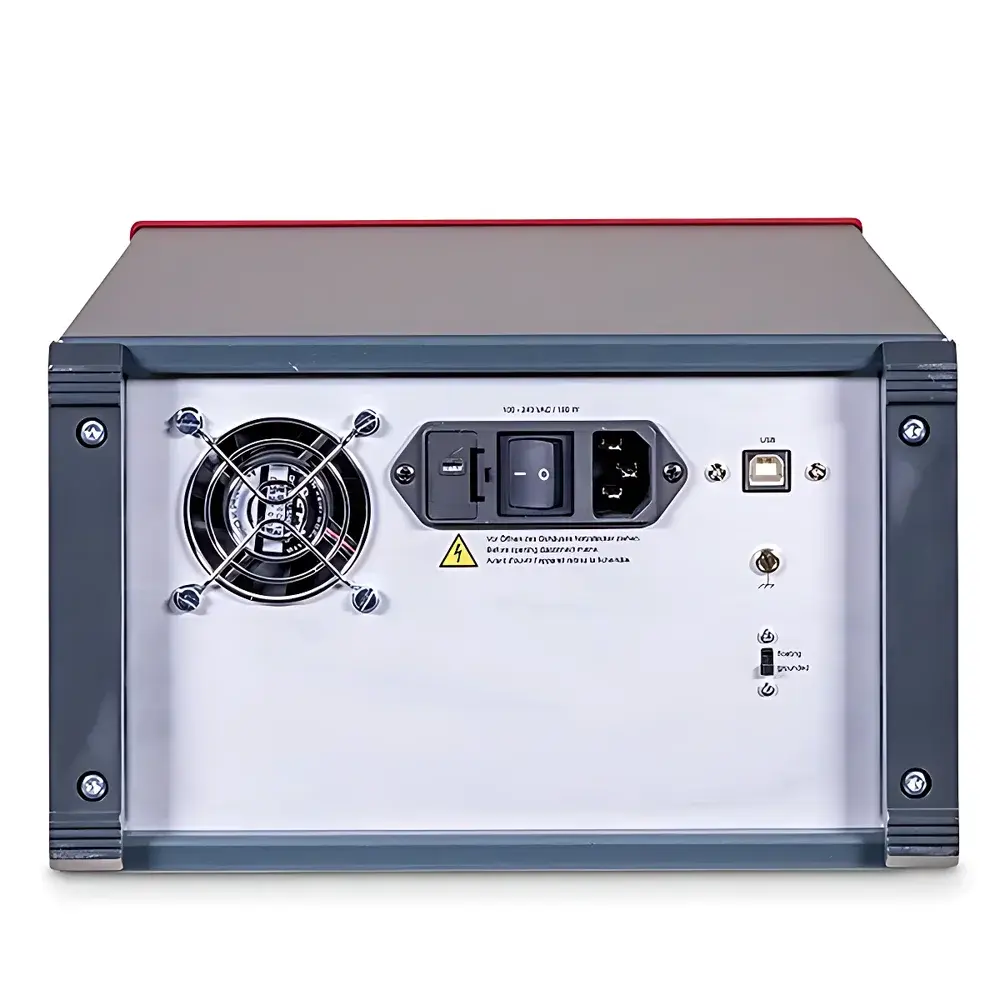
Zahner Zennium Pro Electrochemical Workstation
| Brand | Zahner |
|---|---|
| Origin | Germany |
| Model | Zennium Pro |
| Current Range | ±3 A |
| Current Resolution | ±2 aA |
| Potential Accuracy | ±50 µV |
| Potentiostatic Range | ±15 V |
| EIS Frequency Range | 10 µHz – 8 MHz |
| Input Impedance | >10 TΩ |
| ADC Resolution | 32 bit |
| Bandwidth | 10 MHz |
| Voltage Resolution | 3 nV |
| Small-Signal Rise Time | 150 ns – 200 µs (5 steps) |
| Frequency Accuracy | 0.0025% |
| Frequency Resolution | 0.0025%, 10,000 steps/decade |
| Impedance Measurement Range | 10 µΩ to 100 GΩ (depending on probe configuration) |
| IR Compensation | Real-time, adaptive |
Overview
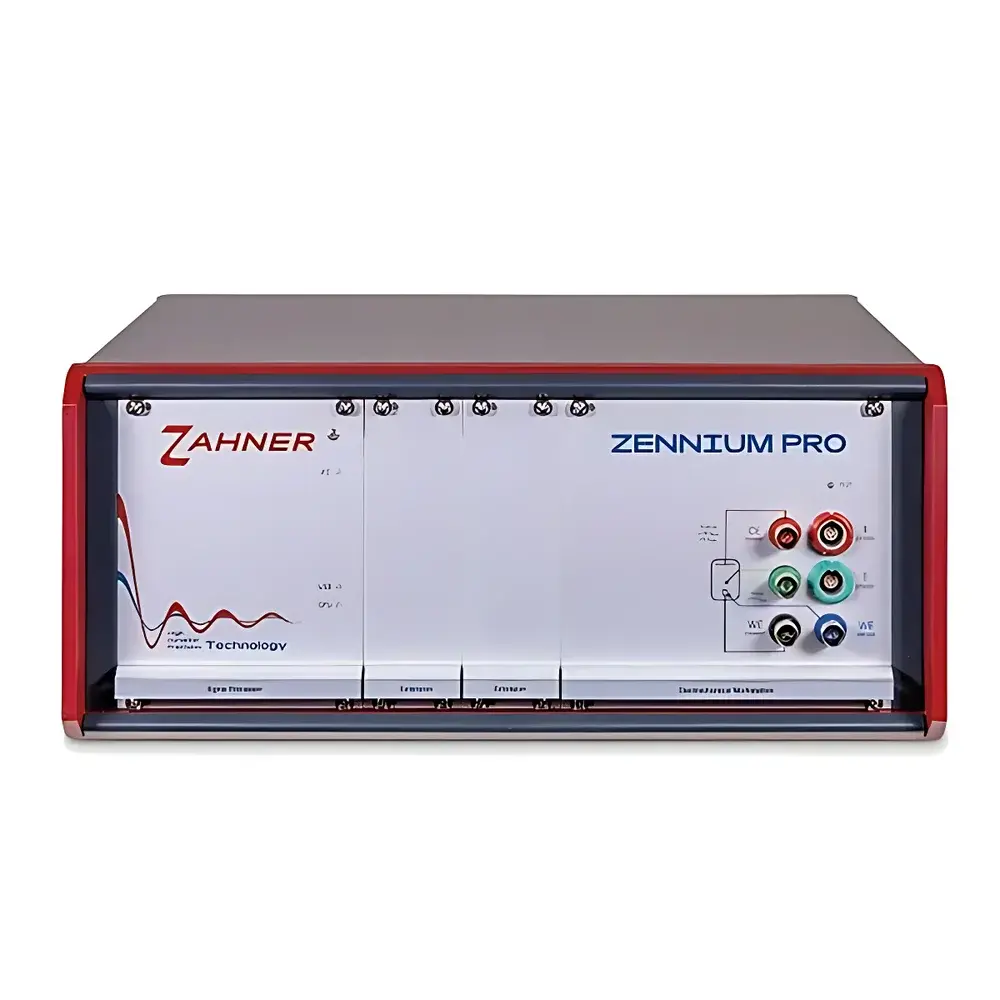
The Zahner Zennium Pro Electrochemical Workstation is a high-performance, modular potentiostat/galvanostat and frequency response analyzer engineered for precision electrochemical research and industrial R&D. Built upon Zahner’s proprietary High Dynamic Performance (HDP) architecture, it integrates a 32-bit analog-to-digital converter with 10 MHz system bandwidth, enabling ultra-low-noise signal acquisition and sub-attoampere current resolution (±2 aA). Its core measurement principle relies on digitally controlled, real-time feedback loops for potentiostatic and galvanostatic control, combined with vector network analysis for broadband electrochemical impedance spectroscopy (EIS) from 10 µHz to 8 MHz — a range covering slow diffusion-controlled processes in battery aging studies and fast interfacial charge-transfer kinetics in catalyst evaluation. The instrument supports both grounded and floating operation modes, making it suitable for non-standard cell configurations including pressurized autoclaves, buried pipeline corrosion monitoring, and multi-electrode arrays where ground-loop isolation is critical. Designed and manufactured in Germany, the Zennium Pro complies with IEC 61010-1 safety standards and meets electromagnetic compatibility requirements per EN 61326-1 for laboratory use.
Key Features
- Modular hardware architecture: Supports seamless integration of optional modules including high-current extension (up to ±10 A), high-voltage extension (±40 V槽压), fast-sampling units (up to 10 MS/s), and CIMPS photoelectrochemical accessories.
- Ultra-high input impedance (>10 TΩ) and low leakage current design ensure accurate measurements on high-resistance systems such as coatings, membranes, and solid-state electrolytes.
- Real-time, adaptive IR compensation using current-interrupt and EIS-based methods — fully integrated into all dynamic techniques without post-processing delay.
- Automatic range switching with five-step rise time optimization (150 ns – 200 µs) ensures optimal signal fidelity across wide dynamic current spans (10 µA to 3 A).
- Dual-channel simultaneous EIS capability for differential or reference-electrode-resolved impedance measurements.
- Comprehensive built-in safety features: overvoltage protection, current limiting, thermal shutdown, and hardware watchdog circuitry compliant with GLP/GMP operational integrity requirements.
Sample Compatibility & Compliance
The Zennium Pro accommodates diverse electrochemical cell geometries — from standard three-electrode beaker cells and rotating disk electrodes (RDE/RRDE) to custom high-pressure reactors, fuel cell test stations, and in-situ battery pouch cells. Its floating-ground architecture enables direct connection to grounded equipment (e.g., potentiostats synchronized with environmental chambers or load frames), satisfying ASTM G59, G102, and ISO 17475 standards for corrosion testing. For regulated environments, Thales XT software supports audit-trail logging, user access levels, and electronic signatures aligned with FDA 21 CFR Part 11 requirements. All firmware and calibration data are traceable to national metrology institutes (PTB, Germany), ensuring long-term measurement reproducibility and compliance with ISO/IEC 17025 accreditation criteria for testing laboratories.
Software & Data Management
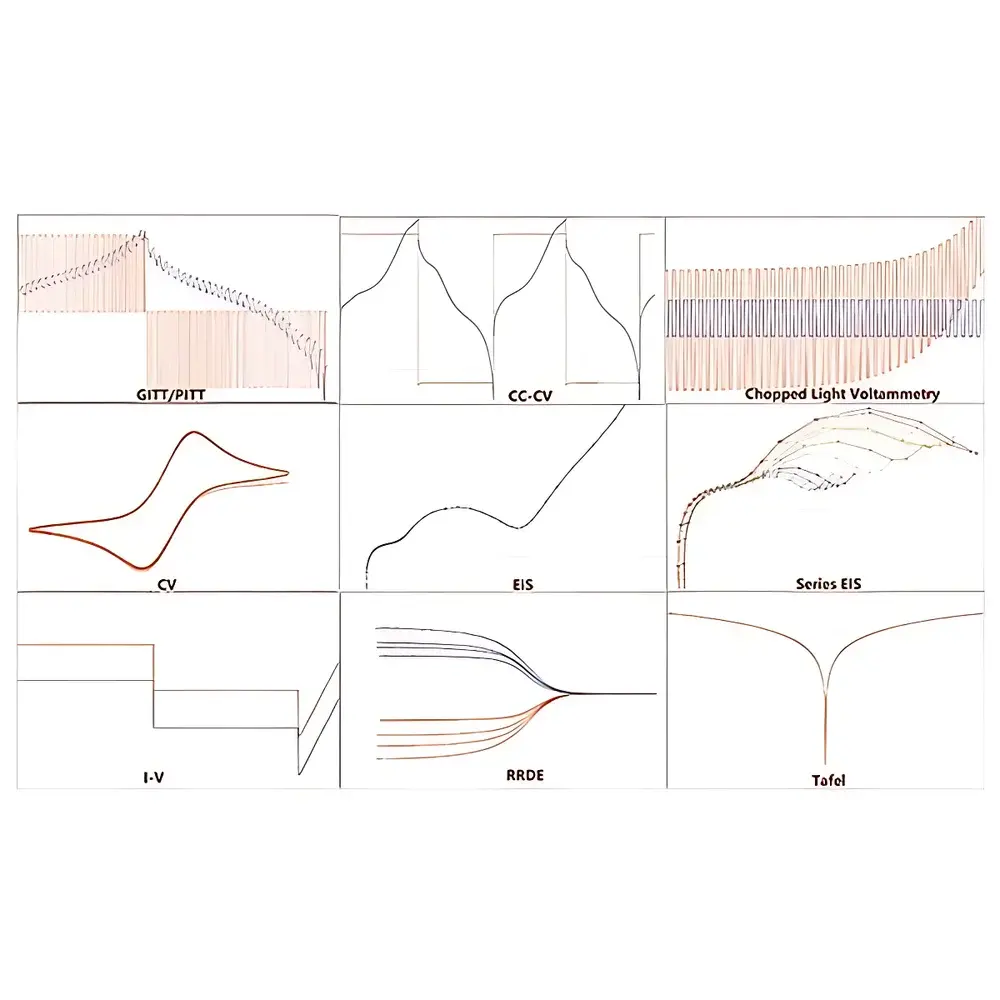
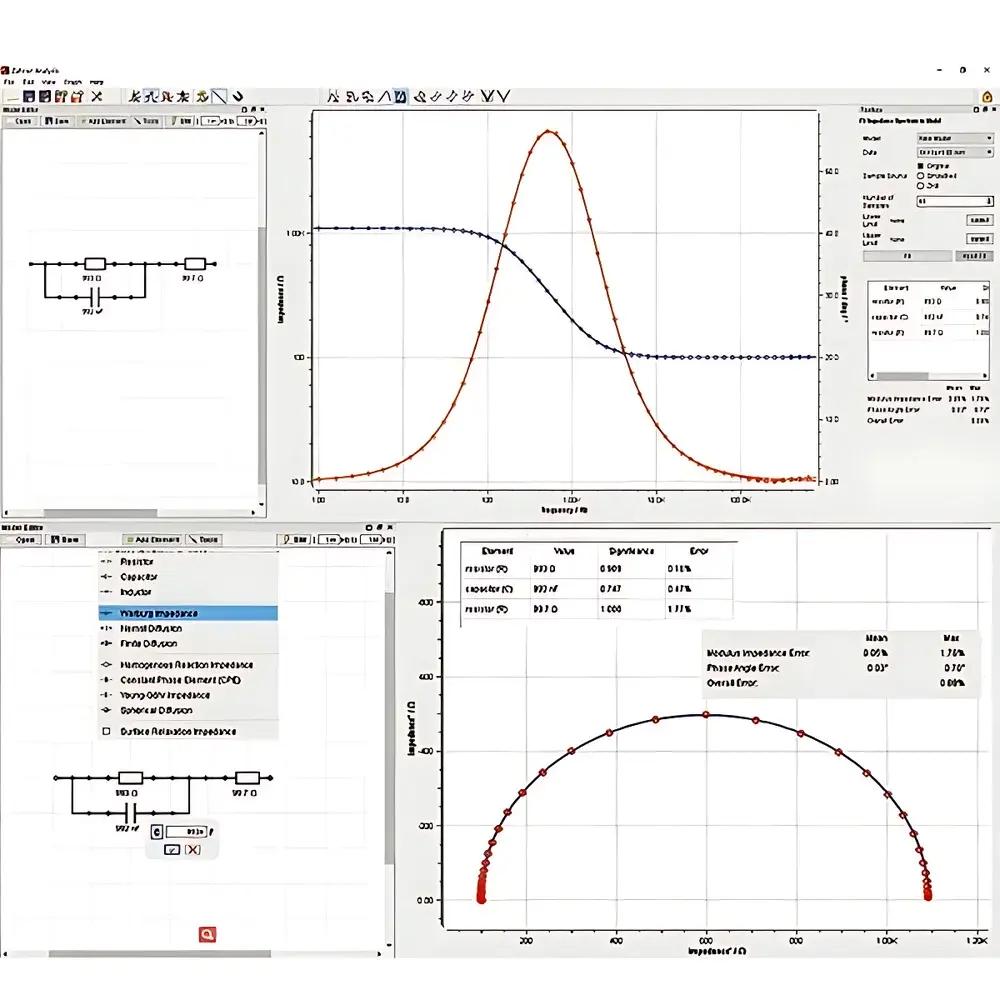
Thales XT is the native, Windows-based control and analysis platform for the Zennium Pro. It provides full experimental scripting (Python API available), real-time multi-parameter visualization (up to 16 concurrent plots), and lossless binary data storage (.zennium format) with embedded metadata (timestamp, operator ID, instrument serial, calibration history). Offline analysis includes advanced EIS modeling via Zahner Analysis (with Z-HIT validation, Kramers–Kronig consistency checks, and nonlinear least-squares fitting of distributed-element circuits), CV deconvolution, Tafel slope extraction, Mott–Schottky analysis, and PITT/GITT diffusion coefficient calculation. Data export supports CSV, TXT, MATLAB (.mat), and industry-standard formats (e.g., BioLogic EC-Lab .mpt, Gamry Framework .dta) for cross-platform interoperability. All operations — method selection, parameter entry, plot customization, and report generation — are accessible through an intuitive drag-and-drop interface with context-sensitive help and embedded application notes.
Applications
- Battery R&D: In-situ/operando EIS of Li-ion, Na-ion, and solid-state batteries; GITT/PITT diffusion analysis; SEI formation kinetics; cycle-life degradation modeling.
- Fuel cells & electrolyzers: PEM and SOEC impedance mapping under variable humidity/temperature; catalyst layer resistance decomposition; membrane conductivity profiling.
- Corrosion science: EIS-based coating defect detection; localized corrosion monitoring (pitting, crevice); electrochemical noise analysis per ASTM G199.
- Photoelectrochemistry: CIMPS-modulated photocurrent spectroscopy; incident photon-to-current efficiency (IPCE) mapping; transient absorption coupling.
- Supercapacitors & hybrid devices: Cyclic voltammetry at scan rates up to 100 V/s; EIS at open-circuit and biased conditions; capacitance retention tracking.
- Sensors & biosensors: Amperometric detection limits down to sub-picoampere; enzyme kinetics modeling; redox polymer film characterization.
FAQ
What is the minimum measurable current resolution, and how is it achieved?
The Zennium Pro achieves ±2 aA (2 × 10⁻¹⁸ A) current resolution via its 32-bit ADC, ultra-low-noise front-end amplifiers, and active shielding — validated by PTB-certified calibration procedures.
Can the Zennium Pro perform simultaneous multi-frequency EIS?
Yes — it supports multi-sine EIS with up to 1024 frequencies per sweep, enabling rapid acquisition of full spectra without harmonic distortion, ideal for time-resolved studies.
Is Thales XT compatible with LIMS or ELN systems?
Yes — Thales XT offers ODBC-compliant database connectivity and RESTful API endpoints for integration with major Laboratory Information Management Systems (LIMS) and Electronic Lab Notebooks (ELN).
Does the instrument support automated sequence testing across multiple samples?
Yes — via Thales XT’s “Batch Mode” and Python scripting interface, users can define sample racks, auto-switch between cells using external multiplexers, and execute unattended overnight protocols.
How is calibration traceability maintained over time?
Each unit ships with a factory calibration certificate referencing PTB standards; optional annual recalibration services include full system verification (current/potential accuracy, EIS phase/gain, timing jitter) with NIST-traceable reference cells and shunts.




