
Zahner Zennium XC Electrochemical Workstation
| Brand | Zahner |
|---|---|
| Origin | Germany |
| Model | Zennium XC |
| Instrument Type | Electrochemical Workstation |
| Current Range | ±2 A |
| Current Accuracy | 0.04% |
| Potential Accuracy | 100 µV |
| Potentiostatic Range | ±14 V |
| EIS Frequency Range | 10 µHz – 5 MHz |
| ADC Resolution | 32-bit |
| Current Resolution | 2 × 10⁻¹⁸ A |
| Voltage Resolution | 2.5 nV / 7.5 nV |
| Input Impedance | 10 TΩ (optional Hi-Z: 1000 TΩ) |
| EIS Accuracy | ±0.2% @ 100 mΩ–10 MΩ |
| AC Perturbation Amplitude | 0–6 V (18-bit resolution) |
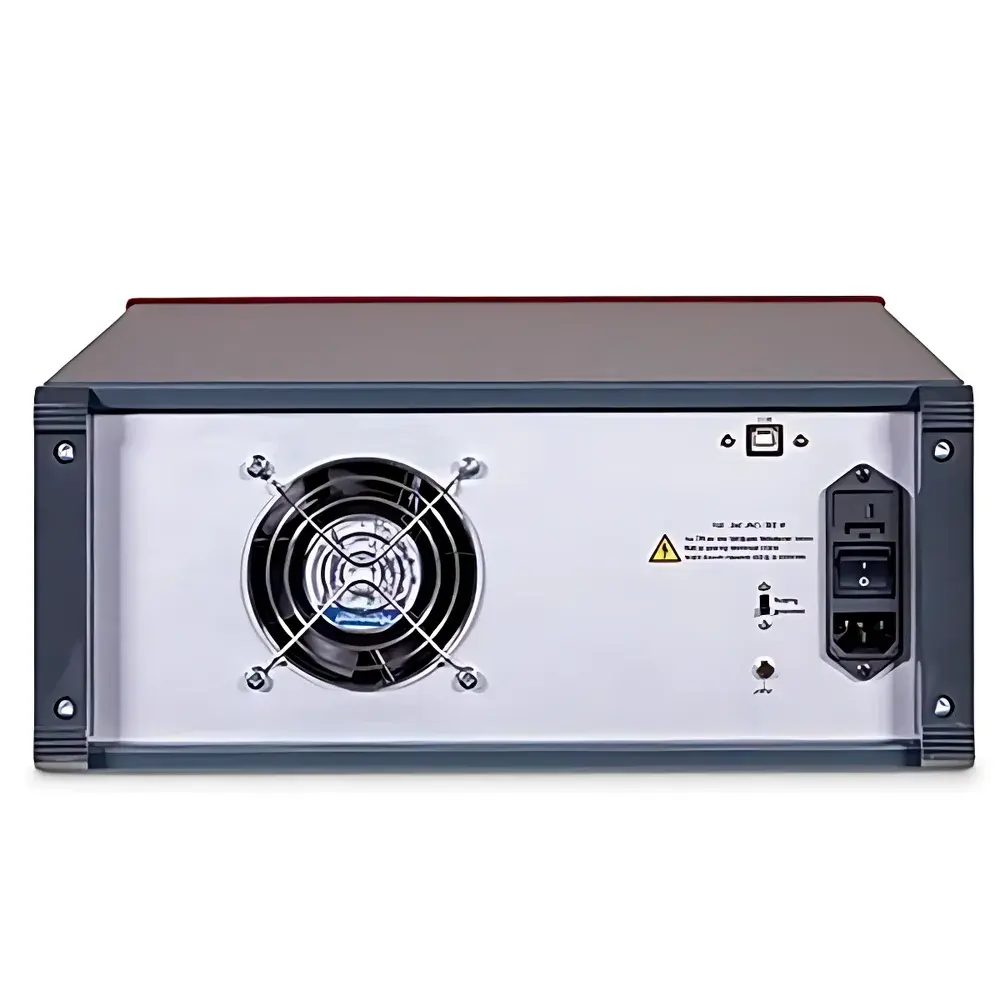
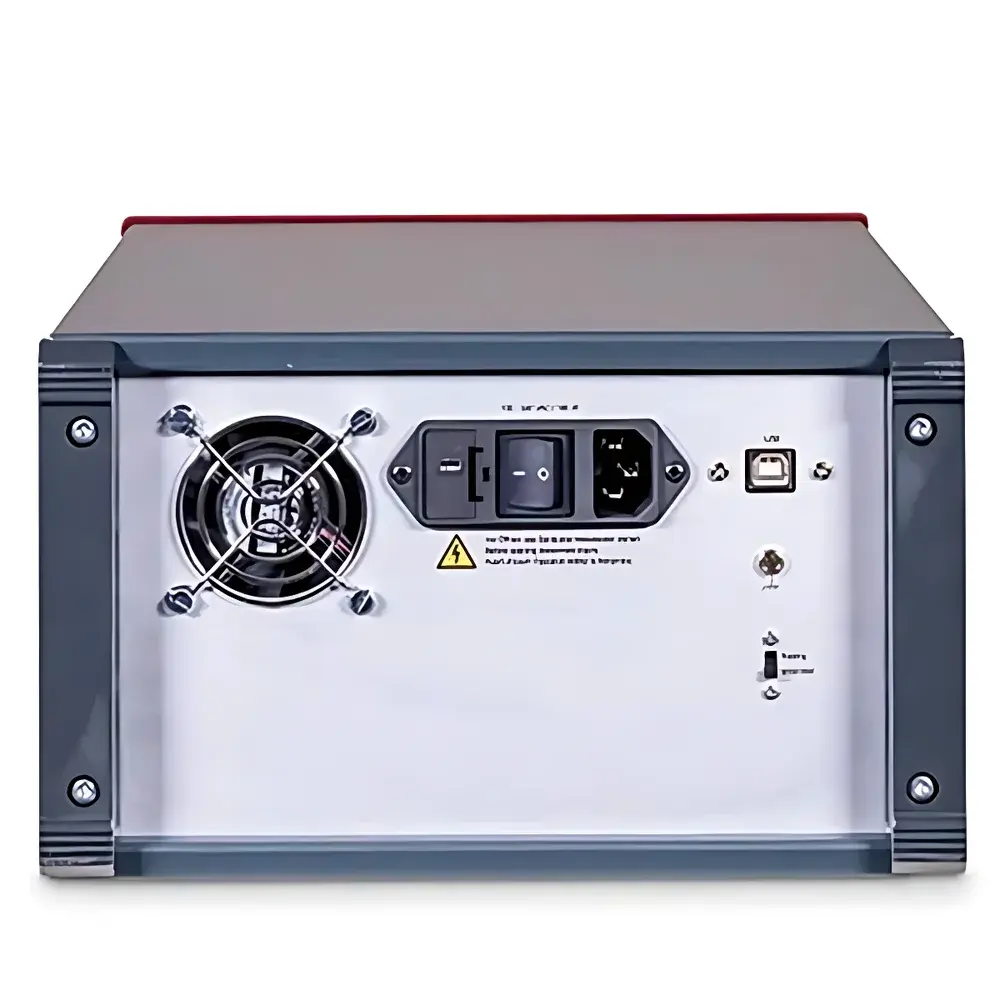
| Grounding Modes | Grounded & Floating (for high-isolation applications, e.g., autoclaves, buried pipelines) |
| IR Compensation | Real-time automatic, 0–10 MΩ range |
| Bandwidth | 6 MHz |
| Software | Thales XT (real-time control, multi-channel visualization, offline analysis via Zahner Analysis) |
Overview
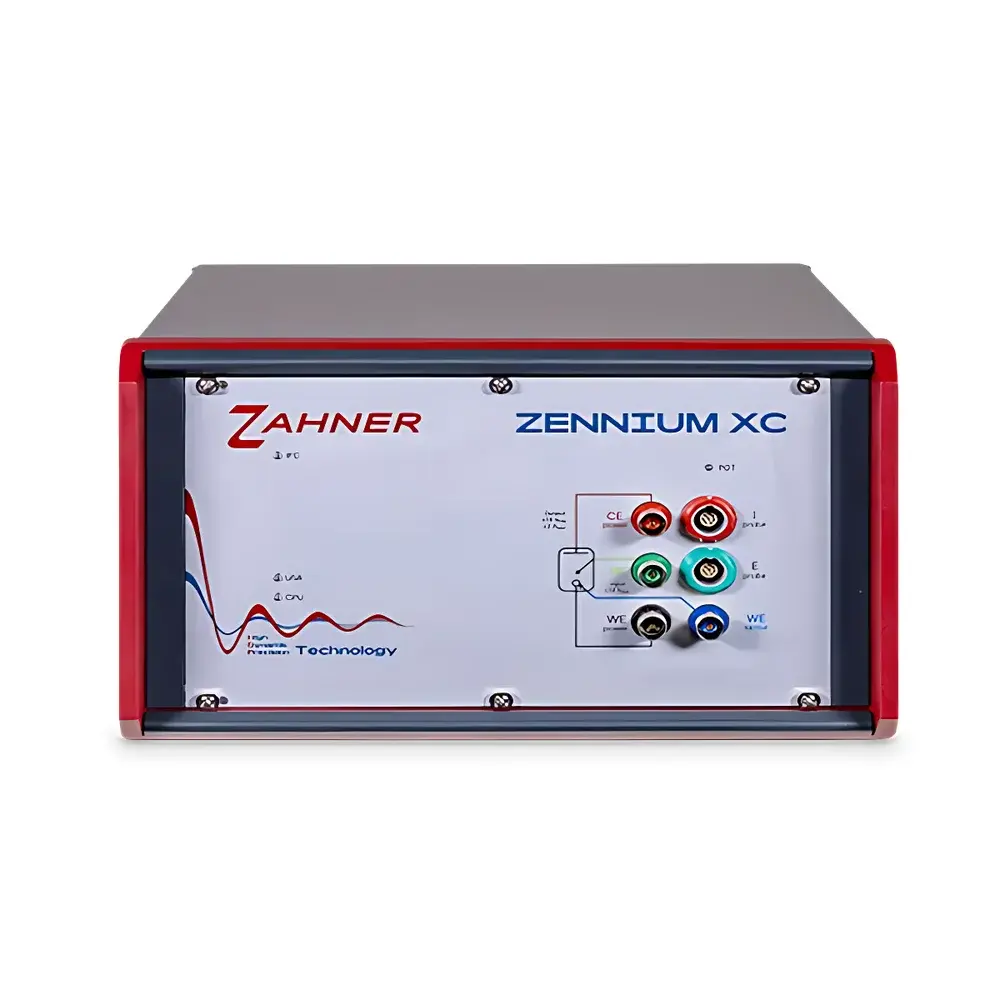
The Zahner Zennium XC Electrochemical Workstation is a high-performance, research-grade potentiostat/galvanostat engineered for precision electrochemical characterization across demanding academic and industrial laboratories. It operates on a dual-channel, fully isolated architecture with true floating-ground capability—enabling stable measurements in electrically noisy or grounded environments such as pressurized autoclaves, corrosion test cells with grounded infrastructure, or multi-electrode battery stacks. Its core measurement principle relies on high-fidelity analog signal conditioning, 32-bit delta-sigma ADCs, and HDP (High Dynamic Precision) technology to deliver exceptional signal-to-noise ratio and wide dynamic range. The workstation supports all fundamental electrochemical techniques—including potentiodynamic, potentiostatic, galvanostatic, and impedance-based methods—with full compliance to ISO 12944 (corrosion), ASTM G5/G102 (electrochemical testing standards), and IEC 62660 (battery testing). Designed and manufactured in Germany, the Zennium XC meets stringent CE, EMC, and safety requirements for Class I laboratory equipment.
Key Features
- Ultra-Wide EIS Frequency Coverage: 10 µHz to 5 MHz with frequency accuracy of ±0.0025% and 10,000 steps per decade—enabling high-resolution modeling of interfacial processes from slow diffusion-controlled reactions to fast charge-transfer kinetics.
- Sub-attoampere Current Resolution: 2 × 10⁻¹⁸ A current resolution supported by ultra-low-noise front-end design and active shielding—critical for low-conductivity electrolytes, microelectrode studies, and ultra-thin film characterization.
- Floating-Ground Architecture: Selectable grounded or floating operation with isolation up to 1000 V DC—essential for experiments involving earth-referenced systems (e.g., pipeline corrosion monitoring, fuel cell stack diagnostics, or high-pressure electrochemical reactors).
- High-Speed Transient Capability: With optional ADF (Advanced Dynamic Function) module, linear sweep rates reach 10,000 V/s—suitable for fast kinetic studies, pulse techniques, and transient response analysis under non-steady-state conditions.
- Real-Time IR Compensation: Automatic ohmic drop correction over 0–10 MΩ range using current-interrupt or current-step methods—ensuring accurate polarization data without post-test correction artifacts.
- 6 MHz System Bandwidth: Enables precise capture of rapid potential/current transients and high-frequency impedance features, particularly relevant for solid-state electrolyte interfaces and nanomaterial-based electrodes.
Sample Compatibility & Compliance
The Zennium XC accommodates a broad spectrum of electrochemical sample configurations—from standard three-electrode cells (working, reference, counter) to complex multi-electrode arrays, rotating disk electrodes (RDE/RRDE), flow cells, and in situ/operando setups. Its high input impedance (10 TΩ standard, 1000 TΩ optional) ensures minimal loading effects on high-resistance systems such as polymer electrolytes, ceramic separators, or bioelectrochemical interfaces. The instrument complies with ISO/IEC 17025 requirements for measurement traceability and supports audit-ready operation under GLP and GMP frameworks. Full 21 CFR Part 11 compliance is achievable through Thales XT’s electronic signature, role-based access control, and immutable audit trails for method parameters, raw data, and analysis logs.
Software & Data Management
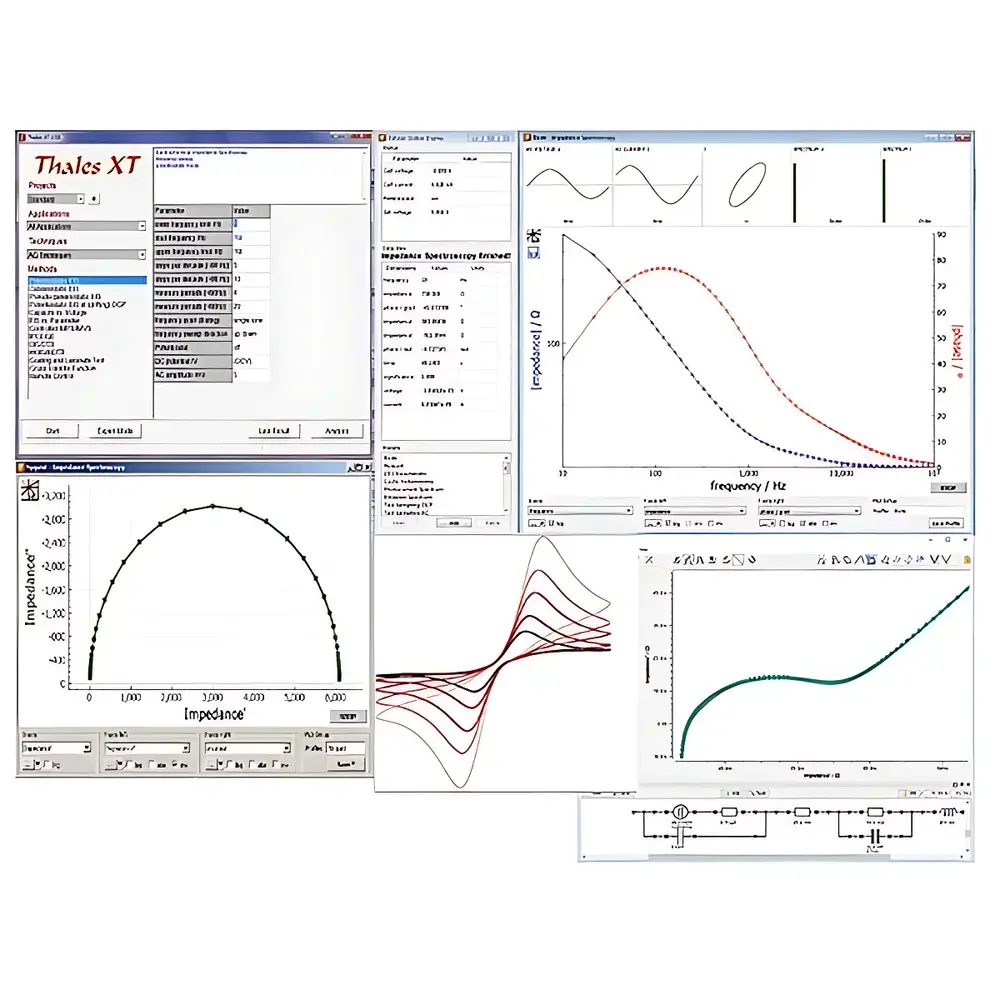
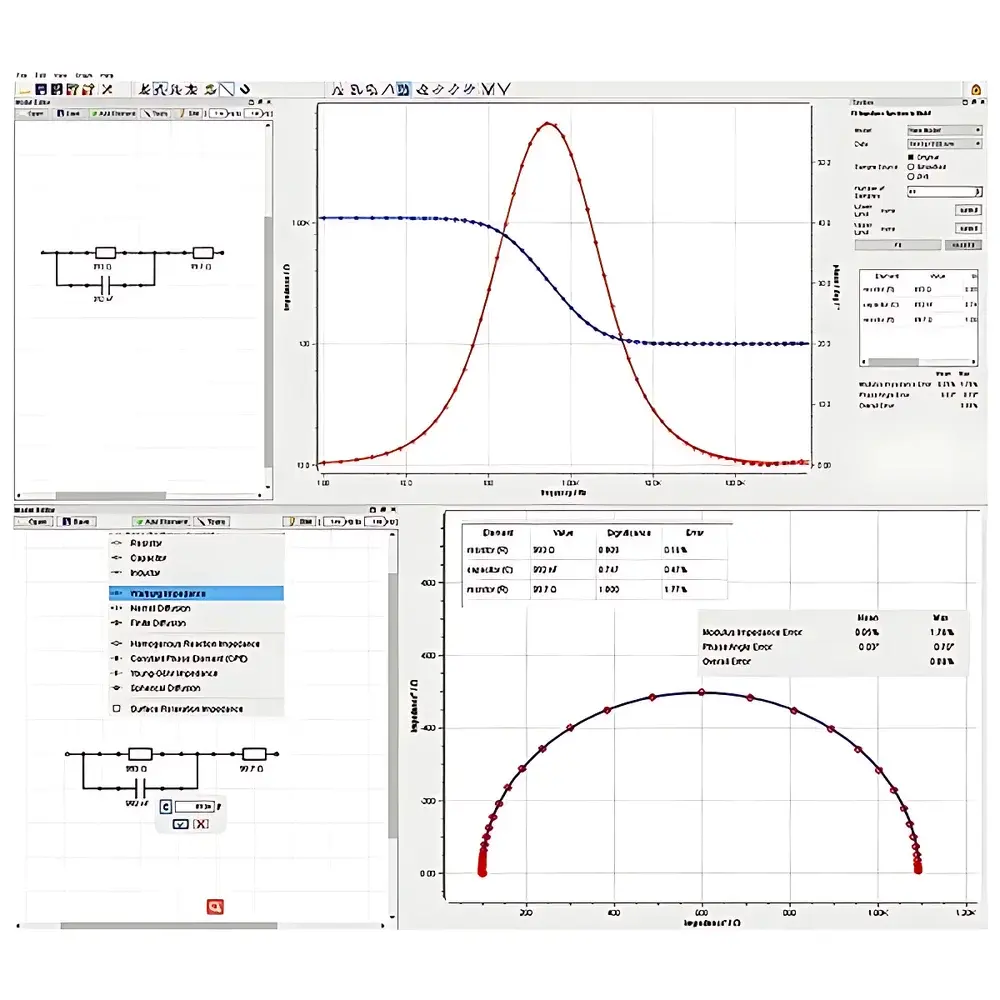
Thales XT software provides an integrated platform for experiment design, real-time acquisition, and advanced offline analysis. It features a modular, drag-and-drop sequencer for constructing multi-step protocols—including hybrid techniques like EIS-CV coupling or time-resolved impedance during battery cycling. All data are stored in vendor-neutral HDF5 format with embedded metadata (timestamp, instrument ID, calibration status, environmental conditions). Offline analysis is performed using Zahner Analysis, which includes Z-HIT validation for EIS data stability assessment, Kramers-Kronig transform verification, and non-linear least-squares fitting of equivalent circuit models with confidence interval estimation. Export options include SVG/PNG graphics, CSV/TXT tables, and direct integration with MATLAB, Python (via PyZahner API), and OriginLab for custom statistical processing.
Applications
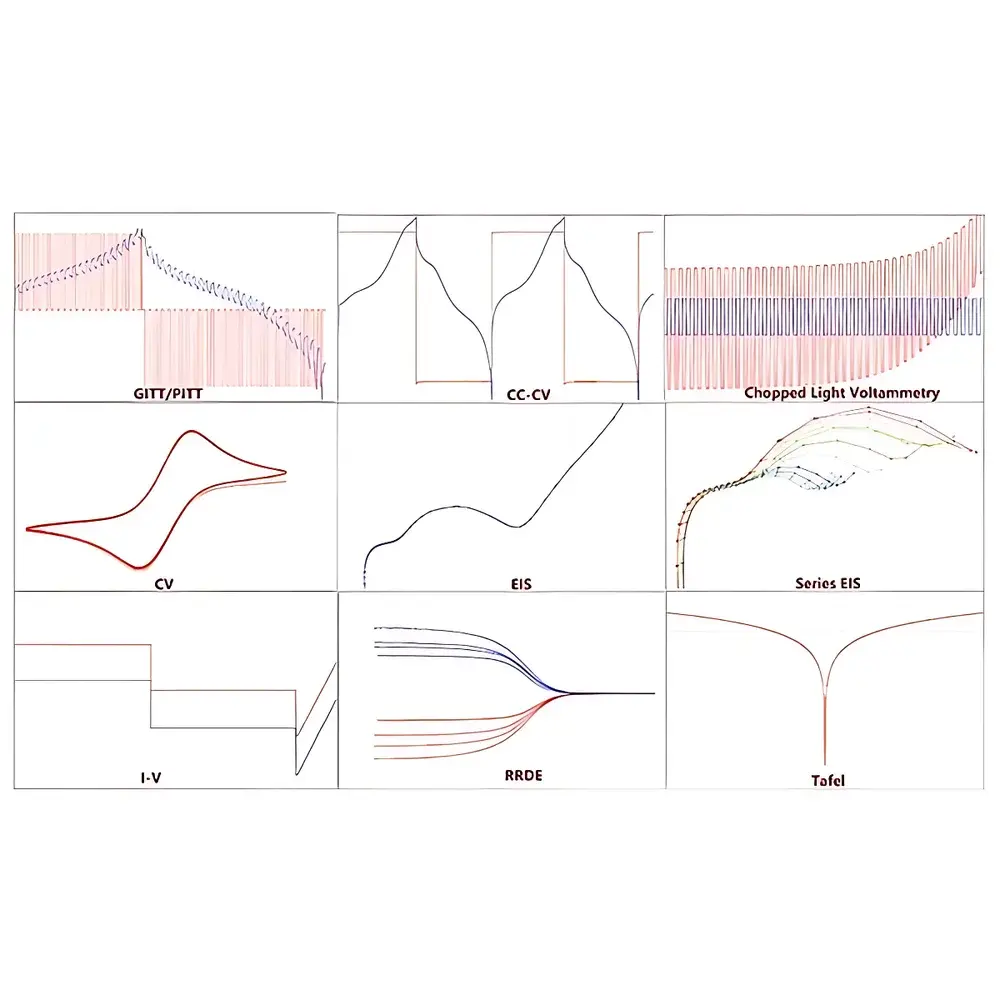
- Battery R&D: CC/CV cycling with in situ EIS at defined SOC/SOH points, GITT/PITT for Li⁺ diffusion coefficient mapping, and impedance evolution tracking during aging.
- Fuel Cell & Electrolyzer Characterization: PEM and SOEC/SOFC electrode kinetics, membrane resistance profiling, and degradation mechanism identification via Mott-Schottky and low-frequency impedance analysis.
- Corrosion Science: Electrochemical noise monitoring, potentiodynamic polarization for pitting susceptibility, and long-term EIS for coating integrity assessment per ASTM D1141/D6319.
- Photoelectrochemistry: Time-resolved photocurrent analysis, intensity-modulated photocurrent spectroscopy (IMPS), and bias-dependent EIS of dye-sensitized and perovskite solar cells.
- Supercapacitor & Hybrid Device Testing: Cyclic voltammetry at ultra-high scan rates, galvanostatic charge/discharge with EIS interruption, and capacitance retention analysis.
- Sensor Development: Amperometric detection limits, redox mediator kinetics, and interfacial electron transfer rate quantification using Laviron analysis.
FAQ
What distinguishes the Zennium XC from entry-level potentiostats?
The Zennium XC integrates true floating-ground operation, 32-bit resolution, sub-attoampere sensitivity, and 5 MHz EIS bandwidth—features typically reserved for flagship-tier instruments. Its hardware architecture eliminates ground-loop errors common in grounded systems, enabling reliable measurements in complex experimental setups.
Is Thales XT compatible with third-party data analysis tools?
Yes. Raw data are saved in HDF5 format with comprehensive metadata, and Python bindings (PyZahner) are provided for programmatic access. Export to CSV, TXT, and image formats ensures compatibility with MATLAB, Origin, and Jupyter-based workflows.
Can the Zennium XC perform simultaneous multi-channel EIS on different electrodes?
While the Zennium XC is a single-channel potentiostat, its floating architecture allows synchronized measurements across multiple independent cells using external multiplexing hardware. For native multi-channel operation, Zahner offers the Zennium EPC system.
How is calibration traceability maintained?
Each unit ships with factory calibration certificates traceable to PTB (Physikalisch-Technische Bundesanstalt) standards. Users may perform in-house verification using Zahner’s certified calibration modules (e.g., RC networks, precision resistors), with results logged automatically in Thales XT audit trails.
Does the system support automated long-term corrosion monitoring?
Yes. Through Thales XT’s sequencer and event-triggered logging, users can configure unattended OCP monitoring, periodic LPR scans, or daily EIS acquisitions over weeks—data are timestamped, backed up locally, and optionally synced to network storage.




