
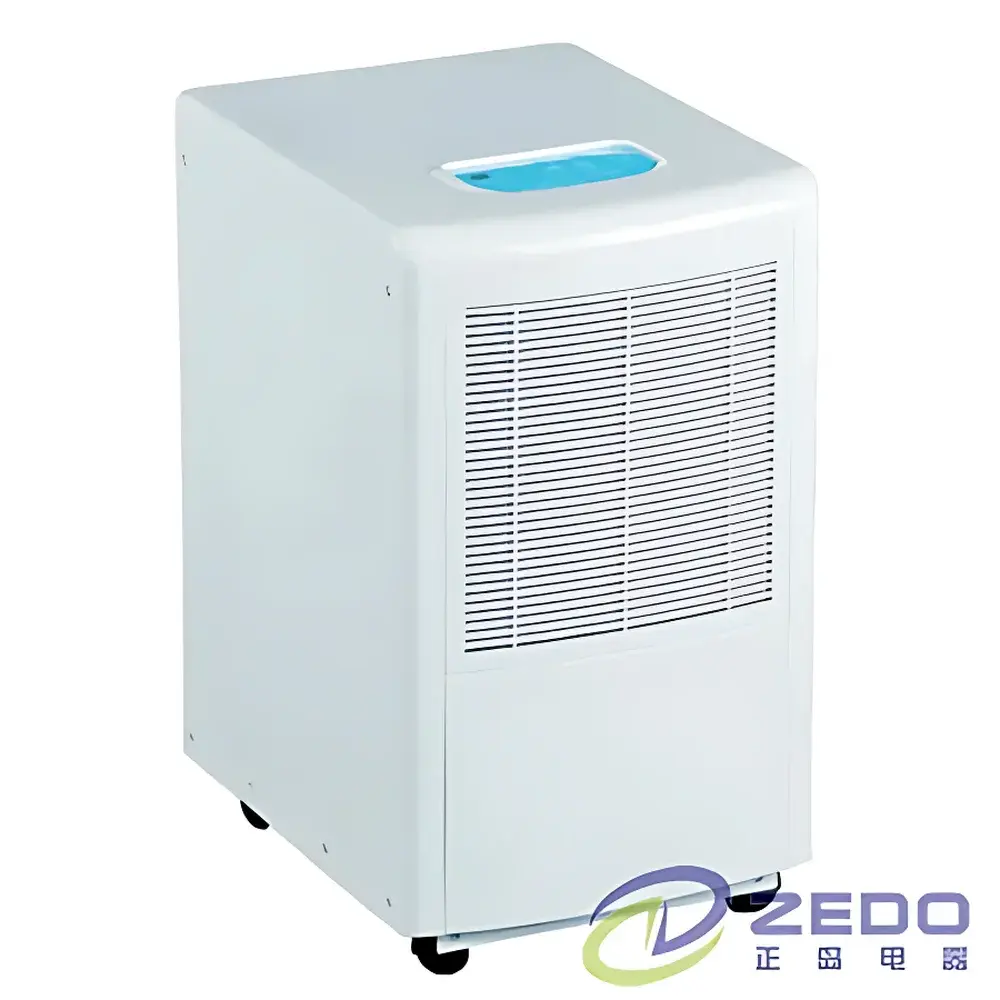
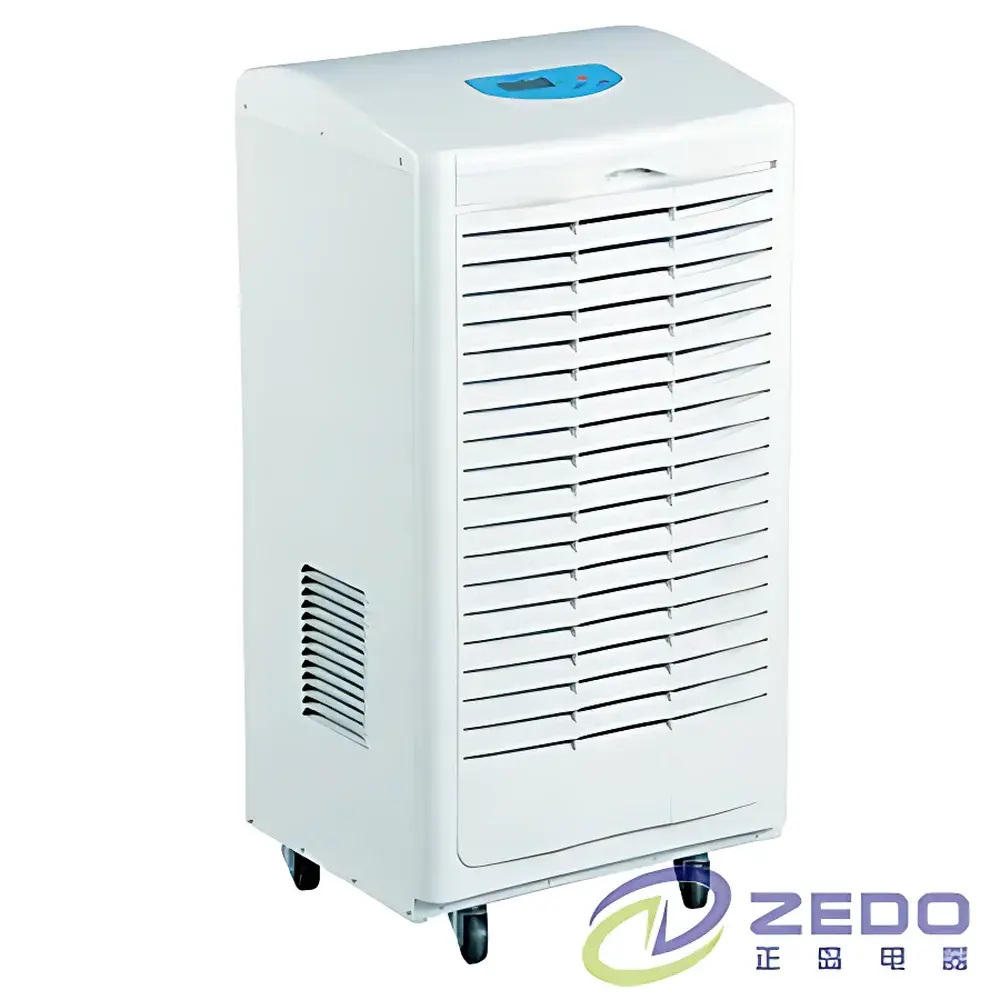
ZEDO ZD-558LB Welding Electrode Storage Dehumidifier
| Brand | ZEDO |
|---|---|
| Origin | Zhejiang, China |
| Manufacturer Type | Direct Manufacturer |
| Product Category | Domestic |
| Model | ZD-558LB |
| Instrument Type | Compressor-Based Dehumidifier |
| Dehumidification Capacity | 58 L/day |
| Control Method | Intelligent Humidity Setpoint Control |
| Display | Full-Color LCD with Fault Code Indication |
| Automatic Defrost | Yes |
| Power Supply | 220 V~50 Hz |
| Input Power | 670 W |
| Airflow Rate | 850 m³/h |
| Operating Temperature Range | 0–38 °C |
| Water Tank Capacity | 6 L (with continuous drainage option via hose) |
| Dimensions (W×D×H) | 350 × 455 × 603 mm |
| Net Weight | 25 kg |
| Filtration System | Activated Carbon Filter |
| Safety Protections | High/Low Pressure, Overload, Undervoltage, Reverse Phase Protection |
| Compressor Type | International Brand Rotary Compressor |
| Refrigerant | Eco-Friendly R-134a or Equivalent |
| Recommended Area Coverage | 40–60 m² (at 2.8 m ceiling height) |
Overview
The ZEDO ZD-558LB Welding Electrode Storage Dehumidifier is an industrial-grade, compressor-driven dehumidification system engineered specifically for controlled environments where moisture-sensitive welding consumables—particularly low-hydrogen (basic) and iron powder-coated electrodes—must be preserved at ≤60% RH. Unlike general-purpose air dryers, this unit applies refrigerant-based condensation dehumidification: ambient air is drawn across a chilled evaporator coil, where water vapor condenses and is collected, while the dried air is reheated slightly and returned to the space. This thermodynamic process ensures stable, repeatable humidity control without chemical desiccants or regeneration cycles—critical for maintaining electrode coating integrity, preventing hydrogen-induced cracking in welds, and complying with AWS A5.1/A5.5 and ISO 2560 storage requirements.
Key Features
- Intelligent microprocessor control with high-accuracy Japanese SHINYO temperature/humidity sensors (±2% RH, ±0.5°C), enabling precise setpoint regulation between 30–80% RH.
- Full-color LCD interface with real-time display of current RH%, target RH, operating status, and diagnostic fault codes for rapid troubleshooting.
- Industrial rotary compressor from a globally recognized brand, optimized for continuous operation under variable load conditions; delivers high energy efficiency (EER ≥2.3) and acoustic performance <52 dB(A) at 1 m.
- Dual-centrifugal impeller fan system with external rotor motor design—engineered for high-volume airflow (850 m³/h) and uniform air distribution across large-volume storage zones.
- Modular heat exchanger assembly featuring internally grooved copper tubing and hydrophilic aluminum fins, maximizing latent heat transfer and minimizing frost accumulation.
- Comprehensive electrical protection suite including high/low pressure switches, thermal overload relays, undervoltage detection, and three-minute compressor restart delay to prevent mechanical stress.
Sample Compatibility & Compliance
The ZD-558LB is validated for use in AWS-compliant electrode storage rooms, QC laboratories, and pre-welding preparation areas where strict adherence to ASME Section IX, AWS D1.1, and ISO 3834-2 material handling protocols is required. It maintains relative humidity below the critical 60% RH threshold that triggers hygroscopic degradation of basic slag coatings and promotes hydrogen diffusion into weld metal. Units are designed for installation in non-classified indoor spaces per IEC 60335-1 safety standards and meet CE marking requirements for electromagnetic compatibility (EMC Directive 2014/30/EU). Optional data logging modules support GLP/GMP audit trails when integrated with facility-wide environmental monitoring systems.
Software & Data Management
While the ZD-558LB operates as a standalone device, its control architecture supports optional RS-485 Modbus RTU communication for integration into building management systems (BMS) or centralized HVAC supervisory platforms. The embedded controller records operational history—including cumulative runtime, compressor cycles, and humidity deviation events—for up to 30 days. When paired with ZEDO’s optional cloud gateway (sold separately), users gain remote access to real-time RH trends, maintenance alerts, and exportable CSV reports compliant with FDA 21 CFR Part 11 electronic record requirements. All firmware updates are delivered via secure USB interface with cryptographic signature verification.
Applications
- Welding electrode storage vaults in fabrication shops, shipyards, and pressure vessel manufacturing facilities.
- Pre-bake staging areas where E7018, E8018, and other low-hydrogen electrodes require ambient conditioning prior to oven drying.
- Quality control labs performing moisture content testing per ASTM E1064 or ISO 8503-2 surface preparation standards.
- Warehouse zones storing coated metals, galvanized components, or precision machined parts susceptible to corrosion at >70% RH.
- Electronics assembly cleanrooms where solder paste shelf life depends on ambient humidity stability.
FAQ
What is the minimum recommended RH level for storing low-hydrogen welding electrodes?
AWS A5.1 specifies storage at ≤60% RH for basic electrodes; prolonged exposure above this threshold increases diffusible hydrogen content and compromises weld ductility.
Can the ZD-558LB operate continuously in unattended mode?
Yes—it features automatic defrost, overflow protection, and thermal cutouts enabling 24/7 operation in enclosed, ventilated storage rooms with ambient temperatures between 0–38°C.
Does the unit comply with international electrical safety standards?
It conforms to IEC 60335-1, EMC Directive 2014/30/EU, and RoHS 2011/65/EU; CE marking is affixed to all units shipped for EU markets.
Is continuous drainage supported?
Yes—a standard 12-mm ID PVC hose connection is provided for gravity-fed or pump-assisted condensate removal, eliminating manual tank emptying.
How often does the activated carbon filter require replacement?
Under typical industrial conditions, replacement is recommended every 6–12 months depending on airborne particulate load; filter life is monitored via system diagnostics.



