
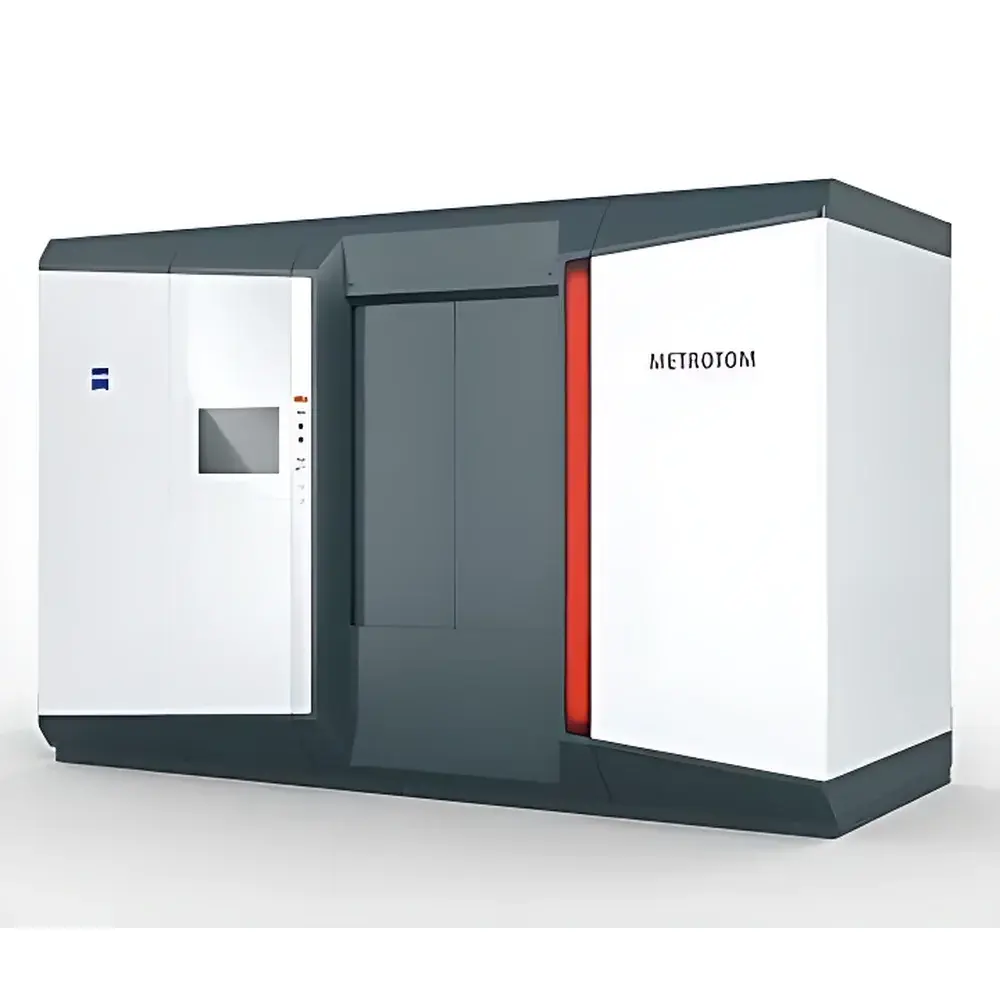
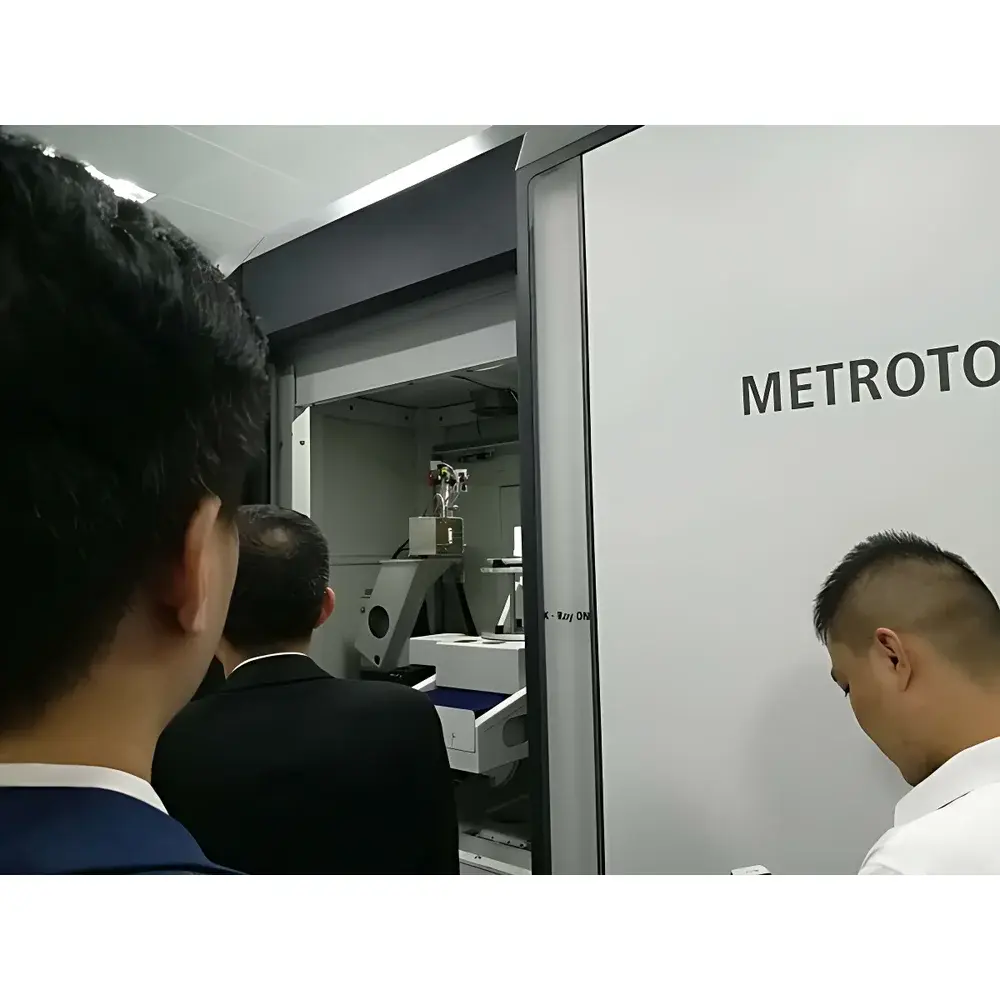
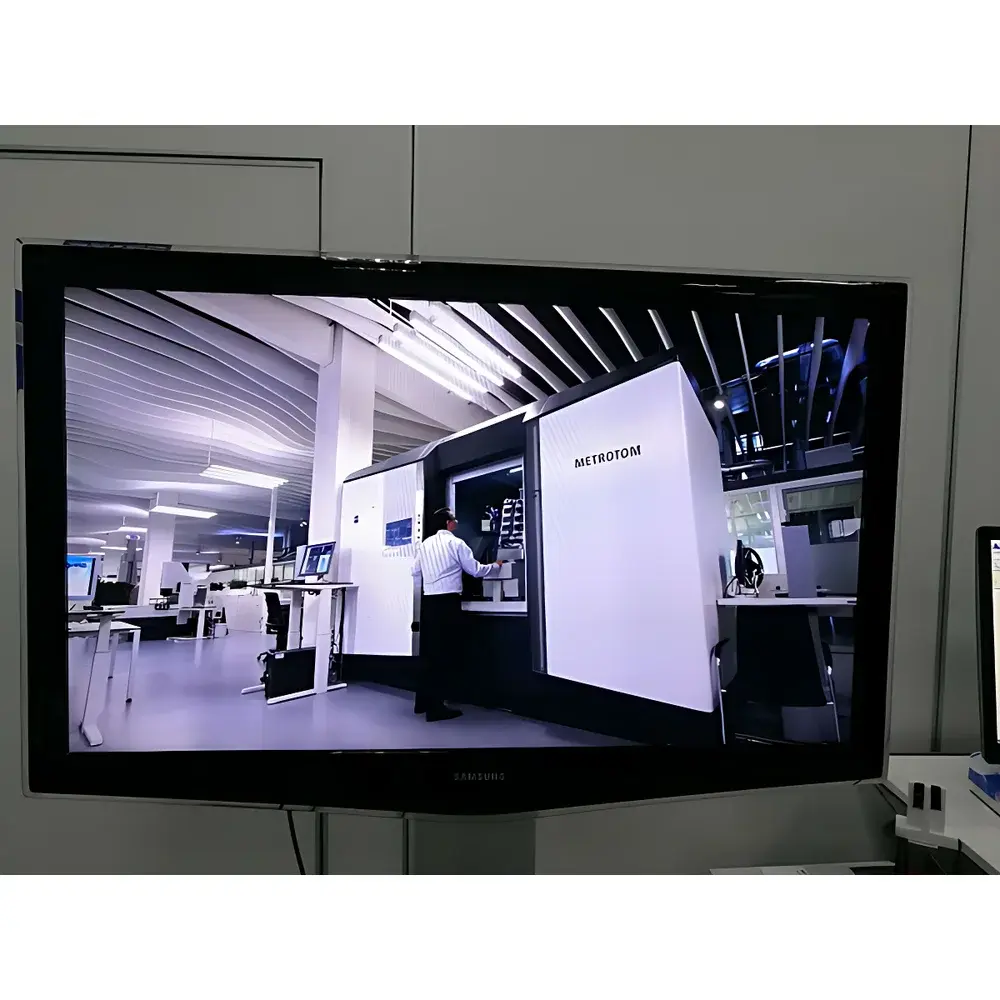
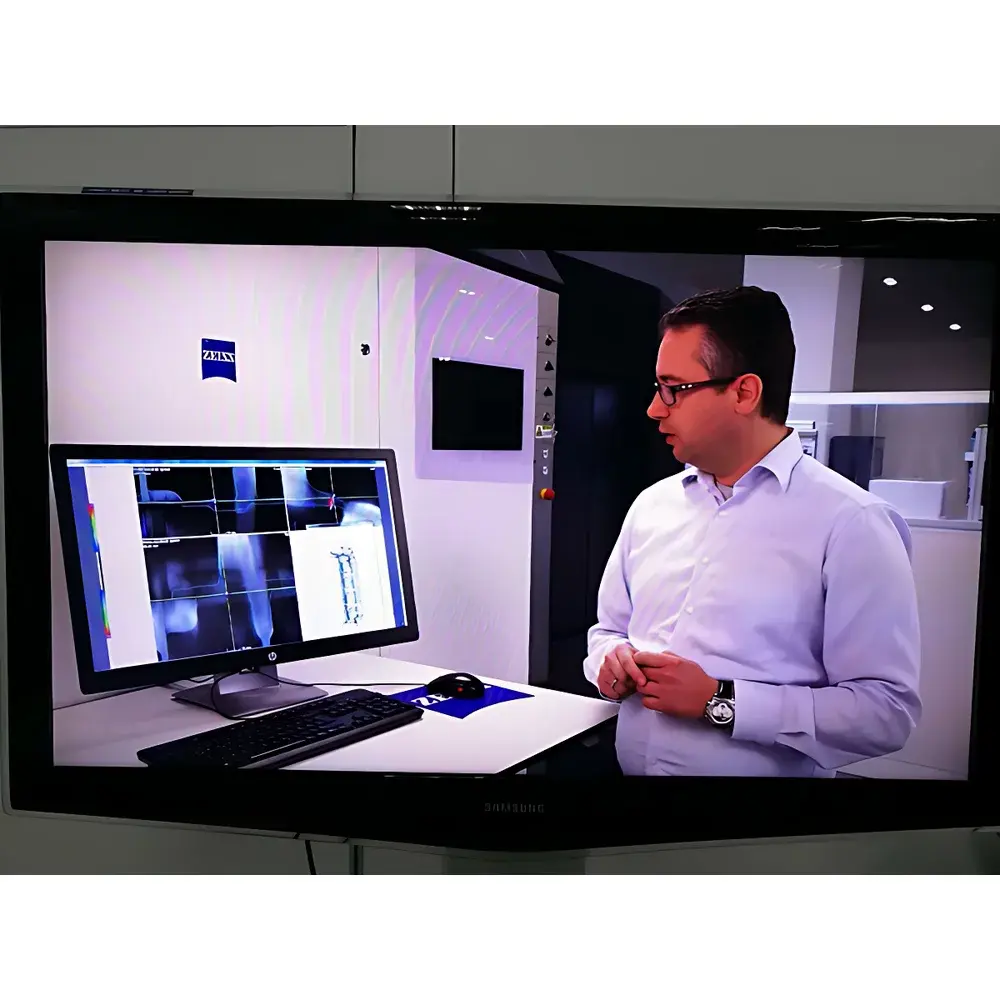
ZEISS METROTOM Industrial X-ray Computed Tomography System
| Brand | ZEISS |
|---|---|
| Origin | Germany |
| Manufacturer Type | Authorized Distributor |
| Origin Category | Imported |
| Model | ZEISS METROTOM CT |
| Price Range | USD 1 – 999,000 |
Overview
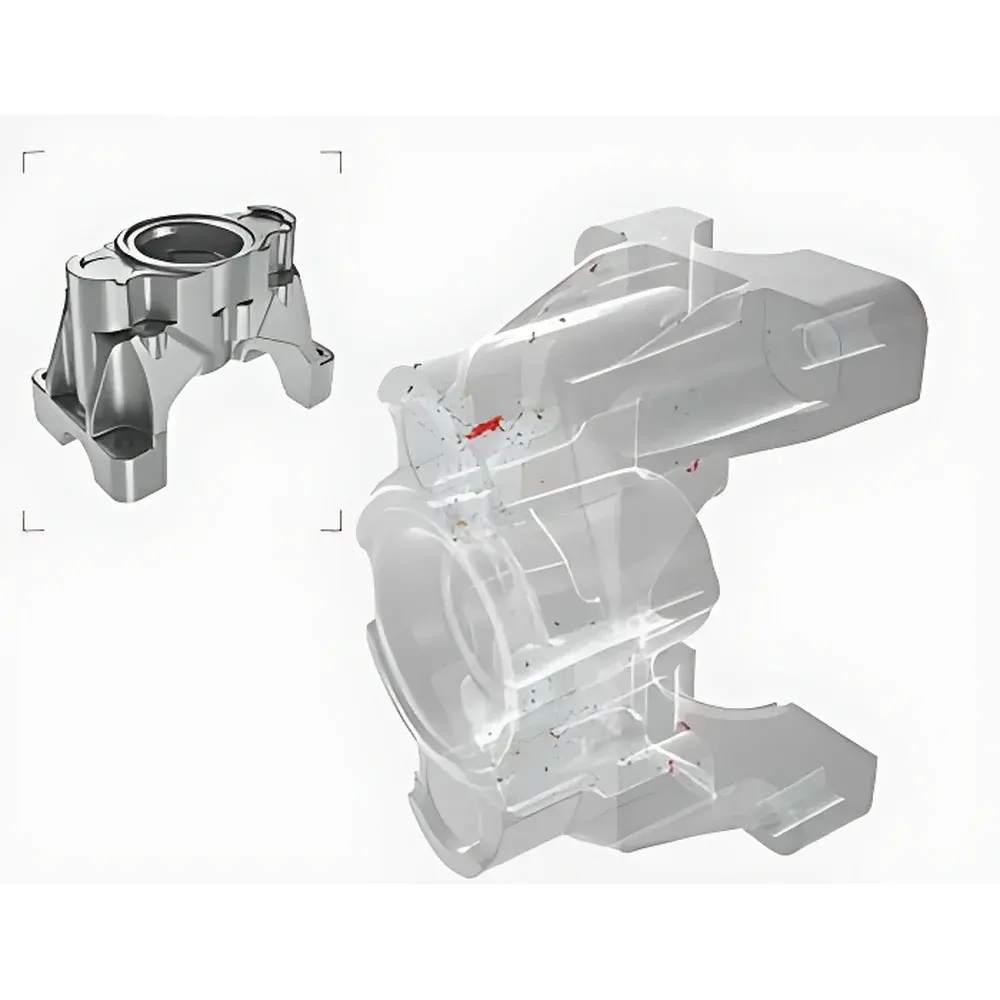
The ZEISS METROTOM Industrial X-ray Computed Tomography (CT) System is a high-precision, non-destructive 3D metrology platform engineered for dimensional inspection, internal defect analysis, and geometric validation of complex components. Operating on the principle of cone-beam or fan-beam X-ray computed tomography, the system acquires hundreds to thousands of projection images as the sample rotates through 360°, reconstructing volumetric voxel data via filtered back-projection or iterative reconstruction algorithms. Unlike contact-based coordinate measuring machines (CMMs) or optical profilers, METROTOM enables full-field internal and external geometry acquisition without part disassembly, sectioning, or surface preparation—making it indispensable for validating additive-manufactured parts, castings, injection-molded polymers, and lightweight alloy assemblies in aerospace, automotive, and medical device manufacturing.
Key Features
- High-resolution microfocus X-ray source with adjustable kV/mA settings optimized for material-dependent contrast (e.g., 80–225 kV range for aluminum-to-titanium density gradients)
- Motorized precision rotation stage with angular resolution ≤ 0.001° and radial runout < 1 µm, ensuring geometric fidelity during helical or step-and-shoot acquisition
- High-dynamic-range flat-panel detector with pixel pitch down to 75 µm and >16-bit depth, supporting both high-speed and high-SNR scanning modes
- Integrated linear motion axes (X/Y/Z) enabling multi-position scanning and automated stitching of large-volume parts beyond single-field-of-view limits
- Thermally stabilized mechanical architecture compliant with ISO 10360-2 and VDI/VDE 2634 Part 2 for volumetric measurement uncertainty quantification
- Modular shielding cabinet meeting IEC 61000-6-4 (EMC) and local radiation safety regulations (e.g., FDA 21 CFR 1020.40, DIN 6812)
Sample Compatibility & Compliance
The ZEISS METROTOM accommodates samples ranging from miniature electronic housings (<10 mm) to engine blocks up to 500 mm in diameter and 600 mm in height—subject to density and attenuation constraints. It supports both conductive and non-conductive materials including thermoplastics (PA, PEEK), composites, sintered metals, aluminum die-castings, and ceramic substrates. All measurement workflows are traceable to national standards (e.g., PTB, NIST) via factory calibration certificates per ISO/IEC 17025. System validation includes ASTM E1441 (Standard Guide for Computed Tomography), ISO 15530-3 (Coordinate Metrology — Calibration of CMMs using calibrated workpieces), and compliance-ready documentation for GLP/GMP environments under FDA 21 CFR Part 11 and EU Annex 11 requirements.
Software & Data Management
Data acquisition, reconstruction, and evaluation are unified within ZEISS METROTOM OS—a dedicated CT control environment supporting DICOM-CT export, automatic beam hardening correction, ring artifact suppression, and GPU-accelerated Feldkamp-Davis-Kress (FDK) reconstruction. Post-processing leverages ZEISS CALYPSO for GD&T evaluation (ISO 1101, ASME Y14.5), including true position, profile, concentricity, and wall thickness analysis on segmented volumes. Measurement reports integrate seamlessly into ZEISS PiWeb SPC software, enabling real-time statistical process control, cross-machine comparison, and audit-trail-enabled data archiving with user authentication, electronic signatures, and change history logging.
Applications
- Non-destructive verification of internal porosity, inclusions, and shrinkage cavities in investment castings and AM metal parts
- Dimensional validation of under-hood plastic components with hidden ribs, snap-fits, and fluid channels
- Assembly integrity assessment—including solder joint voiding in PCB modules and seal ring seating in hydraulic manifolds
- Reverse engineering of legacy parts lacking CAD models, generating watertight STL or STEP files with sub-voxel surface fitting
- Time-resolved in-situ CT for deformation studies under thermal or mechanical load (with optional environmental chambers)
FAQ
What is the typical spatial resolution achievable with ZEISS METROTOM CT systems?
Resolution depends on source focal spot size, detector pixel pitch, geometric magnification, and sample attenuation—but routinely achieves isotropic voxel sizes from 1 µm (micro-CT mode) to 50 µm (macro-CT mode) under optimal conditions.
Can METROTOM perform quantitative density analysis?
Yes—when calibrated with reference phantoms, the system supports relative density mapping and material discrimination based on Hounsfield Unit (HU)-like scaling, though absolute density quantification requires strict beam-hardening correction and stable acquisition parameters.
Is CT data compatible with third-party CAE tools such as ANSYS or Simcenter?
Yes—reconstructed volume data exports in standard formats (e.g., .tiff stacks, .dcm, .nii, .stl), enabling direct import into finite element pre-processors for mesh generation and structural simulation.
How does METROTOM ensure measurement traceability for quality audits?
Each system ships with a Certificate of Calibration referencing PTB/NIST-traceable artifacts; all measurement routines include embedded uncertainty budgets aligned with GUM (JCGM 100) and support ISO 15530-3 compliant verification protocols.
Does ZEISS provide validation documentation for regulated industries?
Yes—IQ/OQ/PQ documentation packages, 21 CFR Part 11-compliant software validation kits, and risk assessments per ISO 14971 are available upon request for pharmaceutical, medical device, and aerospace customers.





