
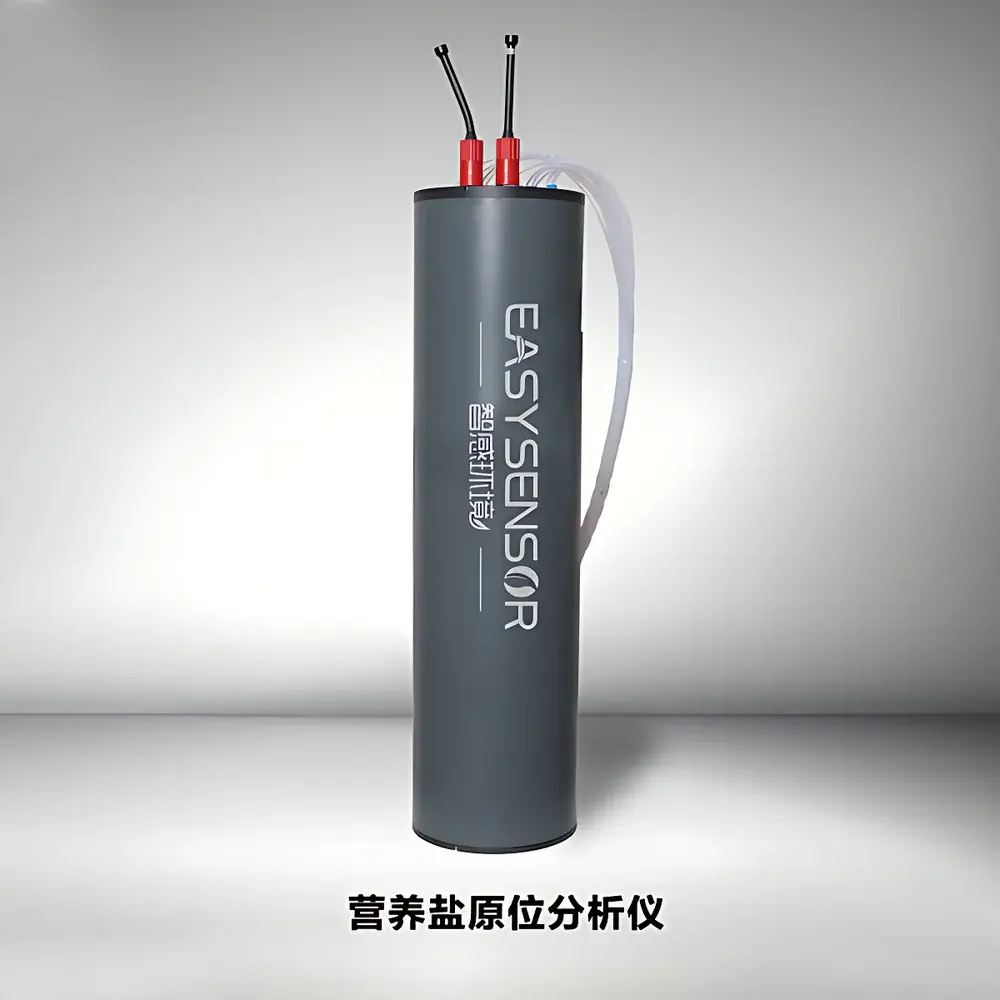
ZG-ST5200 Easysensor In Situ Nutrient Analyzer for Seawater – Five-Parameter Continuous Water Quality Monitor (NH₃-N, NO₂⁻-N, NO₃⁻-N, PO₄-P, SiO₃-Si)
| Brand | Easysensor |
|---|---|
| Model | ZG-ST5200 |
| Origin | Jiangsu, China |
| Instrument Type | Online Water Quality Analyzer |
| Compliance | Designed for ASTM D3867, ISO 15681-2, and USP <643> compliant nutrient measurement workflows |
| Detection Principles | Spectrophotometry (NH₃-N: Fluorometric), Flow Injection Analysis (FIA) with segmented microfluidics |
| Power Supply | 12–24 V DC |
| Operating Temperature | 0–40 °C |
| Depth Rating | Up to 10 m (IP68 housing) |
| Data Output | RS485/Modbus RTU, SD card local storage (up to 1 year @ 15-min intervals), optional 4G/LTE telemetry |
| Calibration | Auto-zero and multi-point standard calibration with onboard reagent reservoirs (≥30 days operation per cartridge) |
Overview
The ZG-ST5200 Easysensor In Situ Nutrient Analyzer is an engineered field-deployable instrument designed for continuous, unattended quantification of five key dissolved inorganic nutrients in marine and estuarine environments: ammonia nitrogen (NH₃-N), nitrite nitrogen (NO₂⁻-N), nitrate nitrogen (NO₃⁻-N), orthophosphate phosphorus (PO₄-P), and silicate silicon (SiO₃-Si). Unlike laboratory-based batch analyzers, the ZG-ST5200 implements a miniaturized flow injection analysis (FIA) architecture integrated with spectrophotometric and fluorometric detection modules. Each nutrient channel operates via precisely timed reagent addition, controlled mixing in a segmented microfluidic loop, and optical density measurement at wavelength-specific photodiodes. Ammonia nitrogen employs a sensitive fluorometric reaction with o-phthalaldehyde (OPA) under alkaline conditions, while nitrite, nitrate (after cadmium reduction), phosphate (via molybdenum blue), and silicate (via molybdenum yellow) rely on standardized colorimetric protocols aligned with ISO 15681-2 and ASTM D3867 methodologies. The system’s low sample/reagent consumption (<2 mL per full 5-parameter cycle) and embedded thermal stabilization ensure high reproducibility across salinity gradients (0–35 PSU) and temperature fluctuations typical of coastal monitoring sites.
Key Features
- Integrated pre-filtration unit (10 µm stainless-steel mesh + optional 2 µm ceramic secondary filter) enabling reliable operation in turbid waters up to 500 NTU.
- Modular fluidic cartridge design: Reagent packs, pump tubing, and optical cells are replaceable as discrete units—minimizing downtime during routine maintenance or field servicing.
- Onboard waste containment: All spent reagents and reaction byproducts are collected in a sealed, volume-calibrated废液 chamber (≥500 mL capacity), eliminating discharge into monitored water bodies and supporting GLP-compliant waste tracking.
- Dual-mode data handling: Real-time Modbus RTU output via RS485 interface for SCADA integration; simultaneous local logging to industrial-grade microSD card with timestamped CSV files, checksum validation, and automatic rollover.
- Autonomous calibration protocol: Supports scheduled zero-point correction using deionized water blanks and multi-level standard addition (up to 5 points) with programmable frequency (e.g., daily or per 100 cycles), traceable to NIST-traceable nutrient standards.
Sample Compatibility & Compliance
The ZG-ST5200 is validated for use in natural seawater, brackish estuaries, riverine outflows, and eutrophic freshwater lakes. Its pressure-rated titanium alloy housing (IP68, 10 m submersion) and biofouling-resistant optical windows permit long-term deployment on buoys, moorings, pier-mounted frames, or research vessels. Analytical performance meets the precision requirements of ISO 5667-3 for environmental water sampling and aligns with EPA Method 353.2 and USP <643> for orthophosphate and nitrate determination. All firmware and data logs comply with ALCOA+ principles (Attributable, Legible, Contemporaneous, Original, Accurate, Complete, Consistent, Enduring, Available), facilitating audit readiness for GLP and GMP-regulated environmental monitoring programs.
Software & Data Management
The instrument operates autonomously using embedded Linux-based firmware with secure over-the-air (OTA) update capability. Configuration, diagnostics, and historical data retrieval are managed via a web-based interface accessible through Ethernet or LTE modem (optional). Raw absorbance/fluorescence signals, calculated concentrations, QC flags (e.g., low signal-to-noise, reagent depletion warning), and calibration history are stored with ISO 8601 timestamps. Export formats include CSV and NetCDF4, compatible with common environmental data platforms (e.g., ERDDAP, IOOS, WISKI). Audit trails record all user-initiated actions—including parameter changes, manual calibrations, and firmware updates—with operator ID and time stamp, satisfying FDA 21 CFR Part 11 electronic record requirements when deployed in regulated coastal observatories.
Applications
- Long-term eutrophication monitoring in coastal zones and semi-enclosed seas, supporting EU WFD and U.S. NPS assessments.
- Real-time validation of satellite-derived chlorophyll-a and primary productivity models through synchronous nutrient time-series.
- Process evaluation of wastewater discharge plumes at ocean outfalls, including nitrification/denitrification dynamics.
- Baseline characterization for marine protected areas (MPAs) and climate-driven shifts in nutrient stoichiometry (e.g., N:P:Si ratios).
- Integration into autonomous observing systems—such as gliders, AUVs, and smart buoys—for adaptive sampling strategies driven by nutrient anomaly detection algorithms.
FAQ
What is the minimum detection limit for NH₃-N under field conditions?
Typical MDL is 0.5 µg/L NH₃-N (3σ of blank response) in filtered seawater, verified per ISO 11923 protocol.
Can the analyzer operate continuously without external power?
Yes—when paired with a marine-grade solar charging system (≥40 W panel + 100 Ah LiFePO₄ battery), it supports >30 days of uninterrupted operation at 15-minute sampling intervals.
How often must reagents be replenished?
Standard reagent cartridges support ≥30 days of continuous 5-parameter cycling (15-min interval); extended-life kits (60-day) are available for remote deployments.
Is the system compatible with third-party telemetry platforms?
Yes—Modbus RTU over RS485 enables native integration with Campbell Scientific CR-series loggers, Sierra Wireless AirLink gateways, and most SCADA HMI systems.
Does the firmware support remote diagnostic access?
Yes—SSH-enabled secure shell access (with two-factor authentication) allows engineers to perform live sensor diagnostics, fluidic pressure profiling, and spectral baseline verification without physical site visit.
Related Products







