
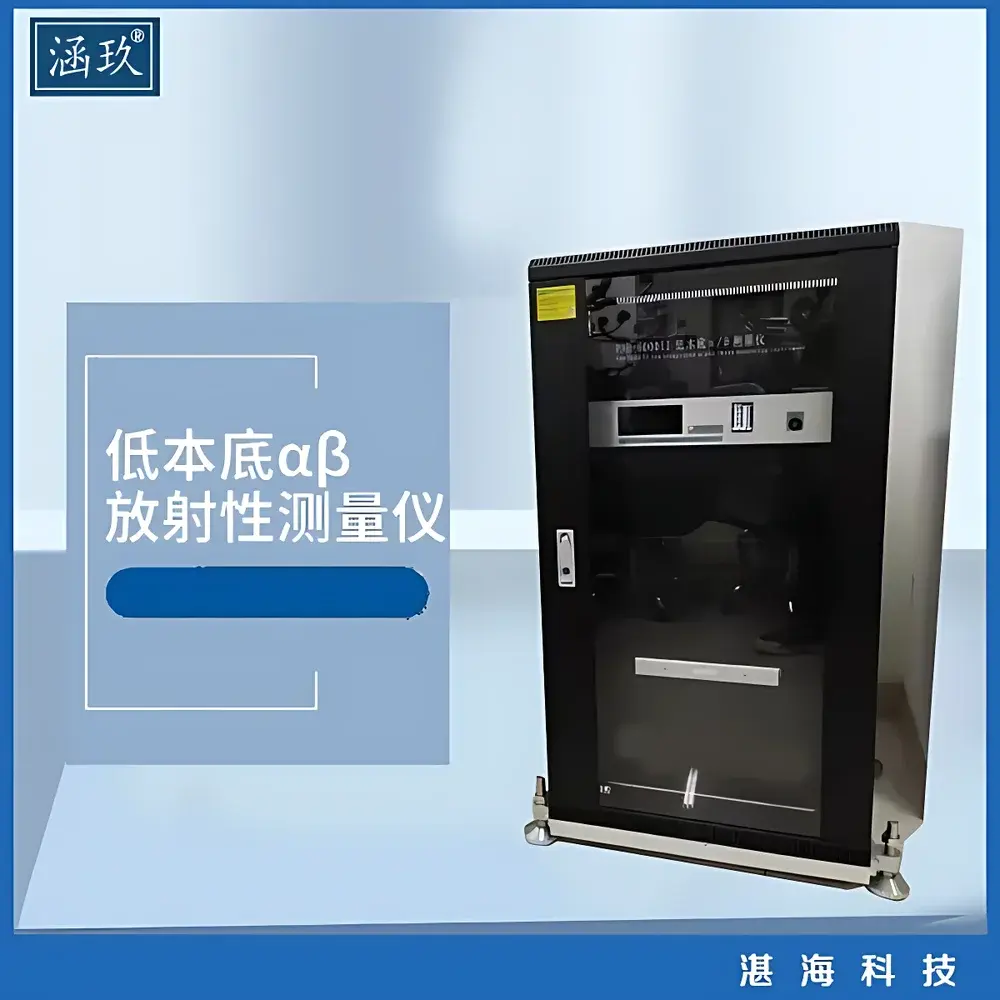
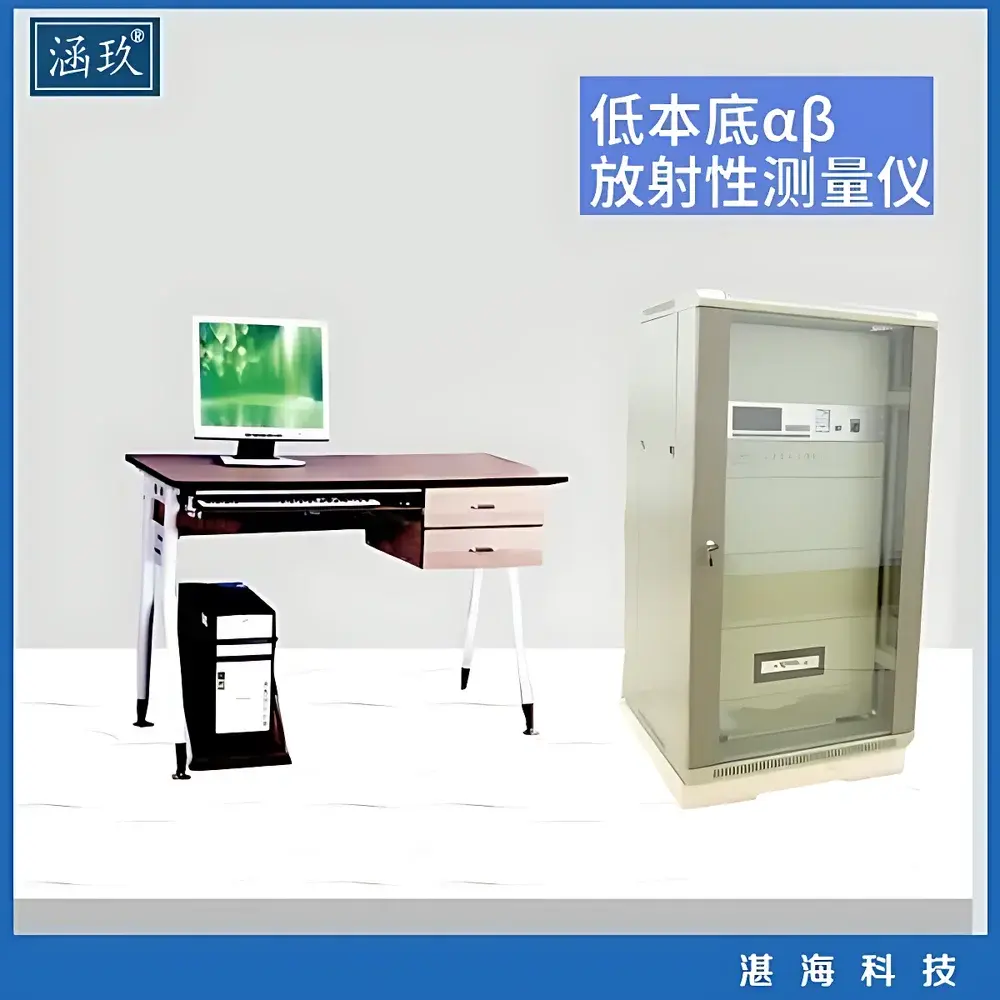
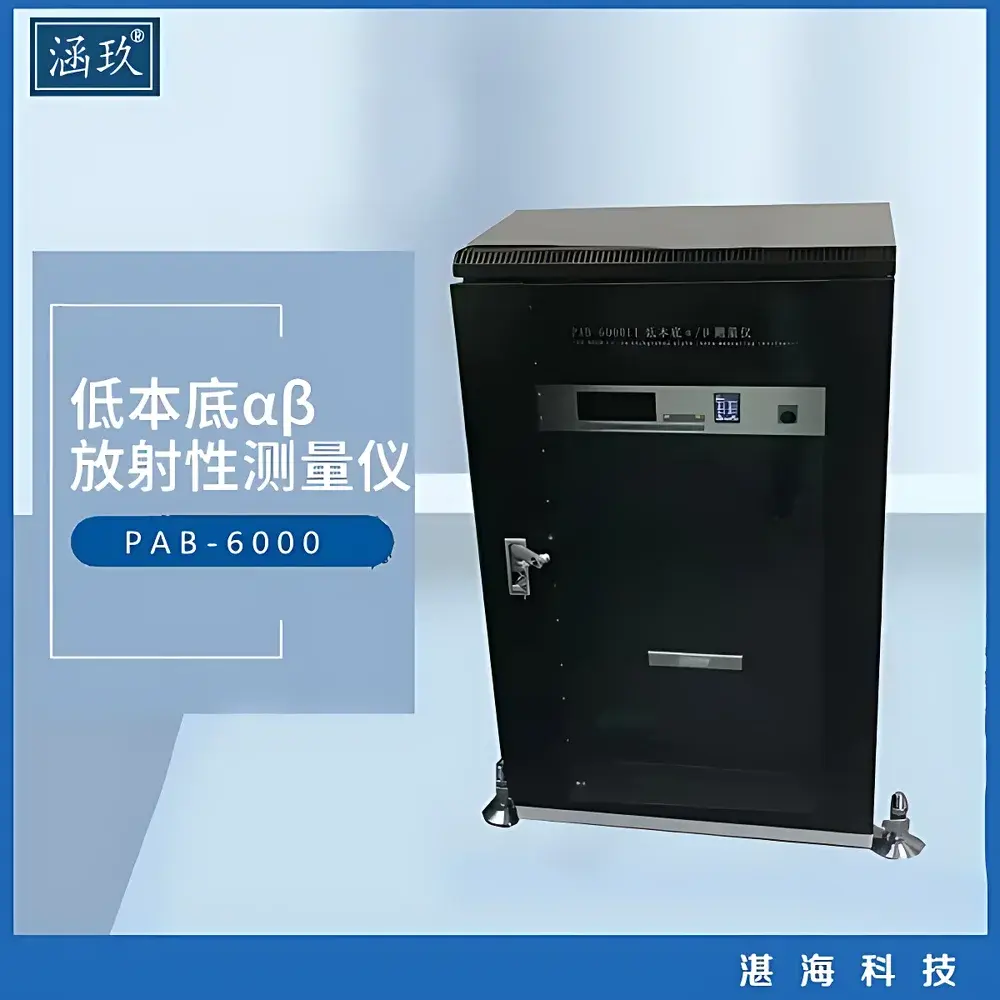
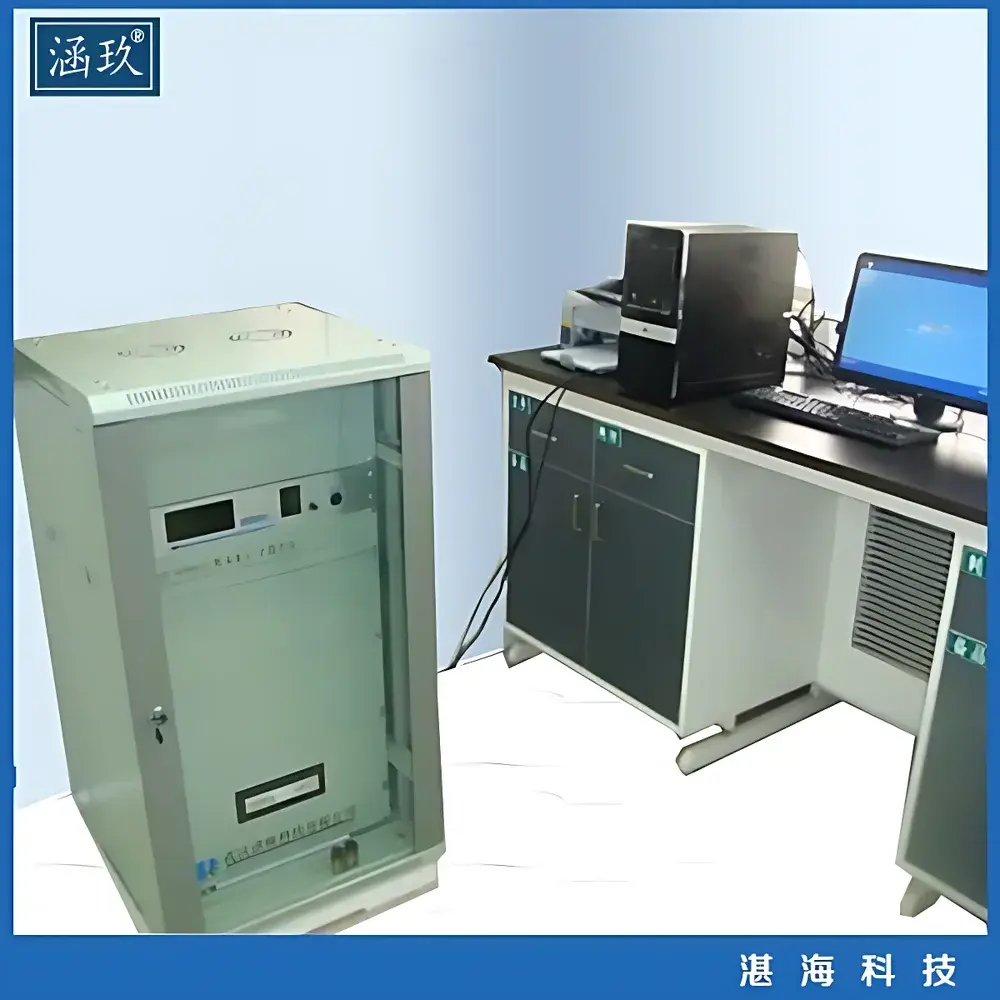
Zhanhai PAB-6000 Series Low-Background Alpha/Beta Radioactivity Counter
| Brand | Zhanhai |
|---|---|
| Origin | Jiangsu, China |
| Manufacturer Type | Authorized Distributor |
| Country of Origin | China |
| Model | PAB-6000 |
| Configuration | Dual-Channel or Quad-Channel |
| Detection Principle | Gas Proportional Counting (P-10 gas, 90% Ar + 10% CH₄) |
| Background Count Rate | ≤0.25 cpm per channel (α), ≤0.55 cpm per channel (β) |
| Minimum Detectable Activity (MDA) | ≤0.04 Bq/kg (α), ≤0.12 Bq/kg (β) for 1000-min counting |
| Sample Chamber Dimensions | Ø80 mm × 40 mm (per channel) |
| Detector Type | Ultra-low-background cylindrical proportional counters with active anti-coincidence shielding |
| Power Supply | AC 220 V ±10%, 50 Hz |
| Operating Temperature | 10–35 °C |
| Relative Humidity | ≤85% RH (non-condensing) |
| Data Output | USB 2.0, RS-232 |
| Compliance | GB/T 11682–2002, JJG 853–2013, ISO 8769:2017, ASTM D3648-19 |
Overview
The Zhanhai PAB-6000 Series Low-Background Alpha/Beta Radioactivity Counter is a high-sensitivity, multi-channel gas proportional counting system engineered for precise quantification of alpha- and beta-emitting radionuclides in environmental and regulatory samples. Designed around the proven principle of pulse-height discrimination in P-10 gas (90% argon + 10% methane), the instrument achieves ultra-low background performance through a combination of passive lead-copper shielding, active anti-coincidence vetoing, and electroformed copper detector construction. Each counting channel operates independently with real-time energy windowing to separate α-particle signals (typically 3–8 MeV) from β-particle events (0.1–2.5 MeV), enabling simultaneous dual- or quad-channel measurement without cross-talk. The system meets stringent metrological requirements for environmental radioactivity monitoring, including compliance with Chinese national standards GB/T 11682–2002 (low-background α/β counters) and JJG 853–2013 (verification regulation), as well as international references such as ISO 8769:2017 (reference sources for calibration) and ASTM D3648-19 (standard test methods for radioactivity in water and soil).
Key Features
- Modular architecture supporting either dual-channel (PAB-6000-D) or quad-channel (PAB-6000-Q) configurations — scalable for laboratory throughput demands without hardware replacement.
- Ultra-low-background proportional counters fabricated from oxygen-free high-conductivity (OFHC) copper, minimizing intrinsic radioactivity from detector materials.
- Active anti-coincidence shielding using plastic scintillator panels coupled to photomultiplier tubes to reject cosmic-ray-induced background events.
- Integrated temperature- and pressure-compensated gas flow control ensuring stable gain and long-term counting stability over extended runs (up to 1000 minutes).
- Real-time spectral acquisition with programmable α/β energy thresholds and automatic dead-time correction per channel.
- Rugged industrial-grade chassis with EMI-shielded enclosure, designed for continuous operation in QA/QC laboratories compliant with ISO/IEC 17025 environments.
Sample Compatibility & Compliance
The PAB-6000 accommodates standard planchet geometries (Ø50 mm, Ø60 mm, Ø80 mm) and supports both filter-based air particulate samples (e.g., PM₁₀, PM₂.₅ collected on cellulose ester or quartz fiber filters) and solid matrices (soil, sediment, vegetation ash, drinking water evaporates). Sample preparation follows EPA Method 900 series and GB 6769–2001 protocols. All measurement procedures align with regulatory reporting frameworks for environmental radiation surveillance, including China’s HJ 845–2017 (determination of α/β radioactivity in environmental water) and EU Council Directive 2013/51/Euratom. Instrument validation includes traceability to national primary standards maintained by CNIM (China National Institute of Metrology), with full audit trails supporting GLP and ISO/IEC 17025 accreditation requirements.
Software & Data Management
The embedded Windows-based control software provides intuitive workflow management: sample registration, preset counting protocols (e.g., 60-min screening, 1000-min high-sensitivity mode), automated MDA calculation per nuclide group (²³⁸U, ²³²Th, ⁴⁰K, ⁹⁰Sr/⁹⁰Y), and customizable reporting templates compliant with local environmental authority submission formats. Raw spectral data are stored in binary format with metadata stamping (operator ID, timestamp, chamber pressure, temperature, gas flow rate). Export options include CSV, XML, and PDF; all audit logs—including parameter changes, calibration events, and user logins—are time-stamped and non-erasable, satisfying FDA 21 CFR Part 11 electronic record requirements when deployed in regulated laboratories.
Applications
- Environmental monitoring of drinking water, groundwater, and surface water for gross alpha/beta activity screening per WHO guidelines and China’s GB 5749–2022.
- Radioactivity assessment of soil and sediment samples near nuclear facilities, uranium mining sites, or legacy industrial zones.
- Quality control of building materials (e.g., granite, fly ash, gypsum board) for natural radionuclide content (²²⁶Ra, ²³²Th, ⁴⁰K) in accordance with GB 6566–2010.
- Research applications in radioecology, fallout analysis (¹³⁷Cs, ⁹⁰Sr), and low-level waste characterization.
- Supporting emergency response protocols during radiological incidents via rapid gross activity triage.
FAQ
What gases are used in the proportional counters, and how often must they be replenished?
The system uses P-10 gas (90% argon, 10% methane) supplied from a regulated high-pressure cylinder. Typical consumption is ≤15 mL/min per channel under continuous operation; a standard 40-L cylinder supports ≥6 months of daily 8-hour use.
Can the PAB-6000 distinguish between specific radionuclides like ²³⁸U and ²³⁰Th?
No — it measures gross alpha and gross beta activity. Nuclide-specific identification requires alpha spectrometry (e.g., silicon surface-barrier detectors) or gamma spectrometry (HPGe systems).
Is the system compatible with automated sample changers?
Yes — the RS-232 interface supports integration with third-party auto-samplers via ASCII command protocol; custom drivers available upon request.
How is background stability verified during routine operation?
Daily background checks using blank planchets are performed automatically; drift tolerance is set to ±5% over 72 hours. Long-term stability is tracked via NIST-traceable ²⁴¹Am/⁹⁰Sr check sources included with each system.
Does the instrument support remote diagnostics or firmware updates?
Yes — secure remote access via encrypted SSH is enabled for authorized service engineers; firmware updates are delivered as signed binary packages with version rollback capability.
Related Products







