
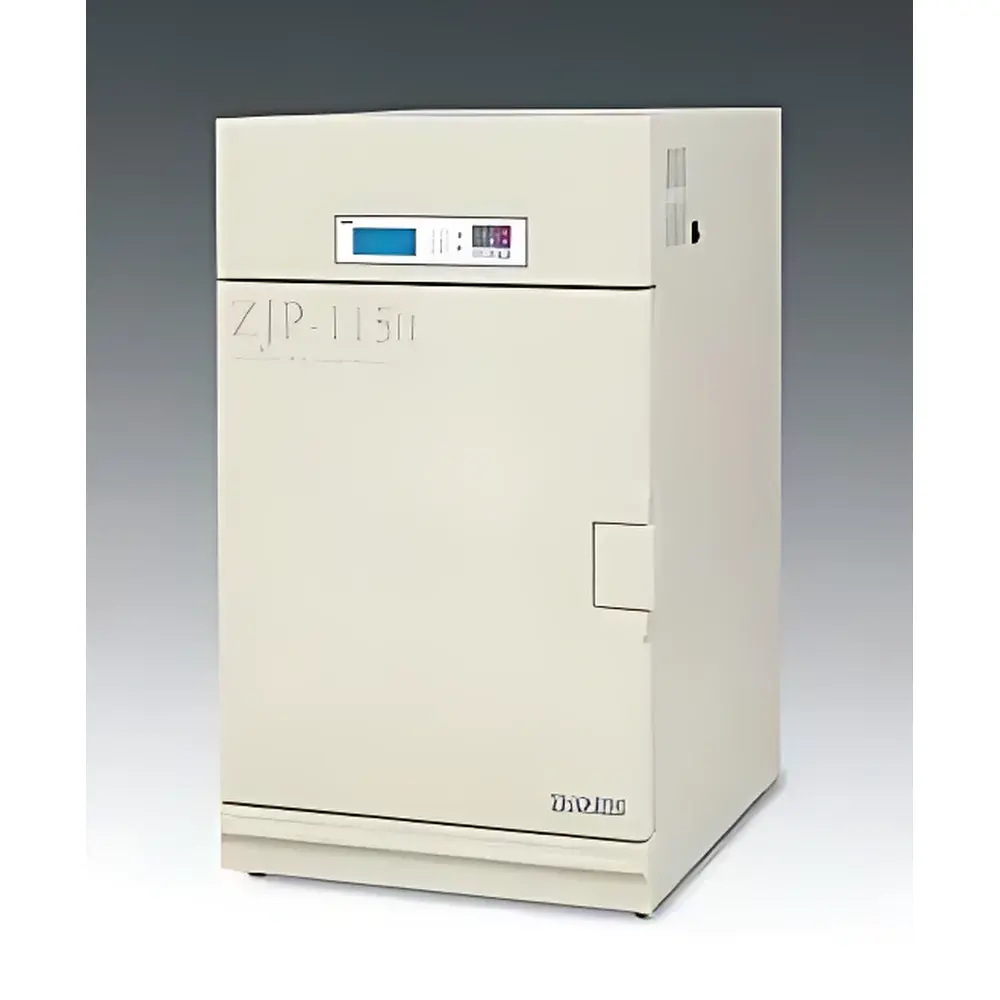
Zhicheng ZXJP-A0430 Ten-Stage Programmable Mold Incubator
| Brand | Zhicheng |
|---|---|
| Origin | Shanghai, China |
| Manufacturer Type | Direct Manufacturer |
| Product Category | Domestic |
| Model | ZXJP-A0430 |
| Pricing | Upon Request |
| Capacity | 430 L |
| Temperature Range | −10 to 65 °C |
| Temperature Resolution | 0.1 °C |
| Temperature Uniformity | ≤ ±1 °C (at 37 °C) |
| Temperature Fluctuation | ≤ ±0.5 °C |
| Humidity Range | 40–95 %RH |
| Humidity Resolution | 0.1 %RH |
| Humidity Fluctuation | ≤ ±2 %RH |
| Humidity Uniformity | ≤ ±6 %RH |
| Control Method | Fuzzy Logic Control |
| Display | LCD |
| Air Circulation | Forced Convection (Turbine Fan) |
| Door Design | Double-Layer Door with Insulated Inner Glass View Window |
| Power Supply | AC 220 V, 50/60 Hz |
| Rated Power | 1650 W |
| Net Weight | 175 kg |
| Internal Dimensions (W×D×H) | 700 × 650 × 950 mm |
| External Dimensions (W×D×H) | 850 × 890 × 1650 mm |
| Shelving | 2 standard stainless steel electropolished shelves (expandable to 4) |
| Safety Features | Dual independent overtemperature protection (adjustable 30–80 °C), dry-run alarm, sensor fault detection, power failure alarm, leakage & overcurrent circuit breaker, refrigeration overload protection |
| Optional Interfaces | RS-232 serial port, embedded thermal printer |
Overview
The Zhicheng ZXJP-A0430 Ten-Stage Programmable Mold Incubator is a precision-engineered environmental chamber designed specifically for controlled fungal culture, microbial preservation, and long-term stability testing of biological samples under regulated temperature and humidity conditions. It operates on a dual-parameter control architecture—integrating high-fidelity fuzzy logic algorithms with real-time feedback from integrated high-response capacitive humidity sensors and platinum resistance thermometers (PT100-class equivalent). Unlike conventional incubators relying on simple on/off or PID-based regulation, this system implements multi-step temporal programming to emulate natural diurnal cycles or simulate stress-conditioned growth environments—critical for mycological research, pharmaceutical stability studies (ICH Q1A–Q5C), and environmental microbiology applications such as BOD5 assays and water quality monitoring per ISO 5815-1 and ASTM D5210.
Key Features
- Ten-segment, eighteen-step programmable sequence control enabling complex environmental profiles—including ramp-hold cycles, stepwise transitions, and repeat loops—with time resolution down to 1 minute per step (1–999 min range).
- Fully automated humidity management via secondary storage-type water supply system; eliminates manual refilling while maintaining consistent vapor saturation across the 430 L chamber volume.
- Intelligent frost-free refrigeration using R134a refrigerant with variable-speed compressor modulation—ensuring stable sub-ambient operation down to −10 °C without ice accumulation or thermal shock to cultures.
- Optimized airflow architecture featuring a high-efficiency turbine fan and symmetrical ducted wind path, achieving ≤ ±1 °C temperature uniformity at 37 °C and ≤ ±6 %RH humidity uniformity across all shelf levels.
- Robust safety redundancy: three independent thermal cutoff mechanisms (adjustable overtemperature limiter, fixed overheat protector, and self-diagnosing sensor drift monitor), plus electrical protections including ground-fault interruption and current-limiting circuit breakers.
- Electropolished stainless-steel interior with seamless welded corners and tempered glass inner door—supporting ISO 14644-1 Class 5 cleanroom-compatible handling and easy decontamination via validated autoclave-compatible protocols.
Sample Compatibility & Compliance
The ZXJP-A0430 accommodates standard microbiological vessels including Petri dishes (up to 150 mm), Erlenmeyer flasks (up to 2 L), multi-well plates, and cryovial racks—configured across up to four electropolished stainless steel shelves (standard fit: two). Its operational envelope complies with key regulatory expectations for laboratory environmental chambers: temperature and humidity performance meets the repeatability and traceability requirements outlined in ISO/IEC 17025:2017 Annex A.3 for accredited testing laboratories. While not certified to GLP or GMP out-of-the-box, the unit supports full audit trail readiness when paired with optional RS-232 data logging and external compliant software platforms aligned with FDA 21 CFR Part 11 electronic record provisions.
Software & Data Management
Onboard LCD interface provides intuitive parameter navigation, real-time graphing of setpoint vs. actual values, and event-triggered logging of alarms (e.g., low water, sensor failure, power loss). The RS-232 interface enables bidirectional communication with third-party SCADA systems or custom Python/MATLAB scripts for automated calibration verification and long-term trend analysis. Optional embedded thermal printer delivers time-stamped hardcopy reports—including start/stop timestamps, deviation alerts, and user ID tags—facilitating manual record retention in non-digital workflows. All configuration parameters—including password-protected calibration offsets—are retained during power interruption, and auto-recovery resumes pre-interruption programs without operator intervention.
Applications
- Fungal isolation and identification workflows requiring precise hygrothermal cycling (e.g., Aspergillus, Penicillium, and Cladosporium strain propagation).
- Biochemical oxygen demand (BOD) determination per APHA Standard Methods 5210B and ISO 5815-1, where strict 20 ± 1 °C and ≥90 %RH conditions are mandated.
- Pharmaceutical stability testing under ICH Q1A(R2) intermediate and accelerated storage conditions (e.g., 30 °C/65 %RH, 40 °C/75 %RH).
- Agricultural seed germination trials under controlled moisture gradients and chilling treatments.
- Environmental monitoring labs performing mold spore viability assays and indoor air quality assessments per AIHA RP-1207.
- Biobanking operations involving short-term fungal stock maintenance prior to cryopreservation.
FAQ
What is the maximum number of programmable steps supported?
The ZXJP-A0430 supports up to ten segments, each containing up to eighteen sequential steps—allowing highly granular control over temperature and humidity trajectories.
Is the unit suitable for operation below ambient temperature?
Yes—it maintains stable operation from −10 °C to 65 °C, enabled by its R134a-based variable-capacity refrigeration system.
Can humidity be maintained independently of temperature?
Humidity and temperature are co-regulated via shared feedback loops; however, the controller permits independent setpoint definition for each parameter within their respective operational ranges.
Does the incubator meet any international standards for microbiological containment?
While not classified as a biosafety cabinet, its sealed chamber design, smooth interior surfaces, and HEPA-filtered recirculation path (optional upgrade) align with ISO 14644-1 cleanliness benchmarks for Grade C environments.
How is calibration traceability ensured?
The unit includes user-accessible temperature display correction (±9.9 °C offset) and humidity calibration adjustment (±10 %RH), both documented in the factory calibration certificate—traceable to NIM (National Institute of Metrology, China) standards.



