
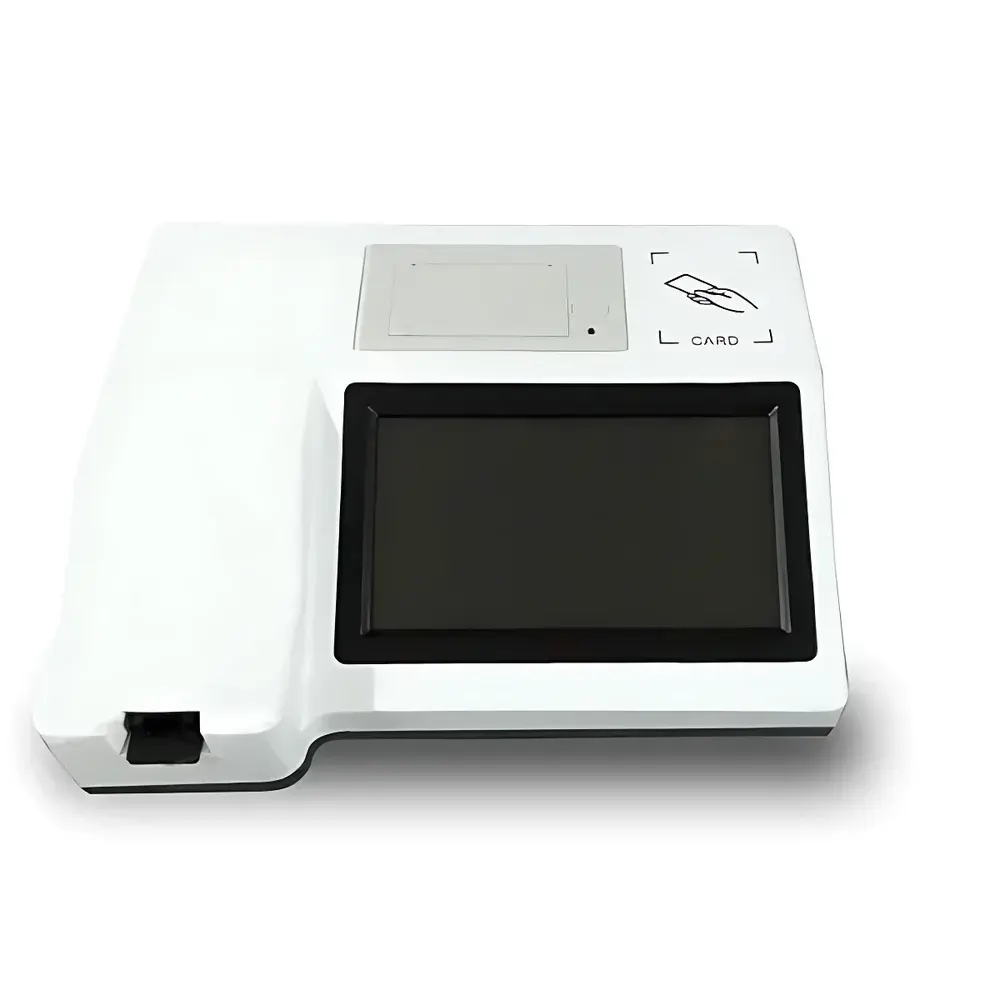
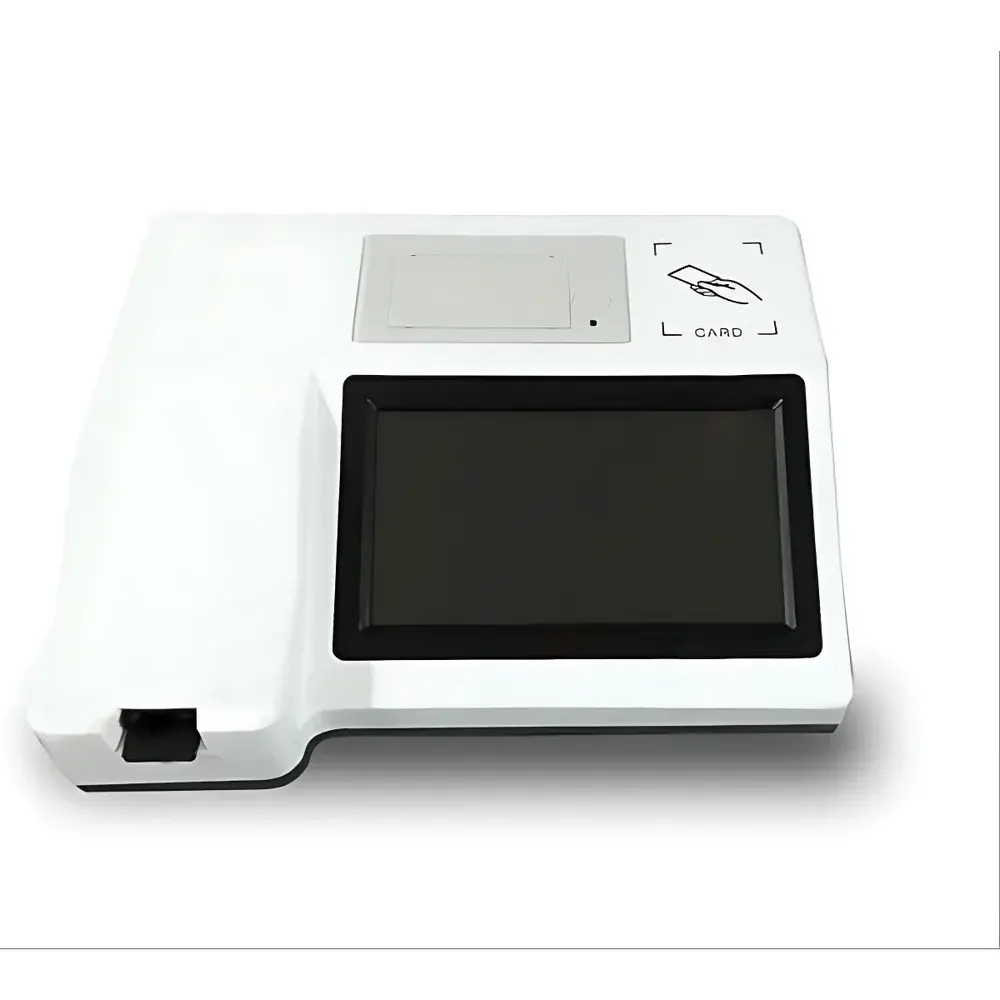
Zhiyunda ZYD-FA Mycotoxin Fluorescence Quantitative Analyzer
| Brand | Zhiyunda |
|---|---|
| Origin | Beijing, China |
| Manufacturer Type | Authorized Distributor |
| Country of Origin | China |
| Model | ZYD-FA |
| Price | Upon Request |
| Potential Range | −1000 to +1000 mV |
| Reference Electrode Input Impedance | ≥1 × 10¹² Ω |
| Detection Sensitivity | ≤0.01 µg/kg |
| Input Bias Current | Available upon manufacturer consultation |
| Potential Increment | Available upon manufacturer consultation |
| Scan Rate | Available upon manufacturer consultation |
Overview
The Zhiyunda ZYD-FA Mycotoxin Fluorescence Quantitative Analyzer is a portable, field-deployable electrochemiluminescence (ECL)-enabled immunoassay platform engineered for rapid, quantitative detection of major mycotoxins in agricultural commodities and feed matrices. Unlike conventional ELISA or HPLC-based methods, the ZYD-FA employs time-resolved fluorescence (TRF) coupled with lateral flow immunochromatography—leveraging lanthanide chelates (e.g., europium or samarium complexes) as highly stable, long-lifetime fluorophores. This principle eliminates short-lived background autofluorescence, enabling sub-part-per-trillion (ppt) sensitivity with high signal-to-noise ratio. The instrument operates on solid-phase competitive immunoassay principles: analyte in the sample competes with labeled antigen for binding sites on immobilized antibodies, and fluorescence intensity correlates inversely with mycotoxin concentration. Designed for regulatory-grade screening, it delivers quantitative results in under 10 minutes without solvent extraction, derivatization, or laboratory infrastructure.
Key Features
- Portable architecture: Weighs only 1.75 kg with compact footprint—optimized for mobile labs, roadside inspection units, and grain elevator deployment.
- Integrated TRF optical module: Uses high-stability LED excitation source with narrow-band emission filters and time-gated photodetection to suppress ambient interference.
- Pre-loaded calibration curves: Factory-validated standard curves for AFB1, ZEN, DON, and OTA are embedded in firmware, eliminating manual curve fitting during routine operation.
- No routine calibration required: Robust optical alignment and temperature-compensated detector electronics ensure long-term measurement stability across transport and environmental fluctuations (operating range: 10–35 °C, RH ≤80%).
- Open-cartridge compatibility: Accepts third-party or OEM-developed lateral flow test strips conforming to ISO/IEC 17025-aligned manufacturing protocols—enabling method flexibility and supply chain resilience.
- Dual-power operation: Supports 12 V DC input (vehicle cigarette lighter socket), USB-C power bank integration, and internal rechargeable Li-ion battery (≥6 h continuous runtime).
Sample Compatibility & Compliance
The ZYD-FA is validated for direct analysis of ground or homogenized samples—including maize, rice, wheat, barley, bran, soybean meal, rice bran, and compound feed—following standardized sample preparation per GB/T 5009.22–2016 (Chinese National Standard for Aflatoxin B1 in Food) and AOAC Official Method 2014.05 (for Zearalenone and Deoxynivalenol in cereals). It meets functional requirements for rapid screening under EU Commission Regulation (EC) No 401/2006 and FDA’s Guidance for Industry: “Analytical Methods for Mycotoxins in Food.” While not a primary reference method, its performance aligns with Codex Alimentarius threshold criteria for screening tools (i.e., ≥95% concordance with LC-MS/MS at action levels). Data output supports GLP-compliant recordkeeping; audit trails, user authentication, and timestamped result logs are retained locally for ≥10,000 tests.
Software & Data Management
The embedded firmware (v3.2+) features an intuitive graphical interface with icon-driven navigation—no keyboard or software installation required. Results display real-time fluorescence decay kinetics, interpolated concentration (µg/kg), pass/fail status relative to regulatory limits (e.g., EU maximum levels for AFB1 in nuts: 2 µg/kg), and confidence indicators (CV% derived from dual-zone strip readout). Data export is supported via USB mass storage mode (CSV format) or Bluetooth 5.0 to paired tablets running Zhiyunda’s optional LabLink Manager v2.1—compatible with LIMS integration through HL7 or ASTM E1384-compliant APIs. All stored measurements include operator ID, location tag (GPS optional via external module), and environmental metadata (ambient temperature/humidity).
Applications
- Regulatory surveillance: Rapid triage of suspect lots at border control points, grain receiving stations, and municipal food safety bureaus.
- Feed mill quality assurance: In-line verification of raw material acceptance and finished product release against GMP-compliant specifications.
- Field-level monitoring: On-farm testing for pre-harvest mycotoxin risk assessment in collaboration with extension services.
- Emergency response: Deployment during mycotoxicosis outbreaks or contamination incidents requiring same-day decision support.
- Contract testing laboratories: Supplemental screening prior to confirmatory analysis by LC-MS/MS, reducing instrument queue time and consumables cost.
FAQ
What mycotoxins does the ZYD-FA quantitatively detect?
AFB1 (aflatoxin B1), ZEN (zearalenone), DON (deoxynivalenol), and OTA (ochratoxin A) in cereal grains, oilseeds, and animal feed matrices.
Is the instrument compliant with international regulatory data integrity standards?
Yes—firmware implements electronic signatures, immutable result logging, and configurable user access levels in accordance with FDA 21 CFR Part 11 Annex 11 principles for non-clinical use cases.
Can test strips from other manufacturers be used?
Yes, provided they adhere to the ZYD-FA’s defined optical path geometry, lanthanide label chemistry, and strip migration kinetics—validation documentation must be supplied by the cartridge vendor.
Does the device require annual recalibration or service contracts?
No scheduled recalibration is mandated; however, periodic performance verification using certified reference materials (e.g., CRM-MYCO-01) is recommended every 6 months per ISO/IEC 17025 Clause 6.6.
What is the limit of quantification (LOQ) for AFB1 in maize extract?
0.01 µg/kg (10 ng/kg) when processed per the included sample preparation protocol (1:10 w/v extraction with 70% methanol/water, centrifugation, dilution).
Related Products





