
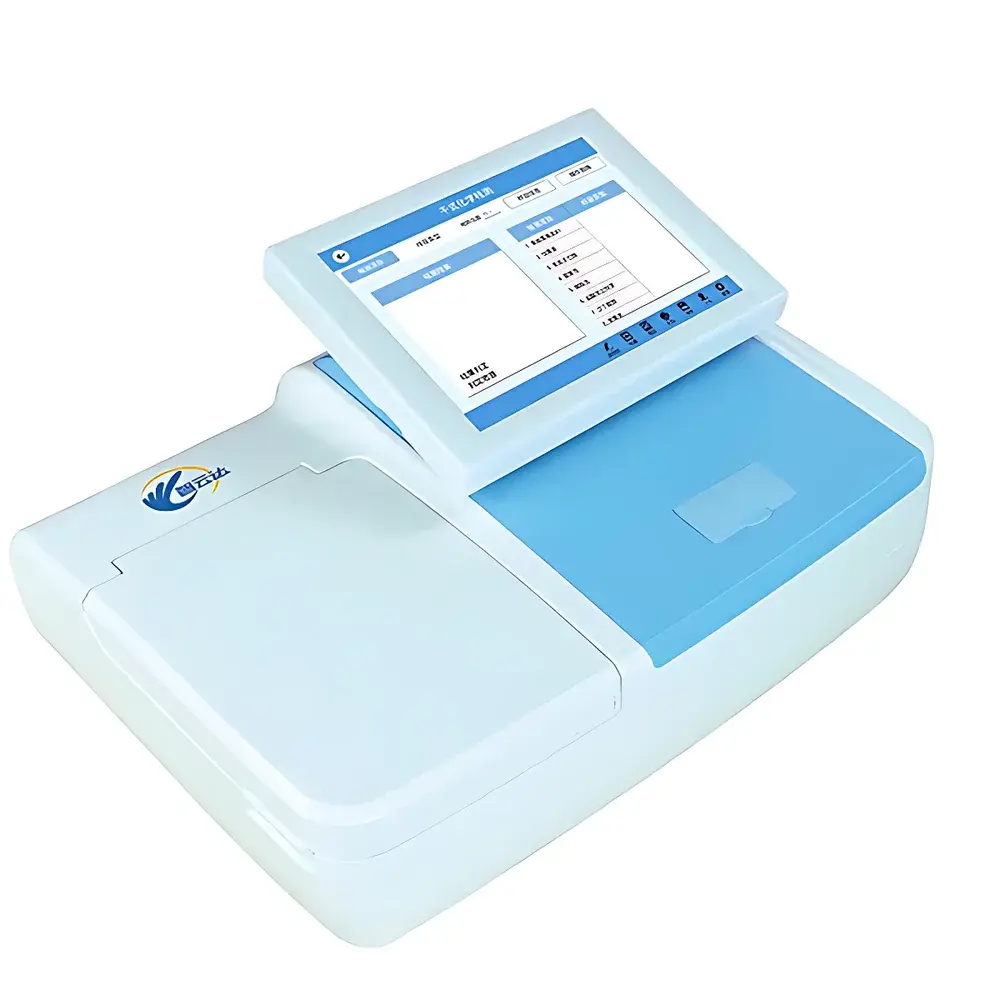
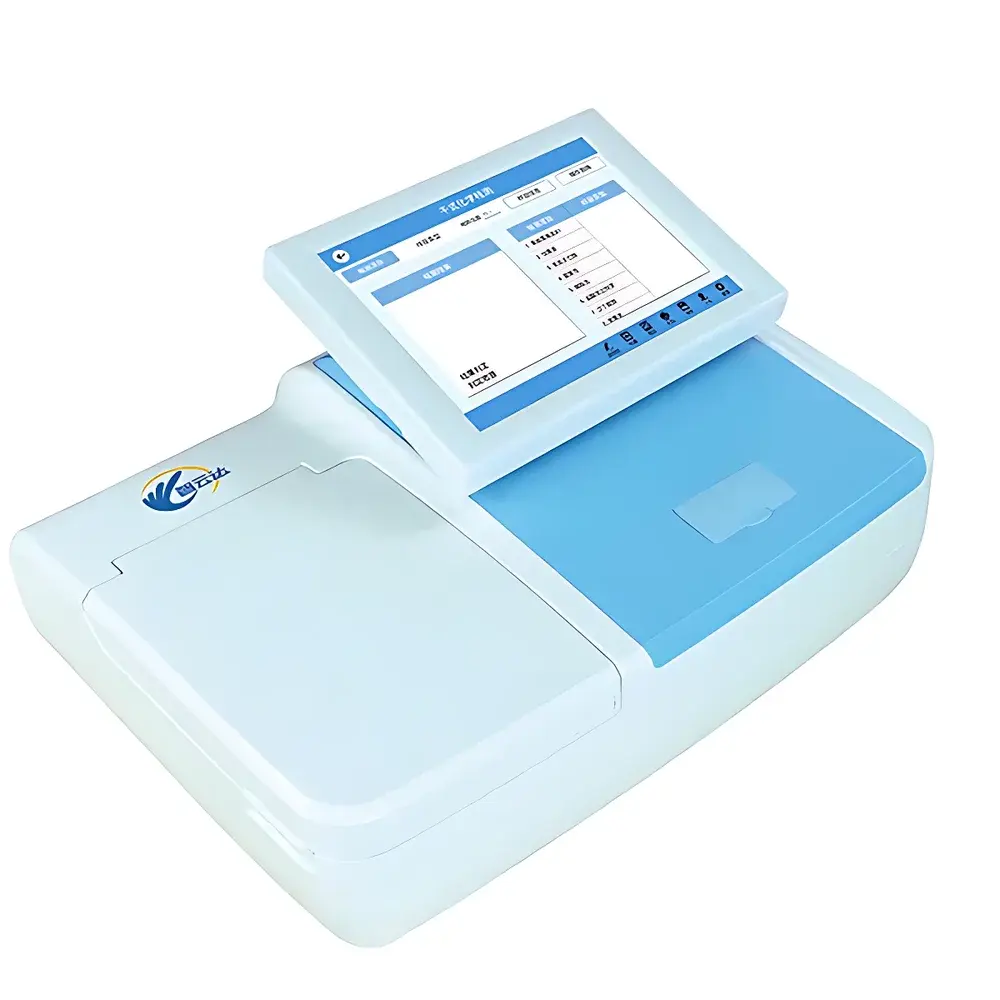
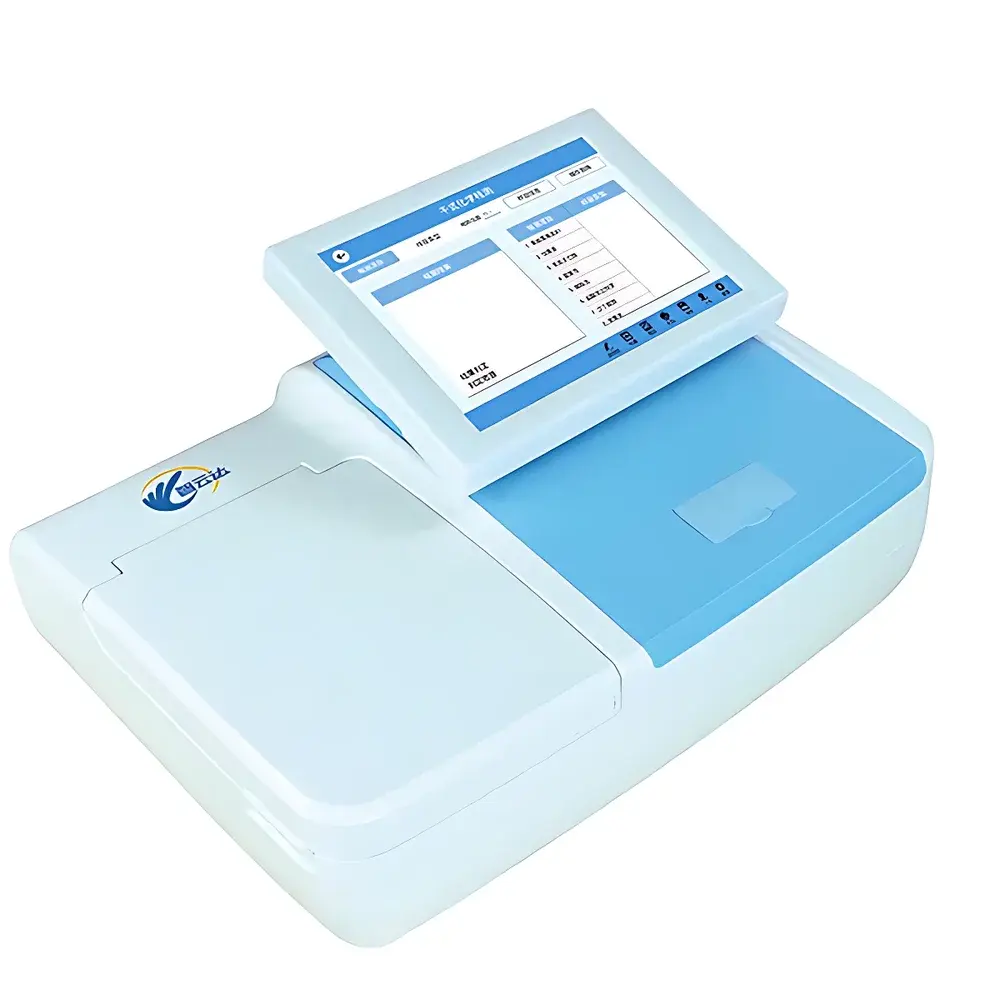
Zhiyunda ZYD-F Multi-Parameter Food Safety Rapid Analyzer
| Brand | Zhiyunda |
|---|---|
| Origin | Beijing, China |
| Model | ZYD-F |
| Function Type | Multi-analyte (Pesticide Residues, Veterinary Drug Residues e.g., Clenbuterol, Food Additives e.g., Nitrite, Heavy Metals via Optional Modules) |
| Sample Compatibility | Liquid, Extracted Homogenates, and Immunoassay Strips |
| Detection Limit | 0.01 mg/kg (for representative analytes e.g., organophosphates, nitrite) |
| Optical System | LED-based Photometric Detection at 410 nm, 520 nm, 590 nm, and 630 nm |
| Detection Time per Parameter | 3–10 min |
| Detection Channels | 12 Independent Optical Channels |
| Repeatability | ≤ ±3% CV |
| Display | ≥7-inch Color TFT Touchscreen |
| Detection Principles | Absorbance-based Spectrophotometry (for colorimetric assays) and Lateral Flow Immunoassay (LFIA) Interpretation |
| Microcontroller | High-Performance Embedded ARM Processor |
| Communication Interfaces | USB 2.0, Bluetooth 4.2, RS-232, Ethernet (Optional Wi-Fi Module) |
| Power Supply | AC 220 V ±10%, 50 Hz |
| Data Storage | Onboard Flash Memory (≥10,000 test records), Cloud Synchronization (via HTTPS API) |
| Dimensions | 380 mm × 280 mm × 150 mm |
| Net Weight | 3.5–4.8 kg |
| Light Source | Stable Cold LED Array |
| Environmental Operating Range | 10–35 °C, RH ≤80% (non-condensing) |
Overview
The Zhiyunda ZYD-F Multi-Parameter Food Safety Rapid Analyzer is an integrated benchtop platform engineered for quantitative and semi-quantitative screening of critical food safety hazards in field, laboratory, and regulatory environments. It operates on two complementary analytical principles: (1) visible-range spectrophotometry (410–630 nm) for enzymatic, chromogenic, and diazotization-based assays—commonly applied to pesticide residues (e.g., organophosphates and carbamates), nitrite, formaldehyde, sulfur dioxide, and peroxide value; and (2) digital lateral flow immunoassay (LFIA) interpretation for rapid detection of veterinary drug residues (e.g., clenbuterol, ractopamine), mycotoxins, and allergens. The instrument employs a temperature-stabilized cold LED optical engine with wavelength-specific photodiode detection, ensuring minimal thermal drift and high photometric reproducibility across repeated measurements. Its embedded ARM architecture enables real-time signal processing, calibration curve interpolation, and pass/fail decision logic based on preloaded or user-defined thresholds aligned with national standards (GB 2763, GB 5009 series) and Codex Alimentarius guidelines.
Key Features
- 12 independent optical detection channels enable parallel analysis of up to 12 samples per run—eliminating cross-channel interference and reducing batch turnaround time by >60% compared to single-channel systems.
- Pre-installed calibration curves for over 30 regulated analytes—including acetylcholinesterase inhibition assays (for organophosphate detection), Griess reaction (nitrite), and iodometric titration analogs (peroxide value)—all traceable to NIST-traceable reference standards.
- Graphical touchscreen interface (≥7-inch capacitive TFT) with context-sensitive prompts, multilingual OS support (English, Spanish, Arabic), and embedded video-guided operation protocols compliant with GLP training documentation requirements.
- Onboard data management supports audit-ready record retention: each result includes timestamp, operator ID, sample ID, assay type, raw absorbance values, interpolated concentration, and pass/fail status—all stored with SHA-256 integrity hashing.
- Dual-mode connectivity: wired Ethernet (for LAN-based LIMS integration) and optional Bluetooth/Wi-Fi modules enable secure TLS 1.2–encrypted uploads to centralized food safety dashboards (e.g., provincial CDC surveillance platforms or enterprise QA databases).
- Modular expandability: firmware-upgradable detection algorithms and optional accessory modules (e.g., centrifuge-integrated sample prep station, portable LFIA strip reader adapter) maintain long-term analytical relevance without hardware replacement.
Sample Compatibility & Compliance
The ZYD-F accepts homogenized liquid extracts prepared from fruits, vegetables, meat, dairy, grains, and processed foods per standardized pretreatment protocols (GB/T 5009.199, GB/T 5009.33). For immunoassay strips, it accommodates common formats (e.g., colloidal gold, fluorescent latex) with automated line intensity quantification. All default methods are validated per ISO/IEC 17025:2017 criteria for precision (repeatability ≤±3% CV), linearity (R² ≥0.995 over working range), and specificity (no significant matrix interference observed in spiked recovery studies across 12 food matrices). The system supports FDA 21 CFR Part 11–compliant electronic signatures when deployed with external identity verification (e.g., LDAP integration), and its data export formats (CSV, PDF, XML) meet EU Regulation (EC) No 882/2004 reporting requirements for official controls.
Software & Data Management
Firmware v3.2+ incorporates a dual-layer security architecture: role-based access control (RBAC) with administrator/operator/user tiers, and encrypted local storage using AES-256. Data export options include direct USB printing (via ESC/POS-compatible thermal printers), CSV download to removable media, and scheduled HTTPS POST transmissions to RESTful APIs. Audit trails log all configuration changes, method edits, and result deletions with immutable timestamps and operator credentials. Cloud synchronization is implemented via OAuth 2.0–secured endpoints, enabling interoperability with national food safety information systems (e.g., China’s “Food Safety Traceability Platform”) and third-party LIMS (e.g., LabWare, STARLIMS) through configurable HL7 or JSON payloads.
Applications
The ZYD-F serves as a primary screening tool in regulatory enforcement (provincial Market Supervision Bureaus), import/export inspection (CIQ laboratories), and industrial QA/QC (dairy processors, meat packing plants, fresh produce distributors). Typical use cases include: daily monitoring of pesticide residues in farm gate vegetables; verification of nitrite levels in cured meats per GB 2760 limits; rapid confirmation of clenbuterol adulteration in livestock feed; and routine checks for illegal bleaching agents (e.g., formaldehyde, SO₂) in aquatic products. Its portability (≤5 kg) and onboard battery option also support mobile lab deployments during food safety emergency responses (e.g., outbreak investigations, festival site inspections).
FAQ
Does the ZYD-F comply with international food safety standards?
Yes—it supports method validation per ISO 15197:2013 (for quantitative colorimetry) and AOAC Official Method guidelines for rapid screening assays. Its software architecture meets EU Annex 11 and FDA Part 11 data integrity expectations when configured with appropriate administrative controls.
Can users develop and validate custom detection methods?
Yes—the instrument includes a method editor that allows creation of new calibration curves, limit definitions, and sample dilution logic. Validation reports can be generated in accordance with ISO/IEC 17025 clause 7.2.2.
What is the expected service life and calibration interval?
Under normal use (≤8 hrs/day), the optical system maintains stability for ≥24 months before mandatory recalibration. Annual verification against certified reference materials (CRMs) is recommended per ISO/IEC 17025.
Is remote firmware update supported?
Yes—over-the-air (OTA) updates are delivered via encrypted HTTPS channels with SHA-256 signature verification to ensure firmware authenticity and integrity.
How does the system handle matrix interference in complex food samples?
Each preloaded method includes built-in matrix correction factors derived from inter-laboratory collaborative studies. Users may also apply blank subtraction and internal standard normalization within the method editor.





