
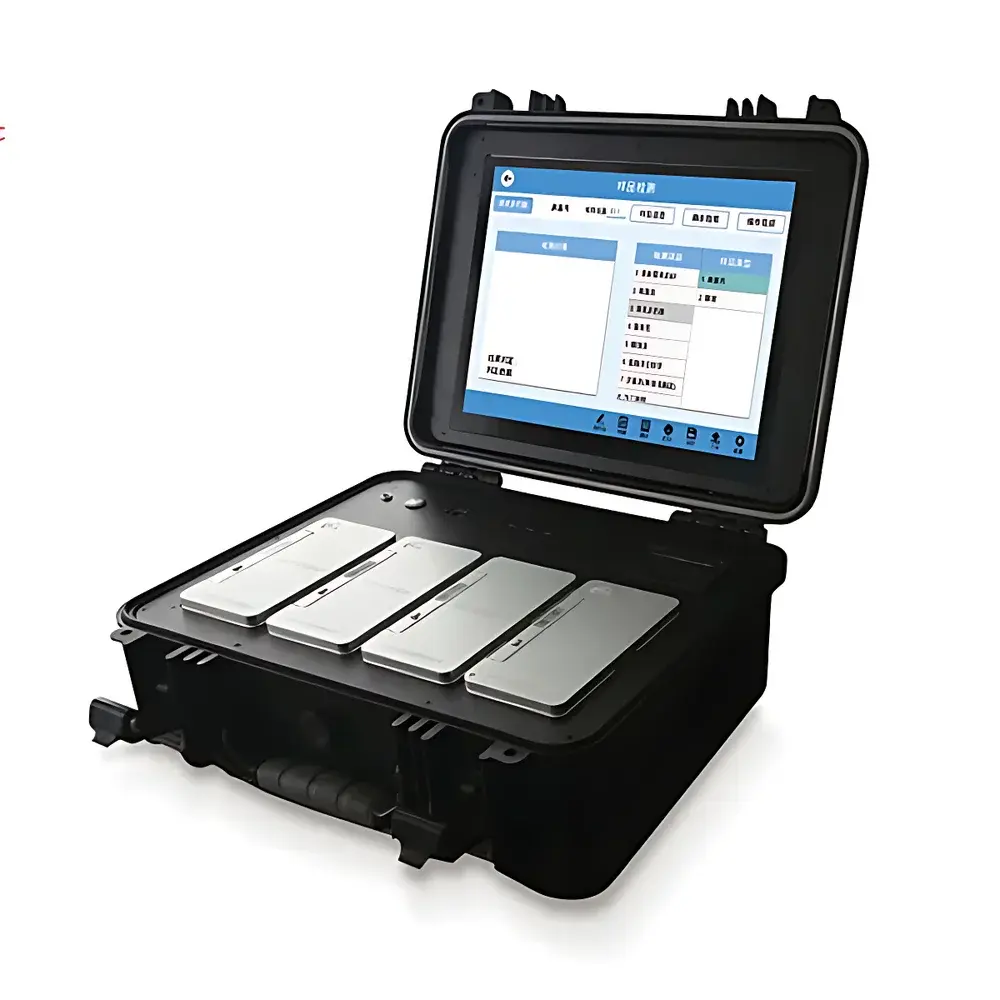
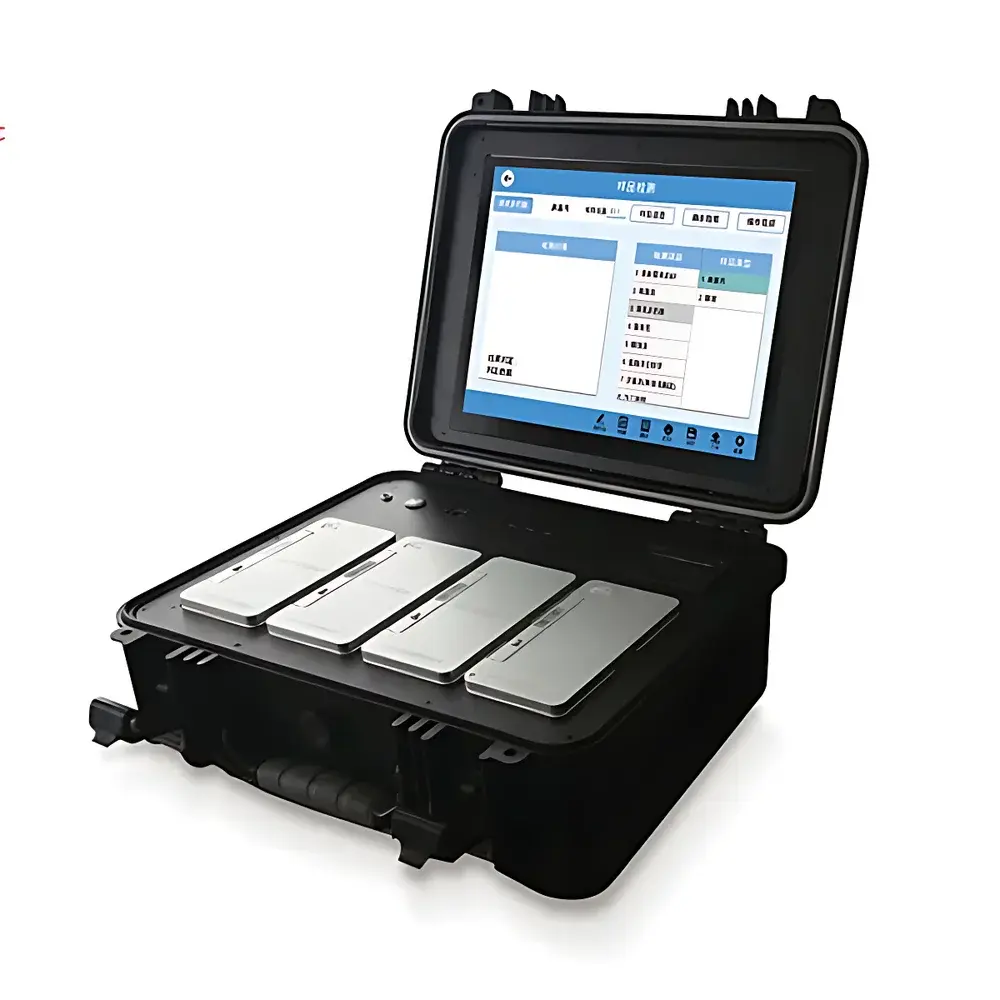
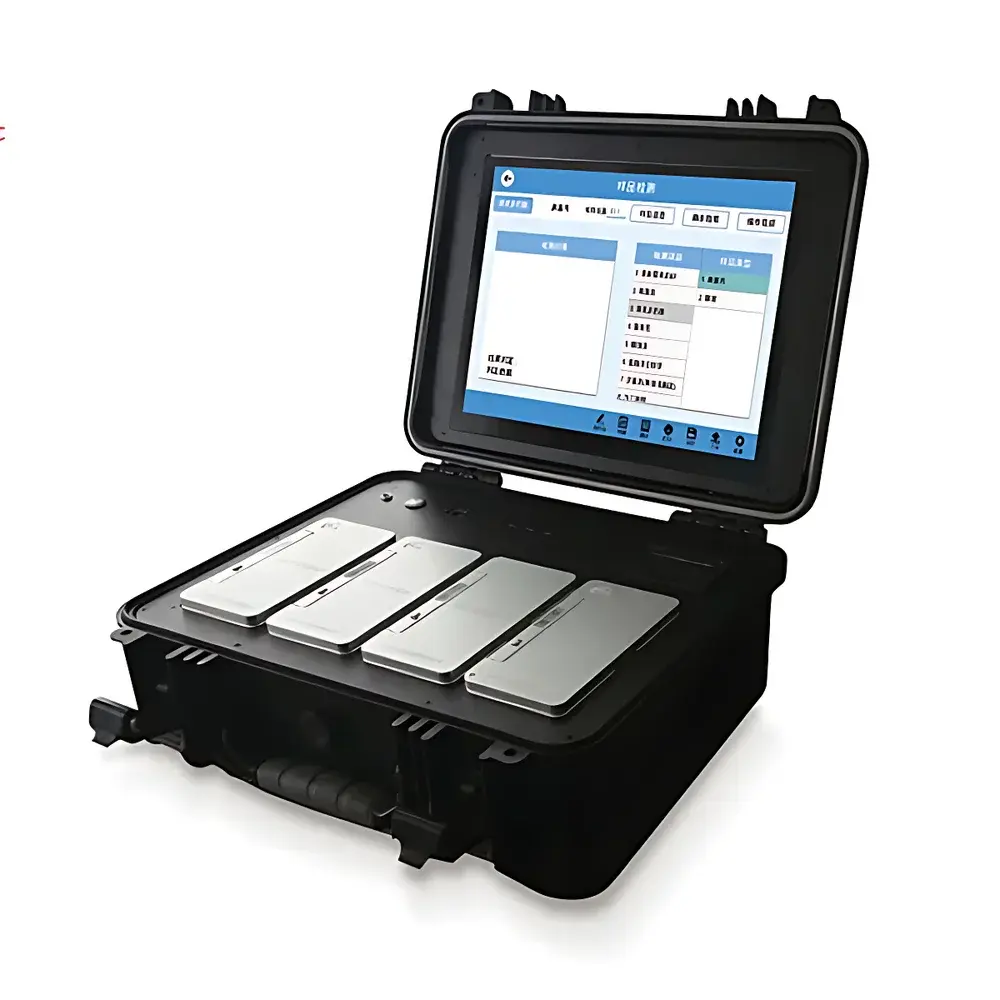
Zhiyunda ZYD-ZH Portable Integrated Food Safety Analysis System
| Brand | Zhiyunda |
|---|---|
| Origin | Beijing, China |
| Manufacturer Type | Authorized Distributor |
| Country of Origin | China |
| Model | ZYD-ZH |
| Function Type | Multi-analyte (Pesticide Residues, Veterinary Drug Residues, Heavy Metals, Microorganisms, Food Additives) |
| Sample Compatibility | Universal for Solid, Liquid, and Semi-solid Food Matrices |
| Detection Range | Pesticide residues (e.g., organophosphates, carbamates), veterinary drugs (e.g., chloramphenicol, sulfonamides), heavy metals (Pb, Cd, As, Hg via anodic stripping voltammetry), pathogenic microorganisms (via immunochromatographic lateral flow), food adulterants & illegal additives |
| LOD | 0.01 mg/kg for representative pesticide analytes |
| Optical System | LED cold light source |
| wavelength range | 380–800 nm |
| Detection Time | 3–10 min per assay |
| Detection Channels | 6 independent photometric channels (simultaneous multi-target quantification) |
| Repeatability | ≤ ±1% CV |
| Display | ≥7-inch capacitive touchscreen LCD |
| Detection Technologies | Integrated spectrophotometry, immunochromatography (lateral flow), thin-layer chromatography (TLC) imaging (254 nm UV excitation), fluorescence sensing, and anodic stripping voltammetry (ASV) |
| Connectivity | USB 2.0, Bluetooth 5.0, Wi-Fi 802.11 b/g/n, RJ45 Ethernet, microSD slot |
| Power Supply | Rechargeable Li-ion battery (≥8 h continuous operation) |
| Data Storage | Internal flash memory (≥100,000 records) + cloud synchronization (HTTPS-secured API endpoint) |
| Dimensions | 300 × 200 × 150 mm (L×W×H) |
| Net Weight | 2.3–2.8 kg |
| Enclosure Rating | IP67 (dust-tight and submersible up to 1 m for 30 min) |
| Processor | Quad-core ARM Cortex-A53 or higher |
| Image Acquisition | CMOS-based direct optical signal capture (no post-processing interpolation) |
Overview
The Zhiyunda ZYD-ZH Portable Integrated Food Safety Analysis System is a field-deployable, multi-technology analytical platform engineered for rapid, on-site screening of critical food safety hazards. It integrates five complementary detection modalities—visible-range spectrophotometry, lateral-flow immunochromatography, thin-layer chromatography (TLC) imaging under 254 nm UV excitation, fluorescence-based biosensing, and anodic stripping voltammetry (ASV)—within a single ruggedized enclosure. Unlike conventional benchtop analyzers, the ZYD-ZH operates independently of fixed laboratory infrastructure, delivering quantitative or semi-quantitative results in 3–10 minutes per assay without requiring reagent refrigeration or external calibration standards. Its measurement architecture adheres to fundamental principles defined in AOAC Official Methods of Analysis (OMA) for rapid immunoassay and spectrophotometric screening, and aligns with ISO/IEC 17025 pre-screening validation requirements for field instrumentation used in regulatory triage.
Key Features
- Rugged IP67-rated enclosure with integrated waterproof gasketing, enabling reliable operation in humid, dusty, or rain-exposed environments—including outdoor markets, cold-chain inspection points, and mobile food vendor audits.
- Modular detection architecture: six interchangeable, hot-swappable modules (photometric, dry-chemistry, TLC, fluorescence, electrochemical) are auto-recognized upon insertion via embedded I²C address mapping and firmware handshake protocols.
- Six-channel photometric engine featuring independent LED illumination (380–800 nm) and CMOS-based direct analog-to-digital conversion—eliminating image interpolation artifacts and preserving raw optical signal fidelity for trace-level quantification.
- Anodic stripping voltammetry module optimized for Pb, Cd, As, and Hg detection in aqueous extracts using disposable screen-printed carbon electrodes; compliant with EPA Method 7063 principles for field-deployable heavy metal screening.
- Onboard thermal printer (80 mm width) supports immediate hardcopy generation of QC logs, sample IDs, timestamps, and pass/fail determinations against configurable national MRL thresholds (GB 2763–2021, GB 31650–2019, etc.).
- Embedded ARM-based processing unit (quad-core, ≥1.2 GHz) executes real-time curve fitting, CT-line peak localization, and ASV deconvolution algorithms without cloud dependency—ensuring data sovereignty and offline functionality.
Sample Compatibility & Compliance
The ZYD-ZH accepts homogenized solid matrices (fruits, vegetables, meat), liquid extracts (milk, juice, cooking oil), and swab eluates (surface sampling). Sample preparation follows standardized protocols referenced in GB/T 5009.x series and ISO 18593:2018 (microbial surface sampling). All detection modules comply with applicable sections of China’s National Food Safety Standard (NFSS) framework and support method verification per CNAS-CL01:2018 (equivalent to ISO/IEC 17025). The system’s software enforces audit-trail logging per GLP principles, recording operator ID, timestamp, environmental temperature/humidity (via onboard sensors), and raw sensor outputs—facilitating traceability during regulatory inspections or internal quality reviews.
Software & Data Management
Firmware v3.2+ includes embedded database management supporting ≥100,000 assay records with searchable metadata (sample ID, matrix type, analyst, location GPS tag). Data export options include CSV (UTF-8 encoded), PDF reports (with digital signature placeholder), and encrypted HTTPS POST to designated LIMS endpoints. Cloud synchronization employs TLS 1.2+ encryption and OAuth 2.0 authentication; no data is stored on third-party servers unless explicitly configured by the user. Software updates are delivered via signed OTA packages verified using ECDSA-P256 signatures to prevent unauthorized firmware modification.
Applications
- Regulatory field screening at border checkpoints, wholesale markets, and catering establishments for compliance with GB 2763 (pesticide MRLs) and GB 2762 (heavy metal limits).
- QC/QA verification of raw material intake in food manufacturing facilities—especially for high-risk commodities such as leafy greens, poultry, dairy, and seafood.
- Surveillance testing during foodborne illness outbreaks, enabling rapid triage of suspect samples prior to confirmatory LC-MS/MS analysis.
- Training and capacity building in rural laboratories where access to centralized instrumentation is limited—leveraging its low maintenance profile and intuitive touch interface.
- Contract testing services requiring portable documentation of chain-of-custody and result integrity across multiple client sites.
FAQ
Does the ZYD-ZH require daily calibration with certified reference standards?
No. The system performs automatic optical zeroing and electronic baseline correction before each assay cycle. External calibration is only required quarterly or after module replacement, per manufacturer-recommended intervals aligned with ISO 8655-7.
Can detection modules be validated independently for ISO/IEC 17025 accreditation?
Yes. Each module ships with a Module-Specific Validation Kit (MSVK), including documented uncertainty budgets, recovery studies, and inter-laboratory comparison datasets—enabling individual module assessment under accredited quality systems.
Is raw spectral or voltammogram data accessible for secondary analysis?
Yes. Full-resolution photometric absorbance curves (380–800 nm, 1 nm step), ASV current-time sweeps, and lateral-flow scan images are exportable in HDF5 format via USB or cloud API, preserving unprocessed sensor outputs.
What cybersecurity safeguards are implemented for Wi-Fi and cloud data transmission?
All wireless communications use WPA3-Enterprise authentication. Cloud API endpoints enforce mutual TLS (mTLS) with client certificate pinning; local storage is AES-256 encrypted at rest using hardware-accelerated keys bound to the SoC’s secure enclave.
How does the system handle environmental interference—e.g., ambient light or temperature fluctuations—during photometric assays?
The optical chamber incorporates active ambient-light cancellation via synchronized LED pulsing and lock-in amplification. Internal thermistors feed real-time compensation coefficients into the photometric algorithm, maintaining ≤±0.5% drift over 15–40°C operating range.






