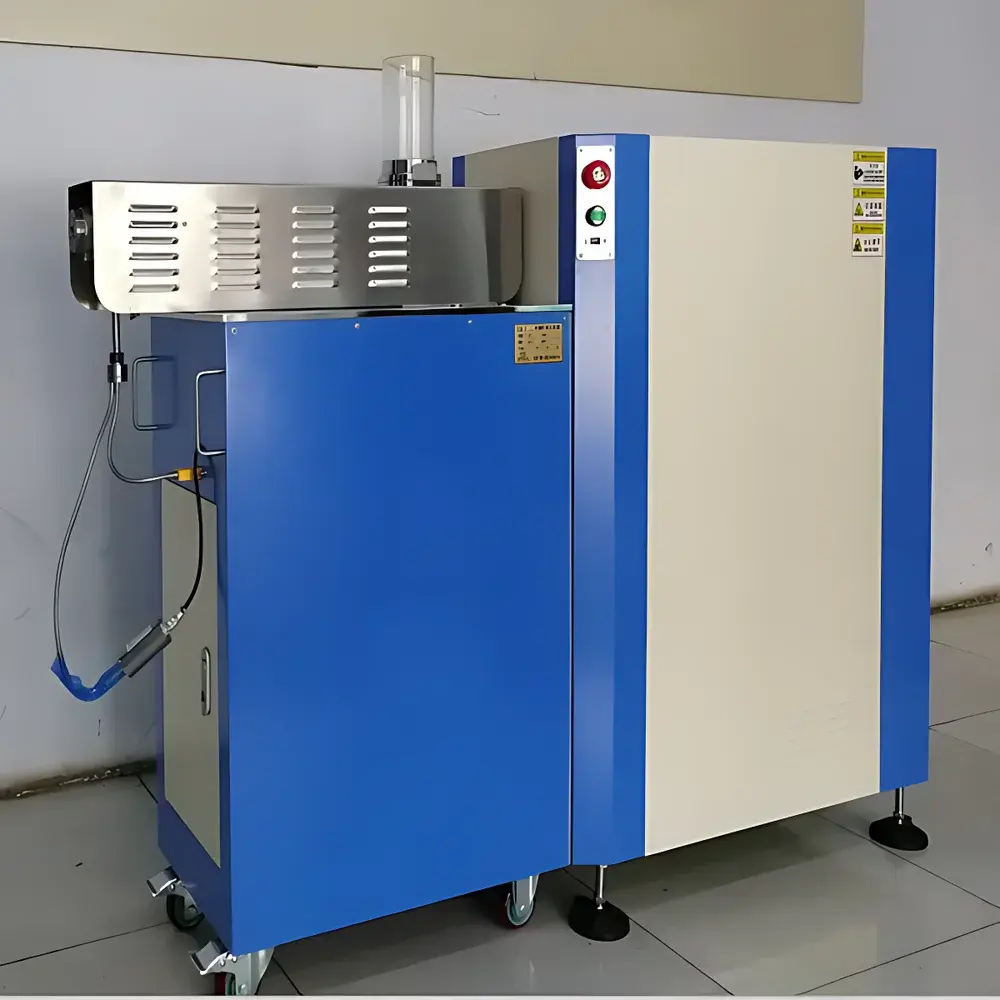
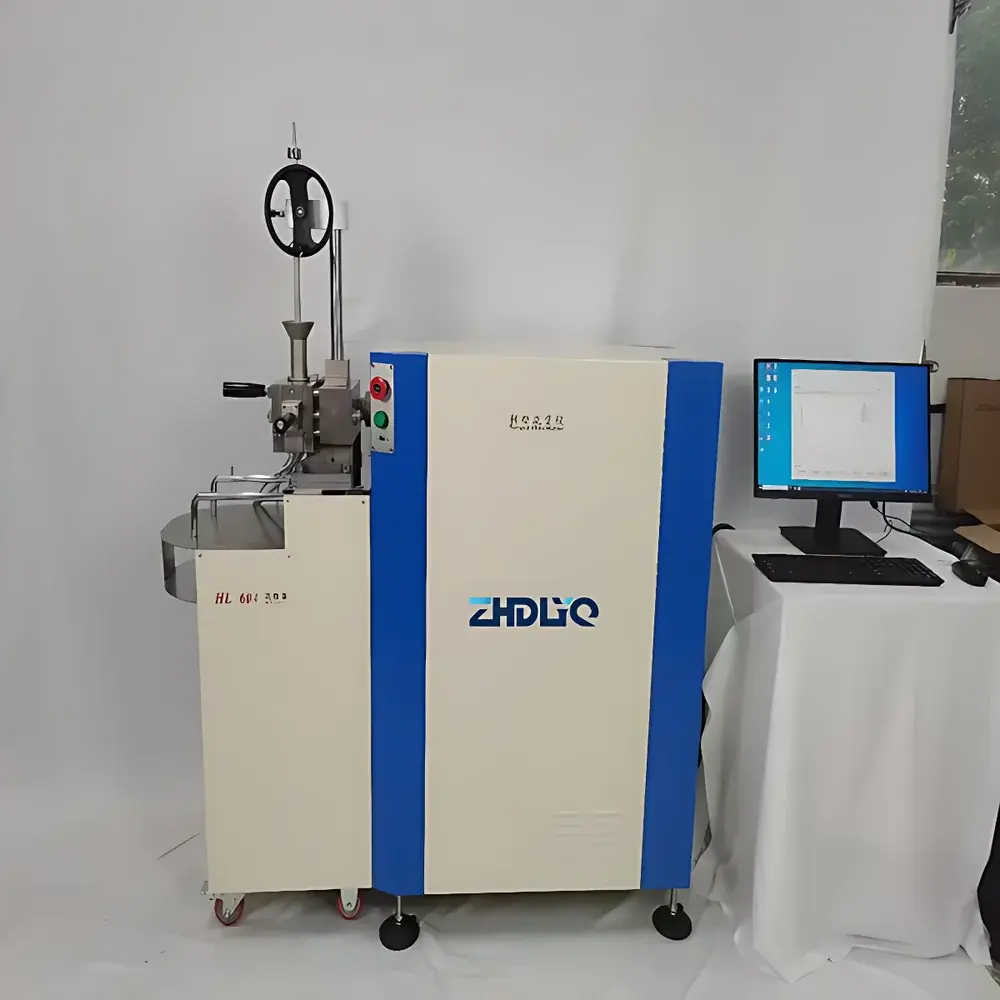
Zhonghang Dingli ZHDL-200 Series Computer-Controlled Torque Rheometer with Integrated 60 mL Mixer, Single-Screw and Twin-Screw Extrusion Modules
| Key | Brand: Zhonghang Dingli |
|---|---|
| Origin | Beijing, China |
| Model | ZHDL-200 Series |
| Motor Power | 3.0 kW (Panasonic) |
| Speed Range | 0.1–120 rpm |
| Torque Range | 0–200 N·m (rated 300 N·m) |
| Torque Accuracy | ±0.3% F.S. |
| Melt Pressure Range | 0.1–100 MPa |
| Pressure Accuracy | ±0.3% F.S. |
| Temp Control Range | Ambient to 350 °C (5-zone control, 6-point measurement) |
| Temp Accuracy | ±0.1 °C |
| Data Acquisition Rate | 50 Hz |
| Mixer Volume | 60 mL |
| Rotor Type | Roller (Banbury/Cam/Delta optional) |
| Heating Power | 2.1 kW (3×700 W) |
| Voltage | AC 380 V, 7.5 kW |
Overview
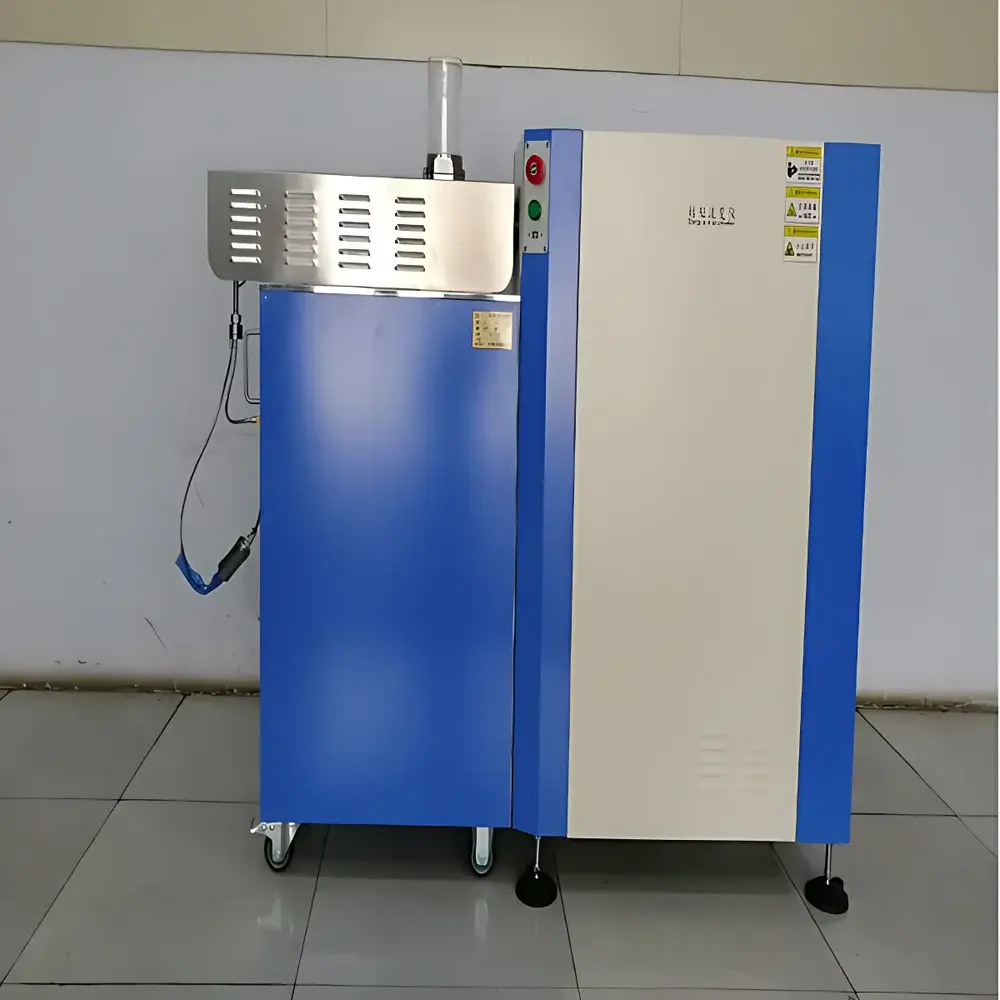
The Zhonghang Dingli ZHDL-200 Series Torque Rheometer is a modular, computer-controlled laboratory-scale processing instrument engineered for dynamic rheological characterization of thermoplastic polymers, elastomers, thermosets, rubber compounds, and filled composites under realistic shear and thermal conditions. Operating on the principle of controlled rotational torque measurement in a confined melt chamber or extrusion barrel, it replicates key mechanical and thermal stresses encountered during industrial compounding, extrusion, and injection molding—enabling direct correlation between lab-scale data and full-scale process behavior. Unlike steady-state capillary or rotational rheometers, the ZHDL-200 captures time-resolved viscoelastic responses—including melt development, plasticization onset, thermal degradation kinetics, and shear-induced structural breakdown—by continuously monitoring torque, temperature, pressure, and rotational speed at up to 50 Hz sampling frequency. Its architecture integrates a high-fidelity Panasonic servo motor (3.0 kW), precision planetary gear reducer (15:1), calibrated torque transducer (0–200 N·m, ±0.3% F.S.), and multi-zone PID temperature control (±0.1 °C stability), ensuring reproducible simulation of complex thermo-mechanical histories across material formulations.
Key Features
- Modular platform supporting interchangeable configurations: 60 mL Banbury-type mixer, single-screw extruder, and co-rotating twin-screw extruder—all interfaced via standardized mechanical and signal coupling to the same host control unit.
- Three-zone electric heating system (2.1 kW total) with K-type thermocouples and independent PID controllers per zone; real-time temperature mapping across six sensor points ensures spatial thermal uniformity critical for degradation-sensitive materials like PVC or bio-polymers.
- High-resolution torque sensing (0.01 N·m resolution) synchronized with 50 Hz data acquisition enables detection of transient events such as gel point formation, filler network breakdown, or antioxidant depletion onset.
- Integrated melt pressure transducer (0.1–100 MPa, ±0.3% F.S.) mounted upstream of die or mixing chamber supports calculation of apparent viscosity, extensional stress contributions, and pressure-dependent flow instabilities.
- Open-architecture software framework supporting ASTM D3835 (extrusion rheometry), ISO 11443 (injection molding simulation), and ISO 6721-10 (dynamic mechanical thermal analysis) compliant reporting templates.
- Robust mechanical construction using 4Cr13 stainless steel mixing chamber and hardened alloy rotors ensures long-term dimensional stability and resistance to abrasive fillers (e.g., CaCO₃, glass fiber, carbon black).
Sample Compatibility & Compliance
The ZHDL-200 accommodates solid pellets, powders, flakes, and pre-compounded masterbatches across polymer classes including polyolefins (PP, PE), engineering thermoplastics (PC, PA6/66, PBT), thermoplastic elastomers (TPE, TPU), PVC compounds (dry-blend and plastisol), silicone rubbers, and ceramic/polymer composites. It meets functional requirements for GLP-compliant formulation screening per ICH Q5C guidelines and supports audit-ready data integrity through built-in electronic signatures, user-level access control, and 21 CFR Part 11–compliant audit trails in its standard software suite. All temperature, torque, and pressure channels are traceably calibrated against NIST-traceable references; calibration certificates are generated automatically upon completion of each validation cycle.
Software & Data Management
The embedded Windows-based control software provides real-time visualization of torque–time, temperature–time, and pressure–time curves with overlay capability for comparative batch analysis. Dedicated modules include: (1) Polymer Melt Viscosity Calculator (applying Cross-WLF and Carreau-Yasuda models), (2) Extrusion Data Processor (calculating mass flow rate, specific energy input, and die swell ratio), and (3) Mixer Data Analyzer (quantifying energy input, dispersion index, and plastication time). Raw datasets export to CSV, Excel, and HDF5 formats; API integration supports automated transfer to LIMS platforms (e.g., LabWare, Thermo Fisher SampleManager). All processed reports include metadata stamps (operator ID, environmental conditions, calibration status) and support digital signature workflows aligned with ISO/IEC 17025 documentation standards.
Applications
- Formulation optimization of PVC dry blends: quantification of fusion time, gel content evolution, and thermal stabilization efficiency under shear.
- Evaluation of shear sensitivity in nanocomposites: tracking torque overshoot and recovery during filler de-agglomeration cycles.
- Process window definition for twin-screw compounding: correlating screw configuration (kneading block count, stagger angle) with specific mechanical energy (SME) and melt temperature profile.
- Accelerated thermal aging studies: simultaneous monitoring of torque decay and exothermic onset to rank antioxidant efficacy (e.g., HALS vs. phosphite systems).
- Quality control of incoming polymer lots: rapid assessment of molecular weight distribution breadth via melt elasticity index (MEI) derived from torque relaxation profiles.
- Development of recyclate-compatible blends: detecting interfacial instability through oscillatory torque fluctuations during compatibilizer screening.
FAQ
What sample volumes can be tested on the ZHDL-200 platform?
The base configuration includes a 60 mL mixer chamber; optional 200 mL mixer and single/twin-screw extrusion barrels (L/D = 25) are available for higher throughput or low-viscosity materials.
Is the system compatible with ASTM or ISO rheological test standards?
Yes—the software includes preconfigured protocols for ASTM D3835 (capillary rheometry), ISO 11443 (extrusion simulation), and ISO 6721-10 (dynamic thermal analysis); custom method definitions are fully supported.
Can the torque rheometer generate viscosity versus shear rate curves?
Yes—using the extrusion module with calibrated dies and pressure transducers, apparent viscosity (ηa) is calculated across shear rates from 10 to 10⁴ s⁻¹, with optional normal stress difference (N₁) estimation via die swell analysis.
How is temperature uniformity validated across the mixing chamber?
Six independently calibrated K-type thermocouples (three in chamber walls, one in each rotor shaft, one ambient reference) feed into a distributed PID algorithm; thermal homogeneity is verified per ISO 13477 Annex B using molten polystyrene reference runs.
Does the system support GMP/GLP-compliant data archiving?
Yes—audit trail logging, electronic signatures, role-based permissions, and encrypted database backups meet FDA 21 CFR Part 11 and EU Annex 11 requirements for regulated environments.