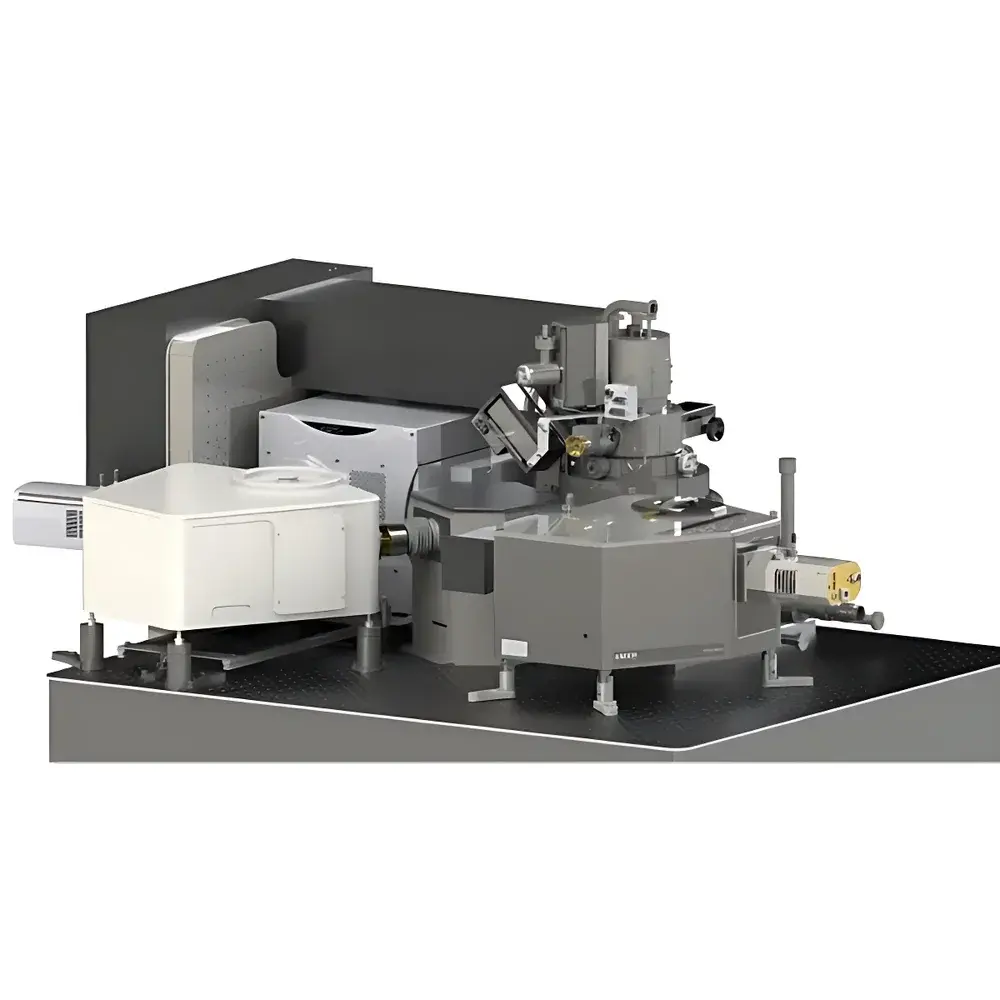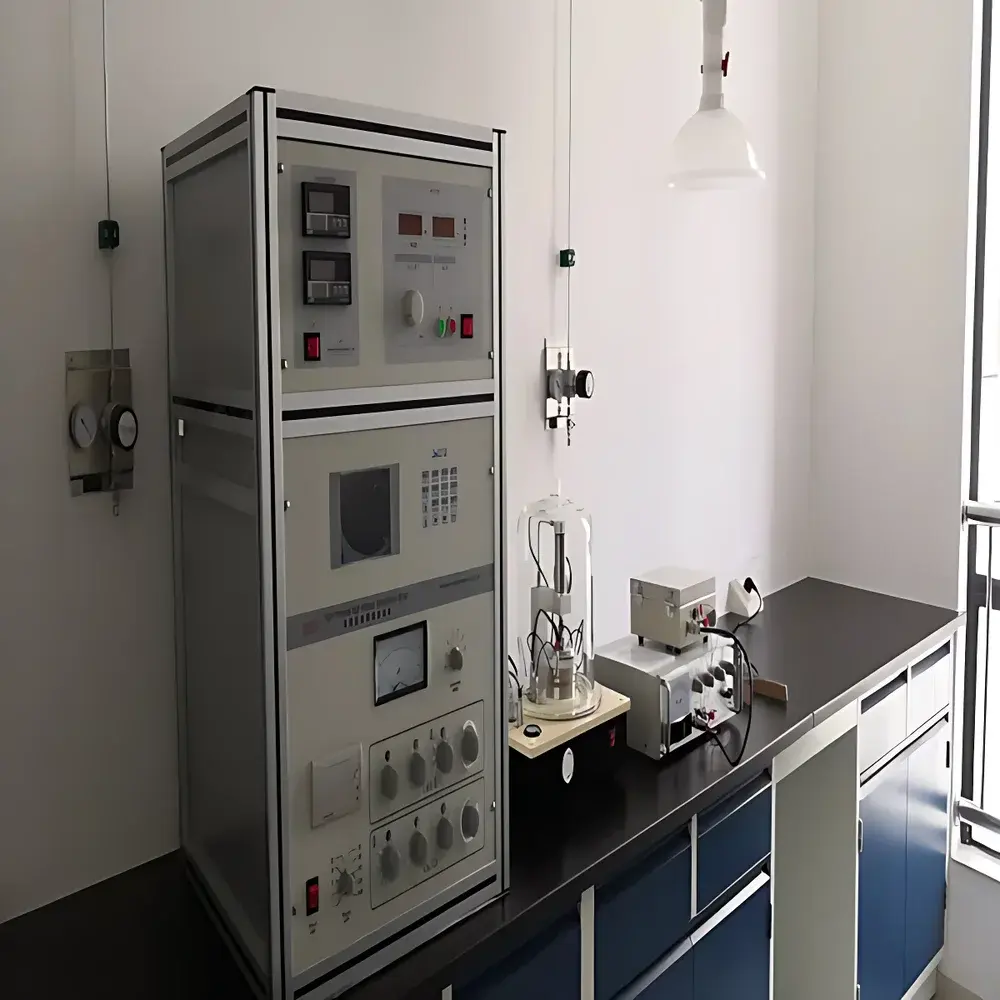
Zhonghangdingli QS87 High-Precision High-Voltage Capacitance Bridge
| Brand | Zhonghangdingli |
|---|---|
| Origin | Beijing, China |
| Model | QS87 |
| Capacitance Range | 0.1Cₙ to 1000Cₙ (7-digit resolution) |
| tanδ Range | −110% to +110% |
| tanδ Accuracy | ≤ 0.2% rdg ± 1×10⁻⁵ |
| tanδ Resolution | 1×10⁻⁶ (1×10⁻⁷ with PC interface) |
| Test Voltage | 0–1000 kV (±1%, 4-digit display) |
| Frequency Range | 35–65 Hz (±1 Hz, 4-digit display) |
| Optional capacitance range extender extends ratio from 1000 | 1 to 10⁶:1 |
Overview
The Zhonghangdingli QS87 High-Precision High-Voltage Capacitance Bridge is a metrology-grade instrument engineered for traceable dielectric characterization under high-voltage AC excitation. Based on the current-comparison principle—a fundamental method defined in IEC 60270 and ASTM D150—it achieves superior ratio accuracy and long-term stability compared to conventional Schering bridges or digital high-voltage loss analyzers. Unlike voltage-ratio-based architectures, the current-comparison technique inherently suppresses errors from stray capacitance, electromagnetic interference, and humidity-induced surface leakage—critical for reliable measurements in field laboratories and high-voltage test stations. The bridge operates at power frequencies (35–65 Hz), enabling direct compliance with routine and type-test requirements for high-voltage apparatus per IEEE Std 4, IEC 60060-1, and GB/T 16927.1. Its core function is the simultaneous determination of complex impedance components: capacitance (Cx), dissipation factor (tan δ), and derived parameters including dielectric constant (ε), quality factor (Q), apparent power (S), active power (P), and reactive power (Q), all presented as direct-read values without manual calculation.
Key Features
- Current-comparison architecture delivering ratio accuracy of ±1×10⁻⁵, exceeding performance limits of conventional Schering bridges and modern digital HV loss meters
- Four-terminal Kelvin measurement configuration with built-in lead resistance compensation—eliminates systematic error from test lead impedance during high-current or low-impedance measurements
- Integrated high-voltage isolation and active overvoltage protection circuitry compliant with IEC 61000-4-5 surge immunity requirements
- TFT color display with 7-digit resolution for Cx, 1×10⁻⁶ minimum tan δ resolution (1×10⁻⁷ when interfaced with PC via RS-232/USB), and real-time display of 11 electrical parameters
- Scalable measurement range: standard 1000:1 capacitance ratio; optional external range extender extends ratio to 106:1, supporting calibration-grade measurements up to 1100 µF
- Frequency-synchronized acquisition at user-selectable 35–65 Hz (±1 Hz), ensuring coherence with grid-sourced test voltages and minimizing harmonic distortion effects
Sample Compatibility & Compliance
The QS87 bridge supports dielectric testing across diverse high-voltage insulation systems and materials. It is routinely deployed for factory acceptance tests (FAT) and periodic maintenance diagnostics on power cables (up to 500 kV class), bushings, coupling capacitors, current and voltage transformers, shunt reactors, and power factor correction capacitors. Solid and liquid insulating materials—including transformer oil, epoxy resin, polyethylene, and ceramic dielectrics—are characterized per ASTM D924 (standard test method for dielectric spectroscopy) and IEC 60250 (determination of permittivity and dielectric dissipation factor). The instrument’s design accommodates GLP/GMP-aligned workflows: measurement timestamps, operator ID fields, and audit-ready data logs are supported through optional software modules. While not pre-certified to FDA 21 CFR Part 11, its data export structure (CSV, XML) enables integration into validated LIMS environments requiring electronic record integrity.
Software & Data Management
The bridge features native RS-232 and USB interfaces for bidirectional communication with Windows-based host applications. Standard firmware supports automated test sequencing, multi-point frequency sweeps, and time-resolved tan δ trending. Exported datasets include full metadata: test voltage (Upk/√2), frequency (fx), ambient temperature/humidity (when connected to optional environmental sensors), and instrument calibration status flags. Data files conform to IEEE Std 1158 (Standard for Digital Recording of Electrical Measurements) for interoperability with third-party analysis tools such as MATLAB, Python-based SciPy pipelines, or commercial dielectric response analyzers. Firmware updates are delivered via signed binary packages to ensure traceability and prevent unauthorized modification.
Applications
- Capacitance and tan δ verification of high-voltage power capacitors per IEC 60831-1 and IEEE C37.99
- Dissipation factor mapping of transformer winding insulation during diagnostic frequency-domain spectroscopy (FDS)
- Quality control of polymer film capacitors in aerospace-grade power electronics
- Dielectric constant (ε) profiling of composite insulators under controlled humidity and temperature
- Calibration reference for secondary standards in national metrology institutes (NMIs) performing high-voltage AC measurements
- Ratio error and phase angle error evaluation of electromagnetic voltage transformers (VTs) per IEC 60044-2
FAQ
What measurement principle does the QS87 employ, and how does it differ from a Schering bridge?
It uses the current-comparison method, where primary and secondary currents are balanced via precision current transformers—providing inherent immunity to stray capacitance and grounding effects that limit Schering bridge accuracy.
Can the QS87 measure both capacitance and inductance in the same test setup?
Yes—its dual-parameter architecture directly computes Cx, Lx, Q, and tan δ from the same vector measurement, eliminating need for separate LCR instruments.
Is external HV source synchronization required for accurate frequency measurement?
No—the internal frequency counter locks to the applied test voltage waveform, ensuring precise 35–65 Hz tracking even with distorted or non-sinusoidal sources.
Does the instrument support automated pass/fail reporting against utility-specific limits?
Yes—user-defined thresholds for Cx deviation and tan δ maxima can be configured; results are flagged in real time with configurable audible/visual alerts.
What calibration documentation is supplied with the QS87?
Each unit ships with a NIST-traceable calibration certificate covering Cx, tan δ, and Upk/√2 at three voltage points (10 kV, 100 kV, 500 kV), valid for 12 months under ISO/IEC 17025-accredited procedures.