
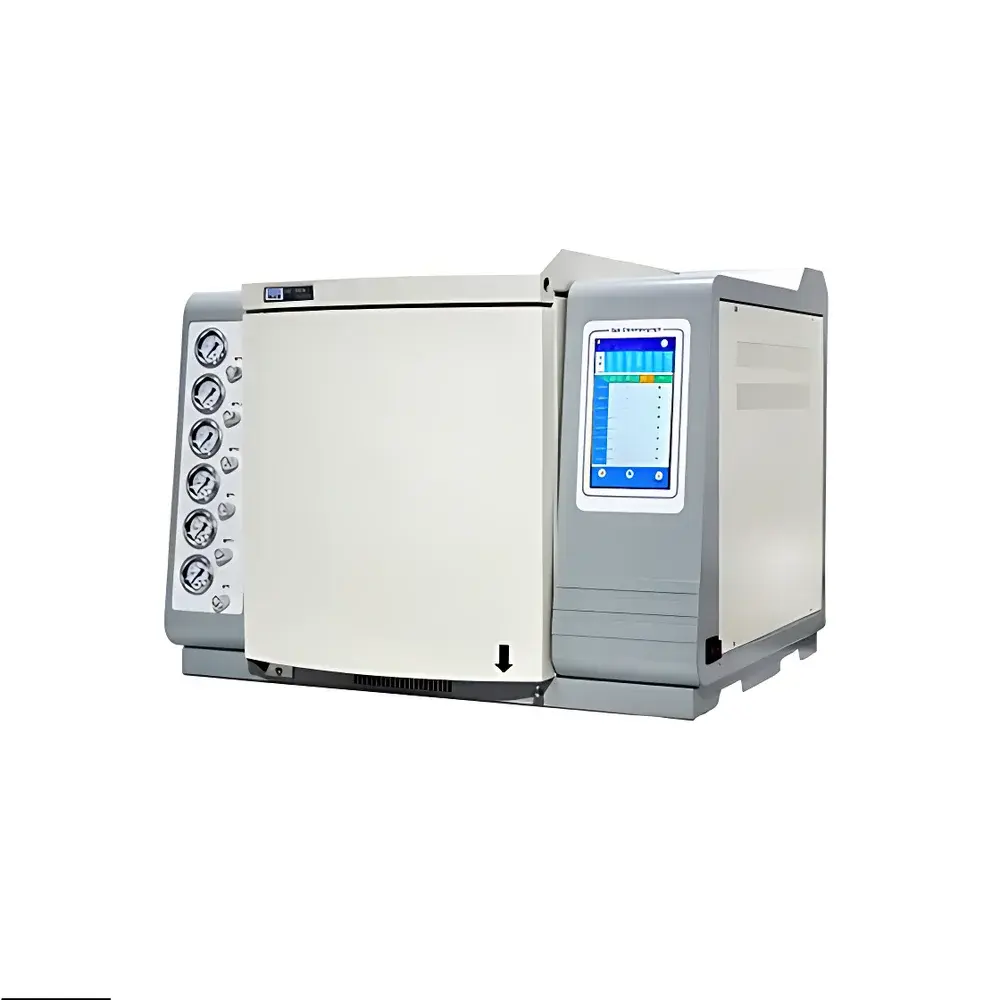
ZHONGKEHUIFEN GC-7820 Fully Automated Coal Mine–Specific Gas Chromatograph
| Brand | ZHONGKEHUIFEN |
|---|---|
| Origin | Beijing, China |
| Manufacturer Type | Authorized Distributor |
| Product Category | Domestic |
| Model | GC-7820 Fully Automated Coal Mine–Specific Gas Chromatograph |
| Instrument Type | Online Gas Chromatograph |
| Application Field | Coal Mining Industry |
| Temperature Control Range | Ambient + 3 °C to 450 °C |
| Oven Ramp Rate | 0.1–40 °C/min |
| Cooling Rate | ~8 min (450 °C → 50 °C) |
| Carrier Gas Flow Range & Control | 0–1200 mL/min |
| Carrier Gas Pressure Range & Control | 0–970 kPa |
| Injector Maximum Operating Temperature | 450 °C |
| Injector Pressure Setting Range | 0–970 kPa |
| Injector Total Flow Setting Range | 0–1200 mL/min |
Overview
The ZHONGKEHUIFEN GC-7820 Fully Automated Coal Mine–Specific Gas Chromatograph is an online analytical instrument engineered for continuous, real-time gas composition monitoring in underground coal mine environments. It operates on the principle of capillary or packed-column gas chromatography, utilizing precise thermal programming and high-stability detection to resolve and quantify critical gaseous species associated with spontaneous combustion—namely H2, O2, N2, CO, CO2, CH4, C2H4, C2H6, and C2H2. Integrated into a multi-channel束管 (bundle tube) sampling system (12–32 lines), the GC-7820 enables automated sequential sampling from remote mine galleries or sealed goaf zones. Its design conforms to AQT 1019–2006 (“Methodology for Chromatographic Analysis and Optimization of Indicator Gases for Coal Seam Spontaneous Combustion”), supporting early fire risk assessment through ratio-based indicators such as alkene/alkane (C2H4/C2H6) and paraffin ratios. The system delivers quantitative results within 5–8 minutes per analysis cycle, with dual FID and single TCD detectors operating in parallel—ensuring simultaneous detection of both hydrocarbon traces and permanent gases without method reconfiguration.
Key Features
- Triple-column parallel configuration with dedicated coal-mine–optimized stationary phases for co-elution-free separation of O2/N2, CO/CH4, and C2 hydrocarbons
- Dual flame ionization detectors (FID) and one thermal conductivity detector (TCD), each with independent injection systems to eliminate cross-contamination and ensure quantitative accuracy
- Integrated methanizer for enhanced CO and CO2 sensitivity via catalytic conversion to CH4, housed in a compact, thermally stabilized module
- Logarithmic amplifier architecture providing linear dynamic range of 0–100% for both major and trace components—eliminating manual range switching
- Intelligent oven temperature control with ±0.1 °C stability and programmable ramping (0.1–40 °C/min); rapid cool-down (~8 min from 450 °C to 50 °C) minimizes cycle time
- Self-diagnostic firmware with fault-code display, automatic ignition recovery, carrier gas failure protection, and power-interruption data retention
- Modular pneumatic architecture featuring digital pressure and flow controllers (0–970 kPa, 0–1200 mL/min) for reproducible retention time and peak area precision
Sample Compatibility & Compliance
The GC-7820 interfaces directly with standard coal mine bundle-tube networks (inner diameter: 3–6 mm) and supports passive or vacuum-assisted sample introduction. It accommodates gas matrices containing particulate-laden or moisture-variable streams typical of mine ventilation air or sealed-area headspace. All hardware and software modules comply with industrial safety requirements for Zone 1/21 hazardous locations when installed with appropriate purge or enclosure certification (IEC 60079-0, -10, -11). Analytical procedures align with AQT 1019–2006 and support audit-ready reporting for GLP-compliant fire risk management programs. Data integrity safeguards—including electronic signatures, audit trails, and 21 CFR Part 11–compatible user access controls—are implemented via optional software licensing.
Software & Data Management
The embedded GC workstation provides full-cycle automation: scheduled sampling, peak integration (height/area), calibration curve generation (single-point, multi-point, polynomial fit), and auto-reporting. It includes proprietary algorithms for spontaneous combustion forecasting—calculating ethylene/ethane (C2H4/C2H6) and olefin/paraffin ratios in real time. The Explosion Triangle module evaluates gas mixture flammability using Le Chatelier’s mixing rule and displays hazard status against ISO 8573-1 Class 0–4 thresholds. Raw data, chromatograms, method parameters, and alarm logs are stored in a relational database with timestamped metadata. Network connectivity (Ethernet/RS-485) enables SCADA integration and centralized data sharing across mine control centers. Backup and export functions support CSV, PDF, and XML formats compliant with enterprise LIMS environments.
Applications
- Continuous monitoring of goaf zone atmospheres to detect rising CO, C2H4, and H2 concentrations preceding thermal runaway
- Quantitative assessment of fire extinction progress by tracking decay kinetics of unsaturated hydrocarbons (C2H2, C2H4) and CO/CO2 ratios
- Verification of inertization efficacy (N2/CO2 injection) via real-time O2 depletion profiling
- Supporting regulatory compliance audits under China’s AQ/T 1019 and GB 50116 standards for mine fire prevention systems
- Integration with automated fire suppression decision engines using threshold-triggered alarms and historical trend analytics
FAQ
Does the GC-7820 support unattended 24/7 operation in underground monitoring stations?
Yes—the instrument features robust thermal management, redundant power input options, and built-in UPS-compatible shutdown protocols. All critical diagnostics and alarm events are logged with UTC timestamps and transmitted via Modbus TCP or OPC UA.
Can the system analyze wet or dusty gas samples without pre-treatment?
It is designed for use with standard mine-grade gas filters and condensate traps upstream of the inlet. Optional heated transfer lines (up to 120 °C) prevent water condensation in sample tubing.
Is method validation documentation available for AQT 1019–2006 compliance?
Yes—validation packages include system suitability tests (SST), limit of detection (LOD) verification for C2H2 (≤0.1 ppm), retention time repeatability (<0.05%), and linearity studies across 0.5–100% v/v ranges.
How is detector maintenance performed in field conditions?
FID jets and TCD filaments are accessible via front-panel service ports; consumables kits include calibrated reference gases, septa, liners, and column ferrules—all stocked for 12-month field deployment.
Can third-party LIMS platforms import raw chromatographic data directly?
Yes—ASCII-based .CSV exports include full peak table metadata, baseline-corrected integrals, and instrument configuration snapshots compatible with Thermo Fisher, Waters, and Agilent LIMS interfaces.




