
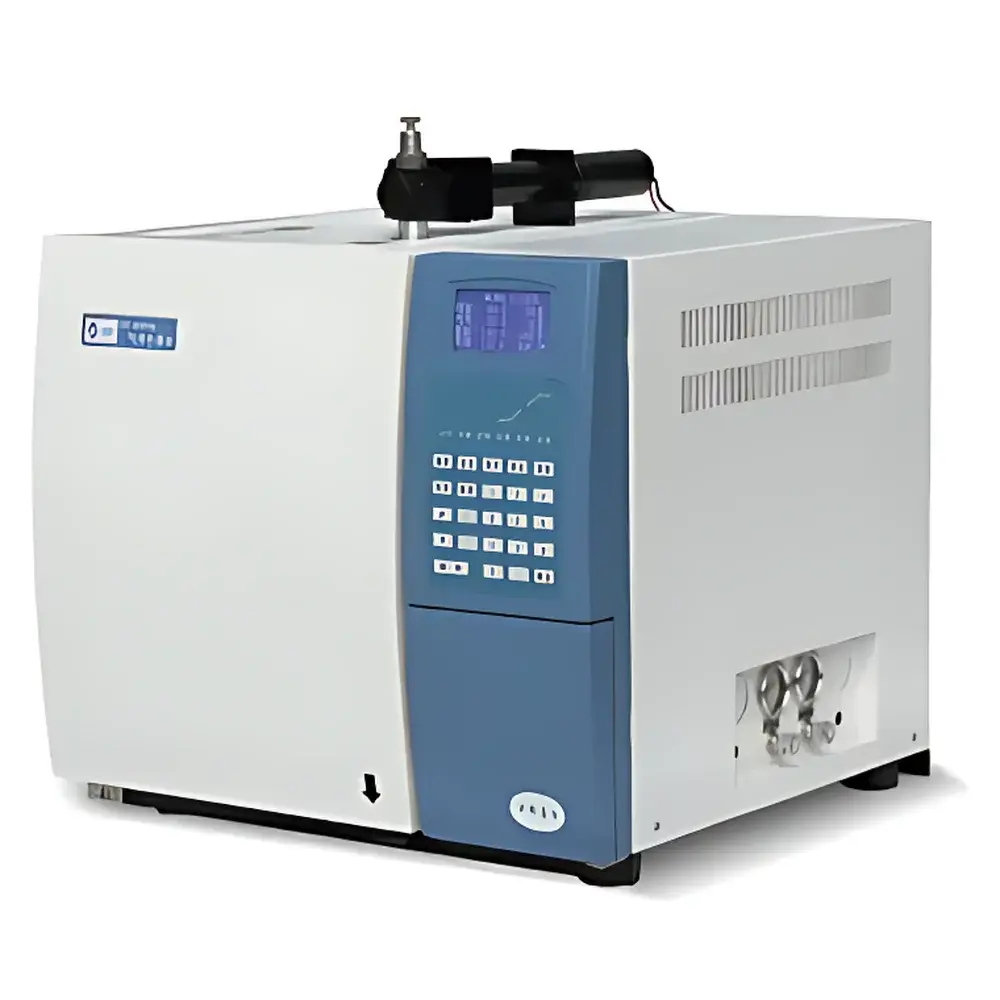
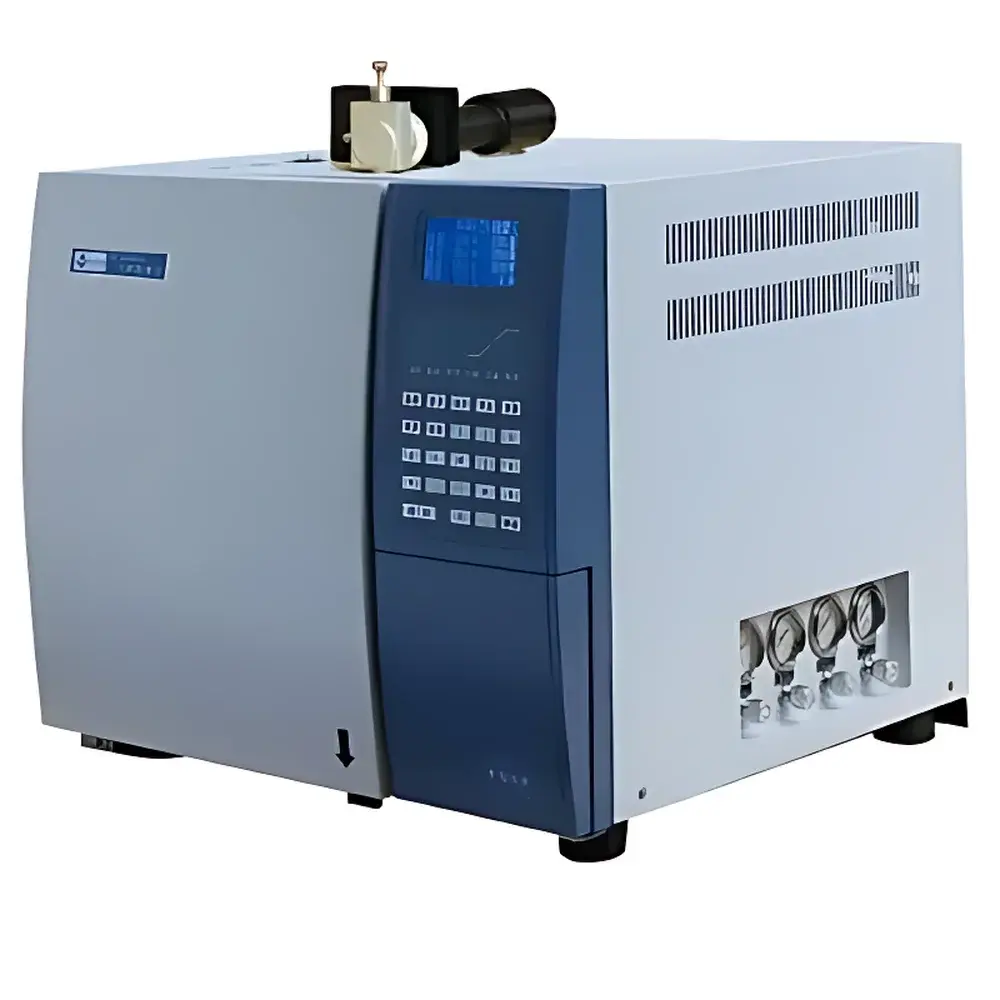
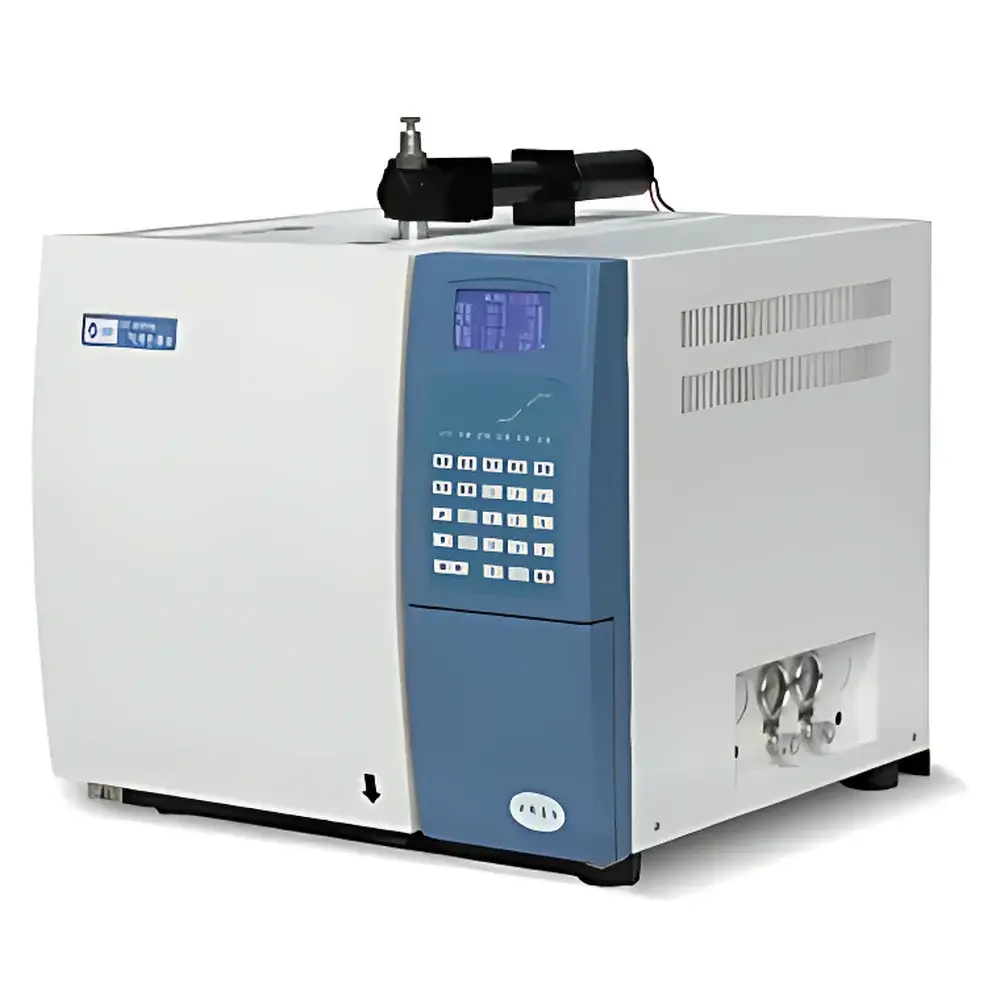
ZHONGKEHUIFEN WLS-08 Micro-Sulfur Analyzer
| Brand | ZHONGKEHUIFEN |
|---|---|
| Origin | Beijing, China |
| Model | WLS-08 |
| Detection Principle | Flame Photometric Detection (FPD) |
| Temperature Control Range | Ambient +3°C to 400°C |
| FPD Sulfur Detection Limit | ≤5×10⁻¹¹ g(S)/s |
| Column Oven Programmed Ramp | 0.1–40°C/min, up to 5 steps |
| Dimensions | 635 × 490 × 470 mm |
| Weight | ~55 kg |
Overview
The ZHONGKEHUIFEN WLS-08 Micro-Sulfur Analyzer is a dedicated gas chromatographic system engineered for the precise qualitative and quantitative determination of sulfur-containing compounds—both organic and inorganic—in gaseous and liquid-phase samples. It integrates a high-selectivity Flame Photometric Detector (FPD) with a robust, temperature-controlled GC platform optimized for trace-level sulfur analysis. The instrument operates on the principle of chemiluminescent emission from excited sulfur monoxide (SO*) species generated in a hydrogen-rich flame, enabling selective detection at sub-ppb levels without significant interference from hydrocarbons or nitrogenous compounds. Unlike general-purpose GC systems, the WLS-08 incorporates sulfur-inert sample introduction components—including specially passivated valves and gas pathways—to minimize surface adsorption and memory effects, ensuring reproducible quantification of labile sulfur species such as thiophene, hydrogen sulfide, mercaptans, and sulfoxides.
Key Features
- Optimized FPD architecture with focused optical collection optics, enhancing signal-to-noise ratio and improving sulfur sensitivity by >3× compared to conventional configurations.
- Sulfur-passivated pneumatic sampling valve and stainless-steel gas lines with electropolished interior surfaces to prevent adsorption and carryover of reactive sulfur analytes.
- Temperature-stabilized detector base with active heating to eliminate condensation-induced baseline drift—critical for long-duration analyses of humid or low-volatility gas streams.
- 5-stage programmable column oven with ramp precision of ±0.1°C and thermal uniformity ≤1% across the active zone, supporting complex multi-component separations (e.g., C₁–C₄ hydrocarbons co-eluting with H₂S and COS).
- Integrated self-diagnostic firmware with over-temperature cutoff, real-time status monitoring, and automatic baseline compensation for single-column operation.
- Large-backlit LCD interface with native Chinese menu navigation; supports method storage, recall, and direct concentration readout post-integration without external software dependency.
Sample Compatibility & Compliance
The WLS-08 accommodates diverse sample matrices via dual-mode injection: gas-tight syringe for liquids (e.g., methanol, benzene, gasoline, aviation fuel) and pressurized gas loop for permanent gases (natural gas, refinery off-gas, coke oven gas, synthesis gas). It meets routine compliance requirements for sulfur testing in industrial feedstocks per ASTM D5453 (UV fluorescence), ASTM D2622 (XRF), and ISO 8792 (gas chromatographic methods), though its FPD-based methodology is particularly aligned with internal QC protocols for petrochemical refining, pharmaceutical excipient purity verification (e.g., USP elemental impurities), and food-grade CO₂ certification (ISO 8573-5). While not pre-certified for 21 CFR Part 11, the system’s audit-trail-capable data files and method-locking functionality support GLP/GMP-aligned validation workflows when deployed with compliant laboratory information management systems (LIMS).
Software & Data Management
Data acquisition and processing are handled by a dedicated Windows-based workstation software package supporting peak integration, calibration curve generation (linear/non-linear), retention time locking, and report export in CSV/PDF formats. Raw chromatograms and processed results are timestamped and stored with full metadata (oven program, detector settings, injection volume, operator ID). The software includes built-in tools for system suitability assessment—including resolution calculation between critical pairs (e.g., thiophene vs. benzene), tailing factor evaluation, and %RSD computation across replicate injections. All method parameters are password-protected and version-controlled, enabling traceability required under ISO/IEC 17025-accredited laboratories.
Applications
- Trace thiophene quantification in polymer-grade benzene (detection limit: 0.1 ppm), where concentrations >0.4 ppm severely inhibit aniline catalyst performance.
- Total sulfur profiling in natural gas and LNG according to GPA 2261 and ISO 6974-5 specifications.
- Speciation of sulfur compounds in cracked naphtha and fluid catalytic cracking (FCC) overheads—differentiating mercaptans, sulfides, disulfides, and thiophenes.
- Residual sulfur monitoring in hydrogenation feedstocks and reformate streams prior to precious-metal catalyst exposure.
- Quality control of ethanol fuel blends (E10/E85), where sulfur contamination accelerates exhaust aftertreatment degradation.
- Environmental monitoring of biogas desulfurization efficiency via longitudinal H₂S and COS tracking.
FAQ
What sulfur species can the WLS-08 detect and quantify?
The instrument detects elemental sulfur, hydrogen sulfide (H₂S), carbonyl sulfide (COS), mercaptans (e.g., ethanethiol), sulfides (e.g., dimethyl sulfide), disulfides, thiophenes, and sulfoxides—provided they elute within the selected column’s polarity and temperature range.
Is the WLS-08 suitable for regulatory reporting?
It is widely used for internal QC and process control. For formal regulatory submissions, users must validate the method against relevant standards (e.g., ASTM D5453) and document system suitability, LOD/LOQ, and precision per ICH Q2(R2).
Can the FPD be used for phosphorus detection?
Yes—the same detector configuration supports simultaneous or sequential sulfur/phosphorus analysis using wavelength-specific optical filters, making it applicable to organophosphate pesticide residue screening.
What maintenance intervals are recommended for optimal FPD performance?
Weekly cleaning of the jet tip and photomultiplier window is advised; quarterly replacement of the H₂/air supply filters and annual recalibration of temperature zones and detector gain are standard practice.
Does the system support unattended operation?
With optional autosampler integration (not included standard), up to 40 samples can be queued; the onboard timer and method sequencing enable overnight batch runs with auto-shutdown and alarm logging.
Related Products



