
Zhonglu DS C–500ARD Differential Scanning Calorimeter for Polymer Melting Point Analysis
| Brand | Zhonglu |
|---|---|
| Model | DS C–500ARD |
| Origin | Shanghai, China |
| Manufacturer Type | Direct Manufacturer |
| Temperature Range | Ambient to 500 °C |
| Heating Rate | 0.1–80 °C/min |
| Temperature Repeatability | ±0.1 °C |
| Temperature Accuracy | ±0.1 °C |
| Temperature Resolution | 0.01 °C |
| Sample Capacity | 1 |
| DSC Signal Range | 0 to ±200 mW / 0 to ±500 mW |
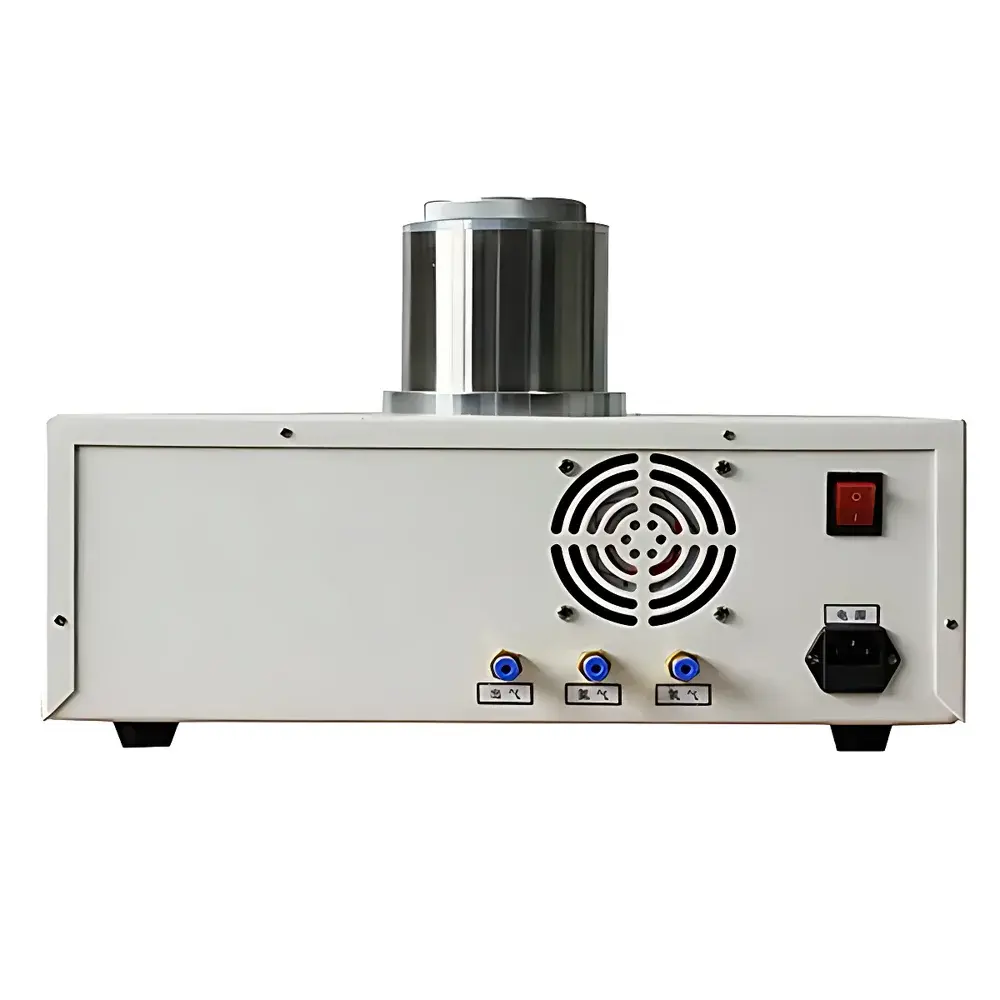
| Atmosphere Control | Dual-gas auto-switching (N₂/Ar) |
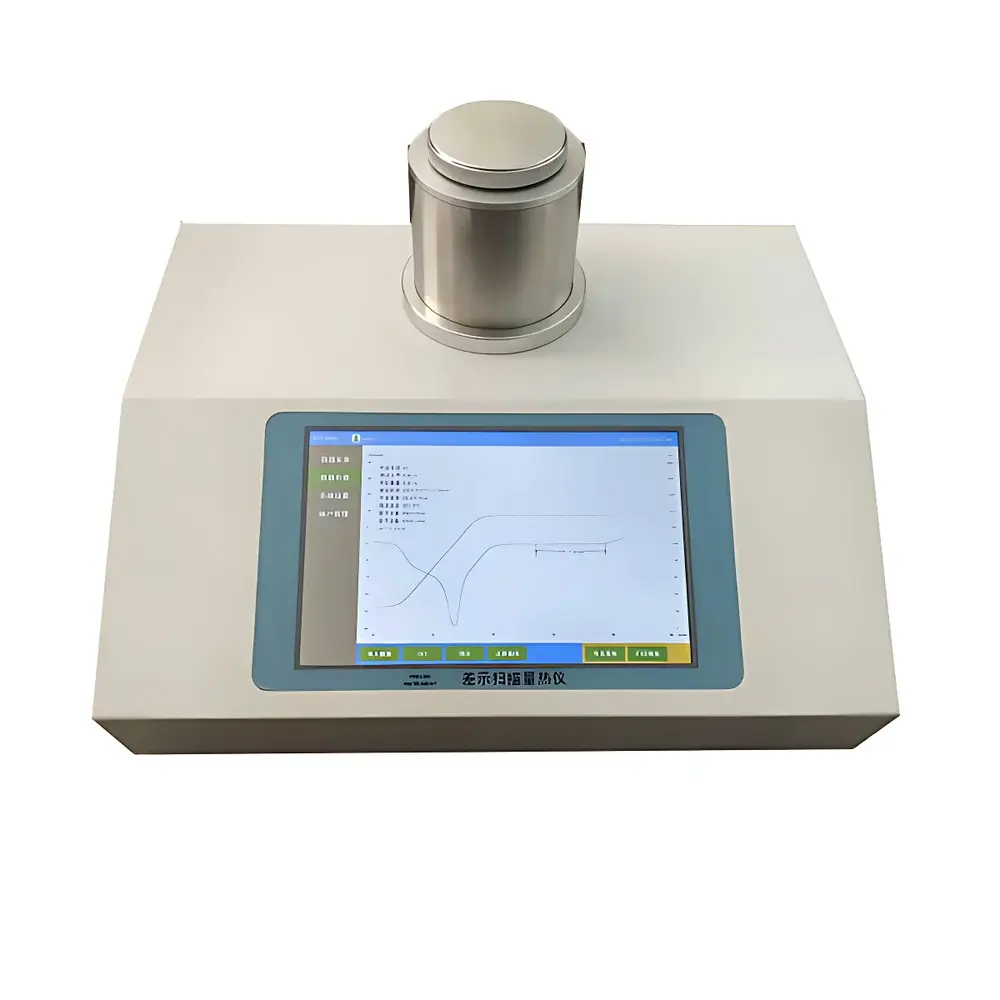
| Display | 10.1-inch 24-bit color industrial touchscreen PC |
| Data Interfaces | USB 2.0, RS-232 |
| Calibration Standards | Indium (In), Tin (Sn), α-Al₂O₃ reference material |
| Compliance | ISO 11357, GB/T 19466, ASTM D3417 |
Overview
The Zhonglu DS C–500ARD Differential Scanning Calorimeter (DSC) is a precision thermal analysis instrument engineered for the quantitative determination of melting behavior in polymeric materials, thermoplastics, crystalline additives, and organic solids. Operating on the principle of heat-flux differential scanning calorimetry, the system measures the difference in heat flow between a sample and an inert reference (α-Al₂O₃) as both are subjected to a controlled, linear temperature program. This enables direct quantification of endothermic transitions—including onset melting temperature (Tonset), peak melting temperature (Tpeak), and melting range (ΔTm)—with high thermal resolution and reproducibility. Designed for routine QC laboratories and R&D facilities handling polymer pellets, granules, and molded specimens, the DS C–500ARD delivers traceable, standards-compliant results across the full operating range of ambient to 500 °C. Its integrated architecture eliminates external signal interference, ensuring baseline stability and minimal thermal lag during rapid heating cycles up to 80 °C/min.
Key Features
- Integrated 10.1-inch industrial-grade touchscreen PC with embedded real-time data acquisition, eliminating dependency on external computers for basic operation.
- Dual platinum resistance temperature detectors (RTDs) — one in the sample holder, one in the reference cavity — enabling simultaneous, independent monitoring and enhancing temperature repeatability to ±0.1 °C.
- Mechanically secured furnace assembly with zero adhesive usage in the sensor zone, preventing outgassing-induced baseline drift or thermal signal contamination.
- Programmable heating rate from 0.1 to 80 °C/min, with automatic calibration coefficient adjustment per selected ramp rate to maintain accuracy across dynamic thermal profiles.
- Two-channel gas control system supporting automated switching between inert purge gases (e.g., N₂ and Ar), critical for oxidation-sensitive polymers and reproducible baseline establishment.
- Three-tier user account management (Operator, Supervisor, Administrator) with audit-trail logging of method edits, calibration events, and report generation — compliant with GLP documentation requirements.
- Onboard one-click calibration using certified In (156.6 °C) and Sn (231.9 °C) standards; includes preloaded reference curves and deviation reporting per ISO 11357-1 Annex A.
Sample Compatibility & Compliance
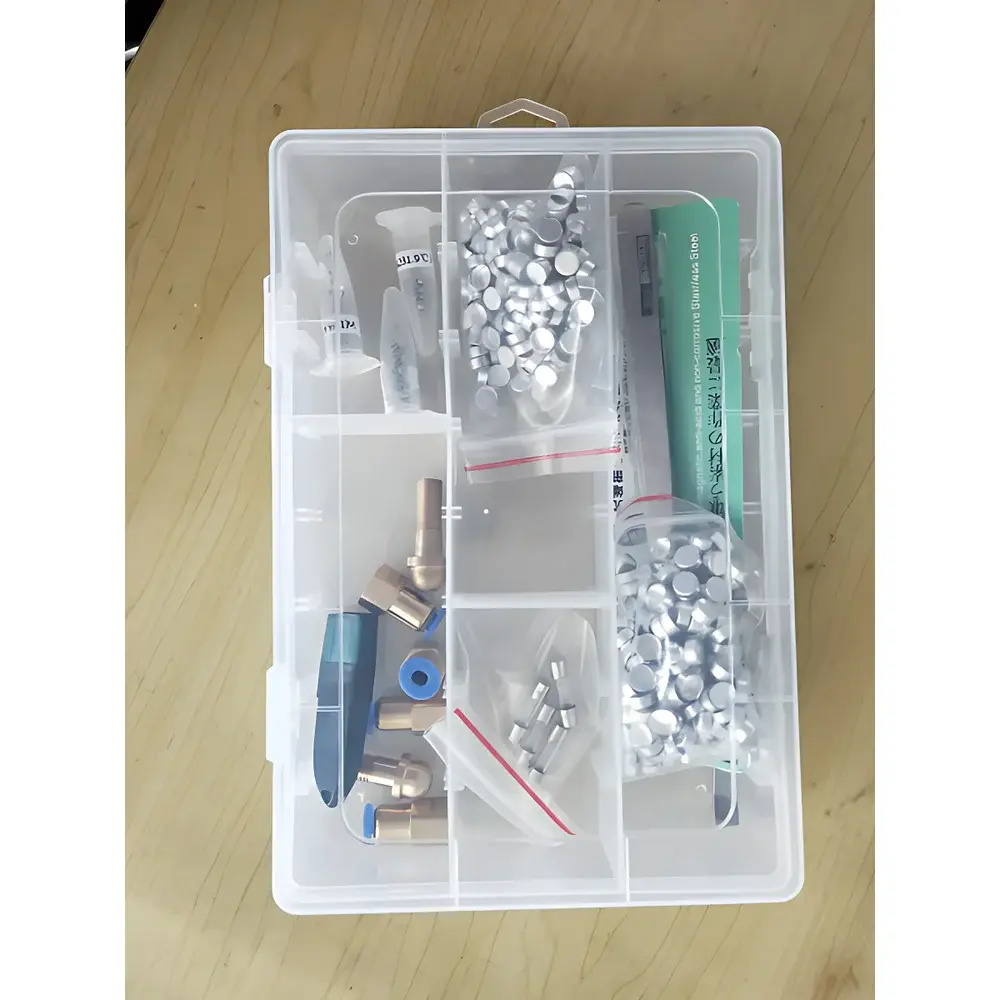
The DS C–500ARD accommodates standard 6.7 mm diameter aluminum crucibles (supplied, 400 pcs), compatible with solid polymer particles, thin films, fibers, and powdered organics. No optical transparency requirement — suitable for opaque, pigmented, or carbon-filled thermoplastics (e.g., PP, PE, PET, PEEK, ABS). All measurements adhere to internationally recognized thermal analysis protocols: ISO 11357-3 (determination of melting temperature and enthalpy), GB/T 19466.3 (Chinese national adaptation), and ASTM D3417 (standard test method for heat of fusion of thermoplastic resins). The instrument’s temperature accuracy (±0.1 °C) and resolution (0.01 °C) meet the minimum metrological criteria specified in USP <841> for thermal analytical instrumentation used in pharmaceutical excipient qualification.
Software & Data Management
Data acquisition and analysis are supported both onboard and via optional Windows-based desktop software (included on CD-ROM). The embedded OS records raw DSC heat-flow and temperature signals at ≥10 Hz sampling rate, generating time-stamped .csv and proprietary .dsc binary files. USB export supports direct transfer of thermograms, metadata, and PDF-formatted reports to removable media. RS-232 serial interface enables integration into LIMS environments or centralized lab networks. Software features include automatic onset/peak detection (tangent-intersection and inflection-point algorithms), baseline subtraction (linear or polynomial), enthalpy integration (J/g), and comparative overlay of up to eight curves. All processing steps are logged with timestamps and user IDs, satisfying FDA 21 CFR Part 11 requirements for electronic records when deployed with appropriate system validation.
Applications
- QC release testing of virgin and recycled polymer pellets per ISO 11357-3 (e.g., HDPE melt point verification prior to extrusion).
- Crystallinity assessment of semi-crystalline thermoplastics via melting enthalpy normalization against 100% crystalline references.
- Thermal stability screening of flame-retardant additives under nitrogen purge.
- Batch-to-batch consistency evaluation in medical-grade polymer manufacturing (e.g., PTFE, PVC compounds).
- Development of polymer blends and copolymers — identification of multiple melting peaks indicating phase separation or co-crystallization.
- Supporting regulatory submissions requiring documented thermal transition data (e.g., ICH Q5C for biopharmaceutical excipients).
FAQ
What calibration standards are supplied with the DS C–500ARD?
Indium (0.5 g, certified Tm = 156.6 °C) and Tin (0.5 g, certified Tm = 231.9 °C), plus 1 g of α-Al₂O₃ reference material for baseline verification.
Is the instrument compatible with GLP or GMP-regulated environments?
Yes — three-level user authentication, electronic audit trail, calibration history logging, and 21 CFR Part 11–ready software options support compliance with GLP (OECD 1998) and GMP (EU Annex 11) requirements.
Can the DS C–500ARD perform cooling scans or isothermal holds?
No — this model is configured exclusively for heating-mode DSC (up to 500 °C). Cooling and multi-step isothermal protocols require the DS C–500ARD+ variant with dual-zone furnace control.
What is the maximum recommended sample mass for polymer melting analysis?
3–5 mg for optimal signal-to-noise ratio and thermal homogeneity; larger masses (>10 mg) may induce internal temperature gradients affecting Tonset accuracy.
Does the system support nitrogen-only purge, or is argon required for certain applications?
Nitrogen is sufficient for most polymer applications. Argon is recommended only for highly reducing systems or when minimizing convective heat loss is critical (e.g., low-mass samples below 1 mg).



