
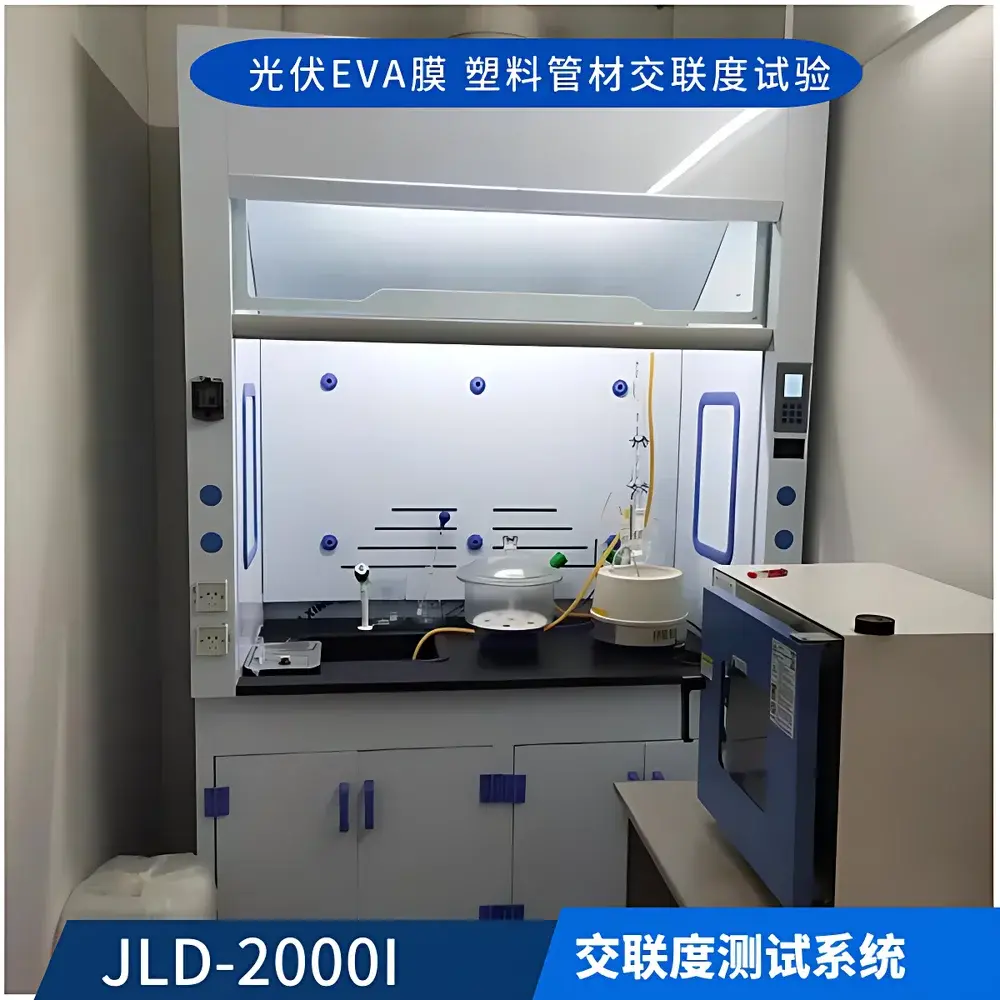
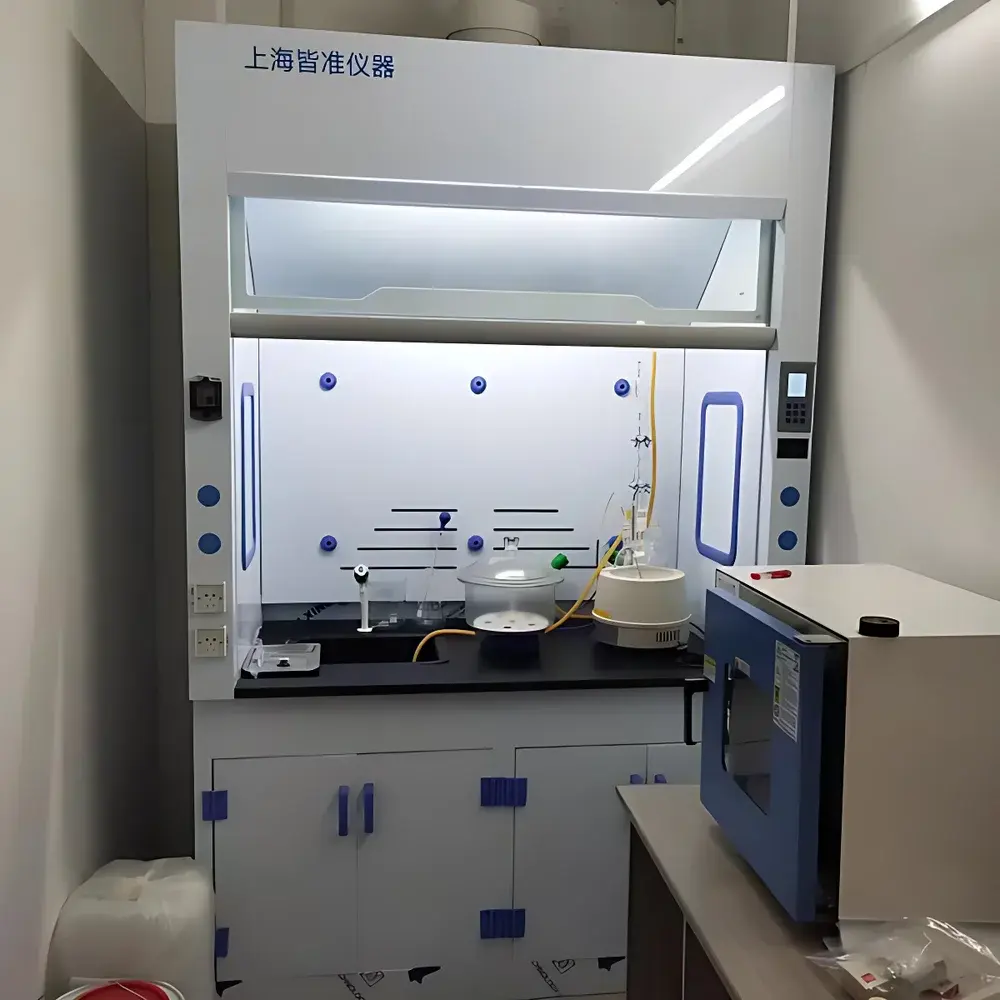
Zhonglu JLD-2000I Photovoltaic EVA Crosslinking Degree Tester
| Brand | Zhonglu |
|---|---|
| Model | JLD-2000I |
| Origin | Shanghai, China |
| Manufacturer Type | OEM Manufacturer |
| Country of Origin | China |
| Price | USD 2,800 (FOB Shanghai) |
| Extraction Capacity | 2000 mL |
| Heating Power | 500 W |
| Max Heating Temperature | 300 °C |
| Analytical Balance Range | 0–100 g |
| Readability | 0.0001 g |
| Vacuum Drying Chamber Temp Range | RT+10 to 250 °C |
| Vacuum Level | ≤133 Pa |
| Compliance Standards | GB/T 29848-2013, IEC 62788-1-6, ASTM D2765, ISO 10147:2011, CQC 3307-2013 |
Overview
The Zhonglu JLD-2000I Photovoltaic EVA Crosslinking Degree Tester is a dedicated laboratory system engineered for the quantitative determination of crosslinking extent in ethylene-vinyl acetate (EVA) encapsulant films used in photovoltaic module manufacturing. It implements the solvent extraction–gel content method, a gravimetric technique standardized across global PV quality assurance protocols. The system operates on the principle that crosslinked polymer networks resist dissolution in selective solvents (e.g., xylene or toluene), while uncrosslinked fractions dissolve completely. The residual insoluble mass—expressed as gel content (%)—serves as a direct, traceable metric of crosslinking density. This method is thermodynamically grounded in Flory–Rehner theory and empirically validated for EVA under controlled thermal and chemical conditions. Unlike spectroscopic or rheological proxies, gel content measurement provides absolute, calibration-free quantification required for process validation, batch release, and failure root-cause analysis in high-reliability solar manufacturing.
Key Features
- Integrated triple-module architecture: solvent extraction unit, precision analytical balance (0.0001 g readability), and vacuum drying chamber (≤133 Pa, RT+10–250 °C)—all pre-aligned for sequential workflow continuity.
- High-stability 2000 mL borosilicate glass tri-neck round-bottom flask with reflux condenser (500 mm ball-type), enabling consistent solvent reflux kinetics and minimizing volatile loss during extended extraction cycles (typically 6–24 h per sample).
- Temperature-controlled heating mantle (500 W, up to 300 °C) with fiber-insulated core ensures uniform thermal distribution and eliminates hot-spot degradation of EVA specimens.
- Vacuum drying system includes built-in oil-sealed rotary vane pump, stainless steel chamber (300 × 300 × 275 mm), and inert gas inlet port—critical for oxygen-sensitive post-extraction drying of gel residues.
- Dedicated PP fume hood (850 × 1500 × 2350 mm, D×W×H) with acid/alkali-resistant construction, balanced vertical sash, and 250 mm exhaust collar—designed to contain hazardous organic vapors (e.g., xylene) during extraction and solvent handling.
- Compliance-ready hardware: all temperature controllers feature ±0.1 °C resolution and ±1 °C stability; balance meets ISO/IEC 17025 traceability requirements; vacuum gauge calibrated to IEC 60068-2-41.
Sample Compatibility & Compliance
The JLD-2000I is validated for EVA encapsulants meeting IEC 62788-1-6 and GB/T 29848-2013 specifications, including standard, low-acetic, and POE-blended formulations. It accommodates specimen masses from 0.5 g to 5.0 g, cut from laminated PV modules or cured film coupons (pre-conditioned at 23 °C / 50% RH per ASTM D618). The system satisfies regulatory requirements for GMP-compliant PV production environments: temperature sensors are NIST-traceable; balance data logs include operator ID, timestamp, and environmental conditions; vacuum chamber records dwell time and final pressure. All test reports generated conform to FDA 21 CFR Part 11 audit trail requirements when paired with optional LIMS integration. Method equivalence is demonstrated against reference materials certified per ISO 17034 (e.g., NIST SRM 3672 crosslinked PE standards).
Software & Data Management
While the base JLD-2000I operates via standalone instrumentation controls, it supports digital data capture through RS232/USB interfaces. Optional Zhonglu LabLink™ software enables automated calculation of gel content (%), crosslinking degree (mol%), and uncertainty propagation per GUM (JCGM 100:2008). Raw weight values (pre-/post-extraction, pre-/post-drying) are logged with metadata: solvent lot number, extraction duration, bath temperature profile, and ambient humidity. Reports export to PDF or CSV with embedded digital signatures and configurable templates aligned with internal QA forms or third-party certification bodies (TÜV Rheinland, UL, CGC). Audit trails retain full revision history, user permissions, and electronic signature authentication—fully compliant with GLP and ISO/IEC 17025 Clause 7.7.
Applications
- Quantitative validation of EVA curing profiles in laminator process development (e.g., dwell time vs. crosslink density mapping).
- Root-cause analysis of delamination, yellowing, or PID in field-failed modules by correlating gel content deviation with encapsulant aging metrics (FTIR carbonyl index, DSC enthalpy recovery).
- Supplier qualification testing per CQC 3307-2013 and IEC TS 63209-1 for incoming EVA roll stock.
- Accelerated aging studies (IEC 61215-2 MQT 17) where crosslinking progression is tracked alongside moisture ingress (DSC-TGA coupled analysis).
- Research into alternative crosslinkers (e.g., silanes, peroxides) and co-agent optimization using statistically designed DoE protocols.
FAQ
What solvents are recommended for EVA gel content testing?
Xylene is the primary solvent specified in IEC 62788-1-6 and GB/T 29848-2013; toluene may be used for comparative studies but requires method revalidation due to lower boiling point and swelling ratio.
Can the system test non-EVA encapsulants such as POE or silicone?
Yes—provided solvent selection and extraction parameters are re-validated per ASTM D2765 Annex A1 for alternative polymers; POE typically requires o-dichlorobenzene at elevated temperatures.
Is calibration certification included with shipment?
A factory calibration certificate (traceable to CNAS-accredited labs) is provided for the balance and temperature sensors; on-site IQ/OQ documentation support is available upon request.
How is operator safety ensured during xylene handling?
The integrated PP fume hood meets EN 14175-3 airflow performance criteria (face velocity ≥0.5 m/s), and all electrical components are rated IP54 for solvent vapor environments.
What maintenance intervals are recommended for the vacuum pump?
Oil changes every 500 operating hours; annual inspection of rotor vanes and check valves per manufacturer’s service manual (included in delivery package).






