
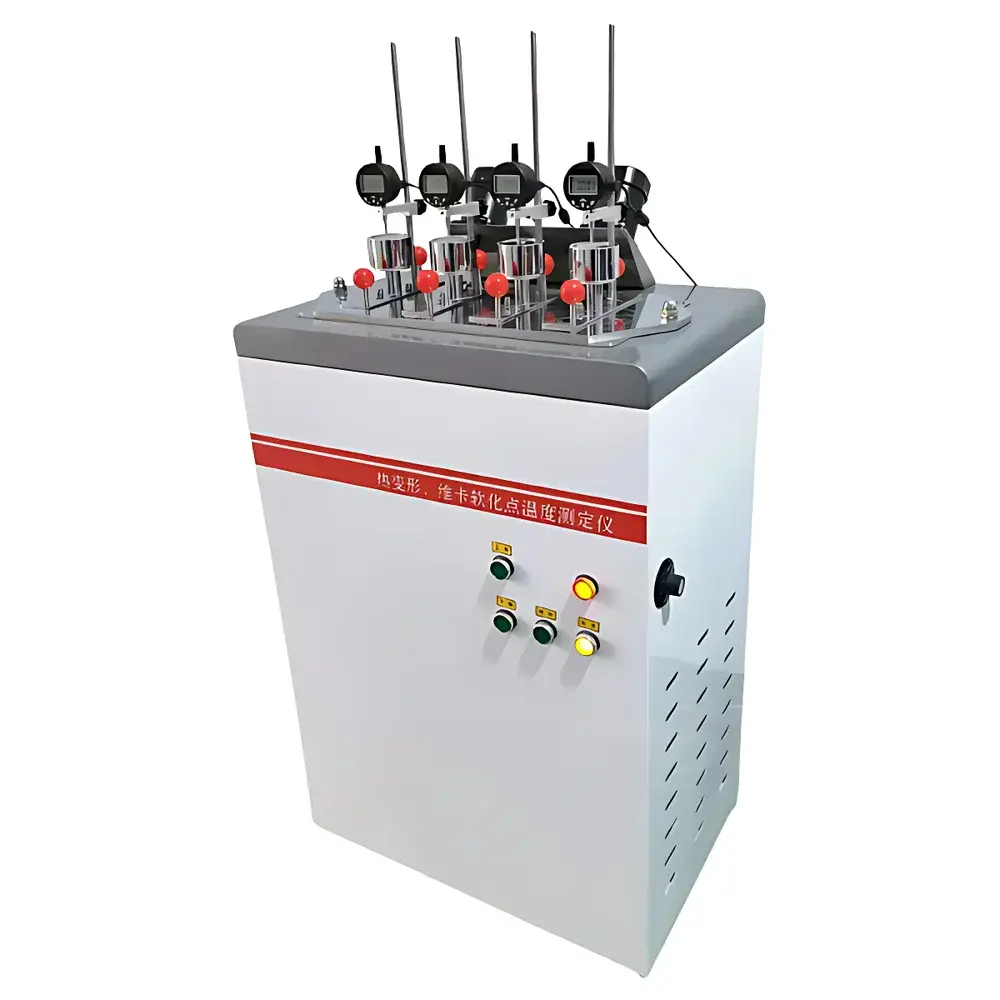
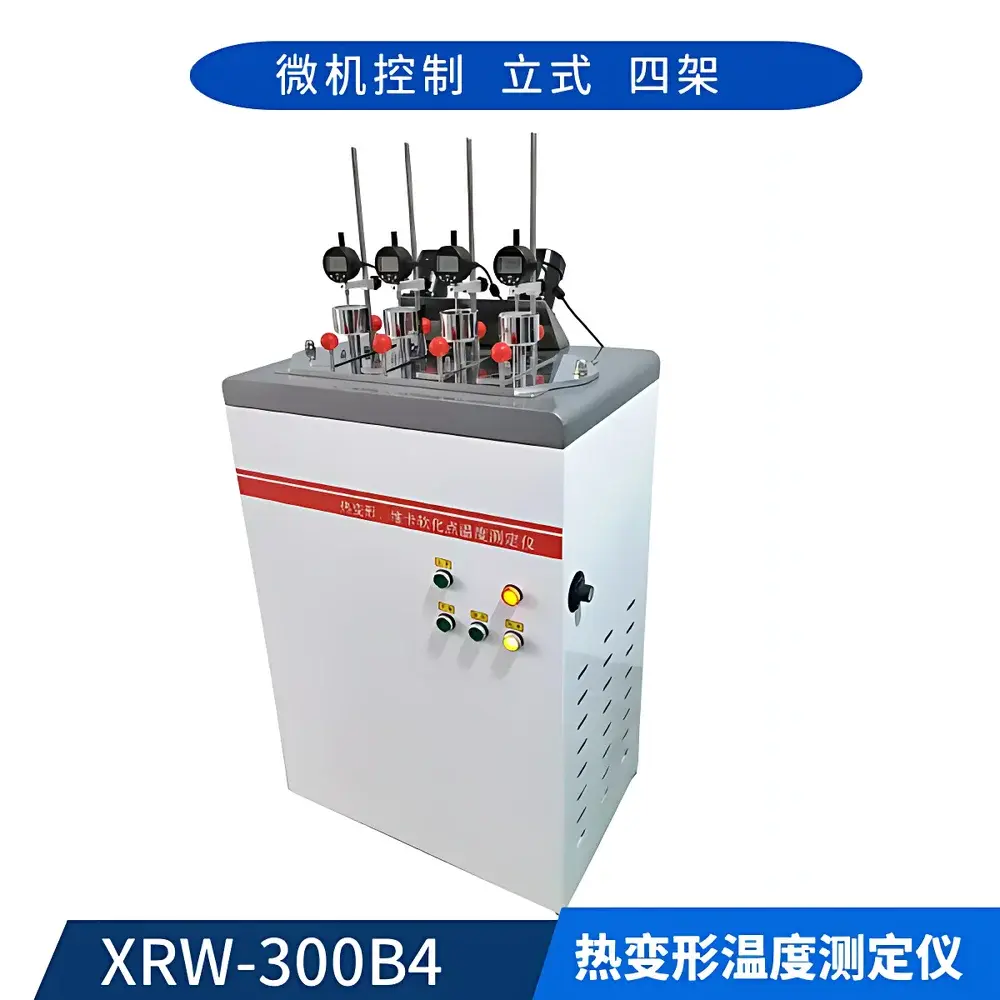
Zhonglu XRW-300B4 Load Deflection Temperature Tester for Fiber-Reinforced Composite Materials
| Brand | Zhonglu |
|---|---|
| Model | XRW-300B4 |
| Origin | Shanghai, China |
| Manufacturer | Zhonglu Instrument Co., Ltd. |
| Application | Heat deflection temperature (HDT) and Vicat softening temperature (VST) testing of thermoplastics, thermosets, fiber-reinforced composites, laminates, and electrical insulating materials |
| Standards Compliance | GB/T 1633, GB/T 8802, GB/T 1634, ISO 2507, ISO 75, ISO 306, ASTM D 1525, ASTM D 648 |
| Temperature Control Range | Ambient to 300 °C |
| Max. Temp. Deviation | ±0.5 °C |
| Heating Rates | 50 °C/h or 120 °C/h (adjustable between 50–120 °C/h) |
| No. of Test Stations | 4 |
| Deflection Measurement Range | 0–10 mm |
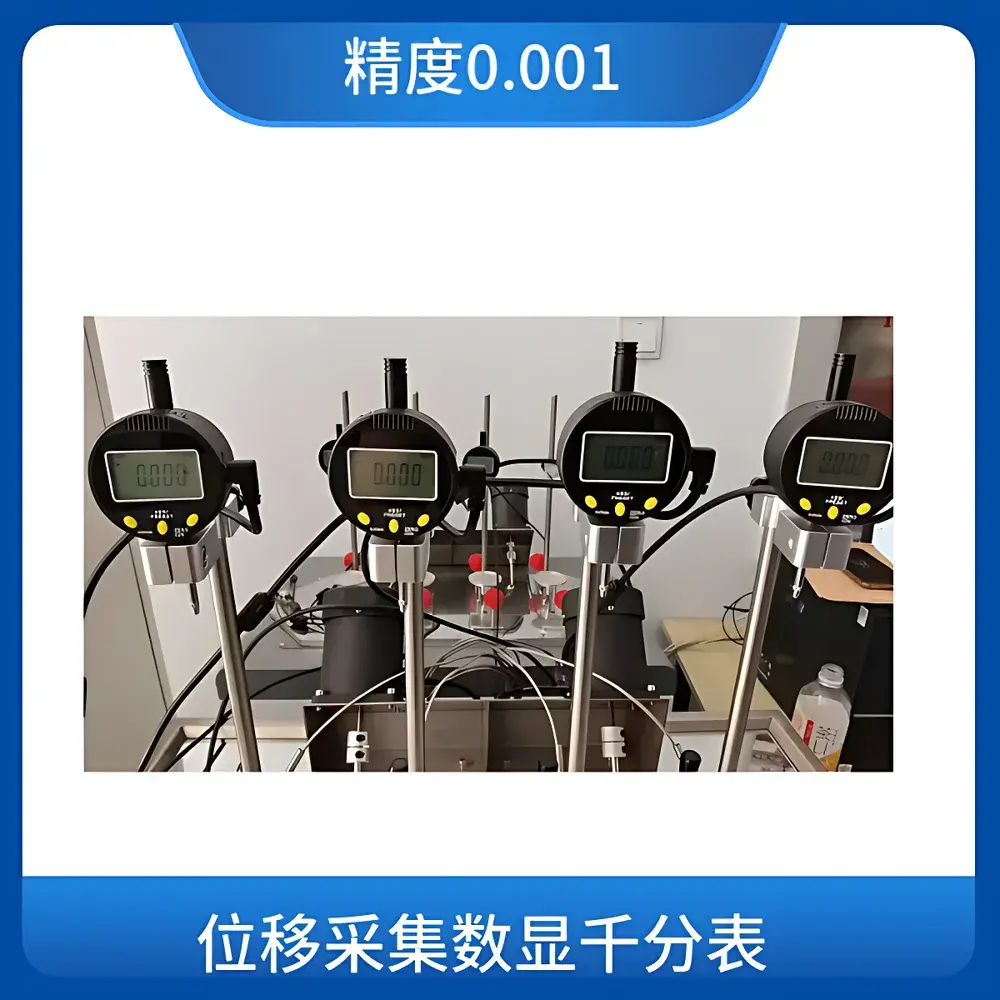
| Deflection Accuracy | ±0.005 mm |
| Resolution | 0.001 mm |
| Span Lengths | 64 mm or 100 mm |
| Thermal Expansion Coefficient of Test Frame | <0.005 /100 °C |
| Temperature Sensor Type | High-stability platinum RTD |
| Displacement Sensor | Optical-grating digital micrometer |
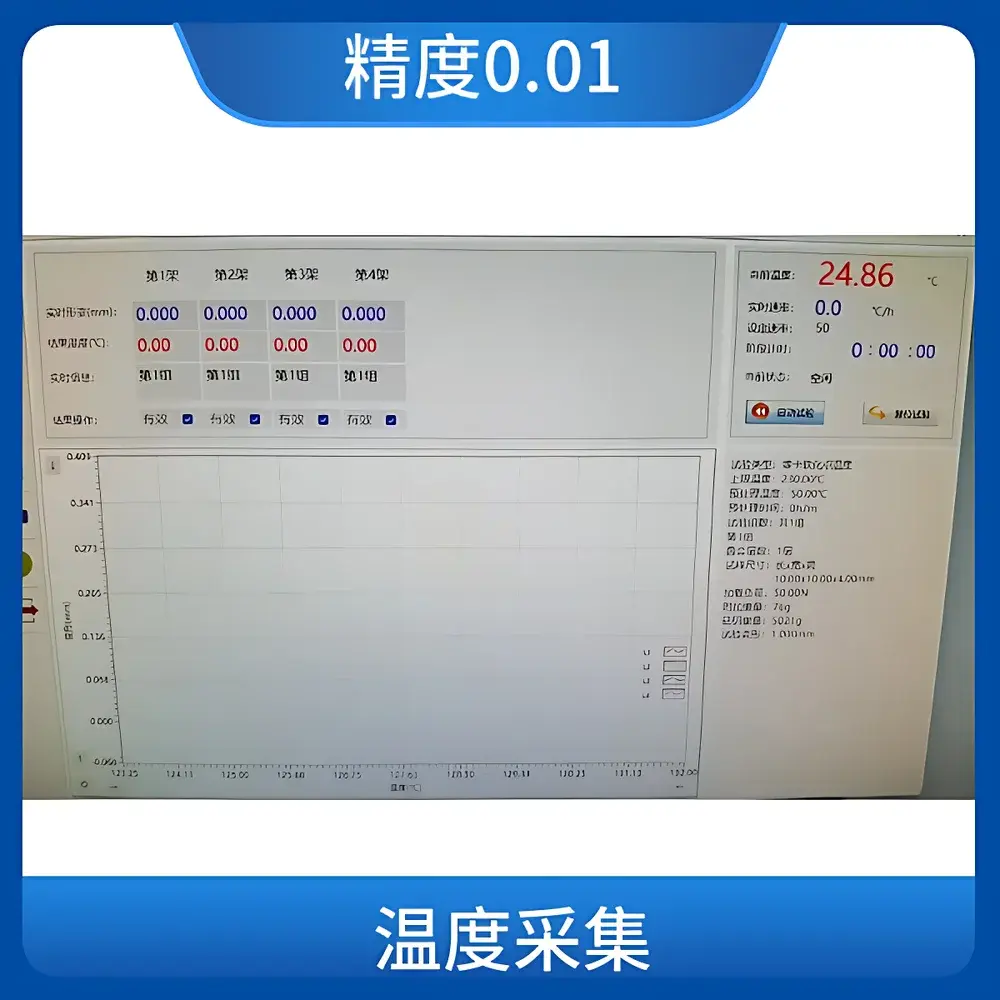
| Control Method | PC-based software with real-time curve display and automated reporting |
| Safety Protections | Dual hardware/software temperature limit switches (30 A Korean thermal cutoff), end-of-test auto-halt, administrator password lockout |
| Heating Power | 4000 W |
| Heat Transfer Medium | Methyl silicone oil or transformer oil |
| Cooling | Natural convection above 150 °C |
Overview
The Zhonglu XRW-300B4 Load Deflection Temperature Tester is a precision-engineered instrument designed for the standardized determination of Heat Deflection Temperature (HDT) and Vicat Softening Temperature (VST) in non-metallic engineering materials—particularly fiber-reinforced polymer composites, high-performance thermoset laminates, rigid plastics, and electrically insulating compounds. It operates on the principle of controlled thermal loading under defined flexural stress (for HDT per ISO 75 / ASTM D 648) or needle penetration under constant load (for VST per ISO 306 / ASTM D 1525). The system applies a precisely calibrated bending moment or axial force while ramping temperature at a certified rate, monitoring specimen deformation in real time until the prescribed deflection threshold (e.g., 0.34 mm for HDT-A, 1 mm for VST) is reached. Its architecture integrates metrological traceability, mechanical stability, and thermal uniformity to meet the stringent reproducibility requirements of international quality control laboratories and R&D facilities.
Key Features
- Automated test frame elevation: Motor-driven, programmable vertical positioning of all four test stations eliminates manual handling, reduces operator variability, and mitigates thermal exposure risk during sample loading/unloading.
- Ultra-low thermal expansion test frame: Constructed from low-coefficient alloy (<0.005 /100 °C), ensuring dimensional stability across the full 300 °C range—critical for minimizing parasitic drift in displacement measurement and preserving test validity per ISO 75-2 Annex B.
- High-fidelity dual-sensor metrology: Platinum resistance thermometer (RTD) with ±0.5 °C accuracy and optical-grating digital micrometers (0.001 mm resolution, ±0.005 mm linearity) deliver synchronized, NIST-traceable thermal and mechanical data acquisition.
- PID-controlled heating with full optical isolation: 4000 W resistive heating module regulated via opto-isolated PWM output ensures stable ramp rates (50 or 120 °C/h) with ≤0.5 °C/h deviation—validated against ASTM D 648 Annex A calibration protocols.
- Four-layer safety architecture: Redundant protection includes (1) hardware thermal cutoff (30 A Korean bimetal switch), (2) software-set temperature ceiling, (3) automatic termination upon test completion or sensor timeout, and (4) role-based access control with encrypted admin credentials.
Sample Compatibility & Compliance
The XRW-300B4 accommodates standard-compliant specimens per ISO 75-2 (rectangular bars, 80 × 10 × 4 mm or 120 × 15 × 10 mm) and ISO 306 (cylindrical or flat discs, ≥10 mm diameter, 3–6.5 mm thick), supporting both 64 mm and 100 mm support spans. It is validated for use with continuous-fiber composites (e.g., carbon/glass-reinforced epoxy), structural thermosets (phenolic, BMI), engineering thermoplastics (PEEK, PSU), and cross-linked elastomers. All operational parameters—including heating rate tolerance, load application accuracy (±1%), and deflection repeatability (RSD <1.2% per ISO 75-1:2019)—are verified against ISO/IEC 17025-accredited procedures. The instrument satisfies audit requirements for GLP environments and supports 21 CFR Part 11-compliant electronic records when deployed with validated software configuration and user access logs.
Software & Data Management
The embedded Windows-based control suite provides fully automated test sequencing, real-time overlay of temperature–deflection curves for up to eight simultaneous channels (via dual 4-station modules), and customizable report generation compliant with ISO/IEC 17025 documentation standards. Raw data export is supported in CSV and XML formats for LIMS integration. Audit trails record all parameter modifications, user logins, calibration events, and test execution timestamps. Software validation packages—including IQ/OQ documentation, boundary condition verification scripts, and uncertainty budget worksheets—are available upon request for GMP-regulated facilities.
Applications
- Qualification of aerospace-grade CFRP laminates for HDT retention after autoclave cycling
- Comparative VST screening of bio-based polyamides versus petroleum-derived analogues
- Thermal stability benchmarking of injection-molded PPS components under UL 746B load conditions
- QC release testing of electrical insulation housings per IEC 60695-10-2
- Research into nanofiller effects on heat distortion resistance in thermoplastic composites
FAQ
What standards does the XRW-300B4 fully support for HDT and VST testing?
It meets the technical and procedural requirements of GB/T 1634, GB/T 1633, ISO 75-1/2/3, ISO 306, ASTM D 648, and ASTM D 1525—including mandatory ramp rate tolerances, specimen geometry controls, and load calibration intervals.
Can the instrument operate continuously at 300 °C without thermal drift?
Yes—the low-expansion frame, PID-stabilized heating, and dual-point RTD feedback loop maintain thermal equilibrium within ±0.5 °C over extended dwell periods, as confirmed by ISO 75-2:2019 Annex C thermal homogeneity mapping.
Is the software compliant with FDA 21 CFR Part 11 for electronic signatures?
The system supports Part 11 compliance when configured with validated user authentication, audit trail logging, and electronic signature workflows—documentation packages are provided for qualification.
What cooling options are available below 150 °C?
Users may select either forced water cooling (with external chiller interface) or passive air cooling, depending on throughput requirements and lab infrastructure.
How is traceability maintained for displacement measurements?
Each optical-grating micrometer is factory-calibrated against NIST-traceable gauge blocks, with certificate of calibration included; recalibration intervals are defined per ISO/IEC 17025 Clause 6.6.






