
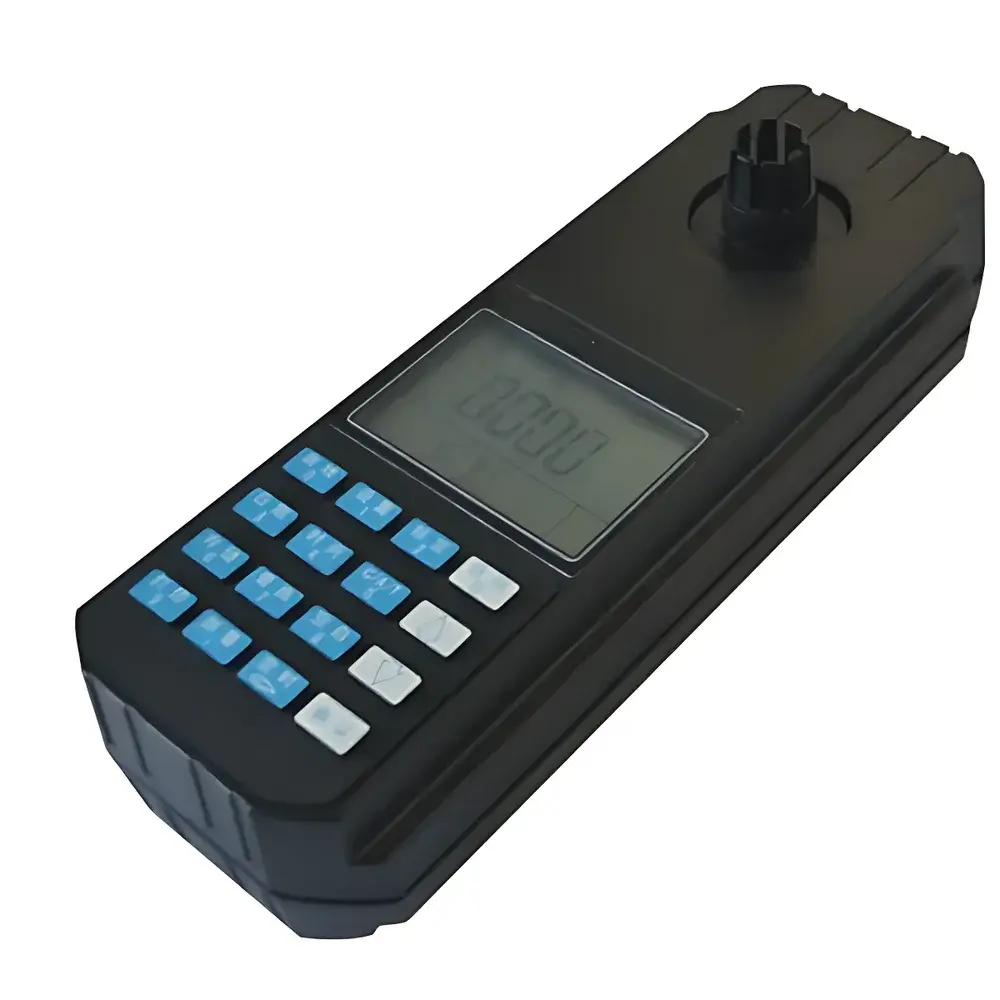
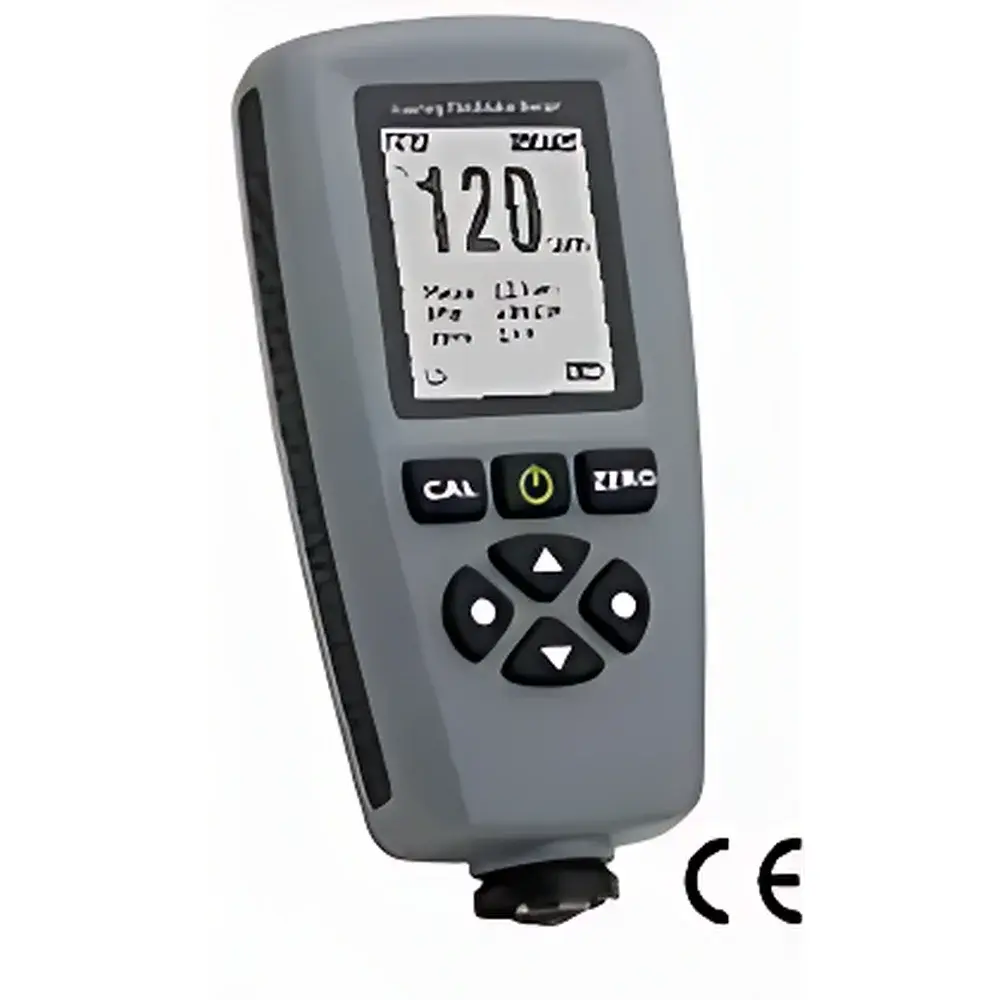
Zhongruixiang ZRX-29854 Portable Chlorine Dioxide (ClO₂) Photometric Analyzer
| Brand | Zhongruixiang |
|---|---|
| Origin | Beijing, China |
| Model | ZRX-29854 |
| Measurement Range | 0.05–20.00 mg/L |
| Accuracy | ≤±5% FS |
| Repeatability | ≤3% |
| Optical Drift | <0.002 A in 20 min |
| Dimensions | 80 × 230 × 55 mm |
| Weight | 500 g |
| Power Supply | 4 × AA batteries |
| Operating Temperature | 5–40 °C |
| Relative Humidity | ≤85% RH |
| IP Rating | IP65 |
| Light Source | Cold LED with narrow-band interference optical system |
Overview
The Zhongruixiang ZRX-29854 Portable Chlorine Dioxide (ClO₂) Photometric Analyzer is a field-deployable, microprocessor-controlled instrument engineered for rapid, on-site quantification of aqueous chlorine dioxide concentration using standardized colorimetric methodology. It operates on the principle of spectrophotometric absorption—specifically, the selective reaction of ClO₂ with a proprietary chromogenic reagent (e.g., DPD or chlorophenol red-based chemistry), generating a stable colored complex whose absorbance at a defined wavelength (typically 520–550 nm) is linearly proportional to analyte concentration. Designed for compliance with common water quality testing protocols—including those referenced in ISO 7393-2, ASTM D1253, and EPA Method 334.0—the ZRX-29854 delivers trace-level sensitivity and robust performance under variable ambient conditions without requiring laboratory infrastructure.
Key Features
- Ultra-low-power 16-bit microcontroller architecture enabling extended battery life and stable real-time signal processing.
- High-contrast LCD display with intuitive menu navigation and full English interface for global operator accessibility.
- Compact, ergonomic housing fabricated from molded ABS polymer with IP65-rated ingress protection—resistant to dust, water spray, and chemical splashes encountered in industrial and municipal environments.
- Dual optical system: cold LED light source coupled with narrow-band interference filters ensures minimal spectral drift and high photometric stability (<0.002 A drift over 20 minutes).
- Onboard data management: stores up to 20 user-defined calibration curves and 199 measurement records, each timestamped with year, month, day, hour, minute, and second—supporting audit-ready documentation per GLP requirements.
- Non-volatile memory with power-loss protection preserves calibration settings and measurement history during battery replacement or unexpected shutdown.
Sample Compatibility & Compliance
The ZRX-29854 is validated for direct analysis of clear to slightly turbid aqueous samples—including drinking water, process water, wastewater effluent, cooling tower water, and disinfection contact tanks—without filtration when turbidity remains below 5 NTU. It accommodates standard 10 mm pathlength cuvettes and supports both pre-filled reagent vials and liquid reagent dispensing workflows. The analyzer meets functional equivalency benchmarks outlined in ISO 9001-certified quality control procedures and aligns with routine monitoring expectations under WHO Guidelines for Drinking-water Quality and US EPA Safe Drinking Water Act (SDWA) secondary standards for residual disinfectants. While not intended for regulatory submission without method validation, it serves as a qualified screening tool for QC/QA personnel performing daily operational checks in accordance with internal SOPs.
Software & Data Management
No external PC software is required for basic operation; however, timestamped datasets can be manually transcribed or exported via optional serial-to-USB adapter (not included). Each stored record includes measured ClO₂ concentration (mg/L), corresponding absorbance value (A), transmittance (%T), and acquisition time. The instrument supports manual zeroing, blank subtraction, and multi-point calibration using NIST-traceable ClO₂ standards. Calibration verification checks may be performed at scheduled intervals to ensure ongoing metrological integrity. For laboratories operating under 21 CFR Part 11 requirements, supplementary documentation—such as calibration logs, maintenance records, and operator training verification—must be maintained externally to satisfy electronic record retention mandates.
Applications
This analyzer is routinely deployed across diverse sectors where real-time ClO₂ monitoring informs critical process decisions: municipal water treatment plants verifying post-chlorination residuals; food and beverage facilities validating sanitizer concentration in CIP rinse cycles; pharmaceutical cleanroom utilities ensuring microbial control in purified water systems; aquaculture operations maintaining optimal disinfection levels without harming aquatic life; and HVAC system service technicians assessing biocide efficacy in chilled water loops. Its portability and battery-powered design make it especially suitable for remote sampling locations, emergency response teams, and third-party environmental consultants conducting multi-site audits.
FAQ
What is the minimum detectable concentration?
The lower limit of quantitation (LLOQ) is 0.05 mg/L, verified against certified reference materials and confirmed through repeated spike-recovery experiments.
Can the instrument measure other oxidants such as free chlorine or chloramines?
No—this model is specifically optimized for ClO₂ detection. Cross-reactivity with free chlorine or monochloramine is minimized by reagent selectivity and optical filtering, but dedicated instrumentation is recommended for multi-analyte profiling.
Is temperature compensation applied during measurement?
The ZRX-29854 does not include automatic temperature compensation; users should conduct measurements within the specified 5–40 °C operating range and equilibrate samples prior to analysis to minimize thermal effects on reaction kinetics.
How often must the optical system be cleaned or serviced?
Routine cleaning of the cuvette chamber and light path with lint-free wipes and isopropyl alcohol is advised after every 50 measurements or when visible residue accumulates. No periodic recalibration of optics is required under normal use.
Does the device support GLP-compliant data export?
While the unit stores auditable timestamps and raw photometric values, full GLP/GMP compliance requires integration with validated LIMS platforms or manual transcription into controlled electronic notebooks meeting ALCOA+ principles.





