
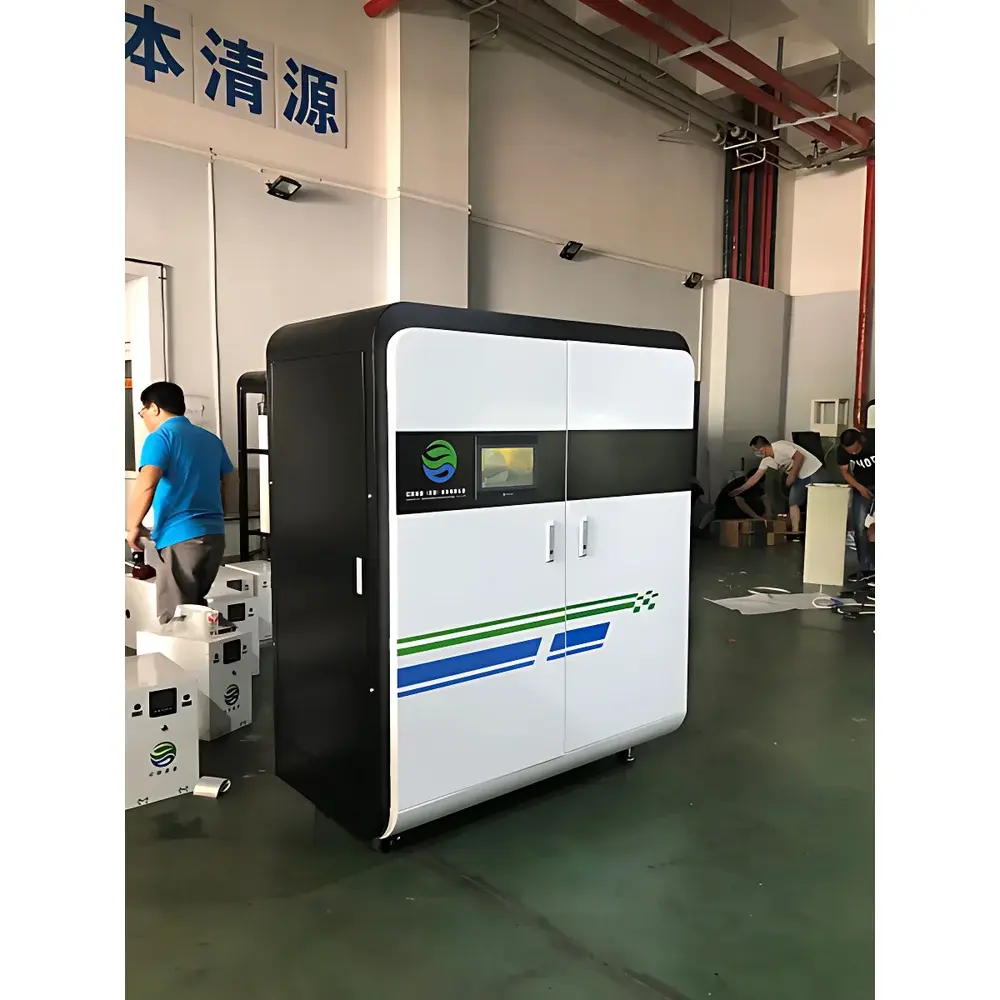
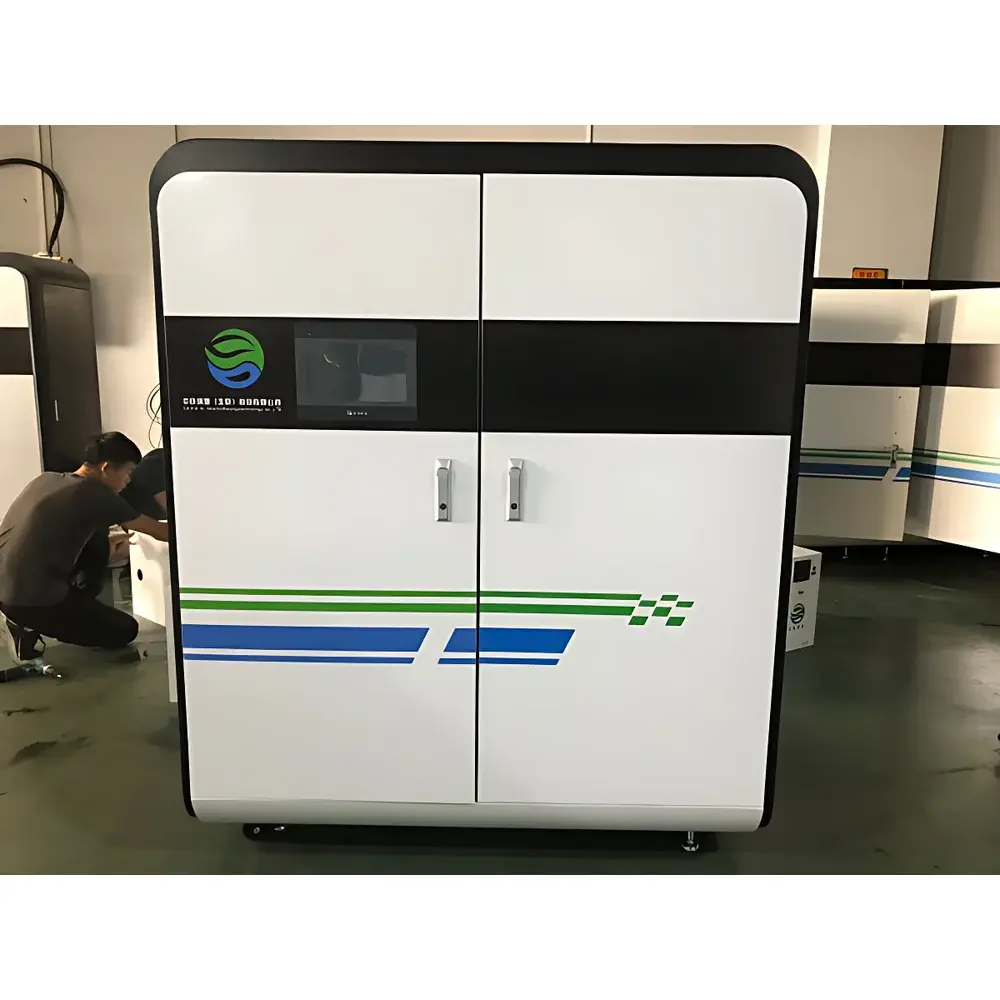
ZHQY-D-300L Integrated Laboratory Wastewater Treatment System
| Brand | ZHQY |
|---|---|
| Origin | Beijing, China |
| Manufacturer Type | OEM Manufacturer |
| Country of Origin | China |
| Model | ZHQY-D-300L |
| Treatment Capacity | 300–500 L/day (8–12 hr operation) |
| Dimensions | 1500 mm × 800 mm × 1800 mm |
| Weight | 100 kg |
| Power Supply | AC 220 V, 50 Hz |
| Rated Power | 300 W |
| Compliance | GB 8978–1996 (Grade I discharge), GB/T 31962–2015 |
| Core Technologies | Ozone oxidation, photocatalytic oxidation, pH auto-adjustment, multi-stage filtration (shallow-media, nanofiltration, optional UF/NF/RO/MF), heavy metal chelation, sealed odor containment |
Overview
The ZHQY-D-300L Integrated Laboratory Wastewater Treatment System is an engineered, turnkey solution designed for the on-site treatment of complex, low-volume, high-variability wastewater streams generated in research laboratories, academic institutions, environmental monitoring centers, pharmaceutical QC labs, and public health facilities. Unlike conventional municipal-scale treatment infrastructure, this system employs a sequential, multi-barrier physicochemical process grounded in proven unit operations—including automated pH neutralization, shallow-media filtration, nanofiltration, optional ultrafiltration (UF), and advanced oxidation via ozone and UV-activated photocatalysis—to achieve consistent effluent quality compliant with stringent national discharge standards. Its compact footprint (1.5 m × 0.8 m × 1.8 m), sealed hydraulic architecture, and fully enclosed gas-phase management eliminate secondary emissions—ensuring zero leakage, no sludge generation, and negligible odor release. The system operates under continuous flow or batch mode, with real-time monitoring of influent/effluent pH, conductivity, and critical process parameters to support GLP-aligned documentation and regulatory traceability.
Key Features
- Integrated modular design: All treatment stages—including collection tank, pH adjustment chamber, shallow-media filter, nanofiltration module, optional UF/NF/RO membrane unit, and photocatalytic reactor—are housed within a single corrosion-resistant enclosure.
- Intelligent PLC-based control: 10-inch industrial touchscreen HMI enables intuitive configuration of dosing ratios, cycle timing, alarm thresholds, and maintenance scheduling; supports password-protected user roles and audit-log export.
- Comprehensive safety interlocks: Automatic shutdown triggered by low-level detection (no-influent protection), overpressure events, electrical leakage, motor overload, and thermal cutoffs on pumps and ozone generator.
- Low-energy operation: 300 W nominal power draw; uses energy-efficient submersible pumps and silent-duty motors; ozone generation optimized for minimal specific energy consumption (kWh/kg O₃).
- Passive odor management: Built-in exhaust fan routes off-gas through activated carbon adsorption before controlled release—eliminating need for external ductwork or scrubber integration.
- Ergonomic engineering: Rounded corners, front-access service doors, integrated casters, and aluminum alloy handles facilitate safe relocation, routine inspection, and component replacement without disassembly.
Sample Compatibility & Compliance
The ZHQY-D-300L treats heterogeneous aqueous waste streams commonly encountered in analytical, synthetic, and biological laboratories—including rinse water from HPLC/GC systems, buffer solutions, diluted acids/bases, low-concentration heavy metal solutions (e.g., Cu²⁺, Cr⁶⁺, Pb²⁺), organic solvents below 5% v/v (e.g., methanol, ethanol, acetone), and microbiologically contaminated effluents. It is not intended for undiluted organic solvents, radioactive waste, or highly viscous suspensions (>50 cP). Effluent consistently meets China’s Integrated Wastewater Discharge Standard (GB 8978–1996, Grade I limits for COD ≤ 100 mg/L, NH₃-N ≤ 15 mg/L, total Cr ≤ 1.5 mg/L, As ≤ 0.5 mg/L) and Wastewater Discharged to Municipal Sewer Systems (GB/T 31962–2015). System design aligns with ISO 14001 environmental management principles and supports compliance verification for institutional environmental impact assessments (EIA) required for new laboratory construction.
Software & Data Management
The embedded control system records time-stamped operational data—including pump runtime, ozone dosage cycles, pH correction frequency, filter pressure differentials, and alarm events—for ≥12 months onboard. Data export is supported via USB and RS485 Modbus RTU protocol for integration into centralized facility SCADA or LIMS platforms. Audit trails comply with basic ALCOA+ principles (Attributable, Legible, Contemporaneous, Original, Accurate), including operator ID logging and immutable event timestamps. While not FDA 21 CFR Part 11-certified out-of-the-box, the system architecture permits third-party validation packages for regulated environments requiring electronic record integrity and electronic signature capability.
Applications
This system serves as a primary treatment node in decentralized wastewater management strategies across diverse institutional settings: university chemistry and biology teaching labs; provincial CDC and food safety testing centers; pharmaceutical R&D and QC facilities operating under GMP-aligned internal environmental controls; environmental monitoring stations performing trace metal analysis; and clinical diagnostic laboratories generating biohazard-adjacent liquid waste. Its scalability—via parallel unit deployment—and adaptability to variable influent composition make it suitable for both retrofit installations in legacy buildings and inclusion in green-lab certification frameworks (e.g., LEED EBOM, Labs21).
FAQ
What types of laboratory wastewater can the ZHQY-D-300L treat?
It is validated for mixed aqueous streams containing low-concentration inorganic acids/bases, salts, chelated heavy metals, polar organics, and microbial contaminants—but excludes halogenated solvents, concentrated oxidizers, or radioactive isotopes.
Is chemical dosing automated and adjustable?
Yes: acid (H₂SO₄) and base (NaOH) dosing is dynamically controlled via real-time pH feedback; coagulant and oxidant dosages are programmable per cycle based on historical load profiles.
Does the system require regular consumable replacement?
Yes: nanofiltration cartridges, activated carbon media, and ozone generator electrodes have defined service intervals (typically 6–12 months depending on usage); all are field-replaceable without tools.
Can the unit be connected to building BMS or lab informatics systems?
Yes: Modbus RTU output enables integration with facility-wide monitoring platforms; analog 4–20 mA outputs are available for pH and flow rate signals.
What maintenance tasks are required for daily operation?
Daily visual inspection of inlet strainer and leak sensors; monthly calibration of pH probe and verification of ozone output concentration; quarterly cleaning of shallow-media filter media and nanofiltration housing.



