
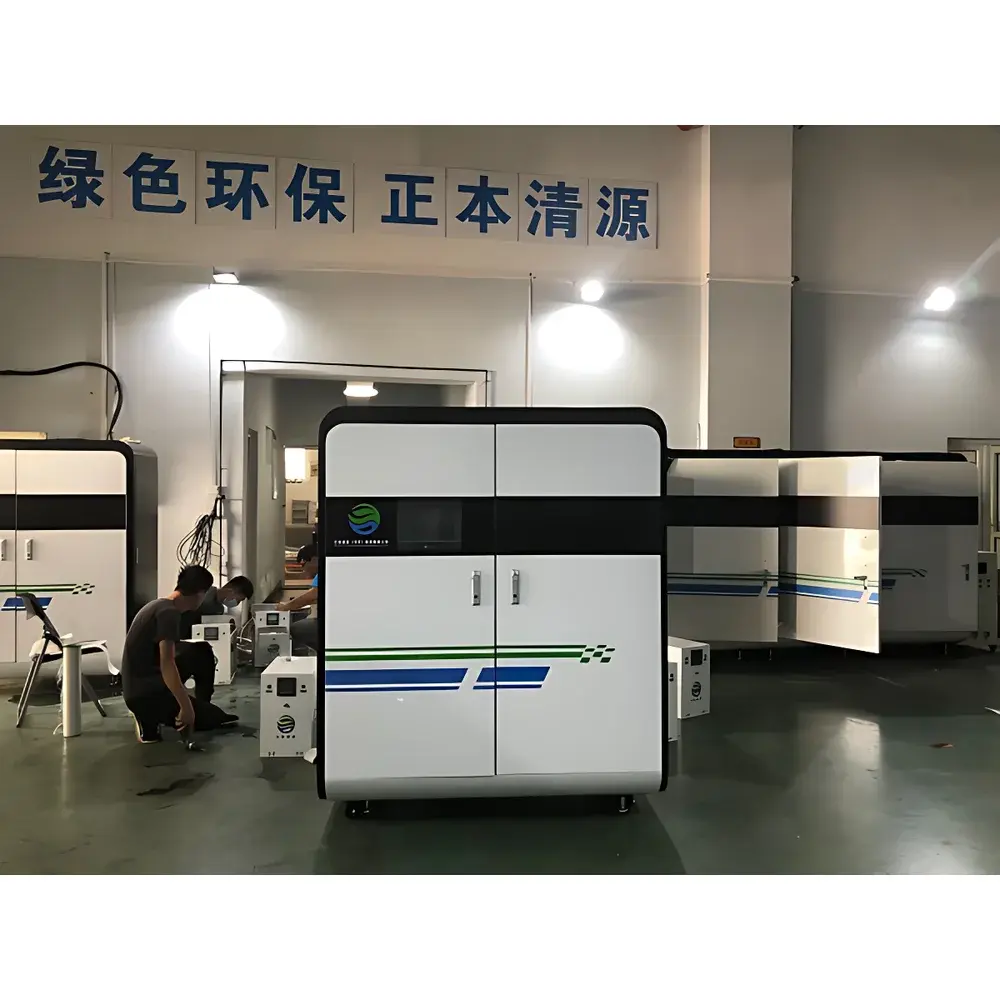
ZHQY-Q Comprehensive Laboratory Wastewater Treatment System
| Brand | ZHQY |
|---|---|
| Origin | Xinjiang, China |
| Manufacturer Type | Direct Manufacturer |
| Country of Origin | China |
| Model | ZHQY-Q |
| Price | USD 13,600 (FOB) |
| Application | Integrated Treatment of Inorganic, Organic & Biological Laboratory Wastewater |
Overview
The ZHQY-Q Comprehensive Laboratory Wastewater Treatment System is an engineered, modular, and fully automated solution designed to treat complex mixed wastewater streams generated in research laboratories, clinical microbiology labs, pharmaceutical QC facilities, and academic institutions. Unlike conventional single-process units, this system integrates sequential physicochemical and advanced oxidation processes—including pH auto-adjustment, coagulation-flocculation with dissolved air flotation (DAF), micro-electrolysis, electrochemical catalytic oxidation, ozone-catalyzed oxidation, UV/TiO₂ photocatalysis, specialized biological degradation (for biodegradable organics and pathogen attenuation), multi-stage adsorption, ultrafiltration/nanofiltration membrane separation, and composite disinfection (UV + sodium hypochlorite or chlorine dioxide). It operates on the principle of “source segregation–multi-barrier treatment–end-point verification”, ensuring robust removal of heavy metals (Pb²⁺, Hg²⁺, Cd²⁺, Cr⁶⁺, Cu²⁺, Sb³⁺, Fe²⁺, Al³⁺, Mn²⁺), halides, acidic/alkaline residuals, organic solvents (e.g., acetone, ethanol, chloroform), aromatic compounds (benzene, toluene, xylene), phenols, organophosphates, viable microorganisms (viruses, chlamydiae, mycoplasma, spores of Bacillus anthracis and Brucella spp.), and low-level radionuclides (when pre-screened and within regulatory thresholds). The system is validated for continuous operation under variable influent loadings (500 L/day to 50 m³/day), with real-time monitoring of key parameters (pH, ORP, conductivity, turbidity, residual oxidant) to maintain compliance with discharge limits.
Key Features
- Modular, skid-mounted architecture enabling indoor installation in utility corridors or basement mechanical rooms—no civil excavation or multi-tank construction required
- PLC-based central control with 7-inch HMI touchscreen interface; intuitive navigation, password-protected parameter access, and event-log history (≥12 months)
- Auto-calibrated pH adjustment using dual-dosing pumps (acid/base) with feedback loop control (±0.1 pH unit accuracy)
- Intelligent reagent dosing system with gravimetric feed calibration and real-time consumption tracking to minimize chemical overuse
- Dual-layer safety interlock: electrical (overcurrent, ground fault, phase loss) and hydraulic (dry-run, overflow, low-level shutoff)
- Self-cleaning function for DAF saturator, micro-electrolysis electrodes, and membrane housings—scheduled via programmable timer or triggered by transmembrane pressure rise
- Acoustically optimized design: ≤55 dB(A) at 1 m distance; corrosion-resistant SS316L piping, FRP structural frame, and EPDM gasketing throughout
- Zero secondary waste generation: no sludge cake requiring disposal; all spent media (activated carbon, iron-carbon fillers, ceramic membranes) are regenerable or certified for hazardous waste incineration per local regulations
Sample Compatibility & Compliance
The ZHQY-Q system treats heterogeneous influents meeting typical laboratory wastewater profiles: COD 200–2,500 mg/L, BOD₅ 50–800 mg/L, suspended solids ≤400 mg/L, total coliforms up to 10⁷ CFU/100 mL, and heavy metal concentrations aligned with GB 8978–1996 Class I limits. It complies with Chinese national standards including GB 8978–1996 (Integrated Wastewater Discharge Standard, Grade I), GB/T 31962–2015 (Wastewater Discharged to Municipal Sewer Systems), and HJ 2029–2013 (Technical Guidelines for Pollution Control of Medical Institutions’ Wastewater). For international deployment, the system’s control architecture supports audit-ready data logging aligned with GLP/GMP principles; optional 21 CFR Part 11-compliant electronic signatures and role-based user access can be implemented via third-party SCADA integration.
Software & Data Management
The embedded control software records timestamped operational data—including flow rates, reagent dosage volumes, pH/ORP trends, pressure differentials across filtration stages, UV lamp intensity, and alarm events—with automatic CSV export via USB or Ethernet. Historical logs are stored locally on industrial-grade SD card (16 GB, RAID-1 redundant option available) and support remote diagnostics via secure VPN. All data entries include operator ID, action type, and modification timestamp—enabling full traceability for internal audits or environmental regulatory inspections. Optional cloud connectivity (MQTT protocol) enables real-time KPI dashboards (treatment efficiency %, energy kWh/m³, chemical cost/L) accessible via web browser or mobile app.
Applications
This system serves as a centralized wastewater pretreatment unit for biosafety level 2 (BSL-2) and BSL-3 microbiology laboratories, university chemistry departments handling transition-metal catalysts, hospital clinical labs processing cytotoxic drug residues, and R&D centers developing agrochemical formulations. It is routinely deployed in new lab building projects where municipal sewer discharge permits mandate pre-treatment verification, and in retrofit scenarios where legacy acid-waste and biohazard lines require consolidation into a single compliant outflow. Case studies confirm consistent effluent quality meeting ≤50 mg/L COD, ≤10 mg/L NH₃-N, <3 NTU turbidity, <100 CFU/100 mL total coliforms, and undetectable Cr⁶⁺/Hg²⁺ (<0.005 mg/L) across all rated capacities.
FAQ
Does the ZHQY-Q system require connection to municipal sewer infrastructure?
Yes—it is designed as a pretreatment system discharging to existing sewer networks or on-site infiltration fields compliant with local codes.
Can it handle radioactive contaminants?
It is not certified for radioisotope-laden wastewater; users must conduct prior radiological screening and consult national nuclear regulatory authorities before integration.
What maintenance intervals are recommended?
Monthly visual inspection, quarterly calibration of pH/ORP sensors, annual replacement of UV lamps and activated carbon, and biannual integrity testing of membrane modules.
Is remote monitoring supported out-of-the-box?
Standard configuration includes local HMI and USB data export; Ethernet-based remote access requires optional firmware upgrade and network security review.
How is system performance validated during commissioning?
Third-party certified effluent sampling (per GB/T 31962–2015 Annex A) is conducted over 72 consecutive hours at 100% design flow, with results documented in an ISO/IEC 17025-accredited test report.



