
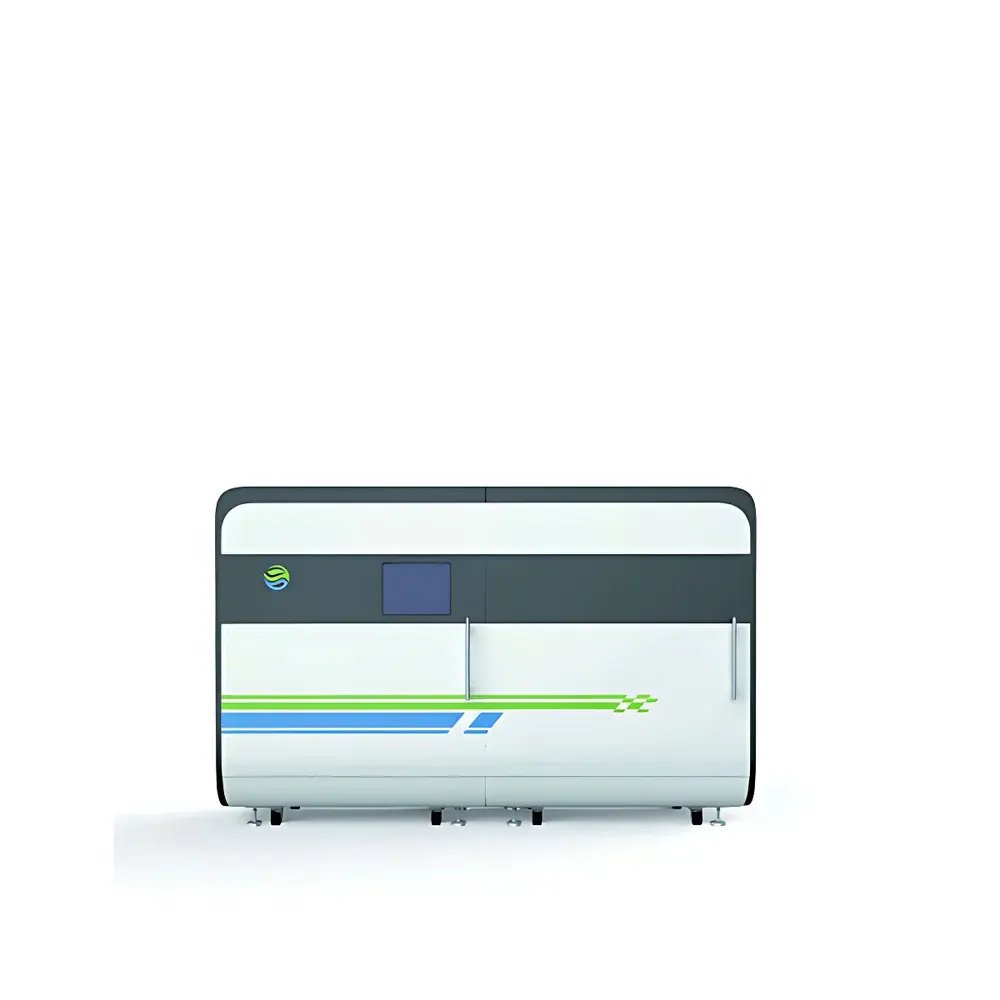
ZHQY ZHFY-5 Integrated Laboratory Waste Liquid Incineration System
| Brand | ZHQY |
|---|---|
| Origin | Beijing, China |
| Manufacturer Type | Direct Manufacturer |
| Product Origin | Domestic (China) |
| Model | ZHFY-5 |
| Price Range | USD 70,000 – 140,000 |
| Instrument Category | Liquid Waste Treatment |
| Applicable Waste Streams | Mixed Laboratory Waste Liquids (Organic Solvents, Residual Reaction Mixtures, High-Strength Organic Effluents) |
| Treatment Principle | High-Temperature Thermal Oxidation (Dual-Chamber Incineration) |
| Throughput Capacity | 5 L/day (nominal continuous feed rate for low-flow, high-hazard streams) |
| Post-Treatment Compliance | GB 8978–1996 “Integrated Wastewater Discharge Standard” Grade I Effluent Limits |
| Combustion Efficiency | ≥99.99% |
| Residence Time in Secondary Chamber | >2 s at ≥1100 °C |
| Ash Burnout Rate | <3% |
| Flue Gas Cleaning | Wet Scrubbing + Terminal Adsorption/Neutralization Unit |
Overview
The ZHQY ZHFY-5 Integrated Laboratory Waste Liquid Incineration System is an engineered solution for the safe, compliant, and thermally complete destruction of hazardous organic liquid waste generated in research laboratories, pharmaceutical development facilities, and analytical chemistry environments. Unlike dilution-based or neutralization-only approaches, this system employs dual-chamber thermal oxidation — a validated method recognized under international hazardous waste treatment guidelines (e.g., EPA SW-846 Method 0010, ISO 14040 Life Cycle Assessment frameworks for waste minimization). The primary chamber initiates combustion at 750–850 °C, while the secondary combustion chamber maintains sustained temperatures ≥1100 °C for >2 seconds to ensure complete molecular dissociation of persistent organic pollutants (POPs), halogenated compounds, and mutagenic/carcinogenic residues. Designed specifically for intermittent, low-volume but high-risk waste streams typical of academic and industrial labs, the ZHFY-5 operates with precise fuel-air ratio control, real-time temperature profiling, and redundant safety interlocks to prevent incomplete combustion byproducts such as dioxins, furans, or carbon monoxide.
Key Features
- Dual-chamber combustion architecture with independently controlled primary and secondary zones, enabling full thermal decomposition of complex organics including chlorinated solvents, nitroaromatics, and polymerizable residues.
- Integrated auxiliary fuel system compatible with light diesel, acetylene, or ethanol — automatically modulated based on real-time calorific value feedback from feedstock.
- Compressed-air-assisted waste atomization ensures uniform droplet size distribution (<100 µm Sauter mean diameter), enhancing mixing efficiency and flame stability across variable viscosity and density inputs.
- Multi-stage flue gas cleaning train comprising alkali wet scrubber (pH-controlled NaOH solution), demister pad, and activated carbon/polymolecular adsorption bed to remove acid gases (HCl, SO₂, HF), particulates, and trace volatile organics.
- PLC-based automation platform with HMI touchscreen interface, data logging (≥30-day buffer), alarm history with timestamped event records, and configurable setpoints for temperature, pressure differential, and O₂ concentration.
- Structural compliance with ASME Section VIII Div. 1 for pressure components and EN 13693 for incinerator safety systems; all electrical instrumentation rated IP65 for lab-grade corrosion resistance.
Sample Compatibility & Compliance
The ZHFY-5 accepts heterogeneous liquid waste streams without pre-filtration, including acetone/nitromethane mixtures, spent chromatography eluents, hydrolyzed peptide synthesis residues, and aqueous-organic emulsions. It is not intended for halogen-free inorganic acids, cyanide solutions, or reactive metals (e.g., sodium borohydride suspensions). All operational parameters adhere to Chinese national regulatory requirements per GB 8978–1996 Grade I discharge limits for treated condensate and scrubber effluent. While the system itself does not generate wastewater requiring direct discharge, its integrated scrubber output is pH-neutralized and heavy-metal-stabilized prior to connection to facility sewer lines — consistent with GLP laboratory infrastructure standards. Optional integration with local environmental monitoring networks supports automated reporting to municipal environmental protection bureaus.
Software & Data Management
The embedded control system logs critical process variables (combustion chamber temperature, secondary residence time, O₂ excess level, scrubber pH, fan static pressure) at 1-second intervals. Raw data exports to CSV or SQLite format via USB or Ethernet; historical trends are visualized through built-in web server accessible via standard browser. Audit trail functionality complies with basic ALCOA+ principles (Attributable, Legible, Contemporaneous, Original, Accurate), supporting internal QA reviews and third-party inspections. Though not 21 CFR Part 11 certified out-of-the-box, the firmware architecture allows for future validation packages (IQ/OQ/PQ documentation templates available upon request) to meet GMP-aligned quality systems in regulated pharmaceutical R&D labs.
Applications
- Destruction of legacy solvent inventories containing benzene, chloroform, or carbon tetrachloride prior to lab decommissioning.
- On-site treatment of failed synthesis batches contaminated with genotoxic impurities (GTIs) in medicinal chemistry units.
- Secure disposal of forensic toxicology samples post-analysis where chain-of-custody integrity must be preserved until final thermal elimination.
- Reduction of hazardous waste transportation frequency and associated UN 3265 classification liabilities for university core facilities.
- Complement to fume hood exhaust abatement strategies by eliminating concentrated condensate waste from solvent recovery units.
FAQ
What types of laboratory waste liquids are incompatible with the ZHFY-5?
Highly viscous polymer solutions (>10,000 cP), molten metal salts, perchloric acid-containing mixtures, and peroxide-forming ethers (e.g., diethyl ether stored >12 months) require pretreatment or alternative disposal pathways.
Does the system require external ventilation or stack installation?
Yes — a dedicated stainless steel exhaust duct (minimum Ø150 mm) must connect to a facility stack meeting local building codes; backpressure must remain <500 Pa at maximum airflow.
Can the ZHFY-5 operate unattended overnight?
Fully automatic cycle operation is supported, but remote monitoring via Ethernet is mandatory; local personnel must be reachable within 15 minutes for emergency response per IEC 61511 SIL1 requirements.
Is operator training included with purchase?
Yes — a 2-day on-site commissioning and SOP development workshop is provided, covering startup/shutdown sequences, alarm response protocols, scrubber maintenance, and logbook documentation standards.
How often does the activated carbon adsorption bed require replacement?
Under nominal use (5 L/day average), replacement is scheduled every 6–8 months based on breakthrough testing using UV-Vis spectroscopy at 254 nm; usage logs trigger automated service alerts.



