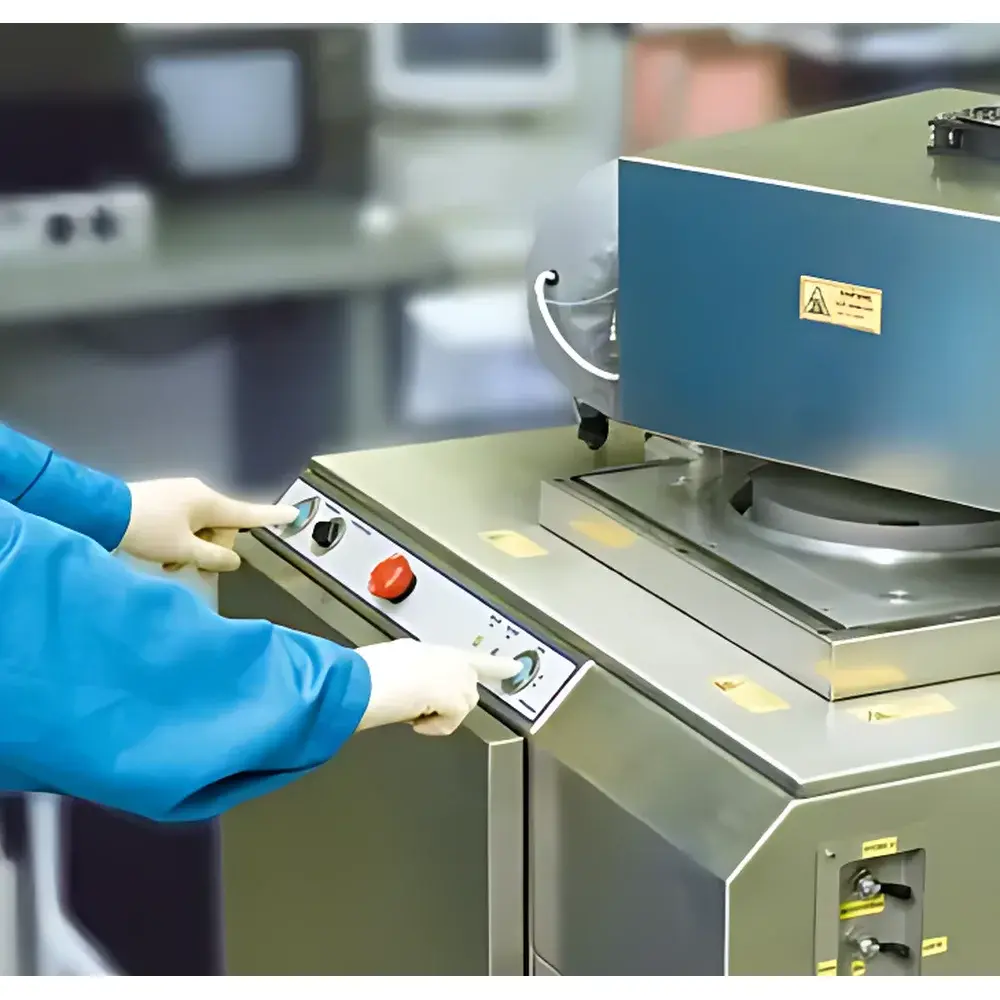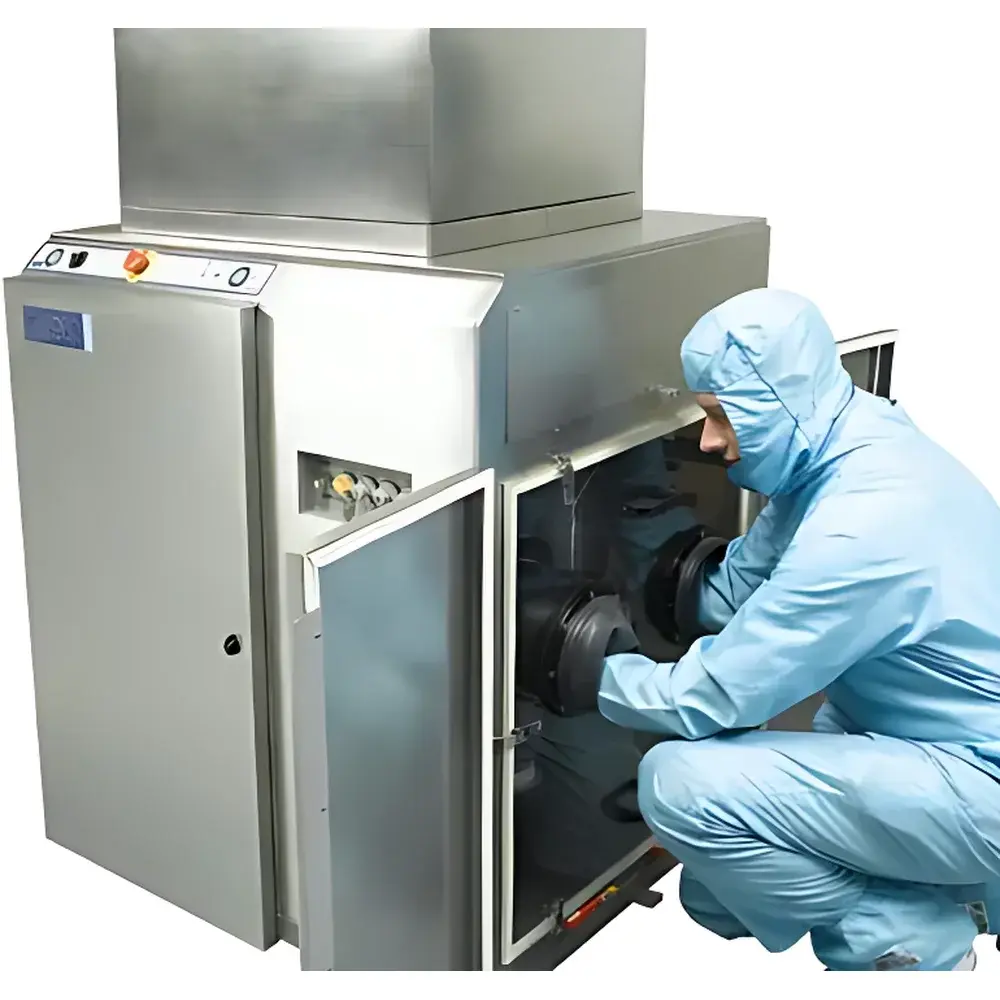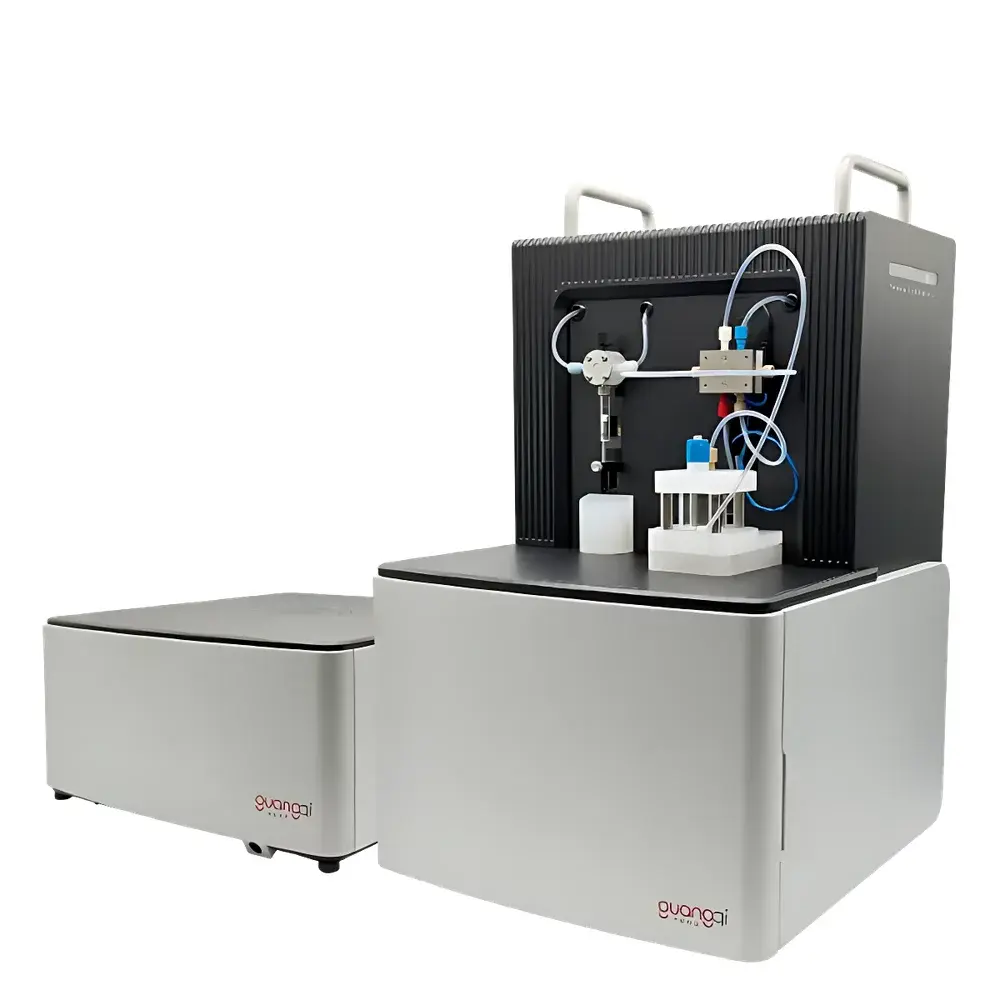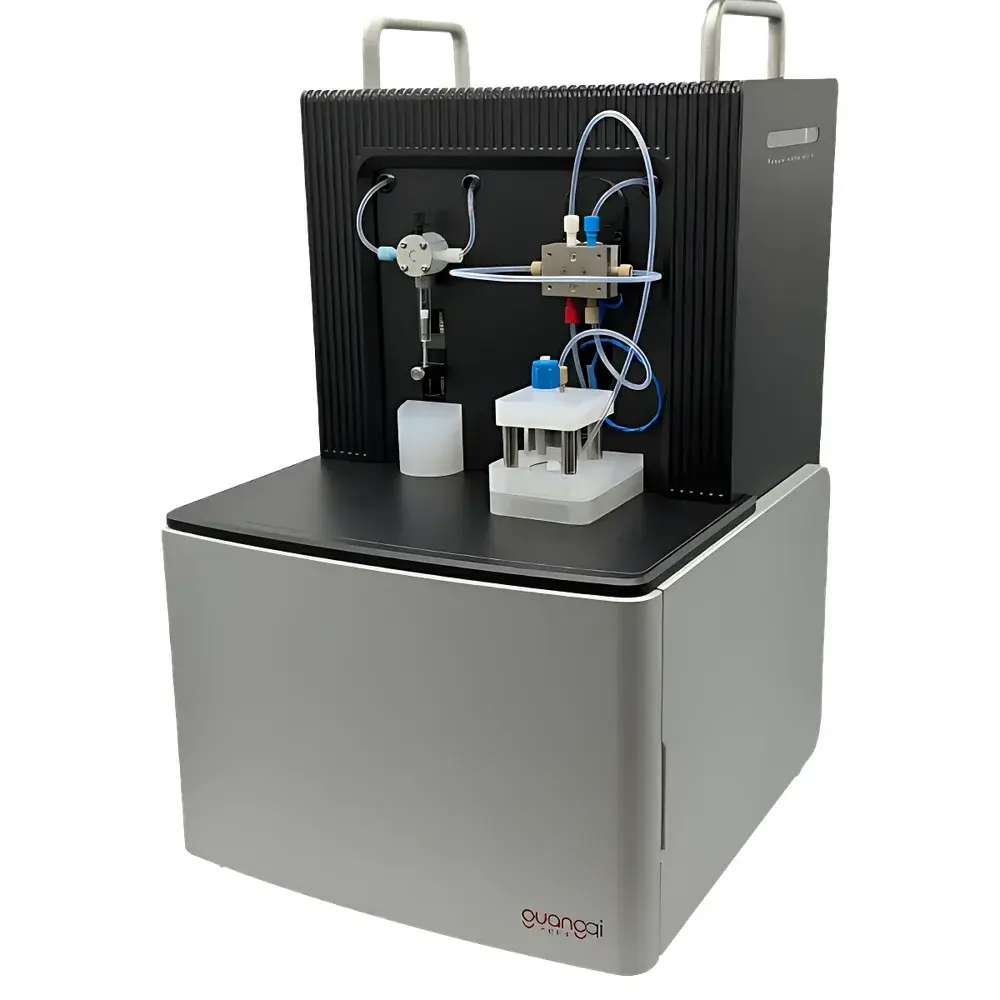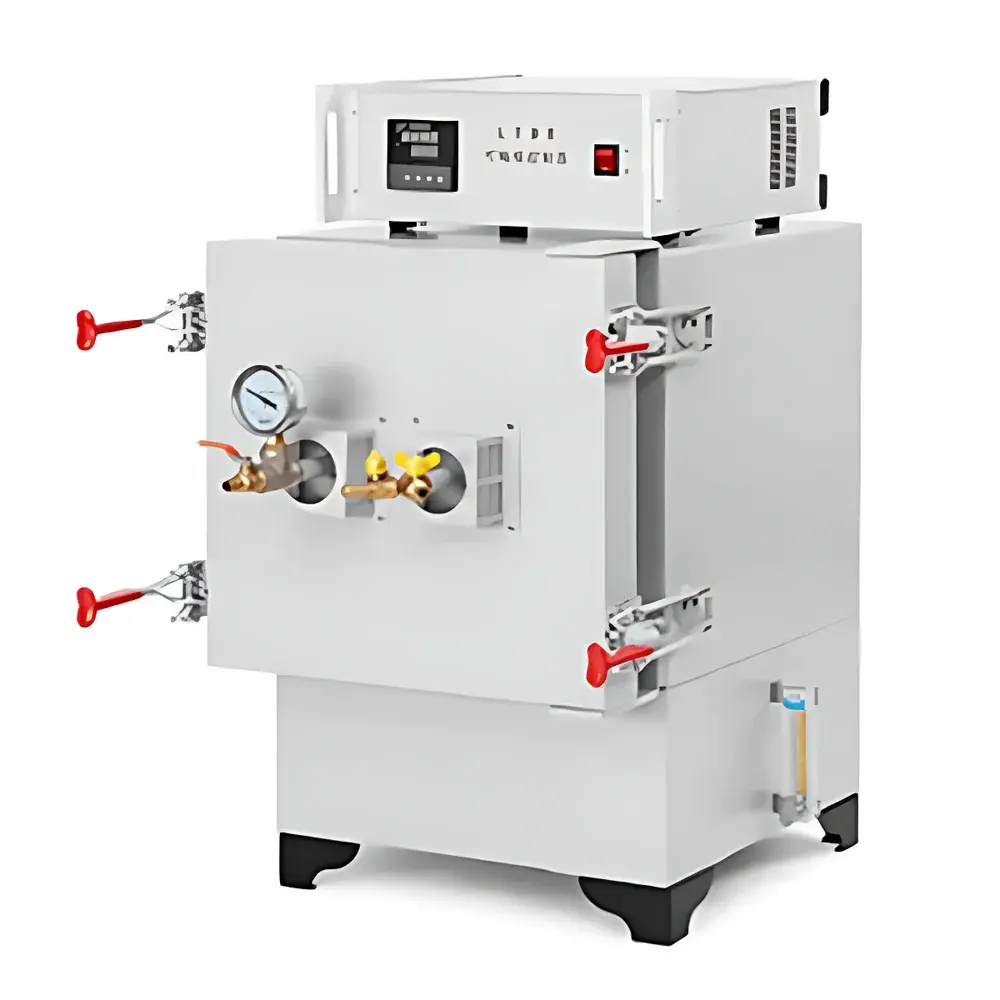
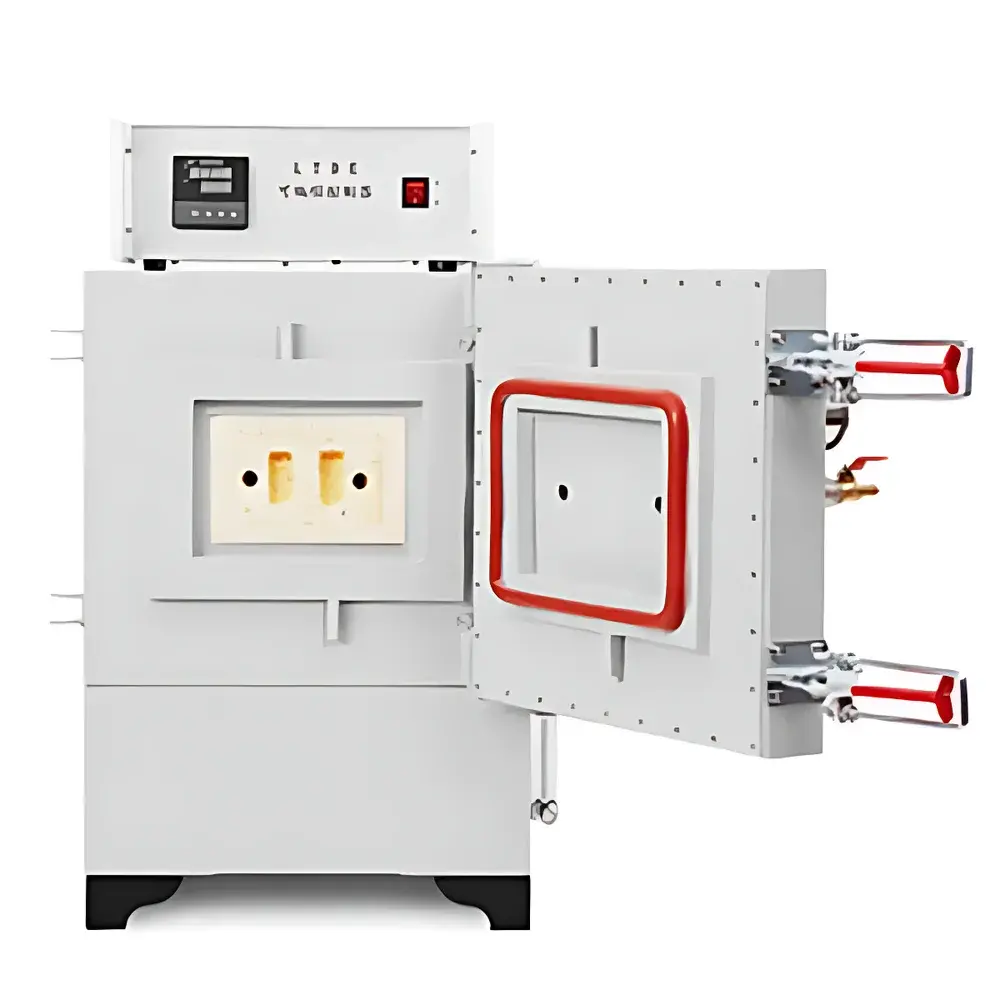
Zhuochi KSX3-5-1200 High-Vacuum Rapid Thermal Annealing Furnace
| Brand | Zhuochi |
|---|---|
| Origin | Zhejiang, China |
| Manufacturer Type | Authorized Distributor |
| Regional Category | Domestic (PRC) |
| Model | KSX3-5-1200 |
| Instrument Type | High-Vacuum Rapid Annealing Furnace |
| Chamber Dimensions | 300 × 300 × 300 mm (L×W×H) |
| External Dimensions | 620 × 660 × 920 mm |
| Temperature Range | Ambient to 1200 °C |
| Max. Heating Rate | ≤50 °C/min |
| Cooling Rate | ≤20 °C/min |
| Temperature Uniformity | ±1 °C |
| Display Resolution | 1 °C |
| Heating Element | High-Temperature Resistance Wire |
| Insulation | Lightweight Refractory Fiber Board + Insulating Bricks & Ceramic Fiber Blanket |
| Thermocouple Type | K-Type |
| Power Supply | 220 V, 50 Hz |
| Total Power | 5 kW |
| Vacuum Capability | Integrated High-Vacuum System (User-Provided Pump Required) |
| Atmosphere Options | Inert Gas (N₂, Ar) or Reducing/Neutral Mixtures via Dual-Valve Gas Inlet/Outlet |
| Cooling Interface | Water-Cooled Flange with External Chiller Connection (Low-Temp Circulator Recommended) |
Overview
The Zhuochi KSX3-5-1200 is a benchtop high-vacuum rapid thermal annealing furnace engineered for precision semiconductor process development, thin-film metallization, and advanced materials research. It operates on resistive heating principles using high-purity resistance wire embedded within multi-layered ultra-lightweight refractory fiber insulation—enabling stable, repeatable thermal profiles from ambient up to 1200 °C under controlled vacuum or inert gas atmospheres. Designed specifically for R&D labs and pilot-line integration, the furnace features a sealed stainless-steel chamber with water-cooled flange interface, dual-valve gas manifold, and integrated vacuum port compatible with standard turbomolecular or diffusion pump systems (pump not included). Its LTDE-based 50-segment programmable controller supports complex ramp-soak-cool sequences essential for dopant activation, silicide formation, oxide densification, and post-deposition annealing in Si, SiC, GaN, and 2D material platforms.
Key Features
- High-integrity vacuum chamber with O-ring sealed door and water-cooled flange—capable of achieving base pressures <10⁻³ mbar with appropriate pumping
- Dual independent gas inlets with precision mass flow control (user-supplied MFCs recommended) and single outlet with adjustable needle valve for dynamic atmosphere management
- Robust thermal architecture: K-type thermocouple feedback loop with ±1 °C stability and 1 °C display resolution across full range
- 50-step programmable temperature profile capability with automatic ramp rate limiting and dual-stage overtemperature protection (hardware + software)
- Integrated safety interlocks: cooling water flow verification, door-open cutoff, and vacuum loss shutdown protocol
- Compact footprint (620 × 660 × 920 mm) optimized for cleanroom-compatible installation and Class 1000 lab environments
Sample Compatibility & Compliance
The KSX3-5-1200 accommodates wafers up to 6-inch diameter, diced dies, MEMS substrates, and ceramic or metallic coupons (max. 300 × 300 × 300 mm internal volume). Its design conforms to fundamental safety and operational requirements outlined in IEC 61000-6-2 (EMC immunity) and IEC 61000-6-4 (EMC emission). While not certified to SEMI S2 or S8 out-of-the-box, the furnace’s modular gas/vacuum interface and traceable temperature control architecture support qualification under GLP and internal GMP-aligned process validation protocols. Users performing regulated annealing steps (e.g., for medical device coatings or aerospace-grade alloys) may implement audit trails via external data logging synchronized to the LTDE controller’s analog output.
Software & Data Management
The LTDE controller provides local USB and RS485 interfaces for real-time data acquisition and remote parameter adjustment using optional PC-based configuration tools. Temperature profiles, dwell times, and alarm logs are stored internally with timestamping. For compliance-critical applications, users may integrate third-party SCADA systems (e.g., LabVIEW, Ignition) via Modbus RTU to capture full traceability—including operator ID, batch number, and environmental conditions—aligned with FDA 21 CFR Part 11 electronic record requirements when paired with digital signature modules and system access controls.
Applications
- Dopant activation annealing in silicon and compound semiconductors (e.g., B, P, As implant recovery)
- Silicide formation (NiSi, CoSi₂) and contact resistance optimization
- Post-deposition annealing of ALD/PVD dielectrics (SiO₂, HfO₂, Al₂O₃) to improve film density and leakage performance
- Vacuum-assisted graphitization of carbon-based nanomaterials
- Controlled oxidation/reduction treatments for catalyst support conditioning
- Thermal cycling reliability testing of solder joints and interconnect structures
FAQ
What vacuum level can this furnace achieve?
Base pressure depends on the connected vacuum pump; with a standard 200 L/s turbomolecular pump and proper bake-out, pressures below 10⁻⁴ mbar are attainable.
Is the furnace compatible with hydrogen-containing atmospheres?
Yes—provided appropriate gas handling infrastructure (leak-tight fittings, explosion-proof ventilation, and H₂ sensors) is implemented per local safety codes (e.g., NFPA 55, CGA G-5.4).
Does it support rapid thermal processing (RTP) profiles?
While not an optical RTP system, its ≤50 °C/min ramp rate enables quasi-RTP-like thermal budgets for small-area samples under localized heating constraints.
Can I perform in-situ electrical measurements during annealing?
The chamber includes two 12-mm feedthrough ports (optional upgrade) for probe wiring; users must supply insulated high-temp cables and vacuum-compatible connectors.
What maintenance is required for long-term calibration stability?
Annual verification of thermocouple calibration against NIST-traceable reference and inspection of fiber insulation integrity are recommended per ISO/IEC 17025 guidelines.