
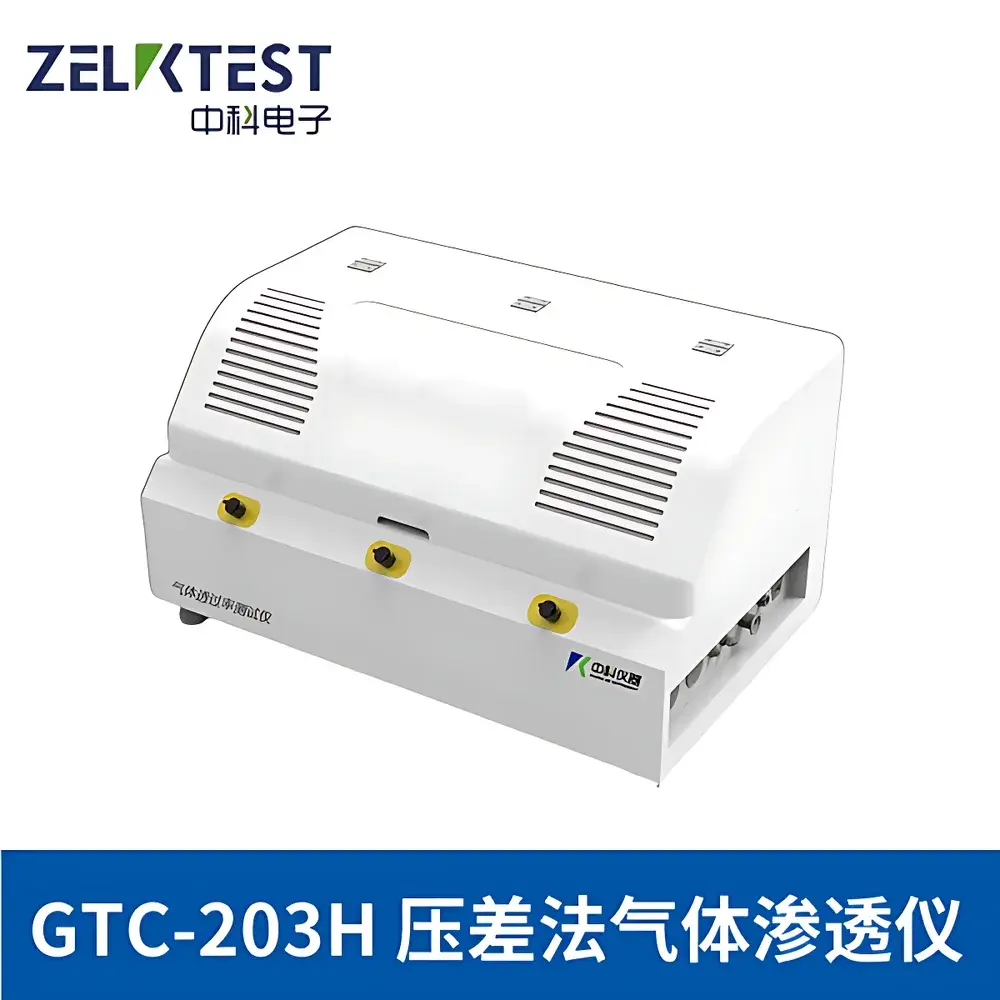

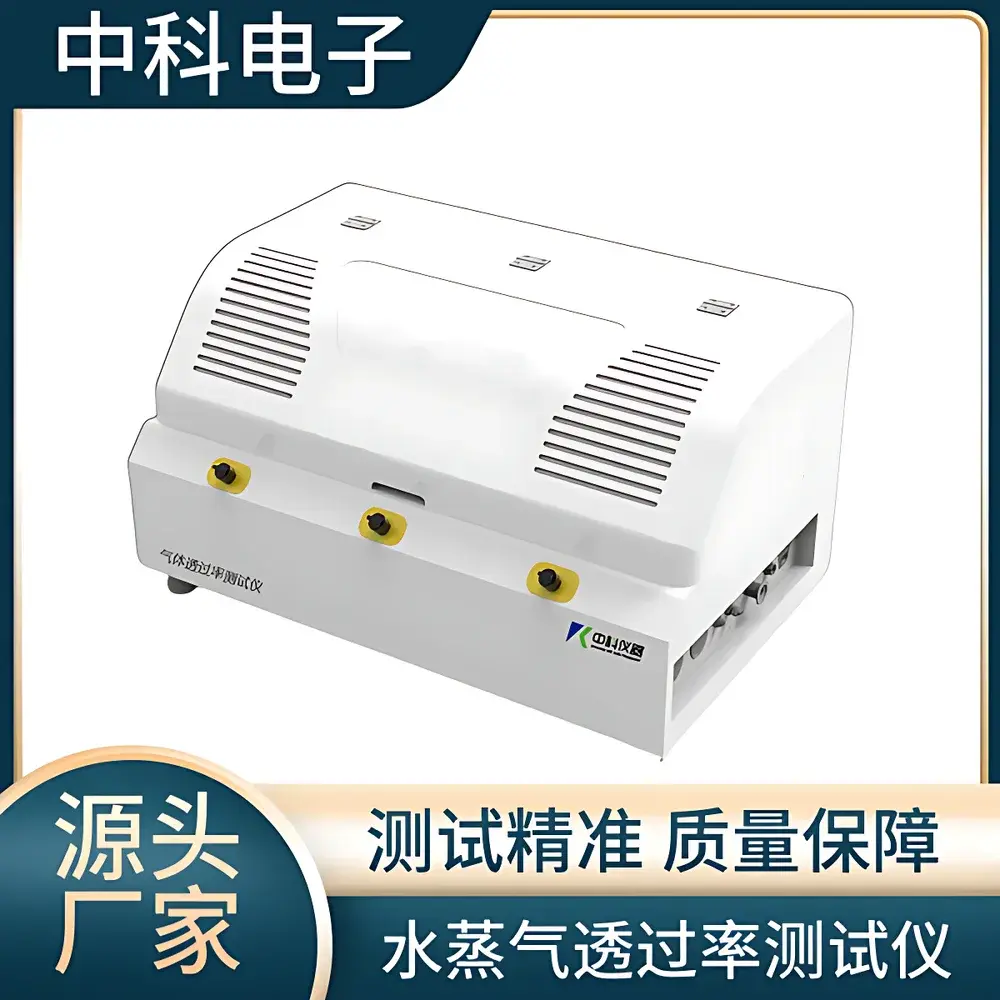

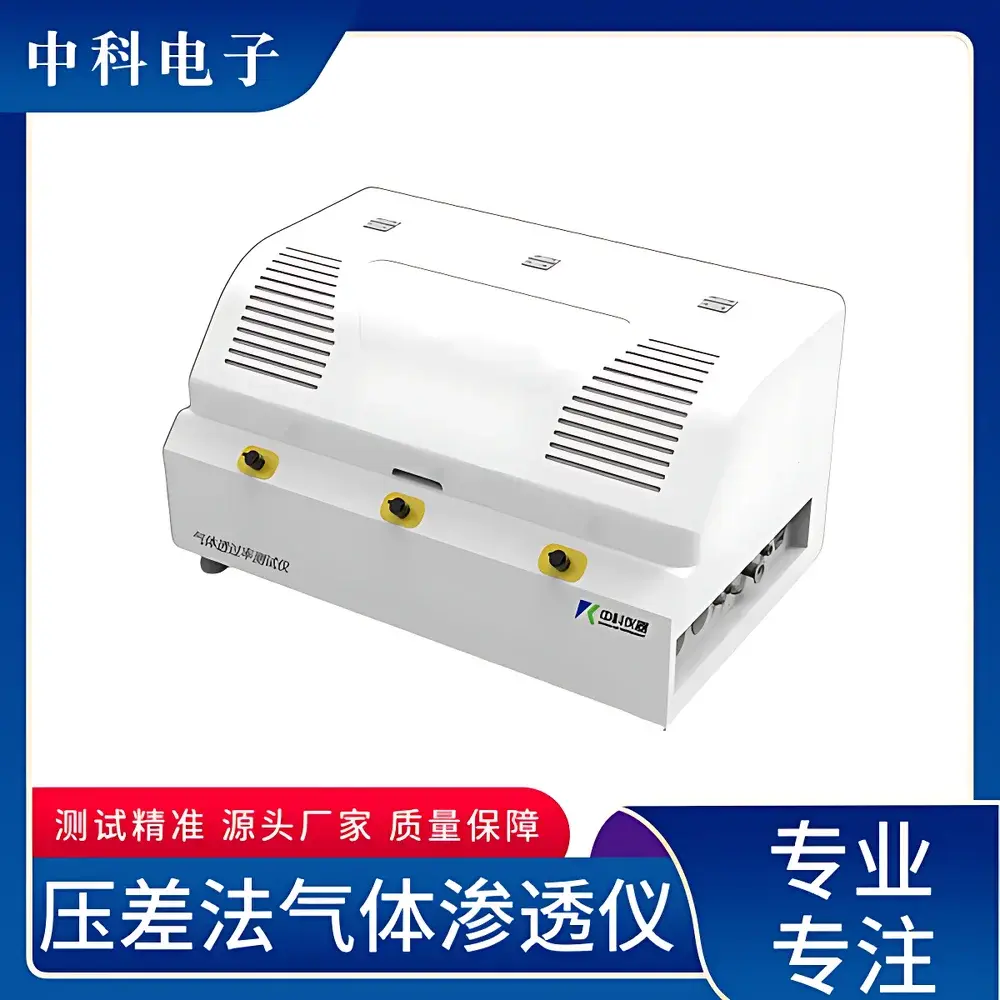
ZK Electronics GTC-203H Differential Pressure Gas Permeation Analyzer
| Brand | ZK Electronics |
|---|---|
| Model | GTC-203H |
| Principle | Differential Pressure (Manometric) Method |
| Test Gases | O₂, CO₂, N₂, Air |
| Sample Types | Plastic Films, Composite Films, High-Barrier Materials, Sheets, Metal Foils, Proton Exchange Membranes (PEM), Elastomers |
| Independent Test Chambers | 3 |
| Temperature Control Range | Ambient to 60 °C (±0.1 °C) |
| Humidity Control Range | 0–90% RH (±1% RH) |
| Vacuum System | Integrated Dual-Stage Rotary Vane Pump (Ultimate Vacuum ≤ 5 Pa) |
| Compliance Standards | GB/T 1038, ASTM D1434, ISO 2556, ISO 15105-1, JIS K7126-A, YBB 00082003 |
| Data Integrity Features | Audit Trail, Electronic Signatures, Role-Based Access Control (GMP-Compliant Software Option) |
| Calibration | Certified Standard Film Included |
| Data Export | CSV, PDF, XML |
| Safety Options | Modified Configuration Available for Toxic/Flammable Gases (e.g., H₂, CH₄, SO₂) |
Overview
The ZK Electronics GTC-203H Differential Pressure Gas Permeation Analyzer is an engineered solution for precise, reproducible measurement of gas transmission rates (GTR) and permeability coefficients (P) in polymeric, metallic, and composite barrier materials. It operates on the manometric differential pressure principle—defined in ISO 15105-1 and ASTM D1434—where a stabilized pressure gradient is maintained across a conditioned specimen sealed between two isolated chambers. The low-pressure chamber (downstream side) is continuously monitored via high-stability capacitance manometers, while the upstream chamber is pressurized with the test gas at a controlled, adjustable differential (typically 0.1–0.3 MPa). Real-time pressure rise in the evacuated downstream volume is recorded, and permeation parameters—including oxygen transmission rate (OTR), carbon dioxide transmission rate (CO₂TR), nitrogen transmission rate (NTR), and air transmission rate (ATR)—are calculated using Fick’s first law of diffusion, corrected for temperature, humidity, and chamber geometry. This method ensures traceable, absolute measurements without reliance on carrier gas flow calibration or sensor drift compensation.
Key Features
- Triple independent test stations: Simultaneous evaluation of three identical or dissimilar specimens under identical environmental conditions—enabling comparative studies, statistical validation, or multi-gas screening in a single run.
- Full automation with intelligent process logic: Parameter-driven workflow initiation, automatic vacuum conditioning, pressure stabilization, real-time permeation monitoring, endpoint detection (via slope threshold or time-based criteria), and auto-save of raw and processed data.
- High-fidelity environmental control: Integrated Peltier-based temperature regulation (ambient to 60 °C, ±0.1 °C uniformity) and optional humidity generation (0–90% RH, ±1% RH accuracy) enable strict adherence to standardized test conditions per ISO 2556 and YBB 00082003.
- Robust metrological architecture: Factory-calibrated reference films included for routine verification; external transducer calibration ports support third-party sensor validation; built-in self-diagnostic routines monitor vacuum integrity, pressure stability, and thermal equilibrium prior to test initiation.
- Power-loss resilience: Non-volatile memory preserves all active test states and acquired data during unexpected power interruption; resumed operation restores from last valid measurement point without data loss.
- Expandable measurement range: Modular sensor configuration allows extension into high-permeability regimes (e.g., non-barrier LDPE or elastomers) without compromising low-end resolution (<0.05 cm³/m²·day·atm for O₂).
Sample Compatibility & Compliance
The GTC-203H accommodates rigid and flexible planar specimens up to 100 mm in diameter and 3 mm in thickness—including biaxially oriented polypropylene (BOPP), ethylene-vinyl alcohol (EVOH) laminates, aluminum-coated PET, silicon oxide (SiOx) coated films, proton exchange membranes for fuel cells, and vulcanized rubber sheets. All clamping mechanisms employ pneumatic sealing with fluorosilicone gaskets to prevent edge leakage and ensure consistent test area definition (50.27 cm² standard). The system conforms to regulatory requirements for material qualification in regulated industries: it supports 21 CFR Part 11-compliant software (optional), complete with electronic signatures, audit trail logging, and user privilege tiers (Administrator, Technician, Reviewer). Full documentation packages—including IQ/OQ protocols, calibration certificates, and traceable standard film reports—are available upon request.
Software & Data Management
The proprietary PermeaSoft™ v4.2 platform provides intuitive test setup, real-time curve visualization (pressure vs. time), automated calculation of permeability (P), diffusion coefficient (D), and solubility (S), plus customizable reporting templates compliant with GLP and GMP Annex 11. All raw sensor outputs, environmental logs, operator actions, and system events are timestamped and cryptographically hashed for integrity verification. Data export supports CSV (for statistical analysis in JMP or Minitab), PDF (for QA review), and XML (for LIMS integration). Local database storage retains ≥10,000 test records with full search-by-date, material ID, operator, or parameter filter. Optional network deployment enables centralized data archiving and remote supervision via secure HTTPS interface.
Applications
This instrument serves critical quality assurance functions across packaging R&D (food, pharmaceutical, medical device blister trays), battery separator development (Li-ion cell membrane O₂ ingress control), fuel cell component validation (PEM hydrogen crossover), and aerospace material certification (composite moisture barrier performance). It is routinely deployed in ISO/IEC 17025-accredited laboratories for supplier qualification, shelf-life modeling, accelerated aging correlation studies, and regulatory submission dossiers (e.g., FDA 510(k), EMA CPMP/QWP/397/98). Its ability to quantify mixed-gas interactions—under controlled RH—is especially valuable for evaluating hydrophilic barrier degradation in humid environments.
FAQ
What gases can be tested on the GTC-203H?
Standard configurations support O₂, CO₂, N₂, and dry air. Custom modifications—including specialized seals, corrosion-resistant valves, and explosion-proof enclosures—are available for H₂, CH₄, SO₂, and other toxic or flammable gases.
Is humidity control mandatory for all tests?
No. Humidity generation is optional but required for standards such as ISO 15105-2 and YBB 00082003 when evaluating moisture-sensitive barriers (e.g., PVDC-coated films or starch-based bioplastics).
How is calibration verified?
Each unit ships with NIST-traceable certified reference films (e.g., 2000 cm³/m²·day·atm O₂ at 23 °C/0% RH). Users perform periodic verification using the built-in standard film mode; deviation alerts trigger recalibration workflows.
Can test data be integrated into an existing LIMS?
Yes. The system supports ASTM E1384-compliant data export and offers optional OPC UA or REST API interfaces for direct LIMS synchronization.
What maintenance is required?
Routine tasks include vacuum pump oil changes every 500 operating hours, O-ring inspection quarterly, and annual transducer recalibration by authorized service centers. No field alignment or optical adjustment is needed.



