
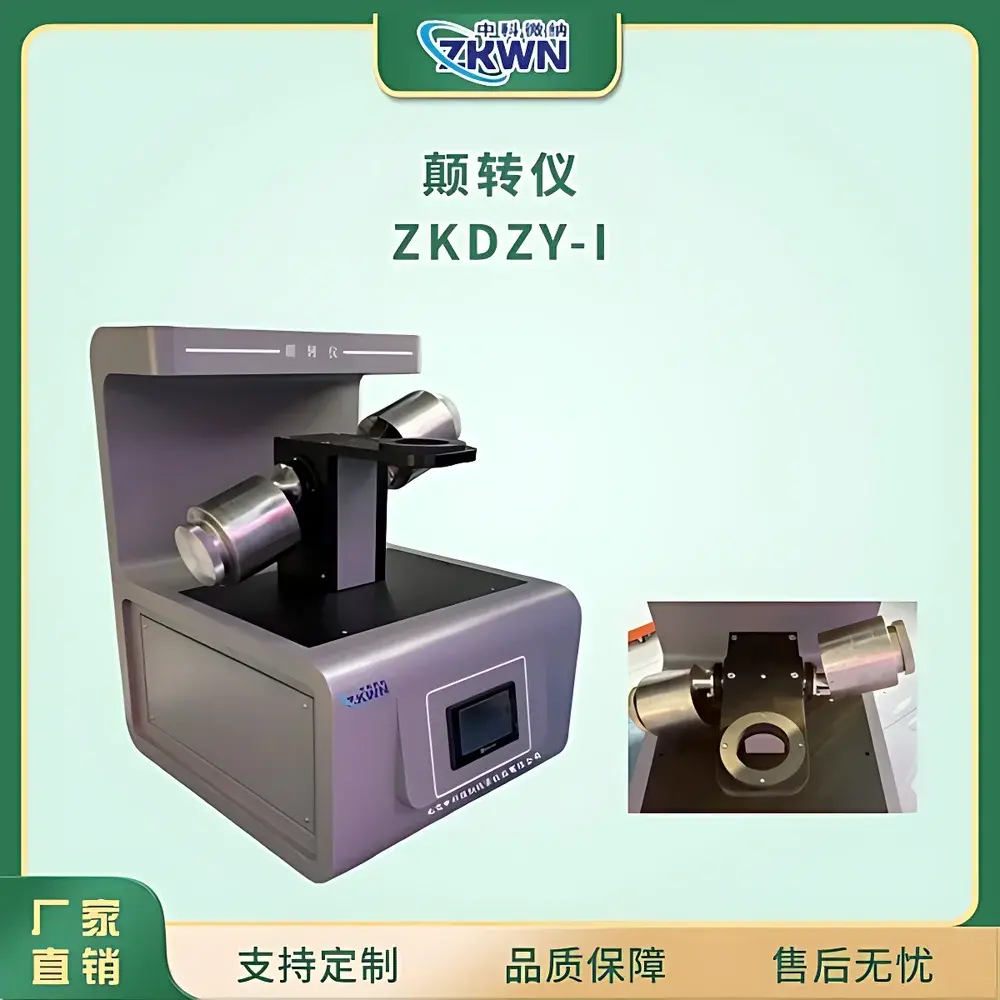
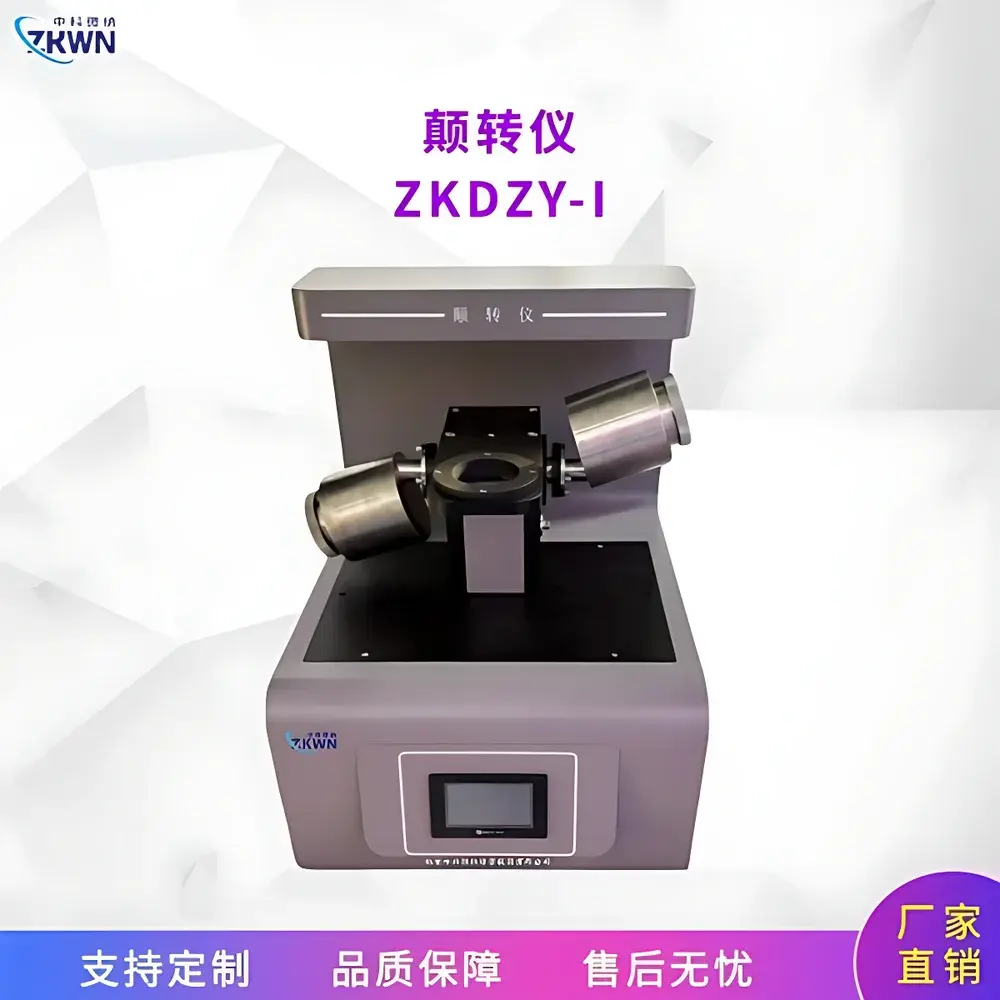
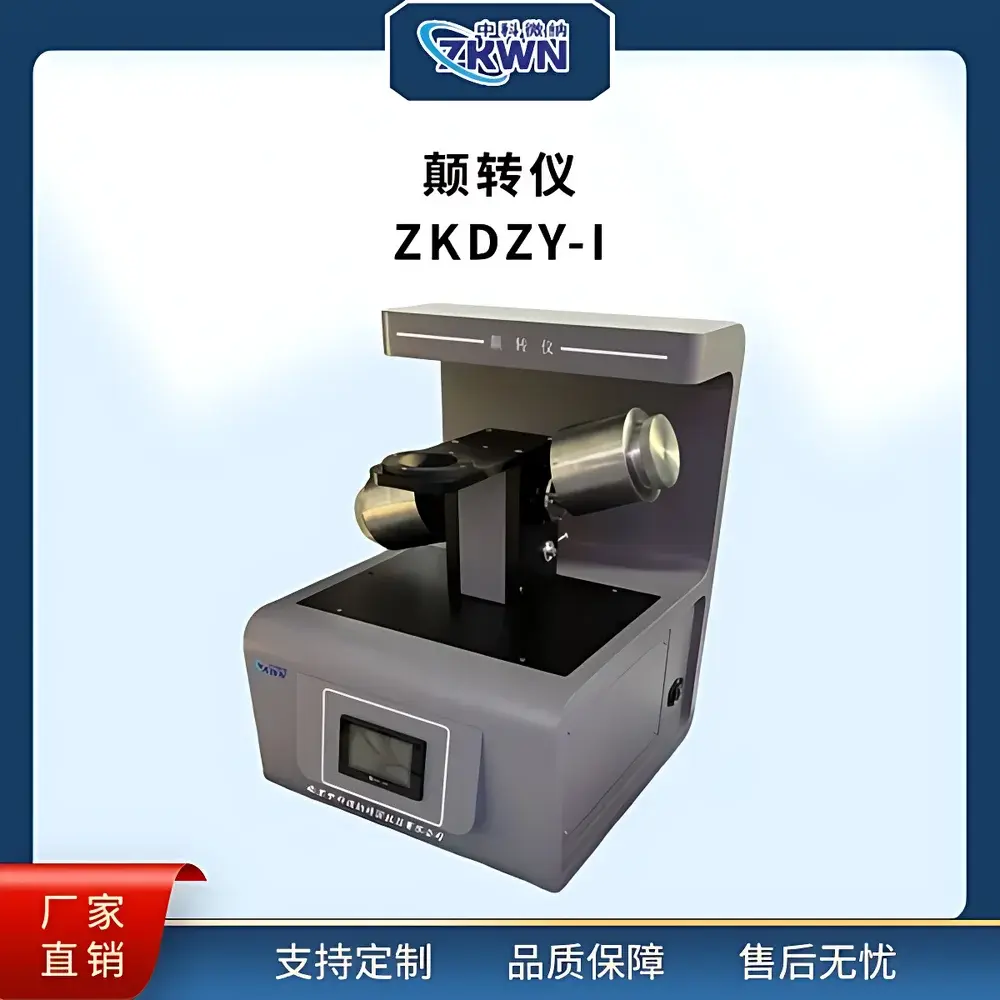
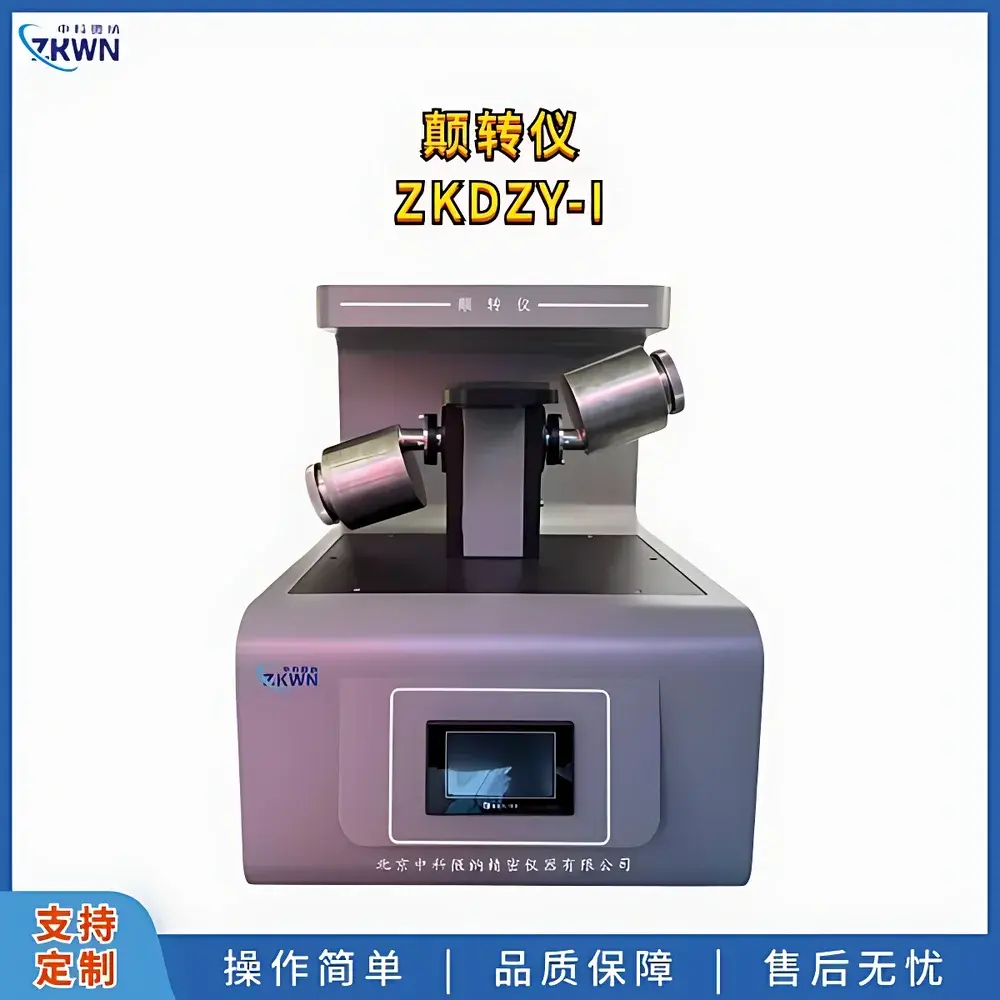
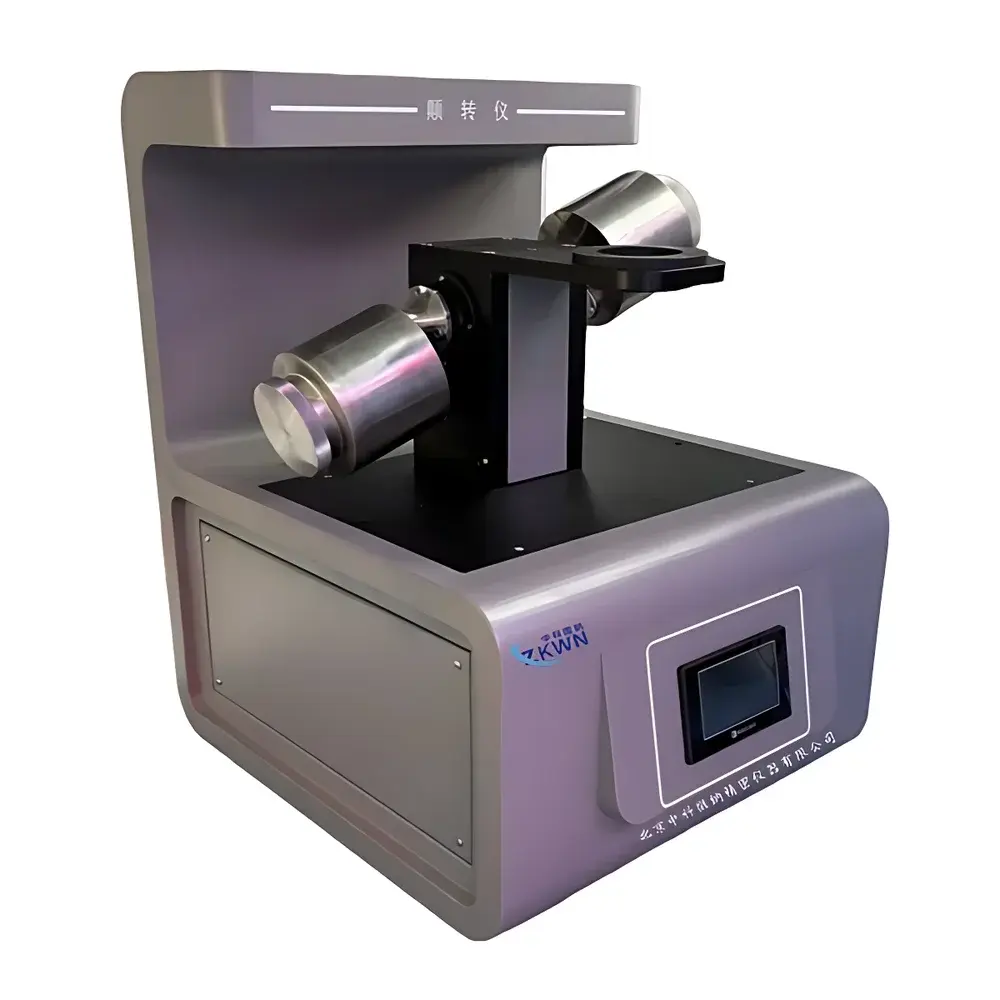
ZKWN ZKDZY-I Carbon Anode Thermal Expansion Tumbler
| Brand | ZKWN |
|---|---|
| Origin | Beijing, China |
| Model | ZKDZY-I |
| Temperature Range | 200 °C |
| Heating Rate | 80 °C/min |
| Temperature Accuracy | ±1 °C |
| Stroke/Displacement Range | 1 mm |
| Measurement Resolution | 0.01 mm |
| Atmosphere Control | 12 configurable gas channels |
| Rated Power | 1 kW |
| Rated Voltage | 220 V / 50 Hz |
| Drum Internal Diameter | Φ68 mm |
| Drum Internal Height | 120 mm |
| Steel Ball Diameter | 6 mm |
| Tumbling Speed | 90 rpm |
| Programmable Tumbling Duration | Yes |
| Overall Dimensions (L×W×H) | 700 × 640 × 690 mm |
| Net Weight | 50 kg |
Overview
The ZKWN ZKDZY-I Carbon Anode Thermal Expansion Tumbler is a precision-engineered auxiliary instrument designed exclusively for post-thermal-reaction mechanical conditioning of carbon anode specimens in aluminum smelting material qualification workflows. It operates on the principle of controlled rotational tumbling—applying standardized mechanical agitation to thermally treated carbon samples to simulate and quantify surface particle detachment following high-temperature oxidation exposure. Unlike conventional dilatometers or standalone thermal expansion analyzers, the ZKDZY-I does not measure dimensional change directly; rather, it serves as a critical sample preparation and post-test evaluation unit within ASTM D3340-22 and YS/T 63.11–2006 / YS/T 63.12–2006 compliant test sequences for air reactivity and CO₂ reactivity assessment of prebaked anodes. Its robust mechanical architecture ensures reproducible tumbling kinetics under defined thermal history conditions, enabling quantitative correlation between thermal degradation behavior and subsequent mechanical fragility.
Key Features
- High-stability stepping motor coupled with synchronous belt drive system—ensures consistent 90 rpm rotation without speed drift or torque fluctuation across extended operational cycles.
- Industrial-grade programmable logic controller (PLC) with embedded timing logic—supports fully adjustable tumbling duration (0–999 minutes), enabling method-specific protocol adherence per YS/T 63.12 or internal QA requirements.
- Human-machine interface (HMI) with 7-inch capacitive touchscreen—displays real-time status including elapsed time, remaining cycle duration, motor temperature, and fault diagnostics (e.g., overload, phase loss, thermal cutoff).
- Electrostatically powder-coated steel enclosure—meets ISO 12944 C3 corrosion category specifications for laboratory environments with intermittent humidity and trace acidic gas exposure.
- Modular drum assembly with replaceable stainless-steel inner liner—facilitates rapid cleaning and prevents cross-contamination between sequential anode batches.
- Integrated safety interlock system—automatically halts rotation when access door is opened, compliant with IEC 61508 SIL1 functional safety requirements.
Sample Compatibility & Compliance
The ZKDZY-I accepts standard cylindrical carbon anode specimens prepared per YS/T 63.11–2006 (air reactivity) and YS/T 63.12–2006 (CO₂ reactivity), typically sized at Ø50 mm × 50 mm or Ø25 mm × 25 mm. The internal drum geometry (Φ68 mm × 120 mm H) accommodates up to six 6 mm steel balls per test run, ensuring uniform impact energy distribution during tumbling. The instrument is validated for use in GLP-compliant laboratories conducting QC/QA testing for alumina reduction facilities and carbon anode manufacturers. All control firmware logs—including start time, set duration, actual runtime, and emergency stop events—are timestamped and stored locally for audit readiness under ISO/IEC 17025:2017 Clause 7.7.2.
Software & Data Management
While the ZKDZY-I operates autonomously via its onboard PLC, optional RS-485 Modbus RTU interface enables integration into centralized LIMS or MES platforms. Logged operational parameters—including cumulative tumble cycles, total runtime, and thermal event timestamps—can be exported in CSV format for trend analysis. Firmware supports user-defined method templates, each assigned a unique ID and revision number, satisfying FDA 21 CFR Part 11 requirements for electronic record integrity when paired with appropriate access controls and audit trail configuration.
Applications
- Quantitative assessment of surface spalling resistance in prebaked carbon anodes after high-temperature oxidation in air or CO₂ atmospheres.
- Correlation studies between thermal expansion behavior (measured separately via dilatometry) and mechanical disintegration propensity under standardized tumbling stress.
- Batch-to-batch consistency verification for carbon raw material suppliers supplying to primary aluminum producers.
- Supporting R&D investigations into binder formulation effects on thermal-mechanical coupling in graphitized carbon bodies.
- Calibration validation of automated mass-loss measurement systems used in conjunction with YS/T 63.12 test protocols.
FAQ
What standards does the ZKDZY-I support?
It is explicitly engineered to fulfill mechanical tumbling requirements specified in YS/T 63.11–2006 and YS/T 63.12–2006 for aluminum industry carbon anode qualification.
Can the tumbling speed be adjusted beyond 90 rpm?
No—the mechanical design and PLC firmware are calibrated for fixed 90 rpm operation to ensure compliance with referenced test methods; variable-speed operation would invalidate conformance.
Is atmosphere control integrated into the tumbler itself?
No—gas environment conditioning (e.g., CO₂, N₂, air) must be performed upstream in the thermal reaction furnace; the ZKDZY-I handles only post-reactivity mechanical conditioning.
How is data traceability ensured for regulatory audits?
All operational events are logged with ISO 8601 timestamps, stored in non-volatile memory, and exportable via serial interface—supporting full electronic record retention per ISO/IEC 17025 and FDA 21 CFR Part 11 when deployed with validated software layers.
What maintenance intervals are recommended?
Belt tension and bearing lubrication should be verified every 500 operating hours; steel balls and drum liners require replacement after 200 test cycles or visible wear, whichever occurs first.



