
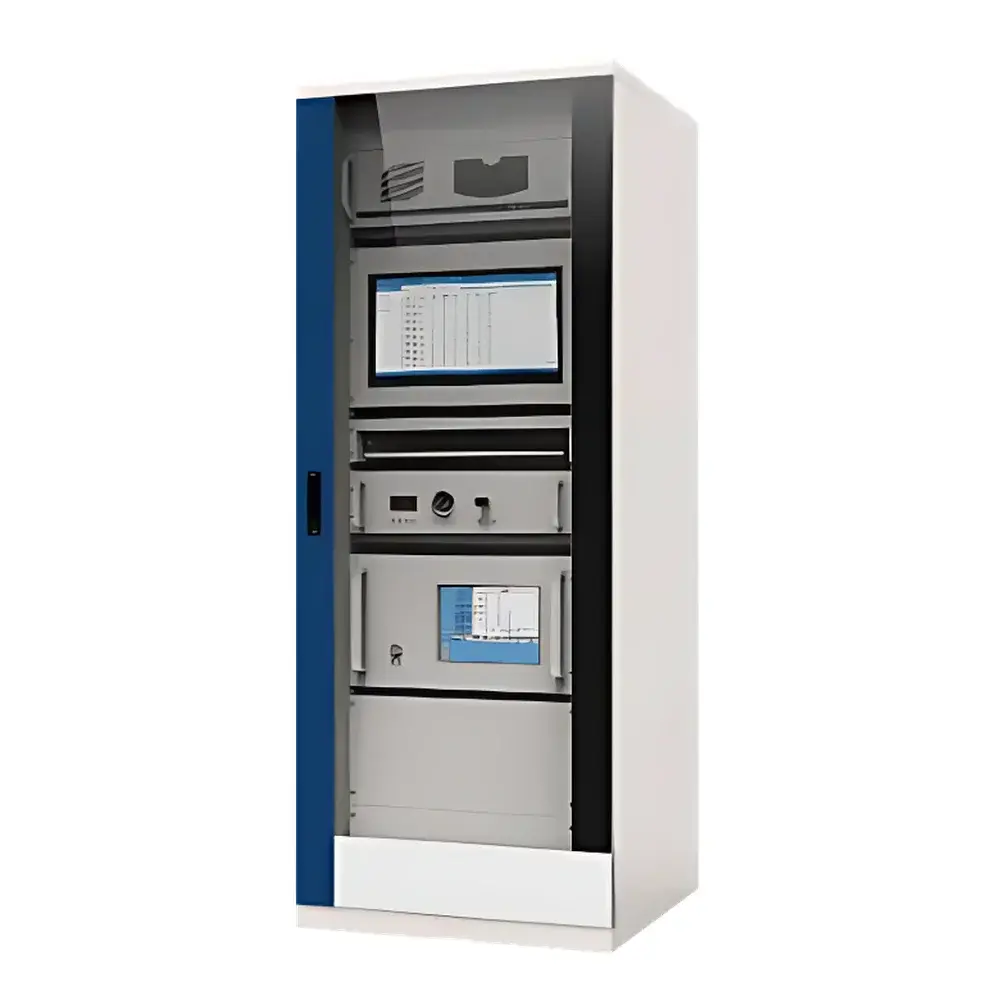
Zming Environmental Technology ZM-GC-FID NMHC Continuous Emission Monitoring System (CEMS) for Fixed Pollution Sources
| Brand | Zming Environmental Technology Co., Ltd. |
|---|---|
| Origin | Jiangsu, China |
| Manufacturer Type | Authorized Distributor |
| Country of Origin | China |
| Model | ZM-GC-FID NMHC CEMS |
| Pricing | Available Upon Request |
Overview
The Zming Environmental Technology ZM-GC-FID NMHC Continuous Emission Monitoring System (CEMS) is a certified, field-deployable analytical platform engineered for real-time, regulatory-compliant quantification of non-methane hydrocarbons (NMHC) in exhaust streams from stationary industrial sources. It operates on the principle of heated extractive sampling coupled with gas chromatography separation and flame ionization detection (GC-FID), delivering high selectivity, low detection limits, and robust long-term stability under demanding stack conditions. The system maintains sample integrity through full-path heating (up to 180 °C), preventing condensation and adsorption losses of volatile and semi-volatile organic compounds. Designed explicitly for compliance with China’s HJ 1013–2018 standard—“Technical Requirements and Test Methods for Continuous Monitoring Systems of Non-Methane Hydrocarbons in Exhaust Gas from Fixed Pollution Sources”—the ZM-GC-FID integrates synchronized measurement of auxiliary flue gas parameters including temperature, static pressure, velocity, oxygen concentration, and relative humidity, enabling accurate NMHC mass emission rate calculation per regulatory reporting protocols.
Key Features
- Heated extractive sampling train with dual-stage filtration and thermally insulated transport lines (180 °C operational setpoint) to preserve VOC integrity from probe tip to detector.
- Electronic Pressure Control (EPC) for carrier gas and detector gases, ensuring precise retention time alignment and quantitative reproducibility across extended run cycles.
- Differential GC-FID configuration eliminating backflushing requirements; eliminates carryover and baseline drift associated with conventional column switching architectures.
- Explosion-proof compatible jet-type sampling probe with no rotating or motorized components—certified for Zone 1/21 hazardous area deployment per GB 3836.1–2010 and IEC 60079–0.
- Dynamic supervision interface supporting remote firmware updates, real-time data streaming, and audit-ready event logging aligned with provincial environmental monitoring platforms (e.g., Jiangsu & Shandong provincial CEMS cloud systems).
- Modular 19-inch rack-mount architecture with hot-swappable analyzer modules (GC oven, FID, EPC manifold, data acquisition unit), minimizing mean time to repair (MTTR) and simplifying routine calibration and maintenance.
Sample Compatibility & Compliance
The ZM-GC-FID CEMS is validated for continuous analysis of NMHC in complex, high-moisture, particulate-laden flue gases emitted from thermal processes, solvent-based operations, and chemical synthesis units. It complies fully with HJ 1013–2018 performance criteria—including zero/span drift ≤ ±2% FS/24 h, linearity error ≤ ±2% FS, response time ≤ 200 s, and detection limit ≤ 0.05 mg/m³ (as propane equivalent). System design incorporates redundant sensor inputs and automatic compensation algorithms for O₂ dilution correction, humidity quenching, and flow-weighted averaging. All hardware and software components are traceable to national metrological standards (CNAS-accredited calibration certificates available). The platform supports optional integration with third-party data acquisition systems compliant with EPA Method 25A, ISO 11890-2, and EN 12619 frameworks.
Software & Data Management
The embedded CEMS control software (v3.2+) provides intuitive operator interface with multilingual support (English, Chinese), automated calibration scheduling (zero/span/gas standard verification), and configurable alarm thresholds per pollutant and parameter. Raw chromatograms, peak integration reports, and QA/QC logs are stored locally with 12-month retention and exportable in CSV, PDF, and XML formats. Audit trails record all user actions—including method changes, calibration events, and data overrides—with timestamp, operator ID, and IP address. Software architecture conforms to GLP/GMP-aligned data integrity principles and supports optional 21 CFR Part 11 electronic signature modules for regulated environments requiring formal validation documentation.
Applications
This system is deployed across emission-intensive sectors where NMHC monitoring is mandated by local environmental authorities: petrochemical refineries and olefin crackers; coating and printing facilities (flexographic, gravure, offset); automotive OEM paint shops and component suppliers; semiconductor fabrication cleanrooms and wafer processing lines; pharmaceutical active ingredient (API) synthesis plants; synthetic resin and adhesive manufacturing; textile dyeing and finishing mills; and bulk liquid storage terminals handling volatile solvents. Its modular scalability also supports multi-stack monitoring configurations via shared data concentrators and centralized reporting dashboards.
FAQ
What regulatory standard does this system comply with?
HJ 1013–2018 is the primary compliance benchmark; supplementary alignment with ISO 11890-2 and EN 12619 is achievable via optional configuration and calibration protocol adaptation.
Can the system measure individual VOC species, or only total NMHC?
The base configuration reports NMHC as propane-equivalent mass concentration; optional GC column upgrades (e.g., PLOT Al₂O₃/KCl) enable speciated analysis of C₂–C₁₂ aliphatics and aromatics.
Is remote diagnostics and firmware update supported?
Yes—via secure TLS-encrypted Ethernet or 4G LTE connection; includes diagnostic self-tests, predictive failure alerts, and over-the-air (OTA) firmware patches.
What maintenance intervals are recommended?
FID nozzle cleaning every 90 days; GC column reconditioning every 6 months; full system calibration verification quarterly per HJ 1013–2018 Annex D.
Does the system provide audit-ready data for environmental inspections?
All raw sensor outputs, chromatographic integrations, calibration records, and user activity logs are time-stamped, digitally signed, and exportable in tamper-evident formats meeting provincial CEMS audit requirements.
Related Products







