
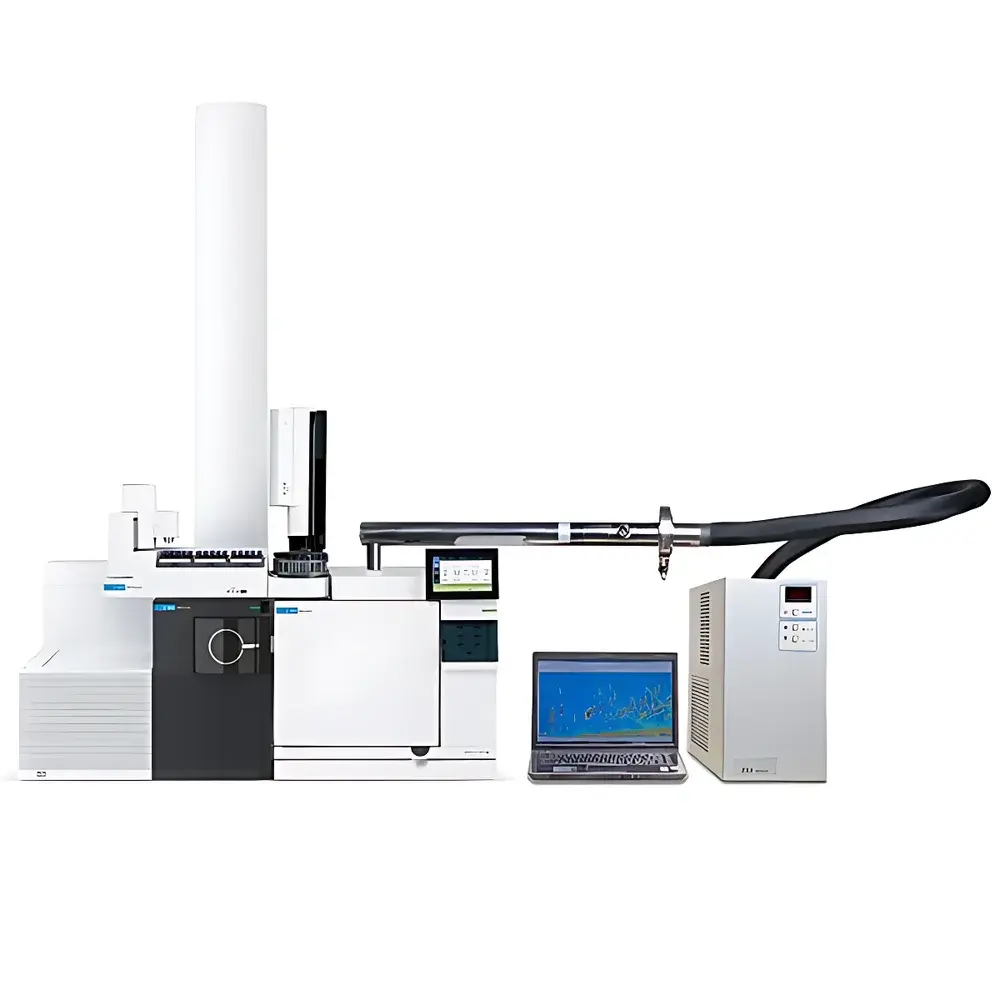
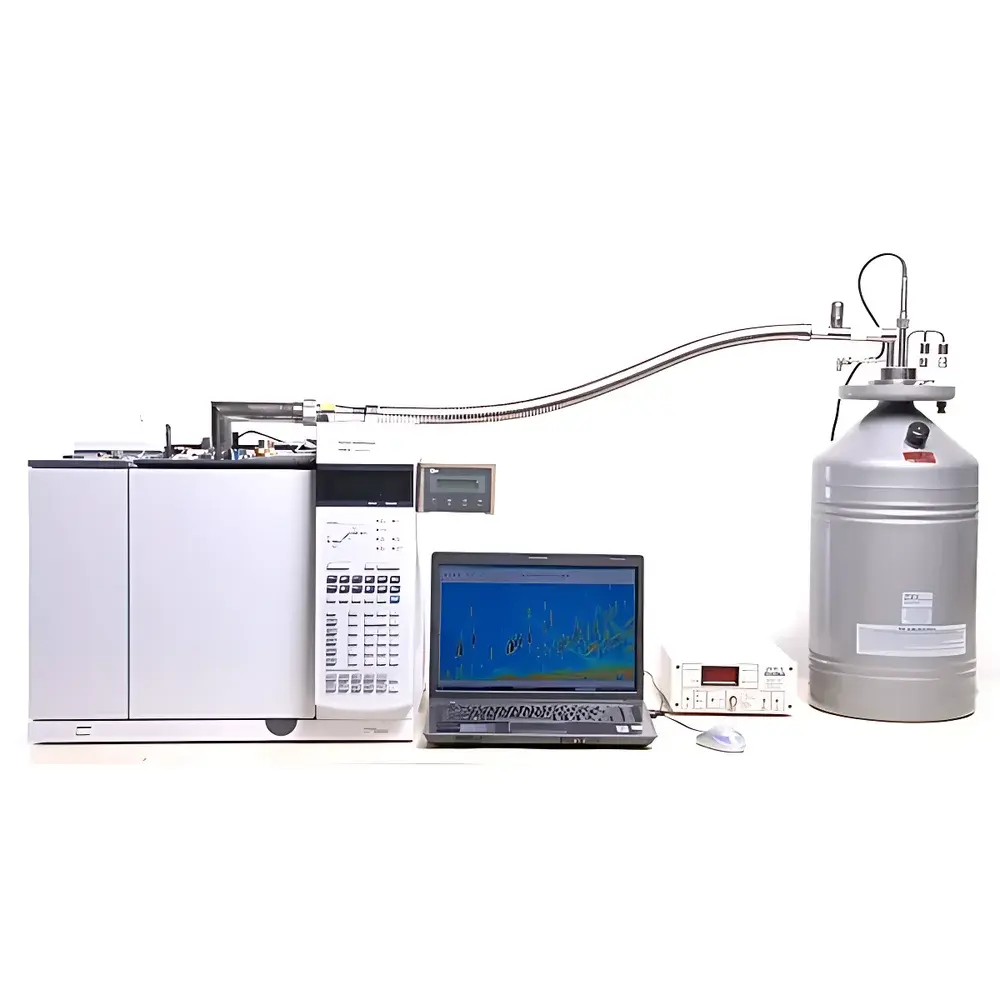
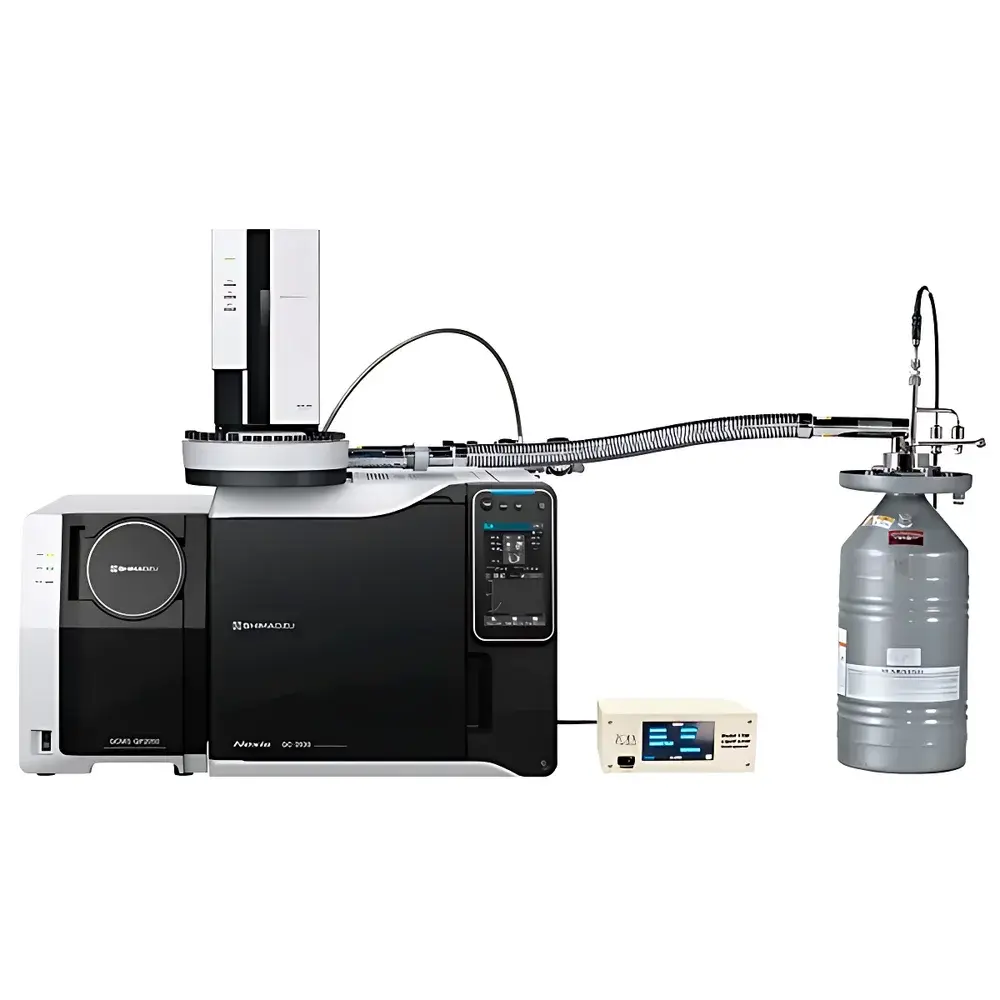
ZOEX ZX-1/ZX-2 Comprehensive Two-Dimensional Gas Chromatography (GC×GC) Modulator
| Brand | ZOEX |
|---|---|
| Origin | USA |
| Model | ZX-1 / ZX-2 |
| Cooling Method | Liquid Nitrogen or Electronic Cryogenic Cooling |
| Modulation Principle | Dual-Stage Thermal Jet Modulation |
| Compatibility | Agilent, Shimadzu, Thermo Fisher, and Other Standard GC Platforms |
| Interface | Non-destructive, GC-native mounting |
| MS Coupling | Compatible with Quadrupole GC-MS, TOF-MS, and High-Resolution Mass Spectrometers |
| Peak Capacity Enhancement | >10× vs. 1D-GC |
| Minimum Detectable Volatility | C4 hydrocarbons (with LN₂ cooling) |
| Regulatory Alignment | Designed for GLP-compliant laboratories |
Overview
The ZOEX ZX-1 and ZX-2 are high-performance, commercially deployed comprehensive two-dimensional gas chromatography (GC×GC) modulators engineered to extend the separation power of conventional gas chromatographs. Unlike single-dimension GC, GC×GC employs two independent chromatographic columns—typically differing in polarity and length—connected in series via a cryogenic or thermally controlled modulation interface. The ZX-1/ZX-2 implements a dual-stage thermal jet modulation mechanism: analytes eluting from the first dimension (¹D) column are periodically trapped, focused, and re-injected as narrow, discrete pulses onto the second dimension (²D) column. This process leverages orthogonal separation mechanisms—e.g., volatility-based retention on a non-polar ¹D column and polarity-driven resolution on a mid-to-polar ²D column—to generate structured two-coordinate chromatograms where retention times on each axis encode complementary physicochemical properties. The resulting peak capacity exceeds 1,000 peaks per analysis, enabling resolution of co-eluting compounds in petrochemicals, environmental extracts, food volatiles, and metabolomic samples that remain inseparable by conventional GC.
Key Features
- Dual-stage thermal jet modulation architecture: one cryogenic nozzle for rapid trapping/focusing and one heated nozzle for precise, pulse-width-controlled reinjection—minimizing thermal disturbance to the primary GC oven.
- Flexible cooling options: liquid nitrogen (LN₂) delivery system achieves temperatures down to –90 °C, enabling effective modulation of C4–C6 hydrocarbons and low-boiling polar species; optional solid-state thermoelectric (Peltier) cooling variant available for labs requiring LN₂-free operation.
- Modular, non-invasive installation: mounts directly between standard GC inlet and detector compartments without hardware modification; compatible with Agilent 7890/8890, Shimadzu GC-2010/GC-2030, Thermo Fisher ISQ/Trace 1300, and other GC platforms featuring industry-standard column nut interfaces.
- Seamless hyphenation readiness: designed for direct coupling to mass spectrometric detectors—including quadrupole, triple quadrupole, and time-of-flight (TOF) instruments—enabling GC×GC-MS and GC×GC-TOFMS configurations with synchronized data acquisition and modulation-triggered MS scanning.
- Robust thermal management: integrated temperature sensors and PID-controlled heating/cooling zones ensure modulation stability across ambient fluctuations and extended run times (>72 h continuous operation demonstrated).
Sample Compatibility & Compliance
The ZX-1/ZX-2 supports broad sample classes including petroleum distillates (naphtha to vacuum gas oil), environmental matrices (PAHs, PCBs, pesticides in soil/water extracts), flavor and fragrance volatiles, essential oils, and clinical volatile organic compound (VOC) profiles. Its modulation fidelity maintains quantitative linearity across concentration ranges spanning three orders of magnitude (0.1–100 ng on-column). Instrument design adheres to IEC 61000-6-3 (EMC) and UL 61010-1 safety standards. When operated within validated laboratory workflows using compliant data systems (e.g., Chromeleon, MassHunter, or TOF Data Analysis Suite), the modulator contributes to audit-ready GLP and GMP environments. Full traceability is maintained through modulation event logging, temperature history archives, and synchronization timestamps aligned with MS acquisition triggers—supporting FDA 21 CFR Part 11 requirements for electronic records and signatures.
Software & Data Management
ZOEX provides the GC Image™ software suite (v2.9+), a dedicated platform for GC×GC data visualization, peak detection, deconvolution, and pattern recognition. It natively imports vendor-neutral netCDF and ANDI files from all major GC-MS platforms. Key capabilities include: automated contour plot generation with adjustable baseline correction; structured peak table export (RT₁, RT₂, area, height, spectral match score); multivariate statistical tools (PCA, HCA) for class discrimination; and batch processing pipelines for high-throughput screening. All modulation parameters—jet timing, cold/hot pulse duration, cycle period—are programmable and stored with raw data. Audit trails record user actions, method changes, and calibration events. Integration with LIMS via ASTM E1578-compliant interfaces ensures end-to-end sample-to-report traceability.
Applications
- Petrochemical fingerprinting: detailed hydrocarbon group-type analysis (PIONA), sulfur speciation, and biomarker profiling in crude oils and refinery streams.
- Environmental forensics: resolution of alkylated PAH isomers, chlorinated pesticide congeners, and dioxin-like compounds in complex sediment extracts.
- Food authenticity & adulteration: detection of trace adulterants (e.g., hazelnut oil in olive oil) and geographic origin markers via volatile metabolite mapping.
- Clinical research: untargeted VOC profiling in breath, blood headspace, and urine for disease biomarker discovery (e.g., lung cancer, diabetes, hepatic dysfunction).
- Materials science: outgassing analysis of polymers, adhesives, and electronic encapsulants under thermal stress conditions.
FAQ
What is the difference between ZX-1 and ZX-2?
The ZX-1 is optimized for routine GC×GC applications with standard modulation frequency (2–10 s), while the ZX-2 supports ultra-fast modulation (down to 1.5 s) and enhanced thermal precision for high-resolution applications such as TOF-MS coupling and trace-level environmental analysis.
Can the modulator be used without liquid nitrogen?
Yes—the ZX-2 offers an optional thermoelectric cooling module; however, LN₂ remains recommended for sub-C6 compound modulation and maximum peak sharpness.
Is method transfer possible between different GC platforms?
Modulation timing and temperature setpoints are instrument-agnostic; methods developed on one GC platform (e.g., Agilent) can be ported to another (e.g., Shimadzu) with minor oven ramp adjustments due to differences in column flow dynamics.
Does ZOEX provide application support for method development?
ZOEX offers remote and on-site application consulting, including column selection guidance, modulation parameter optimization, and GC×GC-MS spectral library matching protocols.
How is calibration performed?
Calibration is based on retention time indexing using certified alkane standards (C8–C30) for both dimensions; ZOEX supplies a validated calibration kit with documented uncertainty budgets traceable to NIST SRM 869b.
Related Products



