
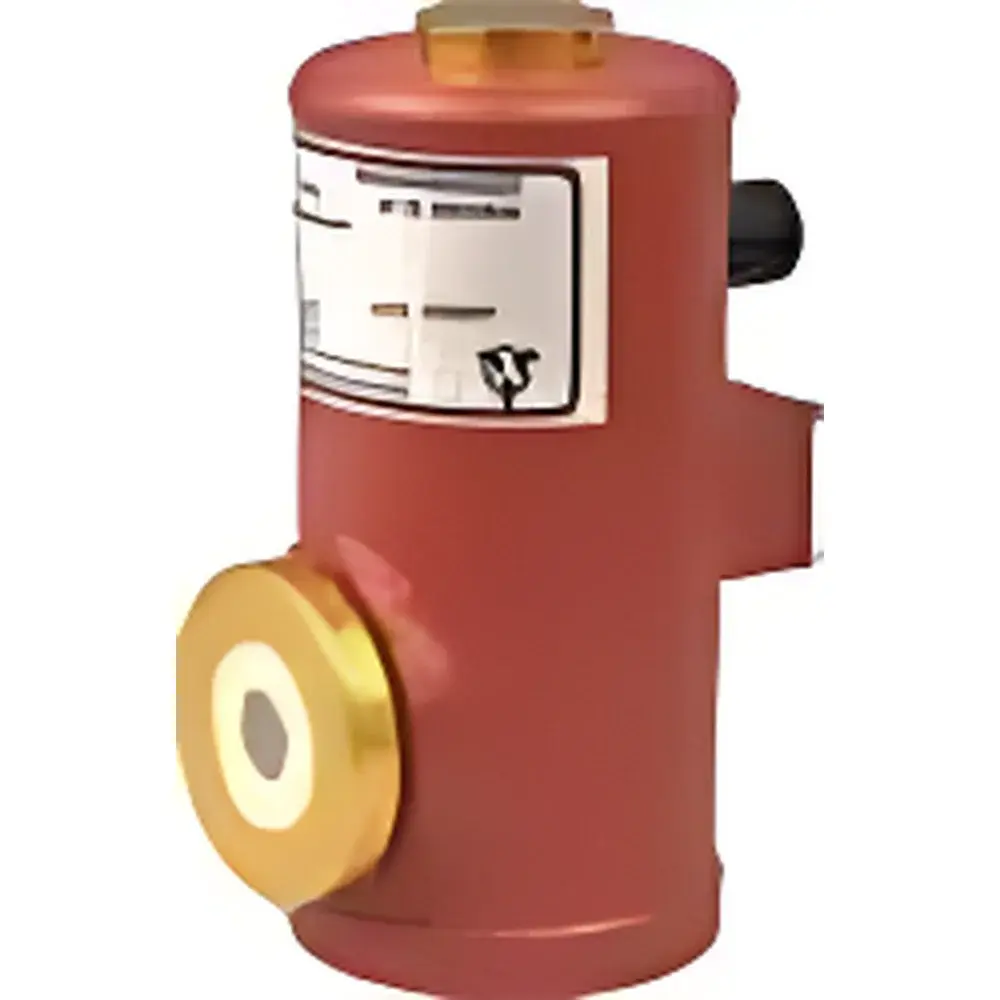
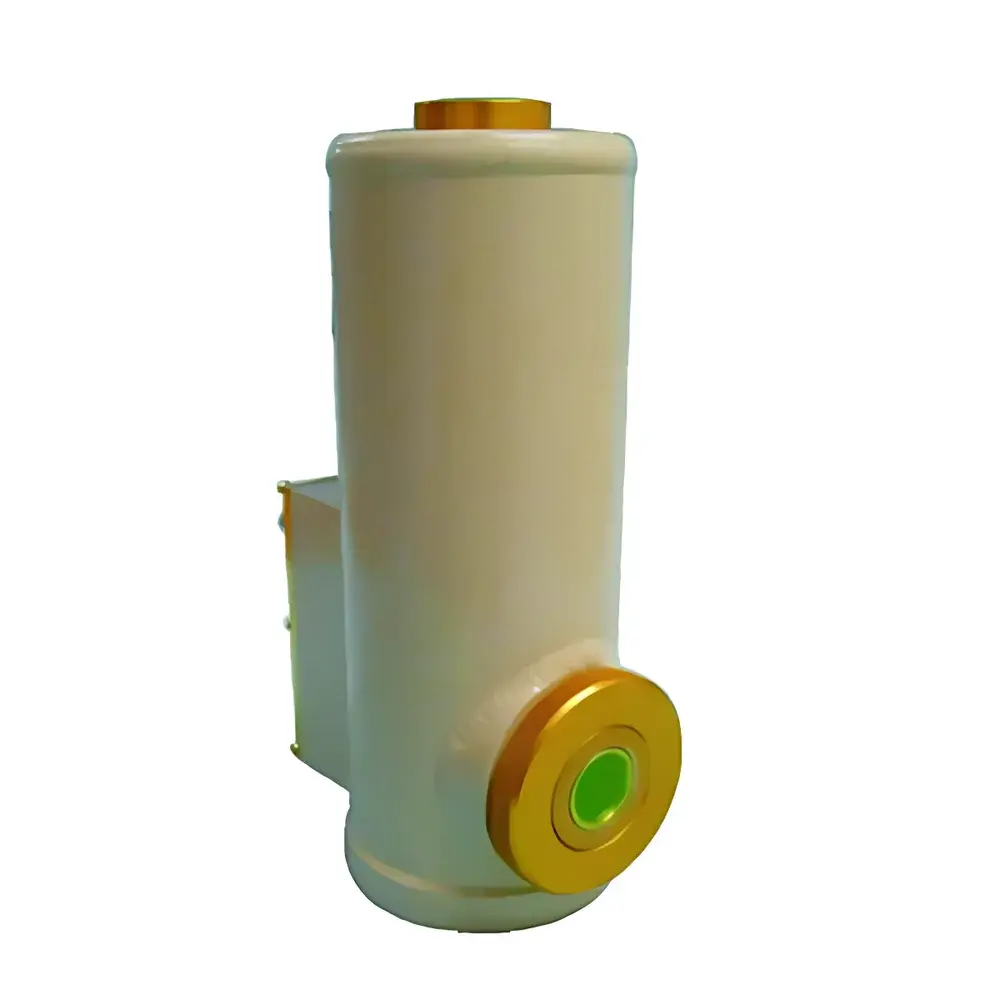
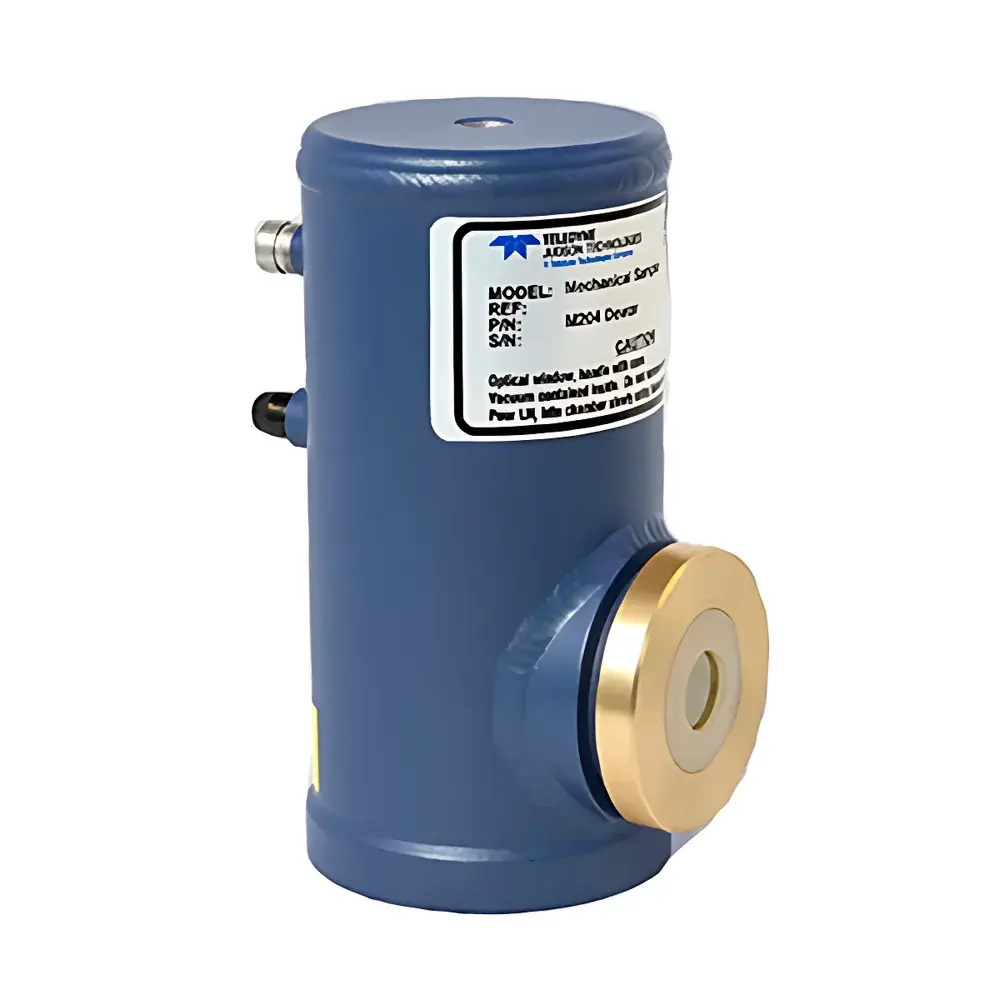
ZOLIX DMCT12-De01 Liquid-Nitrogen-Cooled Mercury Cadmium Telluride (MCT) Infrared Detector
| Brand | ZOLIX |
|---|---|
| Model | DMCT12-De01 |
| Detector Type | Liquid-nitrogen-cooled HgCdTe photovoltaic detector |
| Spectral Range | 2–12 µm |
| Active Area | 1 × 1 mm² |
| Peak Responsivity | 3 × 10³ V/W @ λₚₑₐₖ |
| Response Time | <25 ns |
| Detectivity (D*) | ≥3 × 10¹⁰ cm·Hz¹ᐟ²/W |
| Output Polarity | Positive (P) |
| Output Mode | Voltage |
| Cooling Requirement | Liquid nitrogen (LN₂), user-supplied |
| Housing | DEC-12 dewar assembly for spectrometer slit coupling |
| Amplification | External preamplifier required (e.g., ZPA-101 or ZPA-300) |
| Compliance | Designed for integration with FTIR, dispersive IR spectrometers, and time-resolved IR systems operating under GLP/GMP-aligned laboratory conditions |
Overview
The ZOLIX DMCT12-De01 is a liquid-nitrogen-cooled mercury cadmium telluride (HgCdTe or MCT) photovoltaic infrared detector engineered for high-sensitivity spectral detection in the mid-infrared (MIR) to long-wave infrared (LWIR) range. Operating at cryogenic temperatures (~77 K), this detector leverages the intrinsic bandgap tunability of Hg₁₋ₓCdₓTe alloys to achieve a cutoff wavelength of 12 µm, enabling broadband response from 2 to 12 µm. Its photovoltaic architecture eliminates dark current drift associated with photoconductive designs, delivering superior signal-to-noise ratio (SNR) and baseline stability—critical for quantitative Fourier-transform infrared (FTIR) spectroscopy, gas-phase molecular absorption analysis, and low-flux thermal emission measurements. The device is hermetically sealed within the DEC-12 dewar housing, optimized for direct mechanical and optical interfacing with ZOLIX monochromators and scanning spectrometers via standardized slit-coupling geometry.
Key Features
- Liquid-nitrogen-cooled operation at 77 K ensures thermal noise suppression and maximizes detectivity (D* ≥ 3 × 10¹⁰ cm·Hz¹ᐟ²/W at peak wavelength)
- 1 × 1 mm² active area provides optimal balance between quantum efficiency and spatial resolution for slit-coupled spectroscopic applications
- Peak responsivity of 3 × 10³ V/W enables high-fidelity analog voltage output without internal gain stages
- Sub-25 ns response time supports transient IR signal capture when paired with external lock-in amplification
- Positive-polarity voltage output simplifies signal conditioning and compatibility with standard data acquisition hardware (e.g., DCS103/DCS300PA)
- DEC-12 dewar housing features standardized flange dimensions (CF-35 or ISO-KF40 per configuration) for repeatable alignment and vacuum integrity
- No integrated electronics—designed for modular system integration with user-selected preamplifiers (ZPA-101/ZPA-300) and signal recovery instrumentation
Sample Compatibility & Compliance
The DMCT12-De01 is compatible with continuous-wave and modulated infrared sources, including globar emitters, quantum cascade lasers (QCLs), and synchrotron-based IR beamlines. It meets mechanical and thermal interface requirements specified in ISO 17025-accredited laboratories for spectral radiometry and absorption spectroscopy. While not individually certified to ASTM E1421 or ISO 15969, its performance characteristics align with measurement traceability frameworks used in pharmaceutical residual solvent analysis (USP ), environmental VOC monitoring (EPA Method 320), and semiconductor process gas characterization. The detector requires no electrical biasing, eliminating risk of polarization-induced spectral distortion. All materials in direct optical path conform to RoHS Directive 2011/65/EU.
Software & Data Management
The DMCT12-De01 functions as an analog transducer and does not incorporate embedded firmware or digital interfaces. Signal acquisition is performed externally via lock-in amplifiers (e.g., SR830, Zurich Instruments HF2LI) or DC-coupled digitizers synchronized to chopper reference frequencies. When integrated with ZOLIX DCS103 or DCS300PA acquisition platforms, raw voltage outputs are converted at 16-bit resolution with programmable gain and anti-alias filtering. Data streams adhere to HDF5-compliant metadata structures, supporting automated calibration referencing, spectral stitching, and audit-trail logging per FDA 21 CFR Part 11 requirements when deployed in regulated environments. No proprietary drivers or closed-source SDKs are required.
Applications
- Fourier-transform infrared (FTIR) spectroscopy for polymer identification and crystallinity analysis
- Gas-phase quantitative analysis of CO, CO₂, CH₄, NOₓ, and SF₆ in environmental monitoring systems
- In situ reaction monitoring in catalytic flow reactors using step-scan or rapid-scan IR
- Material emissivity mapping in thermal management R&D for aerospace composites
- Calibration transfer validation between primary and secondary IR spectrometers
- Time-resolved infrared spectroscopy (TR-IR) when combined with nanosecond-pulsed QCLs and external fast preamplification
FAQ
Is liquid nitrogen included with the detector?
No. LN₂ must be supplied by the end user. A fully filled DEC-12 dewar maintains stable 77 K operation for ≥8 hours under typical lab ambient conditions.
Can the DMCT12-De01 be used without a preamplifier?
No. Due to its high output impedance and low-level voltage signal (µV–mV scale), an external low-noise preamplifier (e.g., ZPA-101, ZPA-300) is mandatory for effective signal recovery.
What is the recommended lock-in amplifier configuration?
A dual-phase lock-in with 1–10 kHz reference frequency, time constant ≥10 ms, and input impedance ≥10 MΩ is recommended to maximize SNR while preserving dynamic range.
Does the detector support vacuum or purged optical paths?
Yes. The DEC-12 dewar includes a BaF₂ or KRS-5 window (user-selectable) compatible with dry-air purge or high-vacuum (<10⁻³ mbar) environments.
How is calibration traceability established?
Responsivity and D* values are validated against NIST-traceable blackbody sources (e.g., CI Systems BB-1200) during factory testing; calibration certificates include uncertainty budgets per GUM (JCGM 100:2018).







