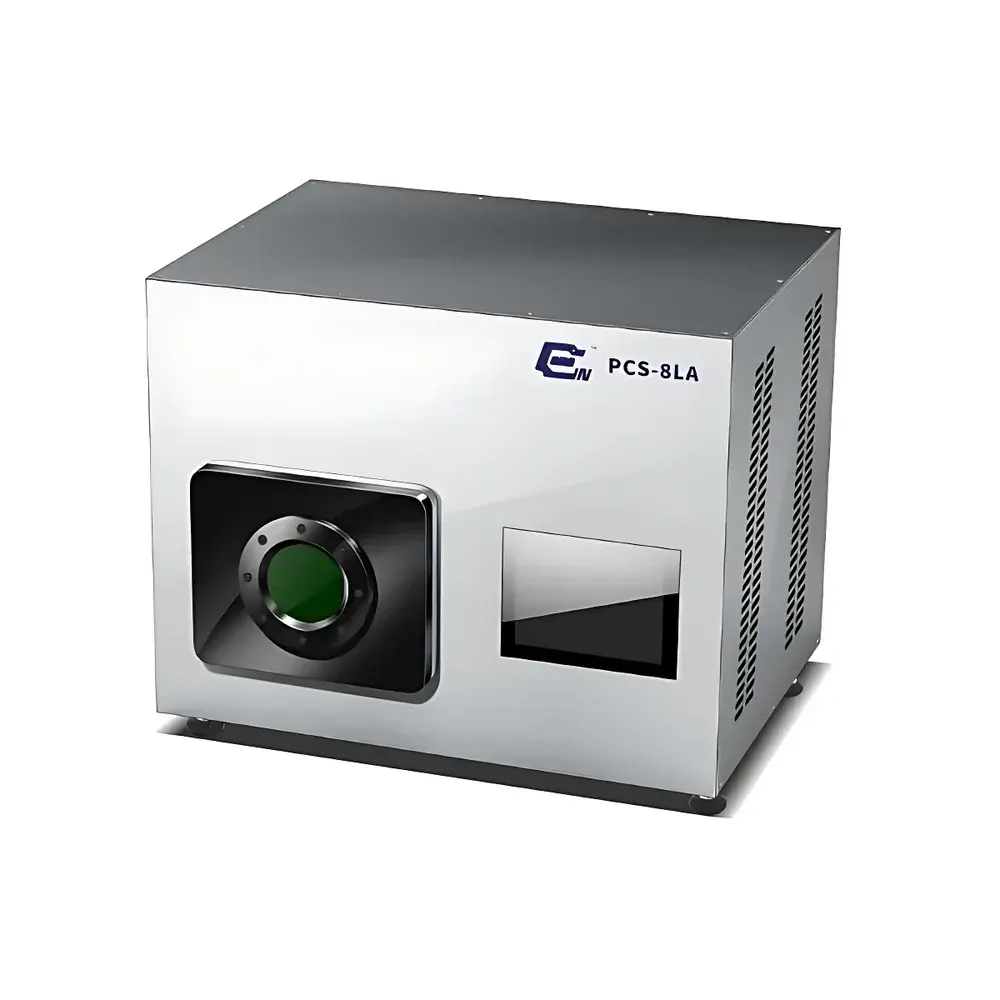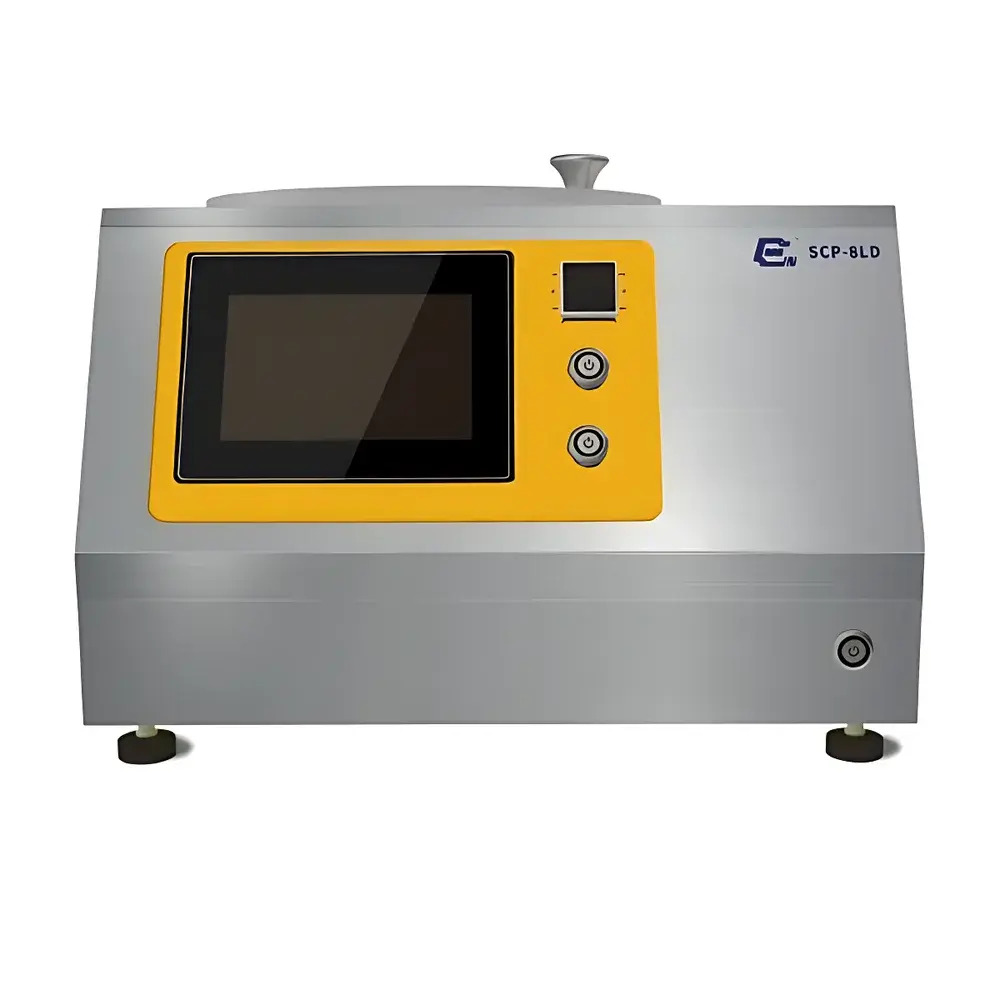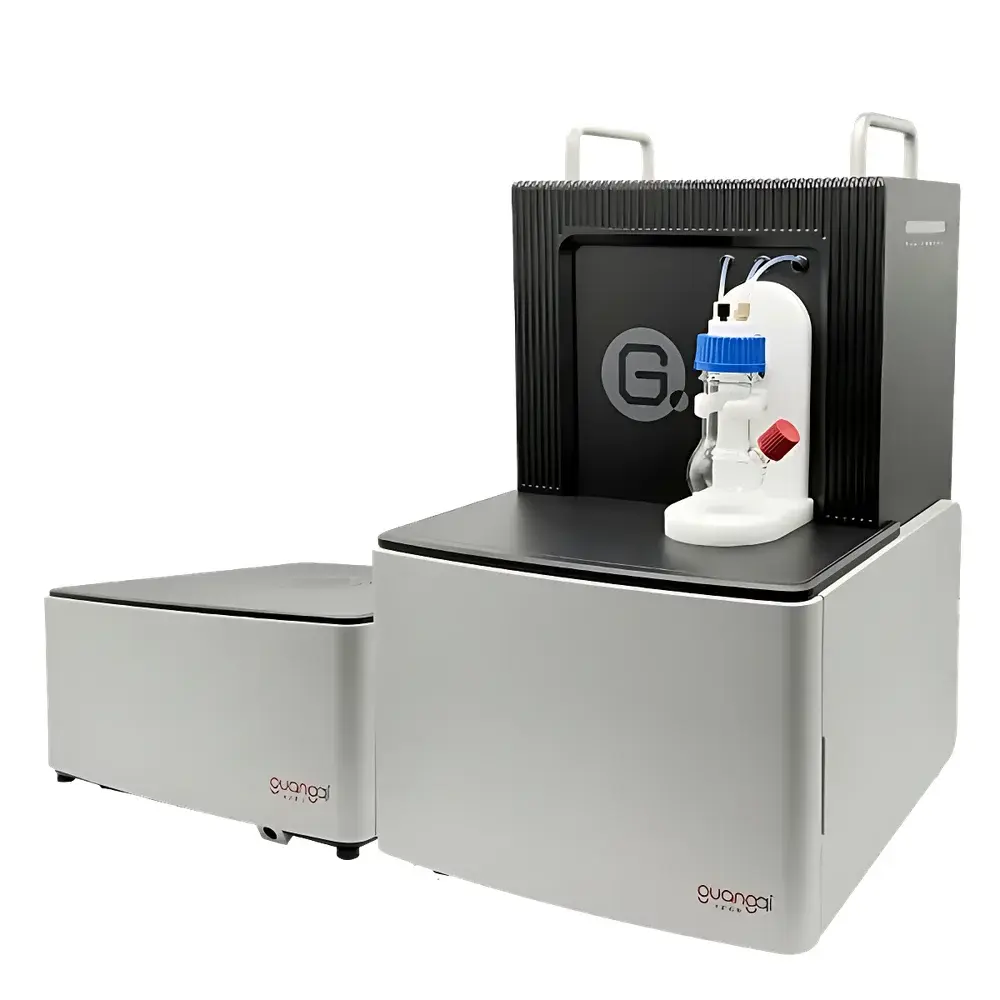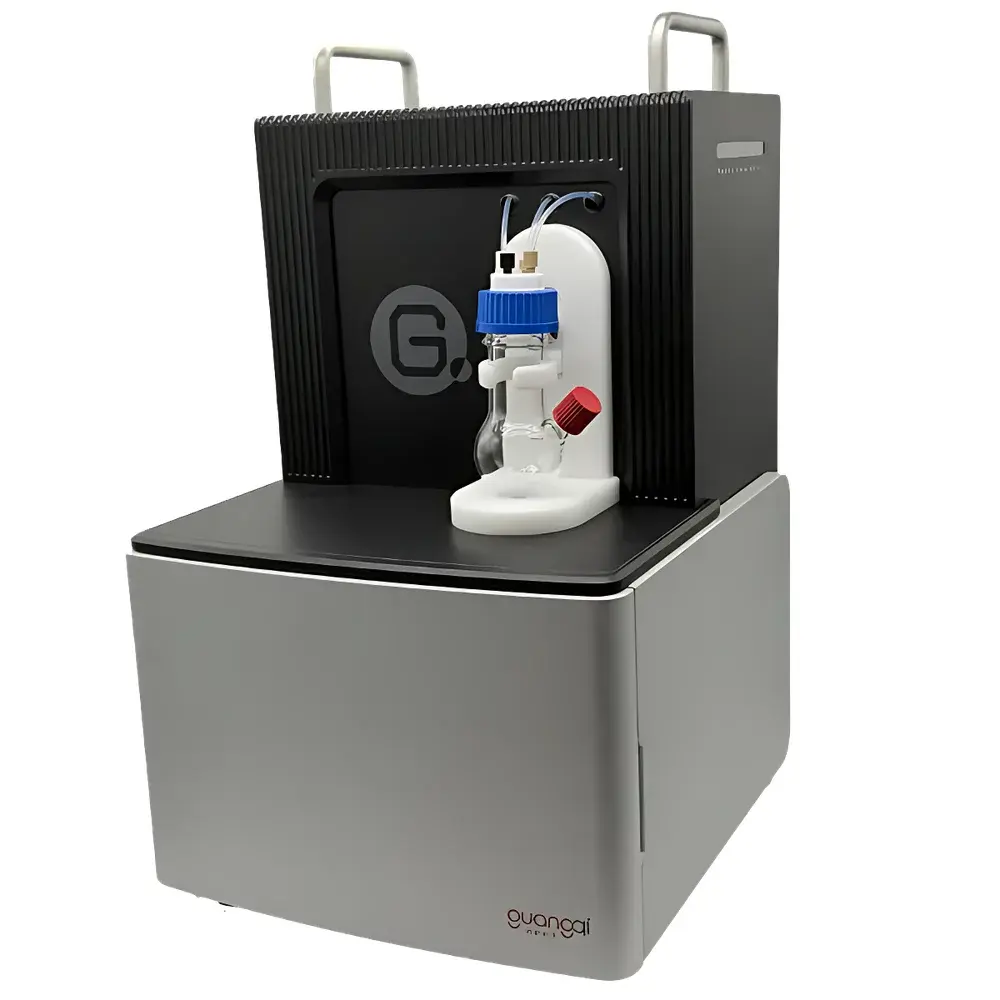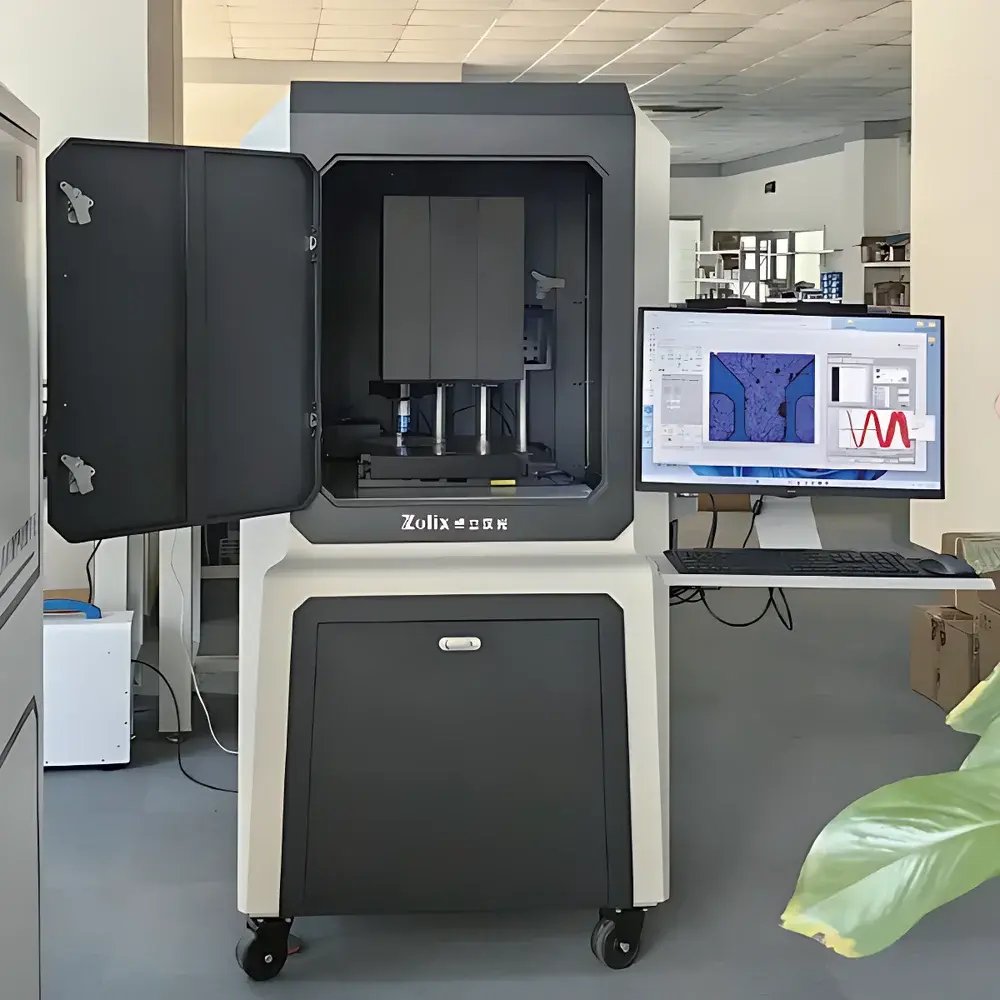
ZOLIX DSR300-DUV Deep-Ultraviolet Photocurrent Measurement System
| Brand | ZOLIX |
|---|---|
| Origin | Beijing, China |
| Manufacturer Type | OEM Manufacturer |
| Country of Origin | China |
| Model | DSR300-DUV |
| Pricing | Upon Request |
Overview
The ZOLIX DSR300-DUV Deep-Ultraviolet (DUV) Photocurrent Measurement System is an engineered platform for quantitative, spatially resolved photocurrent characterization of wide-bandgap semiconductor photodetectors operating in the solar-blind spectral region (<280 nm). It leverages fundamental photoelectric principles—namely, carrier generation via photon absorption across a material’s bandgap and subsequent charge separation under built-in or externally applied electric fields—to deliver traceable, high-fidelity electrical response data. The system is purpose-built for evaluating both photoconductive and photovoltaic device architectures—including Ga₂O₃, AlGaN, ZnMgO, diamond, and other ultra-wide-bandgap semiconductors—under controlled 193 nm pulsed excitation (7 ns pulse width, 1 kHz repetition rate) or continuous-wave DUV illumination (193 nm plasma + monochromator). Its integrated optical path design enables dual-mode operation: focused micro-probe mapping (spot size <500 µm) for spatial uniformity assessment and collimated beam illumination (via iris-controlled Gaussian profile) for macro-scale responsivity calibration across defined die regions.
Key Features
- Deep-UV–optimized optical train with fused silica and CaF₂ optics, supporting stable 193 nm transmission and minimal chromatic aberration
- Motorized high-precision XYZ scanning stage (50 mm × 50 mm × 20 mm travel; <1 µm step resolution) compatible with 2-inch wafers
- Dual-mode microscope module: switchable between UV achromatic objective (for focused photocurrent mapping) and open-beam path (for uniform irradiance delivery)
- Real-time laser power monitoring via integrated pick-off mirror and NIST-traceable reference detector, enabling dynamic correction of photocurrent signals against pulse-to-pulse energy drift (≤10%) and wavelength fluctuation (≤0.5 nm)
- Modular electrical interface supporting both steady-state (source-measure unit dual-channel acquisition) and transient (transimpedance amplifier + multi-channel oscilloscope) measurement modes
- Slot-based parallel optical architecture permitting future integration of Raman, fluorescence, or confocal imaging modules without mechanical realignment
- Software-controlled shutter synchronization with external laser trigger, ensuring precise temporal gating during pulsed measurements
Sample Compatibility & Compliance
The DSR300-DUV accommodates planar semiconductor devices on standard wafer substrates (Si, sapphire, SiC) and discrete chips with active areas ranging from 10 µm² to >1 cm². It supports biasing configurations required for photoconductive (external bias up to ±100 V), photovoltaic (zero-bias or reverse-biased p–n/Schottky junctions), and MSM structures. All optical and electronic subsystems conform to IEC 61000-4 electromagnetic compatibility standards. Data acquisition workflows are structured to support GLP-compliant documentation: audit trails, user access control, parameter versioning, and raw-data immutability align with FDA 21 CFR Part 11 requirements for regulated R&D environments. Calibration certificates for reference detectors and stage encoders are provided per ISO/IEC 17025 guidelines.
Software & Data Management
The unified ZOLIX SpectraControl™ platform provides modular, scriptable control over hardware coordination, measurement sequencing, and post-acquisition analysis. Core functionalities include wafer-level coordinate registration, automated die navigation, multi-point photocurrent mapping (Iph vs. position), time-resolved waveform capture (with timestamp-synchronized dual-channel acquisition), and spectral responsivity derivation (A/W) using calibrated irradiance values. Data export supports HDF5, CSV, and MATLAB-native formats. Integrated processing modules enable baseline subtraction, drift correction, noise spectral density estimation, and linear dynamic range (LDR) calculation. Optional AI-assisted fitting packages support carrier lifetime extraction from transient decay curves and non-uniformity quantification via 2D spatial variance metrics. Custom recipe frameworks allow users to define repeatable test protocols—including sequential wavelength sweeps, bias ramping, and temperature-cooled stage integration—for cross-laboratory reproducibility.
Applications
- Quantitative evaluation of solar-blind responsivity, detectivity (D*), and noise-equivalent power (NEP) in Ga₂O₃ and AlGaN photodiodes
- Spatial mapping of quantum efficiency non-uniformity across wafer-scale epitaxial layers
- Transient photocurrent analysis for carrier transport lifetime and trap-state density estimation
- Process validation of mesa etching, contact metallization, and passivation steps in DUV detector fabrication
- Correlation of microstructural defects (observed via SEM/EBIC) with localized photocurrent suppression
- Calibration transfer between reference standards and production-line testers under ISO 17025 traceability chains
FAQ
What wavelengths does the DSR300-DUV support for photocurrent excitation?
The system is optimized for 193 nm deep-ultraviolet operation using either a pulsed ArF excimer laser or a continuous-wave plasma source coupled to a monochromator. Optional 266 nm and 355 nm laser channels are available for comparative broadband characterization.
Can the system measure both steady-state and transient photocurrent responses?
Yes—dual electrical measurement modes are supported: DC photocurrent acquisition using two synchronized source-measure units (SMUs), and nanosecond-resolved transient waveforms captured via transimpedance amplifiers and digital oscilloscopes.
Is the scanning stage compatible with cryogenic probe stations?
The XYZ stage uses non-magnetic stainless steel construction and low-outgassing lubricants; it has been validated for integration with commercial closed-cycle cryostats operating down to 10 K, subject to vacuum feedthrough and thermal contraction compensation.
How is laser energy stability monitored and corrected during mapping?
A calibrated photodiode samples ~1% of the main beam via a fused-silica pick-off mirror mounted within the microscope turret; real-time intensity data is used to normalize each pixel’s photocurrent value in post-processing.
Does the software support automated pass/fail grading based on user-defined specifications?
Yes—customizable threshold logic can be embedded into measurement recipes to flag outliers in responsivity, dark current, or spatial uniformity, generating annotated reports compliant with IPC-A-610 or JEDEC JESD22-A114B criteria.