
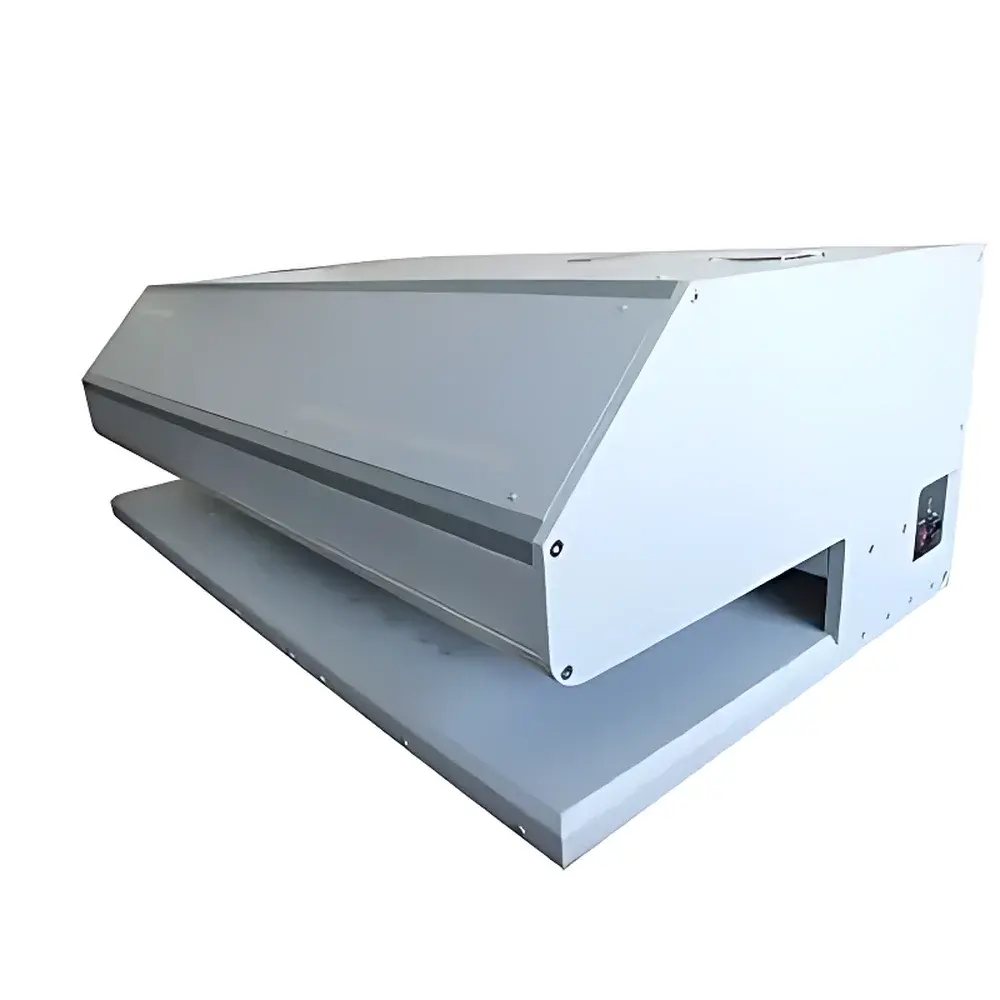
ZOLIX GaiaArtScanner Desktop Hyperspectral Imaging System for Art Conservation and Authentication
| Brand | ZOLIX |
|---|---|
| Origin | Beijing, China |
| Manufacturer Type | Original Equipment Manufacturer (OEM) |
| Country of Origin | China |
| Model | GaiaArtScanner |
| Pricing | Available Upon Request |
Overview
The ZOLIX GaiaArtScanner is a purpose-built desktop hyperspectral imaging system engineered specifically for non-invasive, spatially resolved chemical characterization of cultural heritage objects—particularly classical Chinese paintings, handscrolls, album leaves, and ancient manuscripts. Operating on the principle of push-broom hyperspectral imaging in the visible–near-infrared (VNIR) spectral range (typically 400–1000 nm), the system acquires contiguous spectral data cubes (x, y, λ) with high spectral sampling resolution (< 3 nm FWHM) and spatial sampling down to 50 µm per pixel at working distance. Unlike broadband RGB or multispectral systems, the GaiaArtScanner captures hundreds of narrowband spectral channels across the reflectance spectrum, enabling pixel-wise identification of pigments, binders, varnishes, and degradation products based on their intrinsic spectral signatures. Its optical design minimizes illumination intensity and thermal load, ensuring compliance with conservation ethics that prioritize object safety over analytical speed.
Key Features
- Desktop form factor with fixed-focus, motorized X-Y scanning stage for stable, vibration-damped acquisition of fragile, planar artworks up to A1 size (594 × 841 mm)
- VNIR hyperspectral sensor with back-illuminated CCD detector, optimized quantum efficiency (>60% at 700 nm), and thermoelectric cooling for low-noise performance
- Integrated collimated LED illumination array with adjustable intensity and spectral uniformity correction (flat-field calibration)
- Real-time spectral preview and region-of-interest (ROI) selection via ZOLIX HyperView software suite
- Modular optical path accommodating optional UV-enhanced or SWIR extension modules (upon request and system recalibration)
- CE-compliant electromagnetic compatibility and Class 1 laser safety certification (IEC 60825-1) for laboratory deployment
Sample Compatibility & Compliance
The GaiaArtScanner is validated for direct contact-free analysis of light-sensitive, low-reflectance, and heterogeneous surfaces—including mineral-based pigments (e.g., azurite, malachite, cinnabar), organic dyes (e.g., safflower, indigo), ink formulations (lampblack, pine soot), and aged paper or silk supports. It adheres to the ICOM-CC (International Council of Museums – Committee for Conservation) Guidelines for Non-Invasive Analysis and aligns with ASTM E3087–21 “Standard Practice for Spectral Imaging of Cultural Heritage Objects.” Data acquisition protocols support GLP-aligned documentation, including metadata tagging for illumination geometry, integration time, calibration references (NIST-traceable reflectance standards), and environmental conditions (temperature/humidity logs).
Software & Data Management
ZOLIX HyperView v3.x provides a dedicated workflow for art science applications: spectral library matching (with built-in reference spectra of >120 traditional East Asian pigments), endmember extraction (using VCA and N-FINDR algorithms), false-color mapping of pigment distribution, and PCA-based anomaly detection for retouching or degradation assessment. All raw and processed data are stored in open-format ENVI .hdr/.dat files, compliant with FAIR (Findable, Accessible, Interoperable, Reusable) principles. Audit trails—including user ID, timestamp, processing parameters, and version-controlled algorithms—are retained per ISO/IEC 17025:2017 requirements for accredited testing laboratories. Export options include TIFF stacks, CSV spectral profiles, and PDF reports with embedded spectral plots and spatial overlays.
Applications
- Authentication of classical Chinese paintings by detecting anachronistic pigments or modern restoration materials
- Mapping of hidden underdrawings, compositional changes (pentimenti), and erased inscriptions via spectral unmixing
- Monitoring oxidative degradation of iron gall ink or fading of organic colorants during storage or exhibition
- Guiding micro-sampling strategies by identifying chemically distinct zones prior to invasive analysis (e.g., Raman, XRF)
- Generating digital archival records with spectral fidelity for long-term preservation metadata
- Supporting scholarly research in art history, material provenance, and technical art history methodologies
FAQ
What spectral range does the standard GaiaArtScanner cover?
The base configuration operates from 400 nm to 1000 nm with ~2.8 nm spectral sampling interval and < 3 nm optical resolution (FWHM).
Can it analyze curved or three-dimensional artifacts?
No—the system is optimized for flat, planar objects; curved surfaces require custom stage integration and geometric correction, which falls outside standard validation.
Is spectral calibration traceable to national standards?
Yes—factory calibration uses NIST SRM 2036 (diffuse reflectance standard) and SRM 2035 (spectral irradiance standard); users may perform routine verification using supplied ceramic tiles.
Does the software support multilingual interfaces?
HyperView v3.x includes English and Simplified Chinese UI; additional language packs are available upon request for institutional deployments.
How is data integrity ensured during long-duration scans?
The system implements hardware-level watchdog timers, checksum-verified data streaming, and automatic resume-from-interrupt functionality after power fluctuations or USB disconnects.
Related Products




