
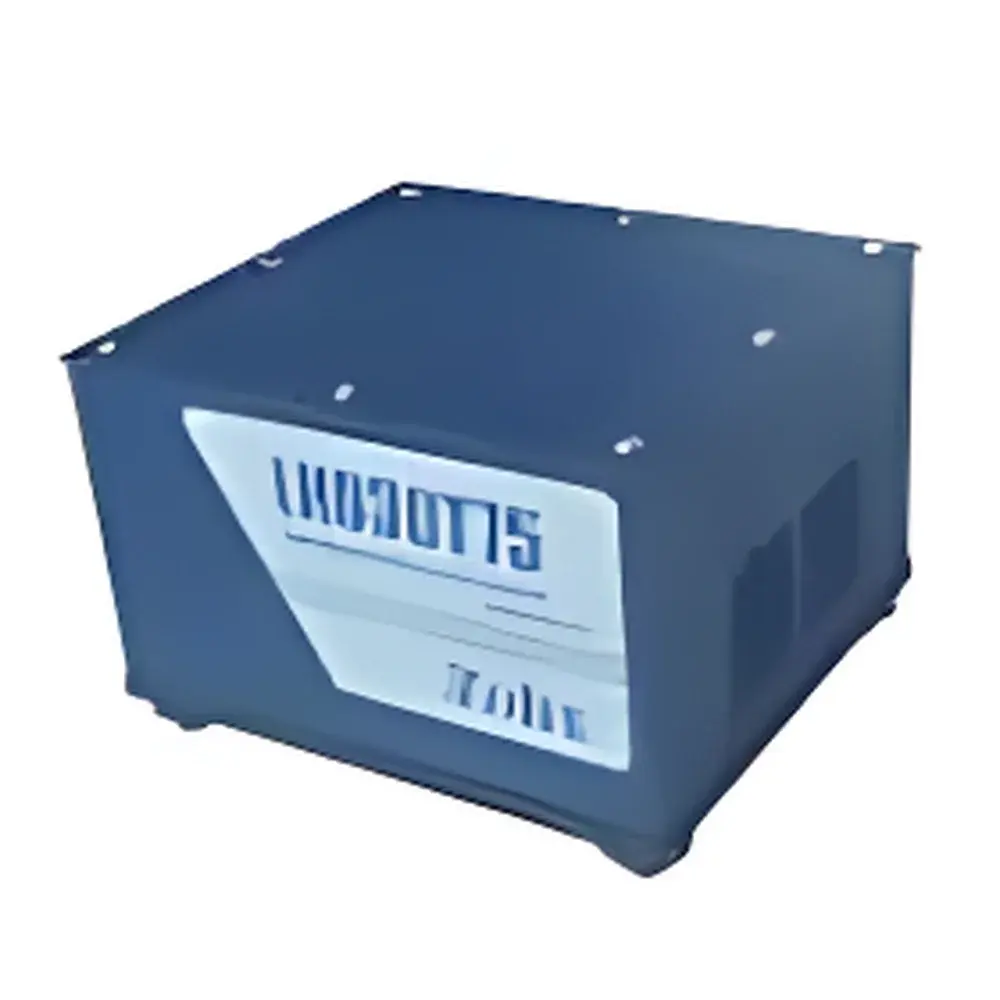
ZOLIX LSH-DT05 Deuterium-Tungsten Halogen Composite Light Source
| Brand | ZOLIX |
|---|---|
| Origin | Beijing, China |
| Manufacturer Type | Direct Manufacturer |
| Model | LSH-DT05 |
| Light Source Type | Deuterium + Tungsten-Halogen Hybrid |
| Wavelength Range | 200–1100 nm |
| Output Aperture | 0.5 mm |
| Intensity Stability | ±0.5% (RMS, over 8 hours) |
| Lifetime | Deuterium Lamp 1,000 h / Tungsten-Halogen Lamp 2,000 h |
| Shutter Control | Manual Switch & TTL-Compatible (High-Level Trigger) |
| Operating Temperature | 5–35 °C |
| Power Supply | 12 V DC / 1 A |
| Dimensions | 180 × 125 × 51 mm |
| Fiber Coupling | SMA905 Convergent-Beam Output |
| Optical Axis Height Adjustment Range | 130–165 mm |
Overview
The ZOLIX LSH-DT05 Deuterium-Tungsten Halogen Composite Light Source is an engineered broadband illumination system designed for high-stability spectroscopic applications requiring seamless spectral continuity across the ultraviolet, visible, and near-infrared regions (200–1100 nm). Unlike single-lamp sources, this dual-emitter architecture integrates a low-noise deuterium lamp (D₂) and a quartz-halogen tungsten lamp within a thermally stabilized, mechanically synchronized housing. The two sources share a common optical path via a motorized flip mirror, enabling rapid, repeatable switching without realignment—critical for automated spectrophotometry, absorbance ratio measurements, and reference-sample interleaving protocols. The source delivers collimated, convergent-beam output through an SMA905 fiber port, optimized for coupling into monochromators, spectrometers, and optical benches with minimal vignetting or divergence loss.
Key Features
- Simultaneous UV–Vis–NIR coverage (200–1100 nm) with spectral continuity at ~350 nm, eliminating gaps typical of discrete lamp systems
- Independent on/off control of deuterium and tungsten-halogen lamps via front-panel switches or TTL-compatible external triggering
- Integrated mechanical shutter with dual-mode operation: manual toggle switch and TTL high-level activation (5 V logic), supporting synchronization with detector gating or scanning routines
- Thermally managed lamp chamber with active airflow regulation ensures intensity stability ≤ ±0.5% RMS over 8-hour continuous operation
- Adjustable optical axis height (130–165 mm) accommodates integration with standard optical tables and modular spectrometer platforms
- Compact footprint (180 × 125 × 51 mm) and low-power 12 V DC input simplify integration into OEM instruments and benchtop analytical systems
Sample Compatibility & Compliance
The LSH-DT05 is compatible with standard 1/4″-20 and M4 threaded mounting interfaces, facilitating secure attachment to optical rails, translation stages, and spectrometer entrance slits. Its SMA905 output is calibrated for use with 400 µm core multimode fibers (NA 0.22), and supports both free-space and fiber-coupled configurations. The device complies with IEC 61000-6-3 (EMC emission limits) and IEC 61000-6-2 (immunity requirements) for laboratory equipment. While not certified for medical or industrial safety standards (e.g., IEC 62471), its enclosed lamp housing meets Class 1 laser product safety guidelines per EN 60825-1 when operated with appropriate fiber termination. No hazardous substance declarations (RoHS 2011/65/EU) are required, as all internal components conform to EU Directive restrictions on lead, mercury, cadmium, and brominated flame retardants.
Software & Data Management
The LSH-DT05 operates as a hardware-controlled light source without embedded firmware or USB connectivity; it functions as a deterministic peripheral in spectroscopic workflows. Shutter timing and lamp selection are managed externally via TTL signals or relay-controlled dry contacts, enabling full integration into LabVIEW, Python (PyVISA), or MATLAB-based automation frameworks. For GLP/GMP environments, users may log lamp-on time, shutter actuation events, and ambient temperature via external data acquisition systems—supporting audit trails compliant with FDA 21 CFR Part 11 when paired with validated timestamped logging software. No proprietary drivers or configuration utilities are required; operational status is verified via LED indicators (green = power, yellow = deuterium active, red = tungsten active).
Applications
- UV-Vis-NIR absorbance and transmittance calibration of spectrophotometers and array detectors
- Wavelength accuracy verification using NIST-traceable absorption standards (e.g., holmium oxide, didymium filters)
- Baseline correction and dark-current subtraction in FTIR and dispersive spectrometers
- Photochemical reaction monitoring where simultaneous UV initiation and Vis/NIR probe wavelengths are required
- Optical thin-film characterization via variable-angle reflectance and ellipsometry setups
- Teaching laboratories for demonstrating spectral radiance differences between continuum and line sources
FAQ
Can the LSH-DT05 be used with fiber-optic spectrometers requiring collimated input?
Yes—the SMA905 output is configured for convergent-beam delivery; optional collimating adapters (e.g., Thorlabs F230SMA-780) are recommended for spectrometers specifying collimated input.
Is lamp alignment required after replacement?
No—lamps are pre-aligned in factory-assembled modules (LSDS-30 deuterium and LSTS-75 tungsten-halogen); field replacement maintains optical centering within ±0.1 mm tolerance.
What is the recommended warm-up time before achieving rated stability?
Deuterium lamp requires 30 minutes; tungsten-halogen lamp stabilizes within 10 minutes. Full system stability (±0.5%) is achieved after 45 minutes of combined operation.
Does the unit support analog intensity modulation?
No—intensity control is binary (on/off per lamp); analog dimming is not supported due to spectral shift risks in deuterium discharge and tungsten filament thermal response.
Are spectral irradiance calibration certificates available?
Yes—NIST-traceable spectral radiance calibrations (200–1100 nm, ±2% uncertainty) are optionally provided upon request, delivered with individual serial-numbered reports meeting ISO/IEC 17025 requirements.




