
ZOLIX MiRass DUV Deep-Ultraviolet Resonance Raman Spectrometer
| Brand | ZOLIX |
|---|---|
| Origin | Beijing, China |
| Manufacturer Type | Original Equipment Manufacturer (OEM) |
| Product Category | Domestic |
| Model | MiRass DUV |
| Instrument Type | Confocal Micro-Raman Spectrometer |
| Spectral Range | 50–5,000 cm⁻¹ (325 nm excitation) |
| Spectral Resolution | ≤1 cm⁻¹ (@585.25 nm) |
| Spatial Resolution | ≤1 µm (diffraction-limited, with 100× objective) |
| Minimum Detectable Wavenumber | 15 cm⁻¹ |
| Spectral Repeatability | ≤±0.15 cm⁻¹ |
| Excitation Lasers (Standard) | 325 nm (≥30 mW, TEM₀₀), 532 nm (≥100 mW, TEM₀₀) |
| Excitation Lasers (Optional) | 244 nm, 266 nm, narrow-linewidth tunable UV–NIR laser |
| Detector | Deep-cooled back-illuminated scientific CCD |
| Detector Quantum Efficiency | >40% @ 250–400 nm |
| Pixel Array | 2048 × 512 |
| Pixel Size | 13.5 × 13.5 µm |
| Spectral Response Range | 200–1000 nm (UV-enhanced) |
Overview
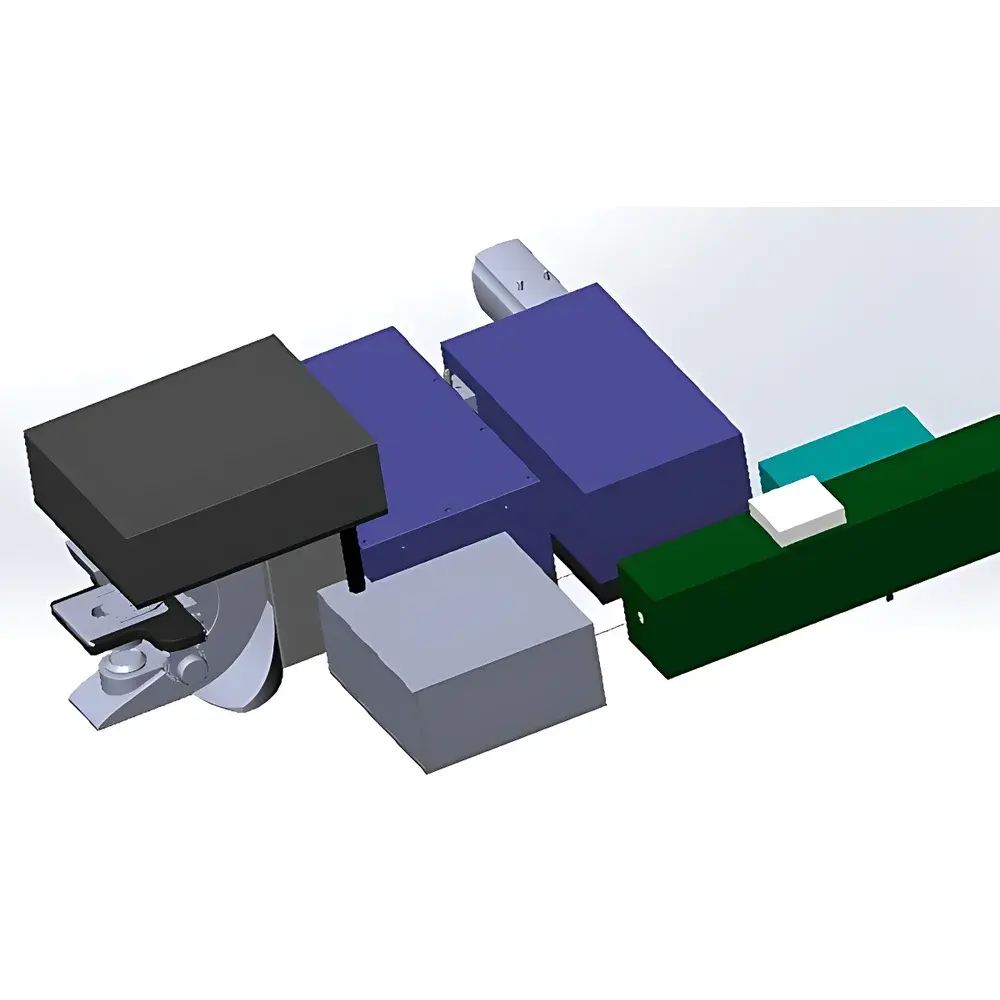
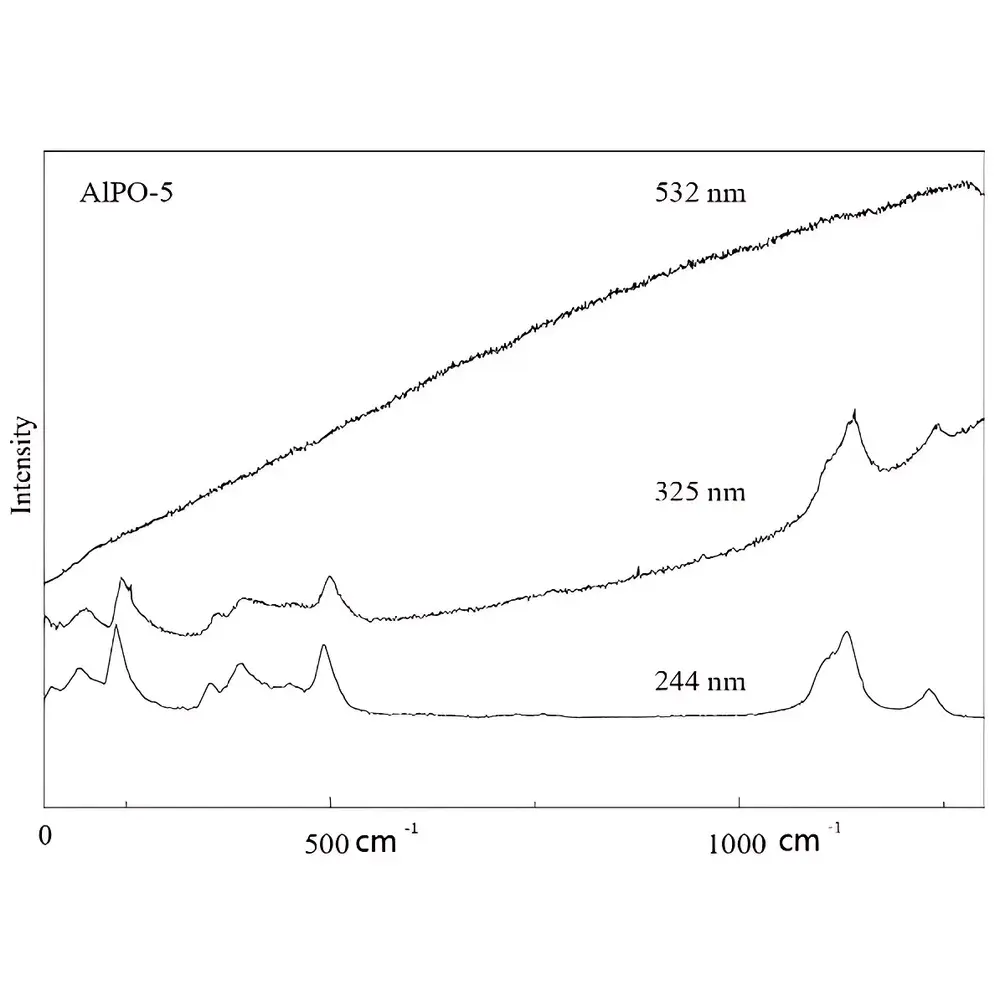
The ZOLIX MiRass DUV Deep-Ultraviolet Resonance Raman Spectrometer is a purpose-built confocal micro-Raman system engineered for high-sensitivity, low-fluorescence vibrational spectroscopy in the deep-ultraviolet (DUV) and visible spectral excitation regimes. It operates on the principle of resonance Raman scattering—where incident laser photons match or closely approach an electronic absorption transition of the target molecule—resulting in selective enhancement of specific vibrational modes by up to 10⁴–10⁶× relative to conventional Raman scattering. This enables detection of trace surface species, weakly scattering crystalline phases, and structurally sensitive modes inaccessible under non-resonant conditions. The system integrates a custom-designed triple-stage imaging-corrected spectrometer with a UV-optimized microscope platform, eliminating reliance on notch or edge filters and supporting flexible, plug-and-play laser source interchange without optical realignment. Its architecture supports rigorous quantitative analysis in catalysis, surface science, and biomolecular conformational studies where fluorescence suppression, low-wavenumber fidelity, and electronic-state selectivity are critical.
Key Features
- Deep-UV resonance capability with selectable excitation wavelengths (244 nm, 266 nm, 325 nm, 532 nm), enabling fluorescence-free interrogation of UV-absorbing materials such as metal oxides (TiO₂, ZrO₂), zeolites, and aromatic biomolecules.
- Triple-stage monochromator design with aberration-corrected optics delivers exceptional stray-light rejection and enables reliable spectral acquisition down to 15 cm⁻¹—critical for low-frequency lattice modes and interfacial vibrations.
- Confocal optical configuration with motorized XYZ stage and high-NA UV-grade objectives ensures diffraction-limited spatial resolution (<1 µm) and precise micro-domain targeting.
- Back-illuminated, deep-cooled scientific CCD detector with enhanced quantum efficiency (>40% at 250–400 nm) and broad spectral response (200–1000 nm), optimized for signal-to-noise performance across UV–NIR Raman shifts.
- Laser-agnostic spectrometer interface: interchangeable excitation sources mount directly to the optical train; no recalibration required upon wavelength change—reducing setup time and calibration drift risk.
Sample Compatibility & Compliance
The MiRass DUV accommodates solid powders, single crystals, thin films, suspended nanoparticles, and biological tissue sections mounted on standard glass or quartz substrates. Its UV-optimized optical path supports transmission and reflection geometries, including quasi-backscattering configurations for highly absorbing samples. The system meets core requirements for GLP-compliant laboratories: full hardware timestamping, detector dark-current compensation, and stable thermal management (CCD cooled to −70 °C) ensure measurement reproducibility per ISO 8573-1 and ASTM E1840-22 guidelines for vibrational spectroscopic instrumentation. While not FDA 21 CFR Part 11-certified out-of-the-box, its data acquisition software supports audit-trail export and user-access controls compatible with GMP-aligned workflows when deployed with validated IT infrastructure.
Software & Data Management
Acquisition and analysis are managed via ZOLIX’s proprietary SpectraSolve Pro software suite, built on a modular C++/Qt framework. It provides real-time spectral preview, automated background subtraction (polynomial and morphological), peak fitting with Voigt or pseudo-Voigt profiles, and batch-processing pipelines for multi-map datasets. All raw spectra are saved in HDF5 format with embedded metadata (laser wavelength, power, integration time, grating position, stage coordinates), ensuring FAIR (Findable, Accessible, Interoperable, Reusable) data principles. Export options include ASCII, CSV, and JCAMP-DX for third-party chemometric tools (e.g., MATLAB, Python scikit-learn, Unscrambler). Software logs all user actions—including parameter changes and processing steps—with UTC timestamps, supporting traceability in regulated environments.
Applications
- Catalysis & Materials Science: Identification of isolated transition-metal sites (e.g., Ti⁴⁺ in Ti-MCM-41) and surface hydroxyl groups on oxide catalysts; monitoring framework evolution during zeolite synthesis via time-resolved UV-Raman.
- Surface Chemistry: Discrimination of bulk vs. surface phases in polymorphic metal oxides (e.g., anatase vs. rutile TiO₂) through resonance-selective enhancement of surface-sensitive modes.
- Life Sciences: Conformational analysis of aromatic amino acids (e.g., tryptophan, tyrosine) and nucleic acid bases without fluorescence masking—enabling label-free structural probing of protein–ligand interfaces.
- Nanoscience: Characterization of strain, defects, and layer stacking in 2D materials (e.g., MoS₂, h-BN) using low-wavenumber Raman modes resolved below 30 cm⁻¹.
- Pharmaceutical Development: Polymorph screening of UV-absorbing active pharmaceutical ingredients (APIs) and excipients where visible-laser Raman suffers from overwhelming autofluorescence.
FAQ
What excitation wavelengths are supported, and can they be changed without recalibration?
Yes—the MiRass DUV accepts discrete and tunable lasers from 244 nm to 532 nm. Its filter-free, grating-based optical design eliminates the need for mechanical realignment or wavelength recalibration when switching sources.
How does the system achieve low-wavenumber performance down to 15 cm⁻¹?
Through a triple-stage monochromator with optimized dispersion geometry and high-efficiency UV coatings, combined with ultra-low-stray-light baffling and deep-cooled CCD readout to suppress thermal noise in the Rayleigh wing region.
Is the detector sensitive enough for weak UV-Raman signals from dilute surface species?
Yes—the back-illuminated CCD offers >40% QE in the 250–400 nm range and sub-electron read noise at −70 °C, enabling integration times up to 1,000 s while maintaining dynamic range and linearity.
Can the system perform mapping experiments, and what is the positional accuracy?
Yes—it includes a motorized XYZ stage with 100 nm step resolution and closed-loop feedback; spectral maps up to 200 × 200 pixels are fully automatable with synchronized stage and acquisition control.
Does the software support spectral library matching and multivariate analysis?
SpectraSolve Pro includes built-in reference libraries (e.g., RRUFF, ICDD PDF-4+) and supports PCA, PLS-DA, and cluster analysis via Python API integration for advanced pattern recognition.




