
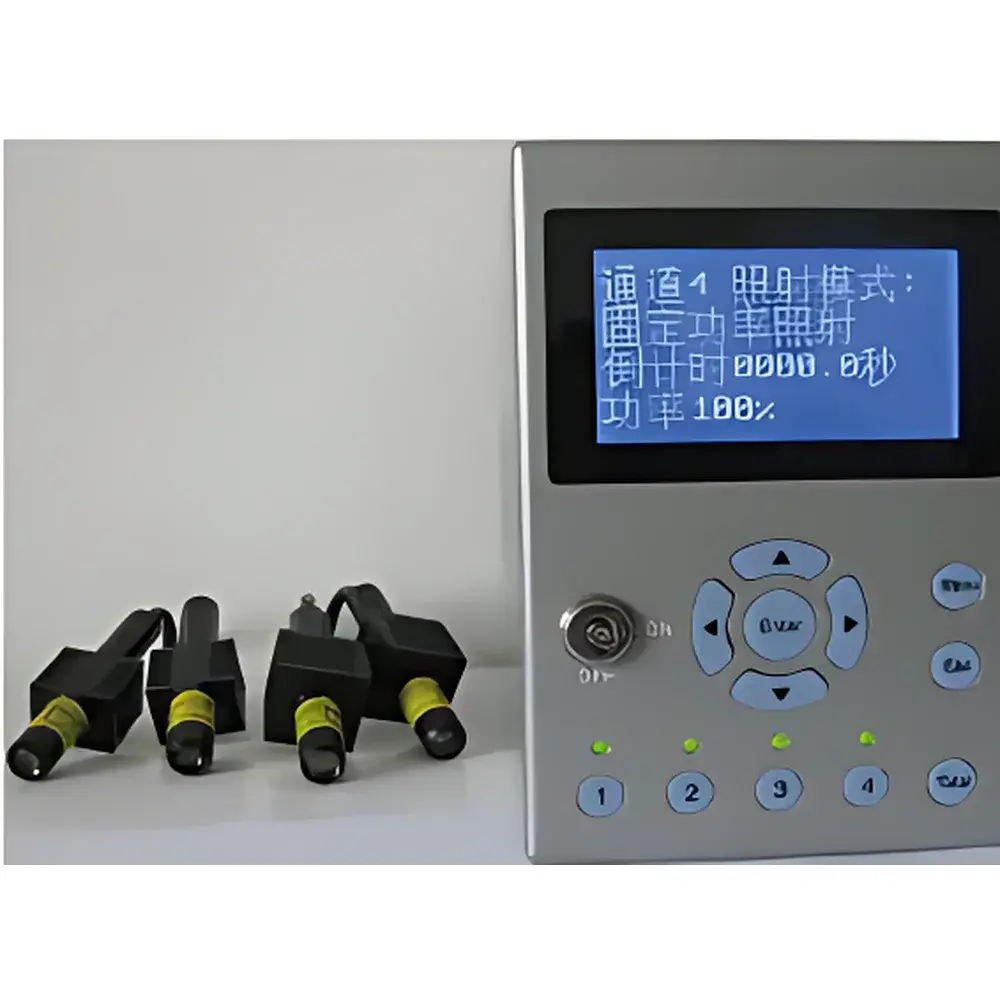
ZOLIX MLED4 Multi-Channel LED Light Source
| Brand | ZOLIX |
|---|---|
| Model | MLED4 |
| Origin | Beijing, China |
| Manufacturer | ZOLIX (Producer) |
| Light Source Type | High-Power Tunable LED Array |
| Illumination Mode | External (Epi-Illumination) |
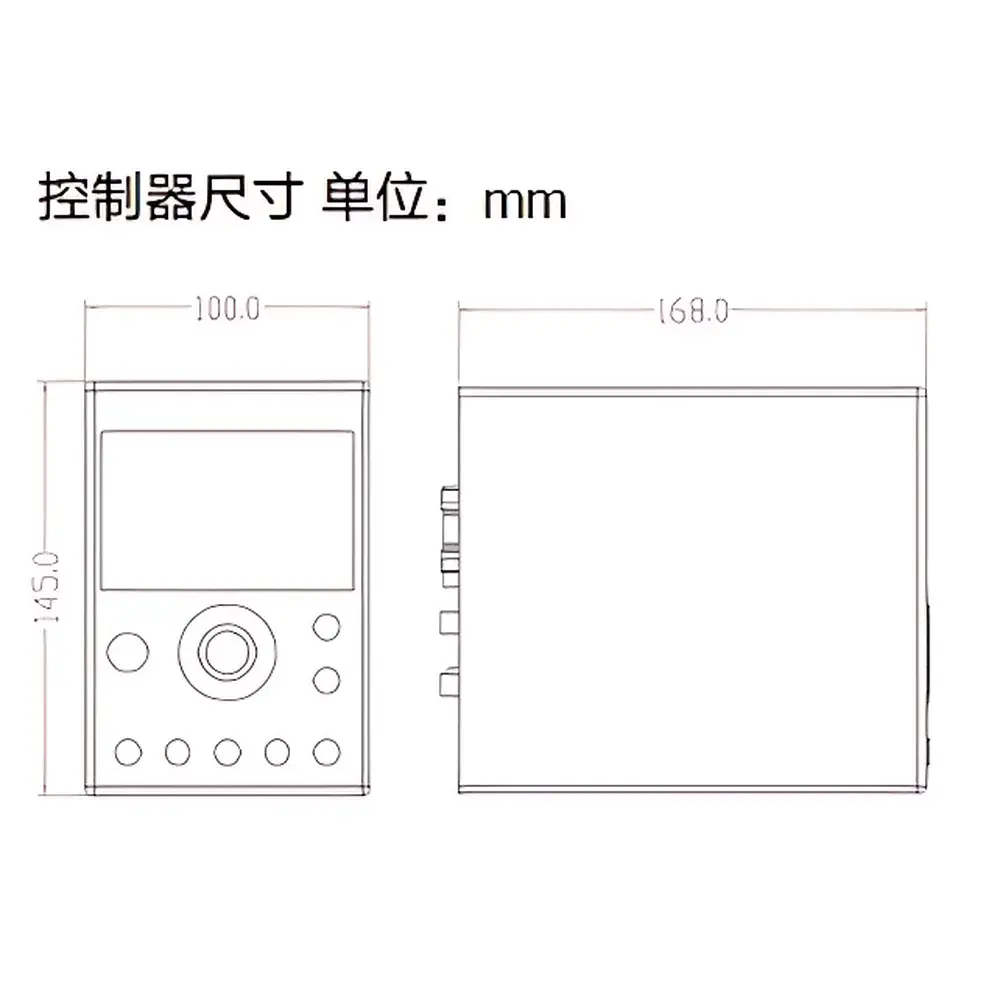
| Dimensions (L×W×H) | 185 × 100 × 125 mm |
| Weight (Host) | ~1.5 kg |
| Power Supply | AC 100–222 V, 50/60 Hz → DC 24 V / 4 A |
| Operating Temperature | +5 to +35 °C |
| Storage Temperature | −10 to +55 °C (non-condensing) |
| Humidity Range | 20–80 % RH (non-condensing) |
| Cooling | Passive + Fan-Assisted |
| Control Interface | RS-232, Digital I/O (4-channel TTL-compatible), Footswitch & Manual Toggle |
| Max Exposure Time | 9999.9 s |
| Intensity Control | 1–100 % digital PWM |
| Programmable Stages | Up to 8 steps per channel |
| LED Wavelength Options | 245–780 nm (discrete peaks including 245, 290, 325, 365, 375, 385, 395, 405, 410, 420, 430, 450, 470, 490, 500, 505, 525, 535, 550, 565, 570, 580, 590, 600, 610, 625, 630, 645, 660, 670, 680, 690, 700, 720, 735, 750, 760, 780 nm) |
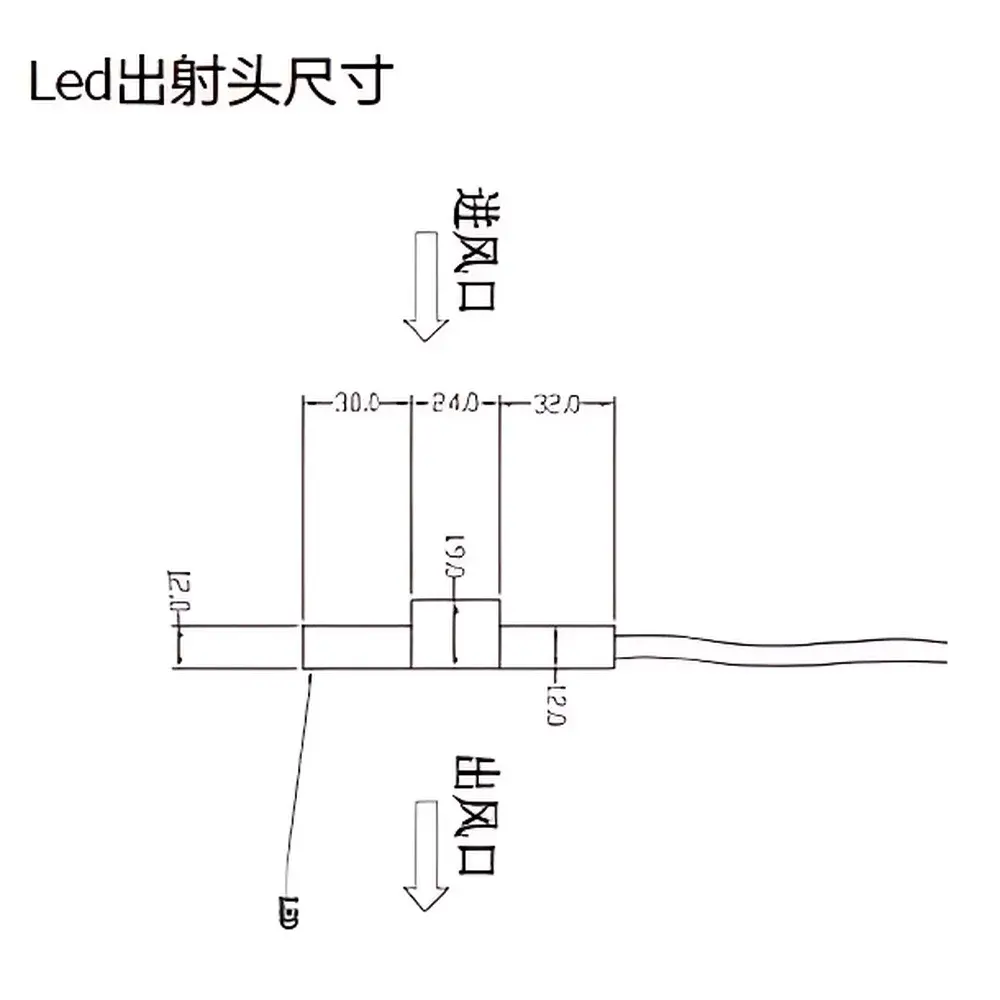
| Output Configurations | Spot (Φ3–Φ10 mm), Linear, and Custom Area Illuminators |
| Compliance | CE-marked design principles |
Overview
The ZOLIX MLED4 Multi-Channel LED Light Source is an engineered illumination platform designed for precision optical experimentation and industrial process control where spectral selectivity, temporal stability, and spatial reproducibility are critical. Unlike broadband arc lamps or filtered halogen sources, the MLED4 leverages discrete high-brightness LED emitters—each independently addressable—to deliver calibrated quasi-monochromatic output across the deep ultraviolet (245 nm) to near-infrared (780 nm) spectrum. Its core architecture follows a modular driver-controller paradigm: the main unit houses four isolated constant-current LED drivers, each supporting up to 24 V / 4 A output, enabling simultaneous or sequential excitation of multiple wavelengths without cross-talk or thermal drift. The system operates on solid-state photonic principles—electroluminescence in semiconductor junctions—ensuring sub-millisecond switching response, negligible warm-up time, and long-term radiometric stability (±2 % over 10,000 h at rated drive current). It is not a generic lamp replacement but a programmable light engine intended for integration into spectroscopic setups, photochemical reactors, fluorescence imaging stations, and automated QA/QC lines.
Key Features
- Four independent, optically isolated LED channels—each fully controllable in intensity (1–100 % via digital PWM), timing (0.1 s to 9999.9 s), and sequencing (up to 8-step programmable exposure profiles per channel)
- Comprehensive wavelength coverage: 38 discrete emission peaks from 245 nm (UVC) to 780 nm (NIR), with optional custom LED modules available upon request
- Modular illuminator interface: interchangeable optical heads—including collimated spot (Φ3–Φ10 mm), linear, and uniform-area configurations—designed for minimal divergence and maximal irradiance homogeneity
- Dual-mode control architecture: local operation via backlit LCD panel and tactile keys; remote automation via RS-232 serial protocol (ASCII command set) or industrial-grade digital I/O (TTL-level start/stop, status feedback, emergency stop)
- Thermally robust mechanical design: aluminum alloy chassis with hybrid passive/fan-assisted cooling ensures stable output even during extended duty cycles at maximum power
- Compliance-ready firmware: supports parameter logging, configuration versioning, and timestamped event records—facilitating traceability in regulated environments aligned with ISO/IEC 17025, USP , or internal GLP protocols
Sample Compatibility & Compliance
The MLED4 accommodates diverse sample geometries and optical path requirements through its standardized M42 × 0.75 mm threaded illuminator mount and configurable beam delivery optics. Spot illuminators enable targeted excitation of microfluidic channels or single-cell assays; linear heads support conveyor-based UV curing or fluorescence line-scanning; area illuminators provide uniform irradiation for thin-film photostability testing (per ICH Q1B) or photocatalytic surface evaluation (per ISO 22197-1). All LED modules are RoHS-compliant and CE-conformant in electromagnetic compatibility (EN 61326-1) and safety (EN 62471 Photobiological Safety Classification). When operated with validated third-party software and documented calibration certificates (NIST-traceable irradiance sensors), the system meets functional requirements for GxP-regulated applications requiring audit trails and user-access controls.
Software & Data Management
While the MLED4 operates autonomously via front-panel programming, its RS-232 interface enables seamless integration with LabVIEW, Python (pySerial), MATLAB, or custom SCADA systems. The ASCII command protocol supports full parameter interrogation and real-time adjustment—including channel enable/disable, intensity setpoint, exposure duration, and step-sequence upload/download. Optional ZOLIX-provided PC software provides GUI-based scheduling, multi-session log export (CSV/TXT), and synchronization triggers for external detectors or shutters. All operational events—including power-on, mode changes, error flags (e.g., overtemperature, open-circuit), and manual overrides—are timestamped and stored in non-volatile memory for post-hoc forensic analysis. The controller’s firmware architecture supports secure firmware updates and retains configuration integrity after power loss.
Applications
- Photocatalysis research: Controlled UVA/UVB/UVC irradiation for TiO₂, g-C₃N₄, or MOF-based degradation studies under ASTM E2997-15 conditions
- Fluorescence microscopy excitation: Rapid wavelength switching between DAPI/FITC/TRITC/Cy5 bands without mechanical filter wheels
- UV-Vis absorbance validation: Reference-grade monochromatic sources for spectrophotometer linearity and stray-light verification (per ISO 17025 Clause 5.9)
- Biological photostimulation: Precise blue/red/far-red dosing in optogenetics, phytochrome activation, or circadian rhythm assays
- Industrial UV curing: Process validation of ink, adhesive, or coating polymerization kinetics using calibrated 365/385/405 nm outputs
- Forensic document analysis: Non-destructive luminescence examination of security features, inks, and latent fingerprints using multi-spectral LED arrays
FAQ
What is the minimum pulse width achievable per channel?
The MLED4 supports TTL-triggered on/off transitions with ≤100 µs rise/fall times; however, minimum controllable exposure duration is 0.1 s in standard mode. Sub-second pulsing requires external hardware triggering.
Can the MLED4 be used with fiber-optic couplers?
Yes—ZOLIX offers SMA905-compatible adapter sleeves for selected spot illuminators. Coupling efficiency depends on NA matching and core diameter; typical throughput loss is 15–25 % for 400 µm fibers.
Is NIST-traceable irradiance calibration available?
Calibration services are provided by accredited third-party labs (e.g., PTB, NIM); ZOLIX supplies mounting fixtures and reference measurement protocols but does not issue certified calibration certificates directly.
How is thermal management handled during continuous 100 % output?
At full load across all four channels, the internal fan activates automatically above 45 °C heatsink temperature. Ambient airflow >0.5 m/s is recommended for sustained operation above 70 % duty cycle.
Are custom wavelengths outside the standard list supported?
Yes—custom LED modules (e.g., 275 nm, 532 nm, or 850 nm) can be developed subject to minimum order quantity and lead time confirmation prior to purchase.





