
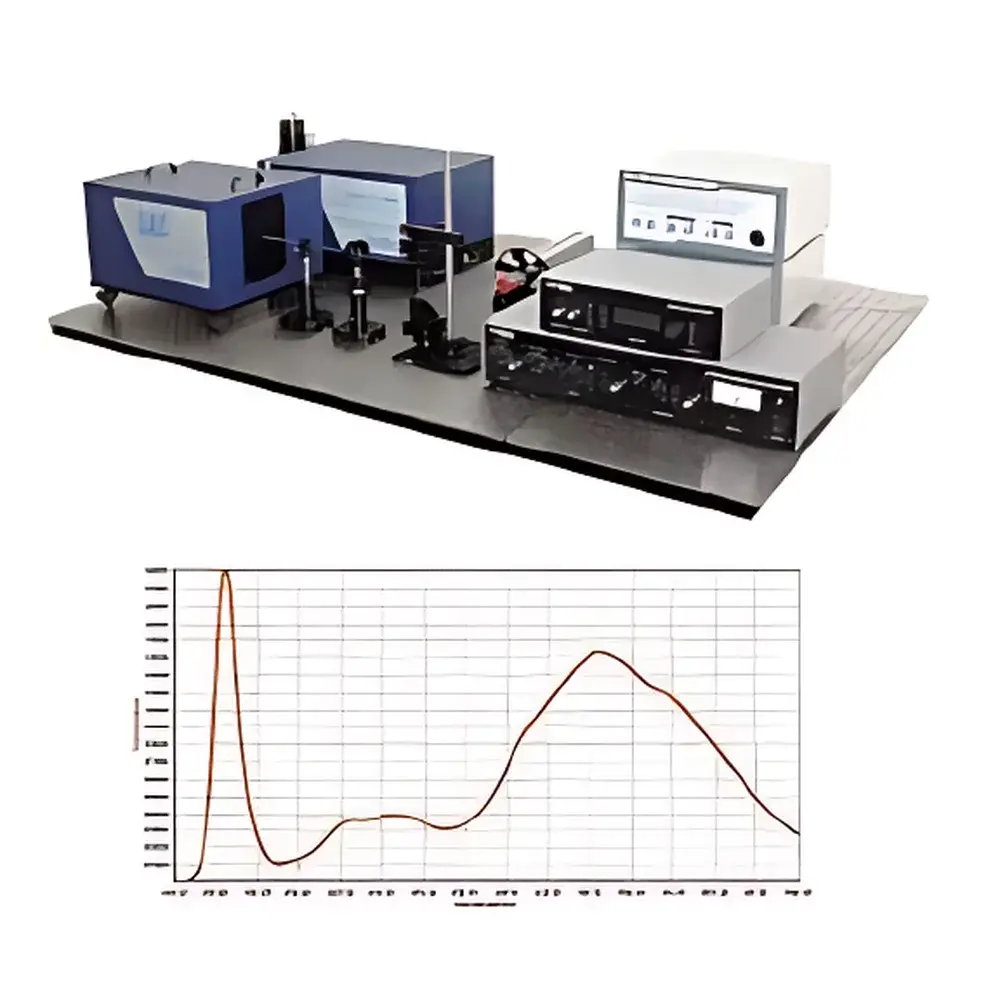
ZOLIX OmniPL Series Steady-State Photoluminescence Spectroscopy System
| Brand | ZOLIX |
|---|---|
| Model | OmniPL-LF325 |
| Excitation Source | HeCd Laser (325 nm, 20 mW) |
| Rayleigh Cutoff Filter | OD > 6 |
| Spectral Range | 300–850 nm (extendable to 2500 nm) |
| Spectral Resolution | < 0.2 nm (@1200 g/mm grating) |
| Wavelength Accuracy | ±0.2 nm |
| Wavelength Repeatability | ±0.1 nm |
| Detector | Scientific-Grade Cooled Back-Illuminated CCD (300–1000 nm) |
| Cryogenic Compatibility | Optional Closed-Cycle Cryostat (down to 2 K) |
| Software | Customizable Acquisition Protocol, Spectral Arithmetic, Batch Processing, and GLP-Compliant Data Archiving |
Overview
The ZOLIX OmniPL Series is a modular, research-grade steady-state photoluminescence (PL) spectroscopy system engineered for quantitative optical characterization of luminescent materials under controlled excitation conditions. Based on the fundamental principle of photoluminescence—where incident photons (typically from a monochromatic source such as a HeCd laser) promote electrons to higher energy states, followed by radiative relaxation emitting characteristic photons—the OmniPL-LF325 delivers high-fidelity spectral acquisition across the UV-Vis-NIR range. Its architecture integrates a stabilized 325 nm HeCd laser (20 mW output), high-optical-density Rayleigh rejection filtering (OD > 6), a Czerny–Turner spectrograph with interchangeable gratings, and a thermoelectrically cooled back-illuminated CCD detector optimized for quantum efficiency between 300 nm and 1000 nm. Designed for reproducibility in demanding academic and industrial R&D environments, the system supports traceable wavelength calibration, sub-nanometer spectral resolution, and long-term signal stability—critical for comparative studies of semiconductor quantum wells, perovskite thin films, wide-bandgap nitrides (e.g., GaN, AlN), and transition metal dichalcogenides.
Key Features
- Modular platform enabling seamless integration of optional components: NIR extension modules (up to 2500 nm), motorized filter wheels, automated sample stages, and polarization optics.
- High-sensitivity detection architecture featuring a scientific-grade, deep-depletion, back-illuminated CCD with thermoelectric cooling to –60 °C, minimizing dark current and enabling low-light PL quantification.
- Precision wavelength control: calibrated spectral accuracy of ±0.2 nm and repeatability of ±0.1 nm—validated against NIST-traceable emission lines (e.g., Hg/Ar lamp standards).
- Robust optical design incorporating kinematic mounts, fused silica transmission optics, and anti-reflection coated elements to maximize throughput and minimize stray light.
- Integrated Rayleigh rejection filter with optical density >6 at 325 nm ensures effective suppression of elastic scattering, essential for resolving weak near-band-edge emissions in direct-bandgap semiconductors.
- Compatibility with cryogenic sample environments: supports direct coupling to closed-cycle refrigerators (base temperature 2 K), enabling temperature-dependent PL mapping from cryogenic to ambient conditions.
Sample Compatibility & Compliance
The OmniPL-LF325 accommodates solid-state samples including wafers (up to 4-inch diameter), thin films on transparent or reflective substrates, powder pellets, single crystals, and microstructures mounted on standard microscope slides or custom holders. Sample positioning is facilitated via XYZ translation stages with micrometer-scale resolution. The system complies with general laboratory safety standards for Class 3B laser operation (IEC 60825-1) and includes interlocked enclosure options. All data acquisition and processing workflows adhere to principles aligned with ISO/IEC 17025 for testing laboratories and support audit-ready documentation required under GLP and GMP frameworks. Optional software modules provide 21 CFR Part 11-compliant electronic signatures, user access controls, and immutable audit trails for regulated environments.
Software & Data Management
ZOLIX OmniPL Control Suite is a Windows-based application built on a modular driver architecture supporting real-time spectral preview, multi-step experiment sequencing, and hardware synchronization. Users define acquisition parameters—including integration time, number of accumulations, grating position, and detector gain—via intuitive graphical interfaces. The software enables on-the-fly spectral arithmetic (addition, subtraction, division, normalization), baseline correction using asymmetric least squares, peak deconvolution with Gaussian/Lorentzian fitting, and spectral mapping across spatial or thermal dimensions. Raw spectra are stored in vendor-neutral HDF5 format with embedded metadata (wavelength calibration, instrument configuration, environmental conditions). Export options include CSV, ASCII, and JCAMP-DX for cross-platform compatibility with third-party analysis tools (e.g., Origin, MATLAB, Python SciPy stack).
Applications
- Bandgap determination and defect-state analysis in III–V and II–VI semiconductors (e.g., InGaN, CdTe, ZnO).
- Quantum efficiency assessment of phosphors and down-conversion materials for solid-state lighting and display technologies.
- Charge carrier lifetime estimation via time-resolved PL (when coupled with pulsed excitation sources and TCSPC modules).
- Strain and composition profiling in epitaxial heterostructures through spectral shift analysis.
- Stability evaluation of perovskite photovoltaic absorbers under thermal, photo, and environmental stressors.
- Photophysical characterization of 2D materials (MoS₂, WS₂) and van der Waals heterobilayers.
FAQ
What excitation sources are compatible with the OmniPL platform beyond the standard HeCd laser?
The system supports interchangeable excitation modules including CW diode lasers (375–1064 nm), pulsed OPO systems, and xenon arc lamps with monochromators—enabling tunable excitation across UV to NIR.
Can the system perform time-resolved photoluminescence measurements?
Yes—when integrated with optional time-correlated single-photon counting (TCSPC) electronics and pulsed excitation sources, the OmniPL platform supports lifetime measurements from sub-nanosecond to microsecond ranges.
Is spectral calibration traceable to national standards?
Yes—factory calibration uses NIST-traceable Hg/Ar spectral line sources; users may perform routine recalibration using included calibration lamps or external reference standards.
How is data integrity ensured during long-duration experiments?
The software implements automatic file versioning, checksum validation, and timestamped metadata logging; optional RAID storage configurations and network backup protocols further enhance data resilience.
Does the system support remote operation and automation in multi-user lab environments?
Yes—API access (DLL and .NET wrappers) enables integration with LabVIEW, Python, and MATLAB for script-driven experiments, robotic sample handling, and LIMS connectivity.




