
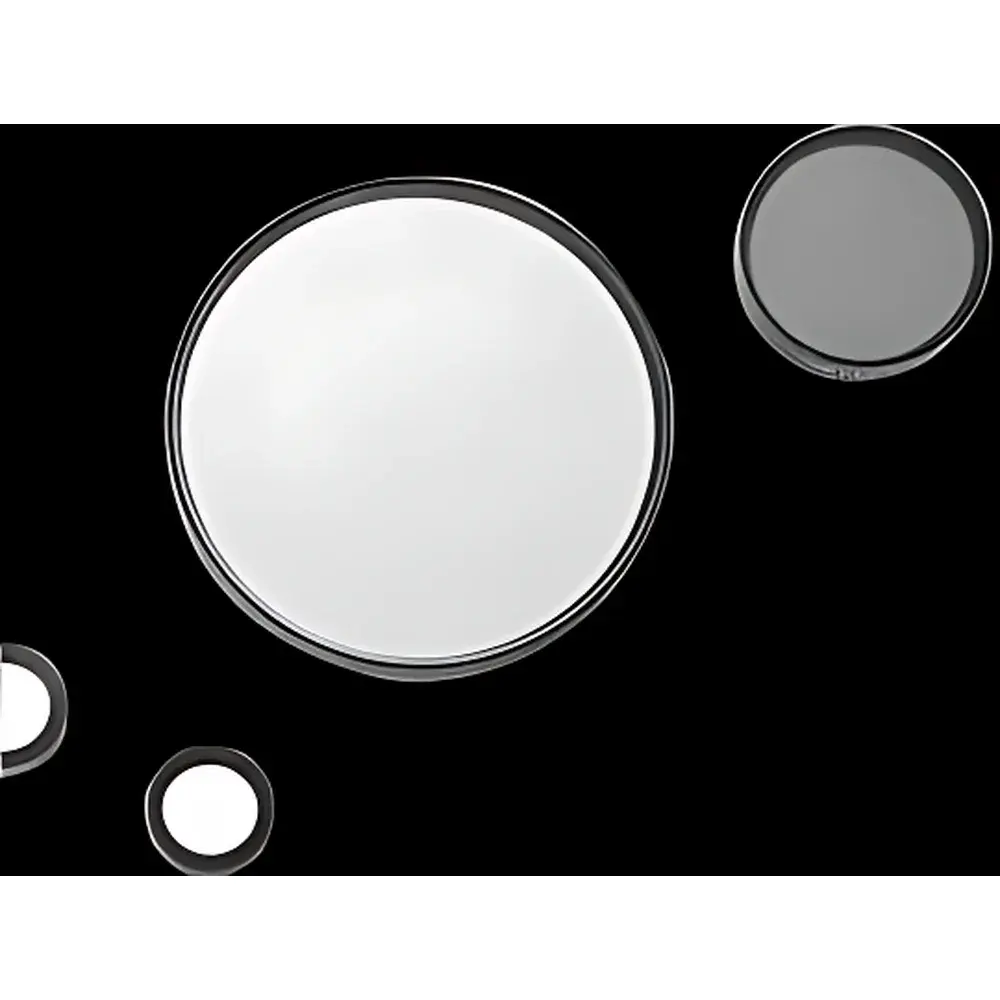
ZOLIX Optical Interference Filters
| Brand | ZOLIX |
|---|---|
| Origin | Beijing, China |
| Manufacturer Type | OEM/ODM Producer |
| Product Category | Optical Component |
| Filter Type | Interference Filter (Narrowband, Bandpass, Edge, Notch) |
| Coating Technology | Multi-layer Dielectric Thin-Film Deposition |
| Compliance | ISO 10110-7, MIL-C-48497A (typical), RoHS-compliant materials |
| Spectral Range | UV–VIS–NIR (200–1200 nm, customizable per design) |
| Surface Quality | 60-40 scratch-dig |
| Parallelism | <3 arcsec |
| Clear Aperture | ≥90% of diameter |
| Substrate Material | Fused Silica, BK7, or CaF₂ (application-dependent) |
Overview
ZOLIX Optical Interference Filters are precision thin-film optical components engineered for spectral control in demanding laboratory and industrial optical systems. Based on the principle of constructive and destructive interference in multi-layer dielectric coatings, these filters selectively transmit, reflect, or block specific wavelength bands with high spectral fidelity. Unlike absorptive filters—whose performance degrades under high-intensity illumination—interference filters maintain thermal stability and polarization insensitivity across continuous-wave and pulsed laser environments. They serve as foundational elements in fluorescence microscopy, Raman spectroscopy, laser cavity optics, quantum optics setups, and hyperspectral imaging systems where precise spectral isolation is non-negotiable.
Key Features
- Multi-layer dielectric coating deposited via ion-assisted e-beam evaporation or magnetron sputtering, ensuring high transmission (>90% peak), steep edge slopes (OD6 at specified blocking regions)
- Customizable spectral specifications: center wavelength (CWL) tolerance ±0.5 nm (standard), bandwidth (FWHM) from 0.5 nm to 100 nm, edge transition sharpness down to 1% per nanometer
- Substrate options include UV-grade fused silica (185–2100 nm), BK7 (350–2000 nm), and calcium fluoride (120–800 nm), each selected for minimal wavefront distortion and low autofluorescence
- Optimized for AOI (angle of incidence) stability: standard designs validated at 0° ± 2°; custom variants available for 45° or variable-AOI applications with minimized spectral shift
- Robust mechanical durability: coating adhesion tested per ISO 2195 and MIL-C-48497A; surface quality rated to 60-40 scratch-dig per MIL-PRF-13830B
Sample Compatibility & Compliance
ZOLIX interference filters are compatible with standard optical mounts (SM1, SM2, C-mount), fiber-coupled systems, and OEM integration into spectrometers, confocal platforms, and flow cytometers. All filters meet RoHS Directive 2011/65/EU material restrictions. Spectral performance data sheets include traceable calibration against NIST-traceable reference standards. For regulated environments—including clinical diagnostics, pharmaceutical QC, and GLP-compliant research—the filters support full documentation packages (CoC, CoA, spectral scan reports) and can be supplied with serialization for audit-ready traceability. Designs comply with ISO 10110-7 (surface imperfections) and ISO 9022-3 (environmental testing: temperature cycling, humidity exposure).
Software & Data Management
While inherently passive components, ZOLIX filters integrate seamlessly with industry-standard optical design and system simulation tools—including Zemax OpticStudio, CODE V, and FRED—via provided .DAT and .SDF spectral files (measured at 0.1 nm resolution). Customers receive full spectral transmittance/reflectance curves in CSV and ASCII formats, enabling direct import into LabVIEW, MATLAB, or Python-based data acquisition pipelines. For high-volume OEM deployments, ZOLIX provides spectral binning reports and lot-level consistency metrics aligned with ISO/IEC 17025–accredited internal metrology protocols.
Applications
- Fluorescence lifetime imaging (FLIM) and confocal microscopy: Paired narrowband excitation filters (e.g., 488 ± 2 nm) and bandpass emission filters (e.g., 520–550 nm) enable clean separation of Stokes-shifted signals in multicolor labeling
- Raman spectroscopy: Notch filters with OD7+ rejection at laser line (e.g., 532 nm, 785 nm) suppress Rayleigh scatter while preserving Raman shifts down to ±5 cm⁻¹
- Upconversion luminescence studies: Edge filters (long-pass or short-pass) isolate anti-Stokes emission (e.g., 475 nm emission excited by 980 nm NIR) while rejecting intense pump leakage
- Laser line cleanup and cavity feedback control: Ultra-narrowband filters (Δλ < 0.3 nm) stabilize single-longitudinal-mode operation in DPSS and diode-pumped lasers
- Environmental and remote sensing: Custom multispectral filter arrays calibrated to MODIS or Sentinel spectral response functions for airborne/satellite payload validation
FAQ
What is the typical damage threshold for ZOLIX interference filters under CW laser illumination?
For fused silica substrates with standard broadband AR coating, the LIDT is ≥5 J/cm² at 1064 nm, 10 ns pulse width (ISO 21254-1). CW thresholds exceed 10 kW/cm² depending on cooling and beam uniformity.
Can ZOLIX supply filters with custom mounting or threading?
Yes—standard SM1 (1.035″-40) and SM2 (2.035″-40) threads are available; custom kinematic mounts, anodized aluminum housings, and magnetic retention sleeves are offered for OEM integration.
Do you provide spectral measurement reports with each shipment?
Yes—every filter batch includes a certificate of conformance with measured transmittance spectra (0.1 nm step, ±0.3 nm wavelength accuracy) referenced to NIST-traceable spectrophotometers.
How does angle of incidence affect the center wavelength of a bandpass filter?
CWL blue-shifts approximately 0.2–0.3 nm per degree increase in AOI for 0°-designed filters; custom designs compensate for fixed AOI up to ±10°.
Are ZOLIX filters suitable for vacuum or UHV environments?
Yes—coatings are fully dense with negligible outgassing; all filters pass ASTM E595 total mass loss (TML) < 1.0% and collected volatile condensable materials (CVCM) < 0.10%.




