
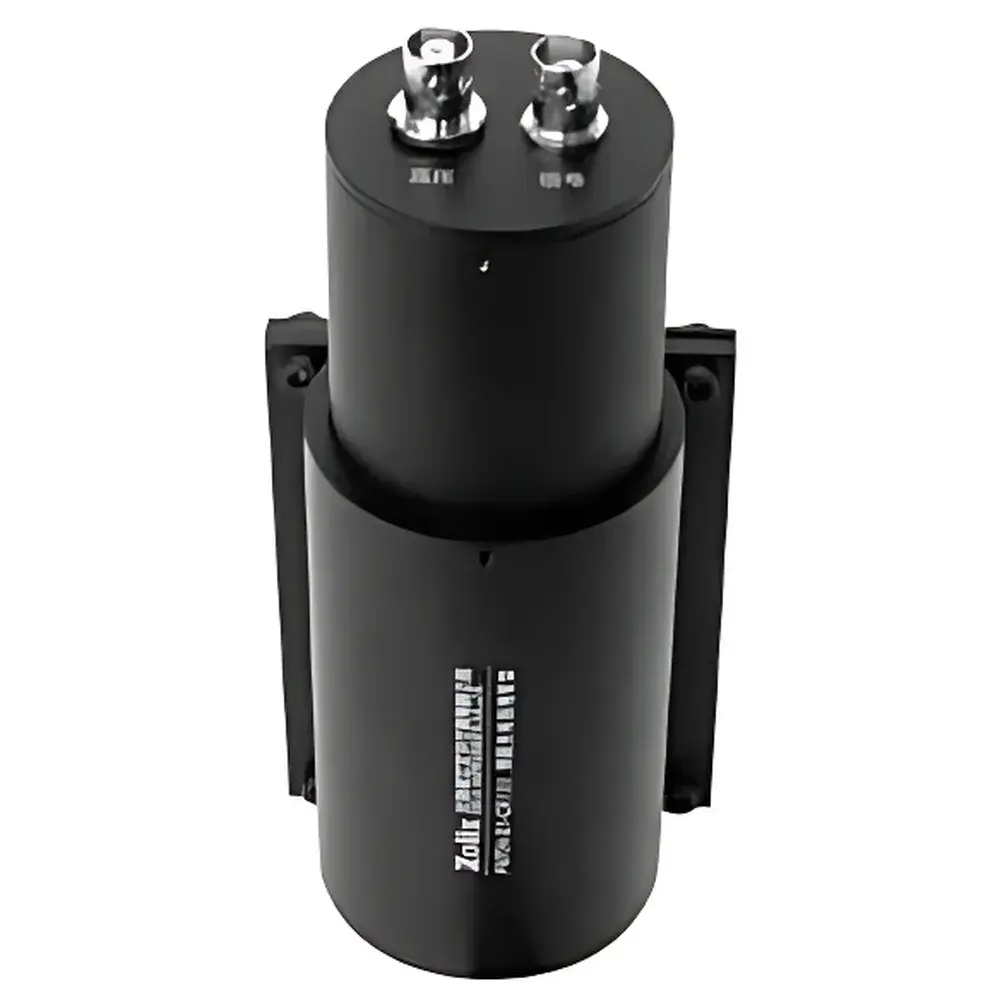
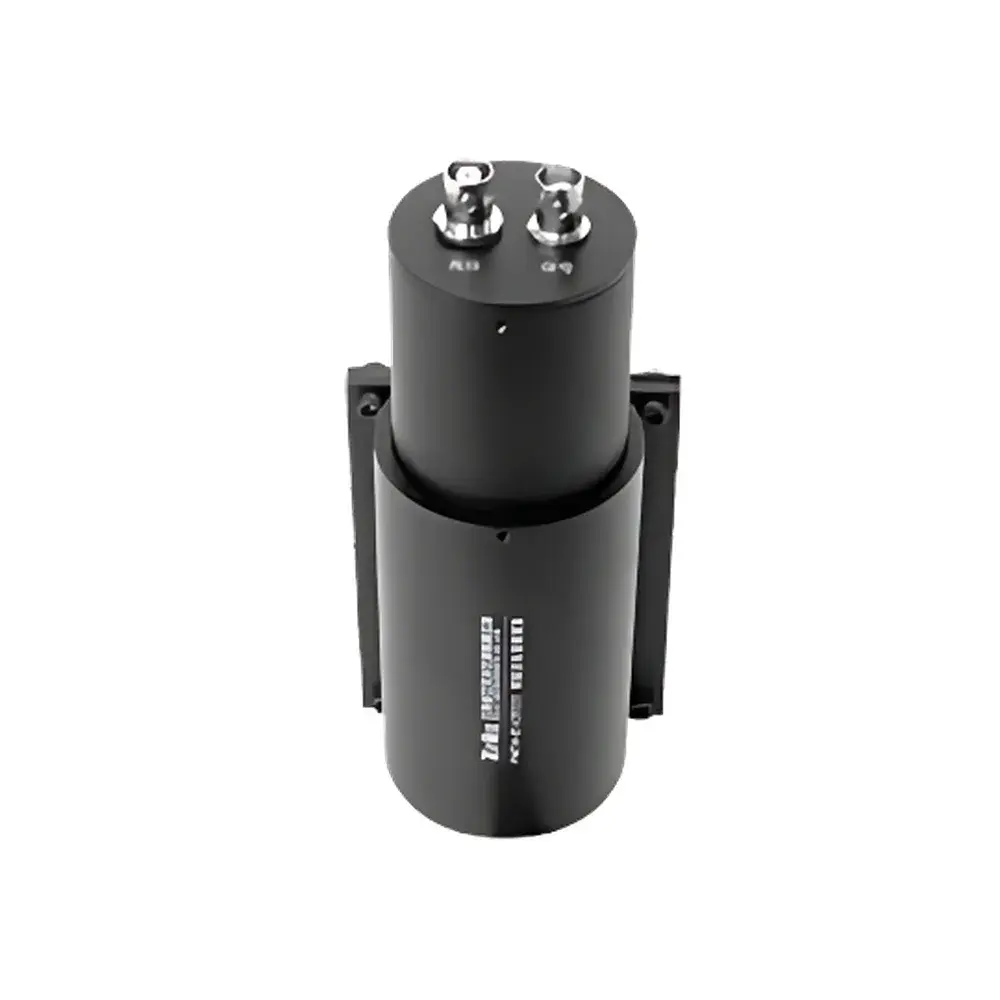
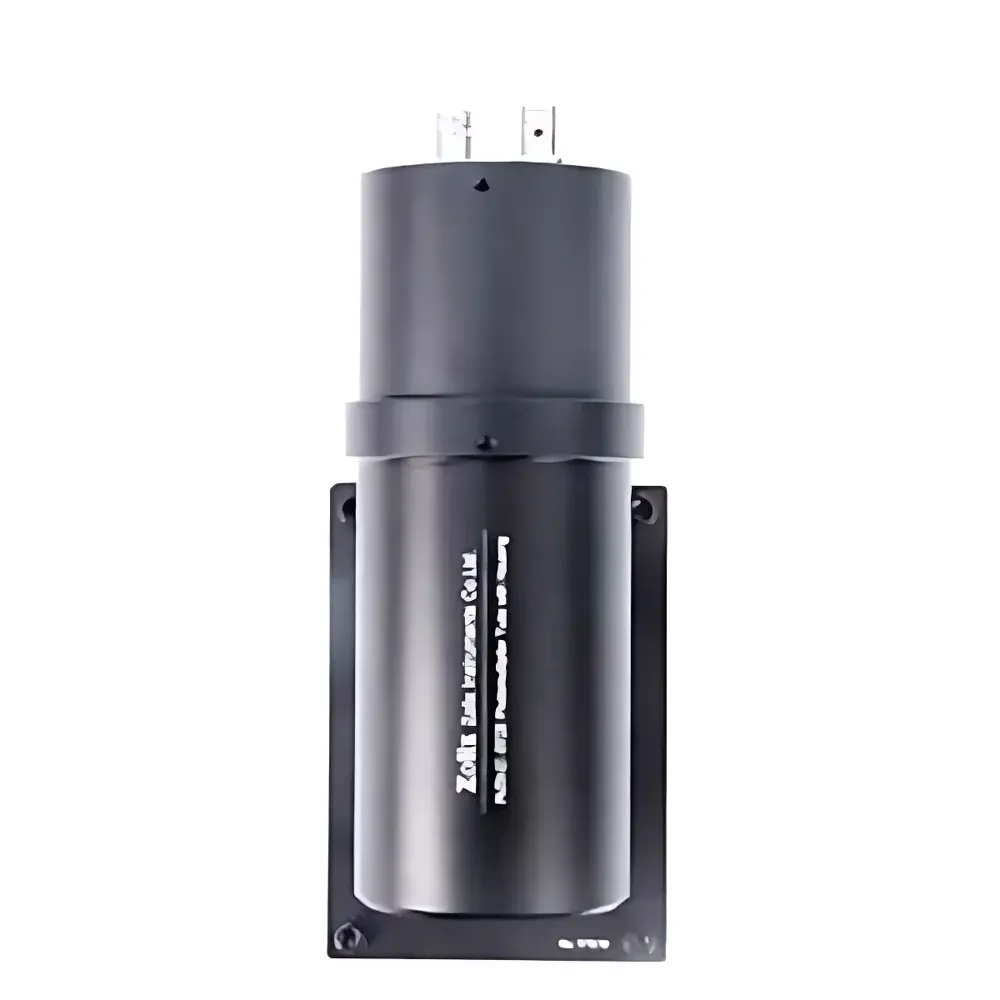
ZOLIX PMTH-S1-(x) Ambient-Temperature Photomultiplier Tube (PMT)
| Brand | ZOLIX |
|---|---|
| Origin | Beijing, China |
| Manufacturer Type | OEM Manufacturer |
| Region of Origin | Domestic (China) |
| Model | PMTH-S1-(x) |
| Pricing | Upon Request |
Overview
The ZOLIX PMTH-S1-(x) is a high-stability, ambient-temperature photomultiplier tube module engineered for integration into spectroscopic detection systems requiring low-noise, high-gain optical signal amplification. Based on side-window PMT architecture, it operates under standard laboratory conditions without thermoelectric or cryogenic cooling—making it suitable for routine UV-Vis-NIR spectroscopy, fluorescence intensity measurement, and low-light photon counting applications where thermal drift and system complexity must be minimized. The device employs a dynode chain multiplication structure to convert incident photons into measurable electrical signals with gains typically exceeding 10⁶, while maintaining linearity over four to five decades of input irradiance. Its design adheres to fundamental principles of photoelectron emission, secondary electron multiplication, and charge collection in vacuum phototubes—ensuring reproducible quantum efficiency and temporal response across batch production.
Key Features
- Side-window configuration with integrated electromagnetic and optical shielding to suppress external interference from stray light, RF noise, and magnetic fields
- BNC-standard signal output interface compatible with oscilloscopes, lock-in amplifiers, and data acquisition systems
- Dedicated high-voltage input via shielded, high-voltage-rated BNC connector (rated ≥1.5 kV DC)
- Modular housing accommodating multiple interchangeable side-window PMT photocathodes (e.g., bialkali, multialkali, solar-blind variants)
- Configurable output mode: selectable current-output (I-out) or voltage-output (V-out) operation via external load resistor (100 kΩ–1 MΩ typical)
- Optimized mechanical interface for direct mounting onto ZOLIX spectrometers, sample chambers, and custom optical benches
- Designed for long-term stability under continuous operation; compatible with regulated HV supplies meeting IEC 61000-4-5 surge immunity requirements
Sample Compatibility & Compliance
The PMTH-S1-(x) supports detection of photons in the spectral range of 185–900 nm, depending on the installed photocathode material. It is routinely deployed in compliance-critical environments including QC laboratories performing ASTM E308-compliant colorimetry, ISO/IEC 17025-accredited spectral calibration workflows, and pharmaceutical dissolution testing per USP . While the module itself does not carry CE or UL certification as a standalone component, its integration into final analytical instruments follows EN 61326-1 (EMC) and EN 61010-1 (safety) when used with certified high-voltage sources such as the HVC1800. Traceable calibration against NIST-traceable reference detectors is recommended for quantitative applications requiring metrological assurance.
Software & Data Management
As a hardware-level detector component, the PMTH-S1-(x) does not include embedded firmware or onboard software. Signal conditioning and digitization occur externally via third-party DAQ systems (e.g., National Instruments USB-6363, Thorlabs PM100D) or proprietary spectrometer control platforms. When paired with ZOLIX’s SpectraMaster software suite or LabVIEW-based custom applications, users can implement real-time gain normalization, dark-current subtraction, and pulse-height analysis. For GLP/GMP-regulated environments, audit trails for HV settings, integration time, and background correction parameters are maintained at the host system level—consistent with FDA 21 CFR Part 11 requirements when configured with electronic signatures and access controls.
Applications
- UV-Vis absorption and reflectance spectroscopy in materials science and thin-film characterization
- Steady-state and time-resolved fluorescence detection in biochemistry and molecular diagnostics
- Luminescence monitoring in environmental sensor arrays and radiation survey instrumentation
- Low-light spectral imaging using scanning monochromators or Czerny–Turner optical engines
- Integration into OEM analytical platforms requiring modular, field-replaceable PMT solutions
- Teaching labs for fundamental studies of photoelectric effect, electron multiplication, and signal-to-noise optimization
FAQ
How do I convert the PMTH-S1-(x) from current-output to voltage-output mode?
Insert a precision metal-film load resistor (100 kΩ to 1 MΩ, ±1% tolerance) between the signal output and ground terminals. Output voltage equals Ianode × Rload; select R based on expected photocurrent magnitude and desired dynamic range.
Is the PMTH-S1-(x) compatible with non-ZOLIX spectrometers?
Yes—mechanical and electrical interfaces follow industry-standard dimensions and BNC conventions. Verify spectral response match and HV polarity compatibility (negative HV supplied to cathode) before integration.
What is the recommended high-voltage supply for optimal performance?
The ZOLIX HVC1800 (0–1500 V, negative polarity, ≤0.03% drift/h) is validated for use; alternative supplies must provide ripple <0.01% RMS and programmable analog/digital control capability.
Does the module include a built-in high-voltage divider network?
No—the PMTH-S1-(x) requires an external HV source. Internal dynode resistors are pre-configured for uniform voltage distribution across the multiplier chain.
Can the PMTH-S1-(x) be operated in photon-counting mode?
Yes, provided the connected amplifier has sufficient bandwidth (>10 MHz), low input capacitance (<10 pF), and discrimination threshold adjustment. Pulse pile-up correction may be required above ~10⁵ counts/sec.





