
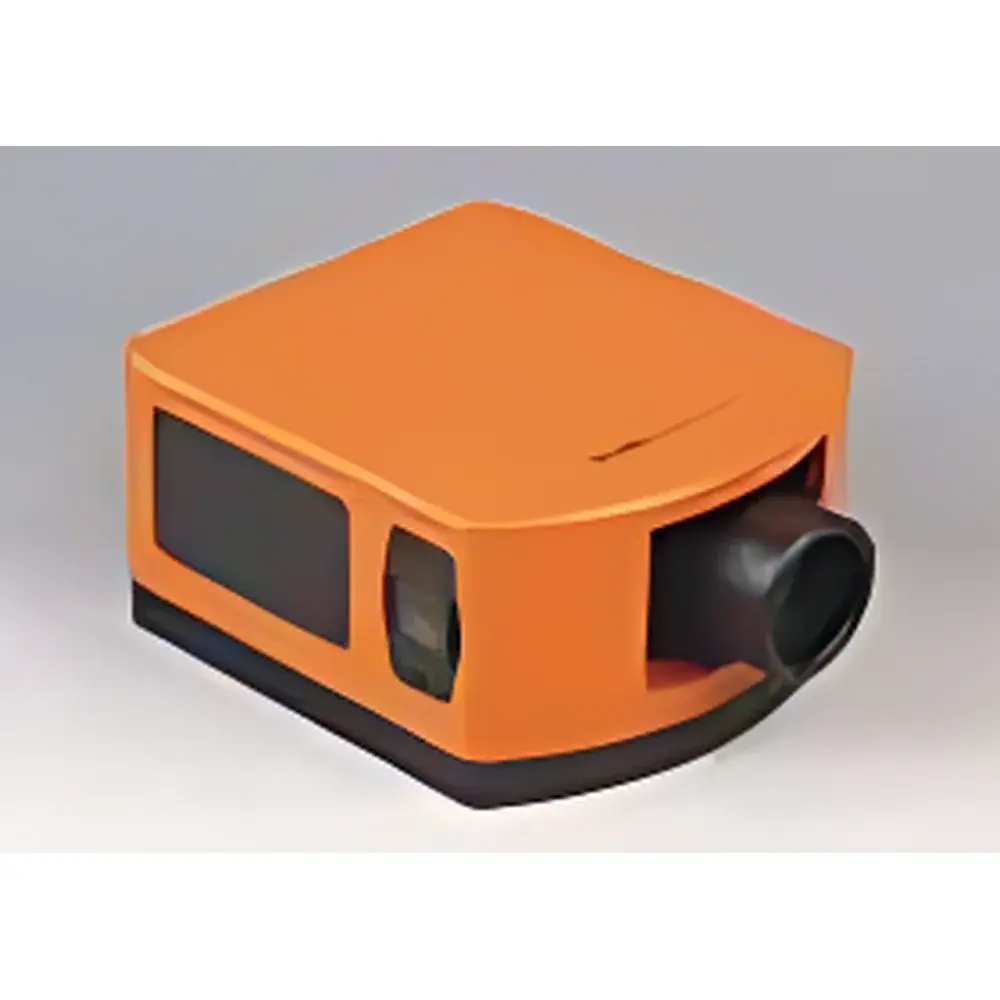
ZOLIX SGM100 Cross-Beam Grating Spectrograph
| Brand | ZOLIX |
|---|---|
| Origin | Beijing, China |
| Manufacturer Type | OEM Manufacturer |
| Country of Origin | China |
| Model | SGM100 |
| Pricing | Upon Request |
| Focal Length | 100 mm |
| f-number | f/3 |
| Optical Layout | Crossed Czerny–Turner |
| Spectral Range | 200–1100 nm |
| Stray Light | <0.1% |
| Detector | 3648-pixel linear CCD array |
| Spectral Resolution (FWHM) | 0.05–18.8 nm (configurable via grating and slit selection) |
| Sensitivity | 20,000 counts/µW·ms |
| Signal-to-Noise Ratio | 300:1 |
| A/D Resolution | 16-bit |
| Integration Time | 7 ms – 65,535 ms |
| Interface | USB 2.0 (8 Mbps), DB-15 I/O (4-in / 4-out) |
| Power Supply | USB 5 V DC or external adapter with buck-boost regulation |
| EMI Shielding | Integrated RF/EMI-optimized enclosure |
| Mechanical Construction | Monolithic aluminum housing |
| Internal Calibration Storage | High-capacity flash memory for wavelength calibration, radiometric correction, and colorimetric coefficients |
| Onboard Processing | High-performance embedded CPU for real-time spectral preprocessing and color space conversion |
Overview
The ZOLIX SGM100 Cross-Beam Grating Spectrograph is a precision optical instrument engineered for high-fidelity spectral acquisition across the ultraviolet, visible, and near-infrared (UV-VIS-NIR) spectrum (200–1100 nm). It operates on the Czerny–Turner optical configuration—specifically implemented as a crossed-beam layout—to maximize optical throughput and minimize aberrations. Incident light enters through a precision-machined adjustable entrance slit, is collimated by a high-quality mirror, dispersed by a user-replaceable plane diffraction grating, and focused onto a 3648-pixel linear CCD detector. This direct-through optical path eliminates beam-splitting elements or fiber coupling, preserving photon flux and enabling shorter integration times without signal degradation. The monolithic aluminum chassis provides exceptional thermal and mechanical stability, reducing wavelength drift under ambient temperature fluctuations or laboratory vibrations—critical for long-term repeatability in quantitative spectroscopy applications.
Key Features
- Crossed-beam Czerny–Turner optical design with integrated stray-light trap to suppress scattered radiation (<0.1% stray light level)
- Monolithic aluminum body machined from a single billet, ensuring dimensional stability and minimizing thermally induced focal shift
- EMI-hardened architecture with shielded internal cabling, grounded metal enclosure, and filtered power regulation to maintain measurement integrity in electrically noisy environments
- User-configurable spectral resolution and range via interchangeable plane gratings (300–3600 lines/mm) and slit widths (10–500 µm)
- Onboard 16-bit analog-to-digital conversion and embedded high-speed CPU for real-time dark-current subtraction, pixel non-uniformity correction, and CIE color space computation (e.g., CIE XYZ, xyY, u’v’)
- Dual-power operation: self-powered via USB 2.0 (5 V) or externally powered via regulated adapter; integrated buck-boost regulator ensures stable 5 V rail regardless of input voltage variance
- Non-volatile flash memory stores factory-calibrated wavelength maps, radiometric responsivity curves, and photometric correction coefficients—enabling traceable, reproducible measurements without host-side calibration overhead
Sample Compatibility & Compliance
The SGM100 is compatible with free-space beam inputs, fiber-coupled sources (via optional SMA adapters), and integrating sphere outputs. Its broad spectral coverage supports reflectance, transmittance, and emission measurements of solids, liquids, gases, and LEDs. While not certified to a specific regulatory standard out-of-the-box, the instrument’s architecture aligns with foundational requirements for GLP-compliant laboratories: full audit trail capability (via timestamped metadata logging), secure calibration storage, and deterministic firmware behavior. When integrated into validated systems, it supports compliance with ISO/IEC 17025 for testing laboratories, ASTM E308 for colorimetry, and IEC 62471 for LED photobiological safety assessments. Optional NIST-traceable calibration kits are available for wavelength and irradiance validation.
Software & Data Management
The SGM100 communicates via USB 2.0 using a vendor-neutral HID protocol, enabling seamless integration with third-party platforms including LabVIEW, MATLAB, Python (via PyUSB or custom DLL wrappers), and .NET applications. ZOLIX provides a native Windows SDK with source examples and a GUI-based SpectraView application supporting live spectral display, multi-curve overlay, peak detection, bandwidth analysis, and CIE chromaticity plotting. All acquired spectra include embedded EXIF-style metadata: acquisition time, integration duration, grating ID, slit width, temperature sensor reading, and checksum-verified calibration version. Raw 16-bit data is exported in ASCII (.csv) or binary (.bin) format; processed results support industry-standard formats including JIS Z 8722 and CIE S 014-2/E:2020.
Applications
The SGM100 serves as a core spectral engine in diverse analytical workflows: UV-VIS absorbance quantification in chemistry labs; spectral radiance and chromaticity evaluation of LEDs and OLEDs per CIE 127 and IES LM-79; environmental monitoring of water quality (COD, nitrate, chlorophyll-a) via absorption fingerprinting; agricultural remote sensing (NDVI, PRI) using portable field spectrometers; food quality inspection (ripeness, adulteration, moisture content); and academic instruction in optics, quantum physics, and analytical instrumentation. Its modularity supports OEM integration into OEM spectrophotometers, hyperspectral imaging systems, and automated QC stations requiring compact, robust, and software-controllable spectral acquisition.
FAQ
What spectral resolution can be achieved with the SGM100?
Resolution (FWHM) ranges from 0.05 nm (with 2400 l/mm grating and 10 µm slit at 250 nm) to ~18.8 nm (300 l/mm grating with 500 µm slit at 1000 nm), as detailed in the grating/slit resolution matrix.
Is the SGM100 suitable for radiometric calibration?
Yes—when paired with an NIST-traceable calibrated light source and appropriate neutral density filters, it supports absolute irradiance measurement after applying stored responsivity coefficients.
Can the SGM100 operate in continuous scanning mode?
Yes—the embedded controller supports hardware-triggered burst acquisition at up to 120 Hz (depending on integration time and USB bandwidth), enabling kinetic spectroscopy and real-time process monitoring.
Does the device support external synchronization?
Yes—the DB-15 I/O port provides TTL-compatible trigger input and strobe output, allowing precise synchronization with pulsed light sources, shutters, or motion stages.
How is thermal drift mitigated during extended measurements?
The monolithic aluminum structure exhibits low coefficient of thermal expansion (CTE ≈ 23.1 × 10⁻⁶/K); combined with passive thermal mass and absence of epoxy-bonded optical mounts, it limits wavelength drift to <0.02 nm/°C over typical lab conditions.






