
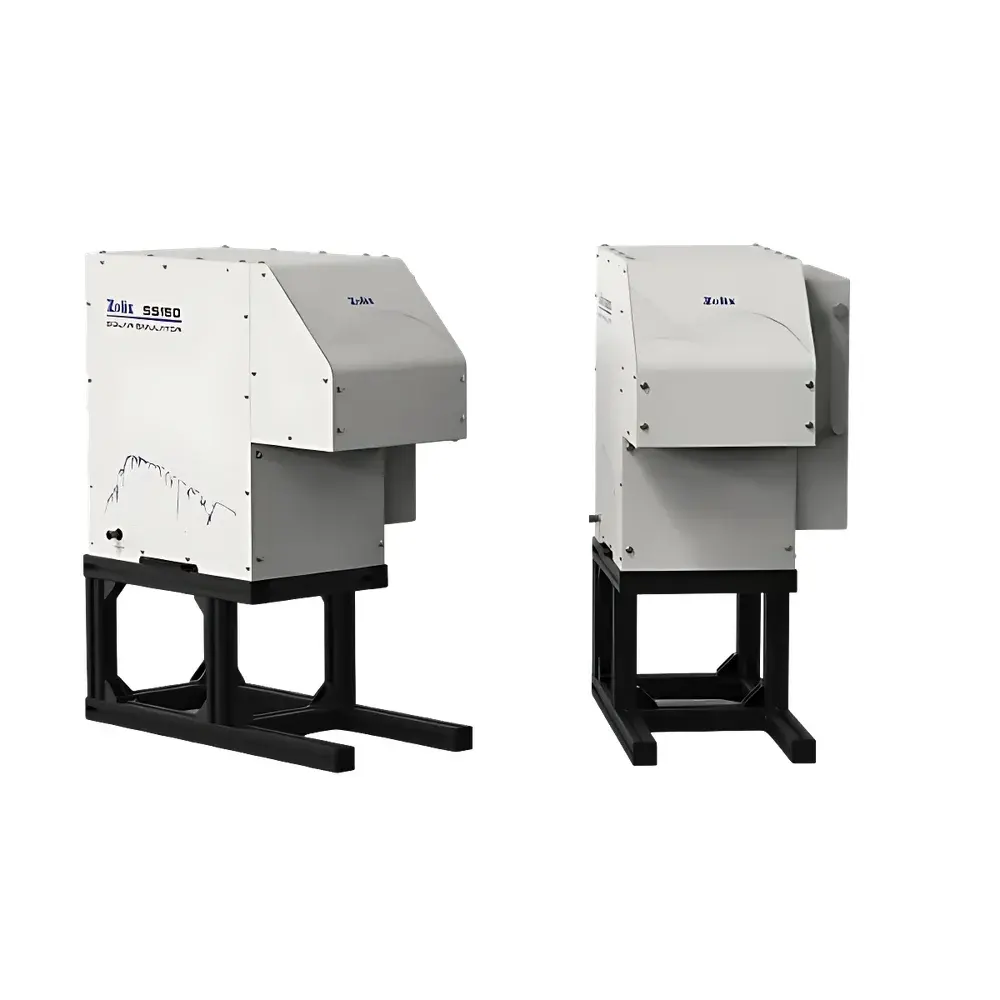
ZOLIX Sirius Series Solar Simulator
| Brand | ZOLIX |
|---|---|
| Origin | Beijing, China |
| Manufacturer Type | Manufacturer |
| Product Category | Domestic |
| Model | Sirius Series |
| Trigger Mode | Steady-State |
| Spectral Match Class | Class A (per IEC 60904-9) |
| Irradiance Uniformity | ≤2% (A-class), ≤5% (B-class) |
| Temporal Instability | ≤2% (A-class) |
| Adjustable Irradiance Range | 0.2–1.2 sun |
| Effective Irradiation Area | 40×40 mm to 60×60 mm |
| Max Irradiance | 1200 W/m² |
| Beam Collimation | ±4° |
| Output Direction | Upward / Downward / Horizontal |
| Light Source | Short-Arc Xenon Lamp |
| Spectral Correction | Precision AM1.5G Filter Set |
| Compliance | IEC 60904-9:2020 Edition 3 |
Overview
The ZOLIX Sirius Series Solar Simulator is a Class A-certified, steady-state illumination system engineered for high-fidelity simulation of the AM1.5G solar spectrum (300–1200 nm) under laboratory and production conditions. Based on the fundamental principle of broadband spectral synthesis—using a stabilized short-arc xenon lamp coupled with a proprietary multi-element collimating lens array and precision-calibrated AM1.5G correction filters—the Sirius Series delivers photometrically traceable irradiance that meets the stringent requirements of IEC 60904-9:2020 Edition 3 for photovoltaic device characterization. Unlike pulsed or flash-type simulators, its steady-state operation enables continuous, real-time measurement of current-voltage (I-V) curves, maximum power point tracking (MPPT), and long-duration stability testing—critical for R&D validation, quality control, and certification of silicon-based, thin-film, perovskite, organic, dye-sensitized, and tandem solar cells.
Key Features
- Class A spectral match (0.75–1.25 ratio across six defined wavelength bands: 400–500 nm, 500–600 nm, 600–700 nm, 700–800 nm, 800–900 nm, and 900–1100 nm), verified per IEC 60904-9 Annex A
- A-class spatial uniformity ≤2% over active irradiation areas (40×40 mm and 60×60 mm models), achieved via a custom-designed microlens array optical homogenizer
- A-class temporal instability ≤2% over 10-minute intervals, ensured by low-ripple, regulated DC power supply and thermally stabilized xenon lamp housing
- Continuously adjustable irradiance from 0.2 to 1.2 sun (200–1200 W/m²), calibrated traceably to NIST-traceable reference cells
- Motorized and remote-controlled shutter with programmable timing, enabling automated exposure sequences and lamp-life monitoring
- Modular beam delivery: selectable output orientation (upward, downward, or horizontal) without optical realignment
- Integrated spectral verification port for in-situ calibration using external spectroradiometers
Sample Compatibility & Compliance
The Sirius Series supports full-area illumination of standard PV test coupons (e.g., 2×2 cm, 5×5 cm), mini-modules, and research-scale devices up to 60×60 mm. Its collimated output (±4° divergence) minimizes angular dependency errors during quantum efficiency (QE) and external quantum efficiency (EQE) measurements. All models comply with IEC 60904-9:2020 for spectral match, spatial uniformity, and temporal stability classification. The system architecture supports GLP-compliant operation: lamp operating hours are logged automatically; shutter actuation events are timestamped; and irradiance settings are stored with user ID and session metadata—facilitating audit readiness for ISO/IEC 17025-accredited labs and internal QC protocols.
Software & Data Management
ZOLIX provides the Sirius Control Suite—a Windows-based application supporting USB and RS-232 interfaces. The software enables real-time irradiance monitoring, scheduled irradiation profiles, automatic lamp aging compensation, and export of time-stamped irradiance logs in CSV format. All parameter changes—including shutter open/close, irradiance setpoint, and timer activation—are recorded with ISO/IEC 17025-aligned audit trails. Optional integration with third-party IV curve tracers (e.g., Keithley 2400/2450, Keysight B2900 series) allows synchronized data acquisition compliant with FDA 21 CFR Part 11 when configured with electronic signatures and role-based access control.
Applications
- Primary and secondary calibration of reference solar cells against certified standards
- Performance evaluation of single-junction and multi-junction photovoltaic devices under standardized AM1.5G illumination
- Stability testing of perovskite and organic photovoltaics (OPV) under continuous 1-sun illumination (ISOS-L-1 protocol)
- Light-soaking studies for passivation layer optimization and defect state analysis
- Qualification of anti-reflective coatings and transparent conductive oxides (TCOs) via spectral responsivity mapping
- In-line process monitoring in pilot-line fabrication of thin-film solar modules
FAQ
What international standard does the Sirius Series comply with for solar simulator classification?
The Sirius Series is fully compliant with IEC 60904-9:2020 Edition 3, the globally recognized standard for classification of solar simulators by spectral match, spatial uniformity, and temporal instability.
Can the Sirius Series be used for accelerated lifetime testing of perovskite solar cells?
Yes—its Class A steady-state output enables continuous 1-sun illumination required by ISOS-L-1 and IEC TS 63209-1 for light-soaking and operational stability assessment.
Is spectral recalibration required after filter replacement?
Yes—ZOLIX recommends post-replacement spectral verification using a calibrated spectroradiometer and submission of the resulting data to the lab’s metrology records for traceability.
Does the system support automated data logging for ISO/IEC 17025 accreditation?
Yes—the Sirius Control Suite generates timestamped, user-attributed logs of all operational parameters and includes configurable audit trail retention policies.
What is the expected operational lifetime of the xenon lamp under rated conditions?
The short-arc xenon lamp is rated for ≥1,000 hours at nominal output; lamp life is tracked automatically and displayed in the control interface with predictive maintenance alerts.





