
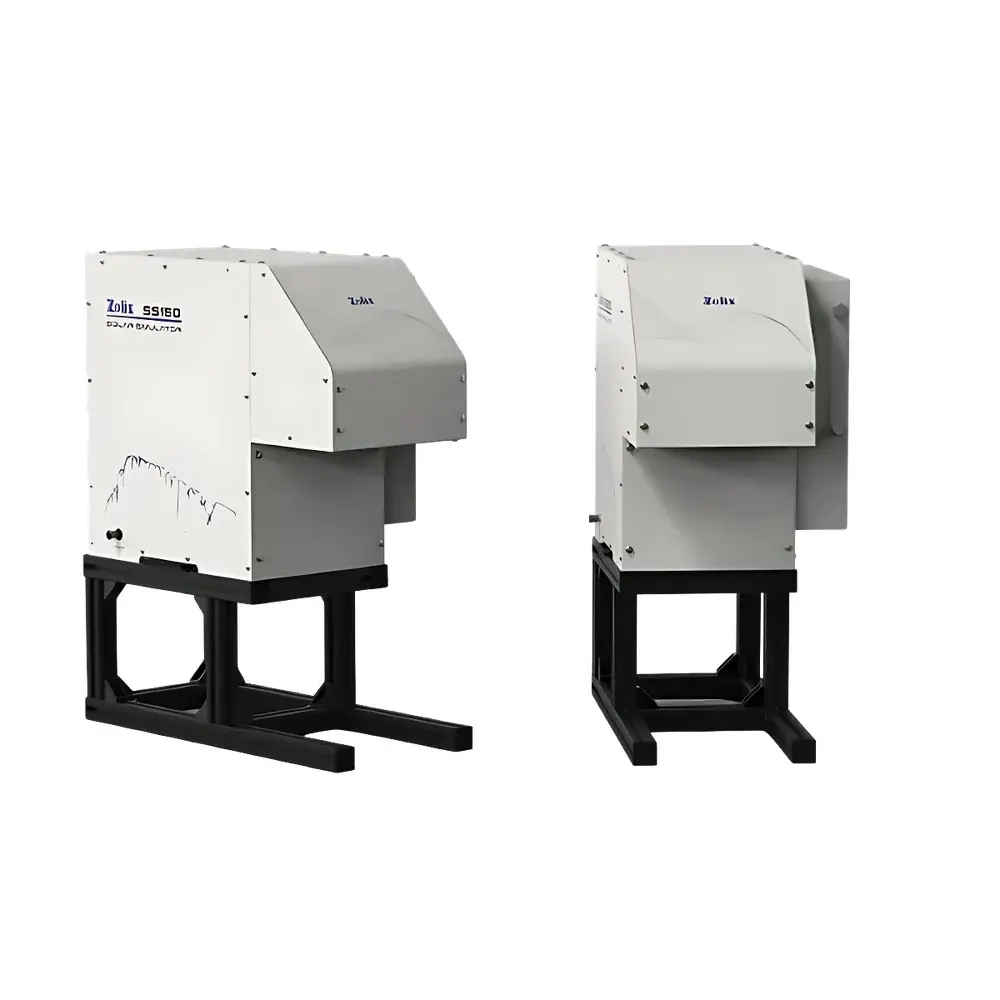
ZOLIX Sirius-SS Solar Simulator
| Brand | ZOLIX |
|---|---|
| Model | Sirius-SS |
| Origin | Beijing, China |
| Manufacturer Type | Manufacturer |
| Category | Solar Simulator |
| Operating Mode | Steady-State |
| Compliance | IEC 60904-9 (AAA/ABA Class Options) |
| Spectral Match Range | 400–1100 nm |
| Irradiance | 1200 W/m² (adjustable) |
| Uniformity | ≤ ±2% (AAA), ≤ ±5% (ABA) |
| Temporal Stability | ≤ ±2% (AAA), ≤ ±5% (ABA) |
| Spectral Match Tolerance | 0.75–1.25 (AAA), 0.6–1.4 (ABA) |
| Lamp Type | High-Stability Short-Arc Xenon Lamp |
| Power Options | 150 W, 500 W, 1000 W |
| Beam Diameter Options | 40–150 mm |
| Optical Configuration | Arrayed Lens Homogenizer |
| Spectral Correction | Proprietary Broadband Filter Set |
Overview
The ZOLIX Sirius-SS Solar Simulator is a high-precision, steady-state illumination system engineered for photovoltaic (PV) device characterization, materials testing, and optoelectronic research under controlled, repeatable solar-spectrum conditions. It operates on the principle of broadband spectral synthesis using a stabilized short-arc xenon lamp as the primary source, combined with proprietary optical filtering and beam homogenization to replicate the Air Mass 1.5 Global (AM1.5G) reference spectrum defined in IEC 60904-9. Unlike pulsed or flash-type simulators, the Sirius-SS delivers continuous, uninterrupted irradiance—enabling steady-state current-voltage (I-V) measurements, long-duration aging studies, and real-time quantum efficiency mapping. Its design targets laboratories requiring metrological traceability, regulatory compliance, and inter-laboratory reproducibility in PV calibration, perovskite stability assessment, organic photovoltaic (OPV) screening, and thin-film semiconductor evaluation.
Key Features
- IEC 60904-9 Class AAA or ABA certification options—fully documented spectral match, temporal stability, and spatial uniformity performance
- Proprietary broadband spectral correction filters engineered for thermal and photonic stability under high-intensity irradiation (no spectral drift over >1000 h operational lifetime)
- Arrayed lens homogenizer architecture ensuring ≤ ±2% irradiance uniformity across defined beam diameters (40 mm to 150 mm), eliminating hotspots that compromise cell grading accuracy
- High-stability short-arc xenon lamp driven by low-ripple, feedback-regulated DC power supply—achieving ≤ ±2% temporal instability over 30 minutes (AAA-class requirement)
- Modular optical path design supporting customizable irradiation geometry: top-down, bottom-up, or side-illumination configurations
- Integrated shutter and TTL-compatible trigger interface for synchronization with external measurement systems (e.g., source meters, spectroradiometers, lock-in amplifiers)
Sample Compatibility & Compliance
The Sirius-SS accommodates a broad range of optoelectronic samples, including silicon wafers (monocrystalline, multicrystalline), CIGS and CdTe thin films, perovskite solar cells, dye-sensitized solar cells (DSSCs), organic photovoltaics (OPVs), and emerging 2D semiconductor heterostructures. All configurations comply with IEC 60904-9:2020 Edition 3 requirements for spectral match (6 spectral bands: 400–500 nm, 500–600 nm, 600–700 nm, 700–800 nm, 800–900 nm, 900–1100 nm), spatial non-uniformity, and temporal instability. Optional factory calibration reports include NIST-traceable spectroradiometric validation. The system supports GLP/GMP-aligned workflows through configurable audit trails and user-access logging when integrated with compliant data acquisition platforms.
Software & Data Management
While the Sirius-SS operates as a hardware-controlled illumination source, it is fully compatible with industry-standard instrument control environments—including LabVIEW, Python (PyVISA), MATLAB, and SCPI-compliant software stacks. Integration enables automated irradiance ramping, scheduled exposure protocols, and time-synchronized data capture with source-measure units (SMUs) or quantum efficiency systems. For regulated environments, optional firmware upgrades support 21 CFR Part 11–compliant electronic signatures, role-based access control, and immutable measurement metadata embedding (timestamp, lamp hours, filter ID, calibration expiry). Raw spectral data (350–1100 nm, 1 nm resolution) and spatial irradiance maps are exportable in CSV and HDF5 formats for third-party analysis.
Applications
- Primary and secondary calibration of reference solar cells per IEC 60904-2 and IEC 60904-4
- Steady-state power conversion efficiency (PCE) validation of lab-scale and mini-module PV devices
- Light-soaking and photo-stability testing of perovskite and organic absorber layers
- Spectral response and external quantum efficiency (EQE) measurements via monochromator-coupled setups
- Accelerated degradation studies under controlled AM1.5G illumination with temperature and environmental chamber integration
- Optical modeling validation using measured spatial and spectral irradiance profiles
FAQ
What classification standards does the Sirius-SS meet?
The Sirius-SS is available in both AAA-class (spectral match 0.75–1.25, uniformity ≤ ±2%, stability ≤ ±2%) and ABA-class (spectral match 0.6–1.4, uniformity ≤ ±5%, stability ≤ ±5%) configurations per IEC 60904-9:2020.
Can the irradiance level be adjusted below 1200 W/m²?
Yes—output irradiance is continuously adjustable from 100 W/m² to 1200 W/m² via precision lamp current regulation and neutral density attenuation, maintaining spectral fidelity across the operating range.
Is spectral recalibration required after filter replacement?
Each proprietary filter set is individually characterized and serialized; post-replacement recalibration is mandatory and performed using a NIST-traceable spectroradiometer—documentation provided with calibration certificate.
How is beam diameter selected for a given model?
Beam diameter is determined by the collimating and homogenizing optics configuration. Users specify required diameter (e.g., 40 mm, 75 mm, 150 mm) at time of order; optical modules are pre-aligned and verified during factory acceptance testing.
Does the Sirius-SS support multi-lamp or multi-spectral configurations?
Standard configurations use a single xenon source. Custom dual-lamp or hybrid LED-xenon systems are available under OEM engineering engagement, subject to optical path redesign and extended lead time.






