
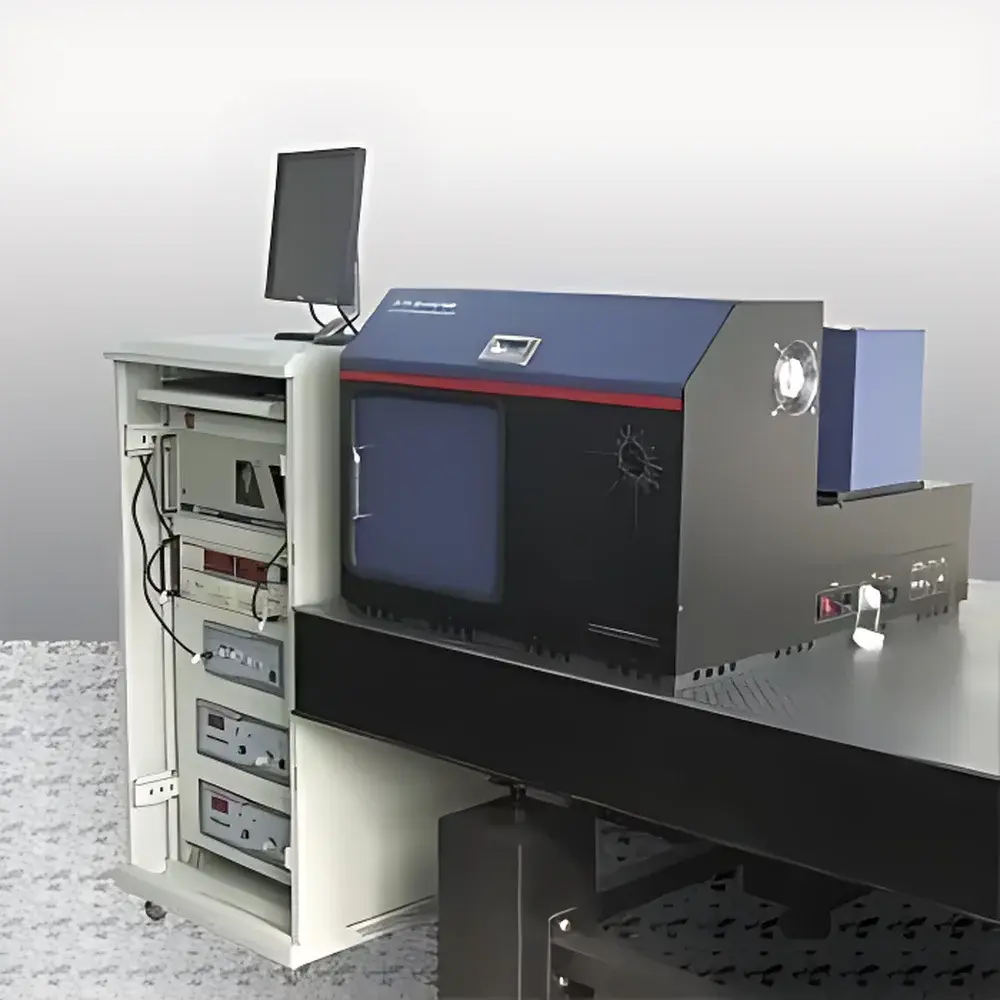
ZOLIX SolarCellScan100 Quantum Efficiency Measurement System
| Brand | ZOLIX |
|---|---|
| Origin | Beijing, China |
| Manufacturer Type | Manufacturer |
| Product Category | Domestic |
| Model | SolarCellScan100 |
| Pricing | Upon Request |
| Measurement Mode | DC |
Overview
The ZOLIX SolarCellScan100 Quantum Efficiency Measurement System is a modular, research-grade platform engineered for precise spectral characterization of photovoltaic (PV) devices. It operates on the principle of monochromatic photocurrent analysis—illuminating the device under test (DUT) with tunable, narrowband light while measuring the resulting photocurrent under controlled bias and illumination conditions. This enables quantitative determination of key optoelectronic performance parameters including external quantum efficiency (EQE), internal quantum efficiency (IQE), spectral responsivity (SR), reflectance, transmittance, and short-circuit current density (Jsc). Designed in full compliance with IEC 60904-8:2017 (“Photovoltaic devices — Part 8: Measurement of spectral response of a photovoltaic (PV) device”), the system supports both fundamental R&D and process validation across diverse PV material systems—from crystalline silicon to emerging thin-film and photoelectrochemical architectures.
Key Features
- Modular architecture enabling configuration flexibility: users select from multiple light sources (Xe lamp, W-halogen lamp, or dual-source option), calibrated detectors (Si, InGaAs), bias light modules, voltage bias units, and optical accessories to match specific device physics requirements.
- DC measurement mode optimized for stability and low-noise current detection—essential for low-current organic, perovskite, and dye-sensitized solar cells (DSSCs).
- Integrated spectral range coverage: standard configuration spans 300–1100 nm (Si detector); extended configurations support up to 2500 nm using NIST-traceable InGaAs detectors with certified calibration certificates.
- Automated mapping capability: optional 2D motorized stage enables spatially resolved EQE and reflectance mapping (QE-Mapping), supporting uniformity assessment of large-area or textured devices.
- Turnkey system variants: purpose-built configurations—including SCS100-Std (standard single-junction), SCS100-Exp (extended-range multi-junction), SCS100-Silicon (c-Si production QA), SCS100-Film (large-area thin-film), and SCS100-PEC (photoelectrochemical cells)—are pre-validated against IEC standards and shipped with application-specific firmware and SOP templates.
Sample Compatibility & Compliance
The SolarCellScan100 accommodates a broad spectrum of PV technologies and architectures: single-junction and multi-junction cells (including GaInP/GaAs/Ge triple-junction), heterojunction (HIT), thin-film (a-Si, μc-Si, CdTe, CIGS), organic photovoltaics (OPV), polymer solar cells, dye-sensitized solar cells (DSSC), and emerging photoelectrochemical (PEC) systems. Device-specific measurement protocols are implemented via software-selectable modes—for example, IQE correction requires simultaneous reflectance measurement and front-side illumination; DSSC testing omits bias light but applies electrochemical potentiostatic control; multi-junction characterization employs spectral splitting and sequential subcell interrogation. All configurations comply with ISO/IEC 17025 traceability requirements for detector calibrations and adhere to GLP-relevant documentation practices, including audit-ready measurement logs and instrument parameter versioning.
Software & Data Management
The proprietary ZOLIX QEMaster software provides a unified interface for instrument control, spectral acquisition, data reduction, and report generation. It implements automated dark-current subtraction, wavelength-dependent responsivity correction, and IQE calculation using measured reflectance and transmittance. Raw data are stored in HDF5 format with embedded metadata (wavelength, bias voltage, light intensity, detector ID, calibration date). Export options include CSV, Excel, and MATLAB-compatible files. The software supports FDA 21 CFR Part 11-compliant user access controls, electronic signatures, and full audit trails—enabling use in regulated environments where data integrity and reproducibility are mandated. Batch processing, template-based measurement sequences, and scripting (via Python API) facilitate high-throughput lab workflows.
Applications
- Material screening and bandgap validation via EQE onset analysis
- Loss mechanism diagnosis (e.g., recombination vs. absorption limitations) through IQE/reflectance correlation
- Process optimization in thin-film deposition and annealing steps
- Uniformity evaluation of large-area modules using mapping routines
- Stability assessment via time-resolved EQE monitoring under controlled environmental conditions
- Calibration transfer between reference cells and production-line sensors
- Validation of optical modeling (e.g., transfer-matrix simulations) against empirical spectral response data
FAQ
What standards does the SolarCellScan100 comply with?
It conforms to IEC 60904-8:2017 for spectral responsivity and quantum efficiency measurements, and supports traceable calibration per ISO/IEC 17025 requirements.
Can the system measure multi-junction solar cells?
Yes—using the SCS100-Exp or SCS100-Film configurations with dual-source illumination, spectral splitting optics, and subcell-selective biasing.
Is bias light required for all measurement types?
No—bias light is essential for IQE measurement of single-junction devices and for stabilizing multi-junction cell operating points, but is omitted for DSSC and certain OPV characterizations.
How is detector calibration handled?
All standard detectors (Si, InGaAs) ship with NIST-traceable calibration certificates; recalibration services are available through ZOLIX’s ISO/IEC 17025-accredited metrology lab.
Does the system support automated mapping?
Yes—the optional QE-D1 2D motorized stage enables programmable raster scanning for EQE, reflectance, or transmittance mapping across samples up to 300 × 300 mm.




