
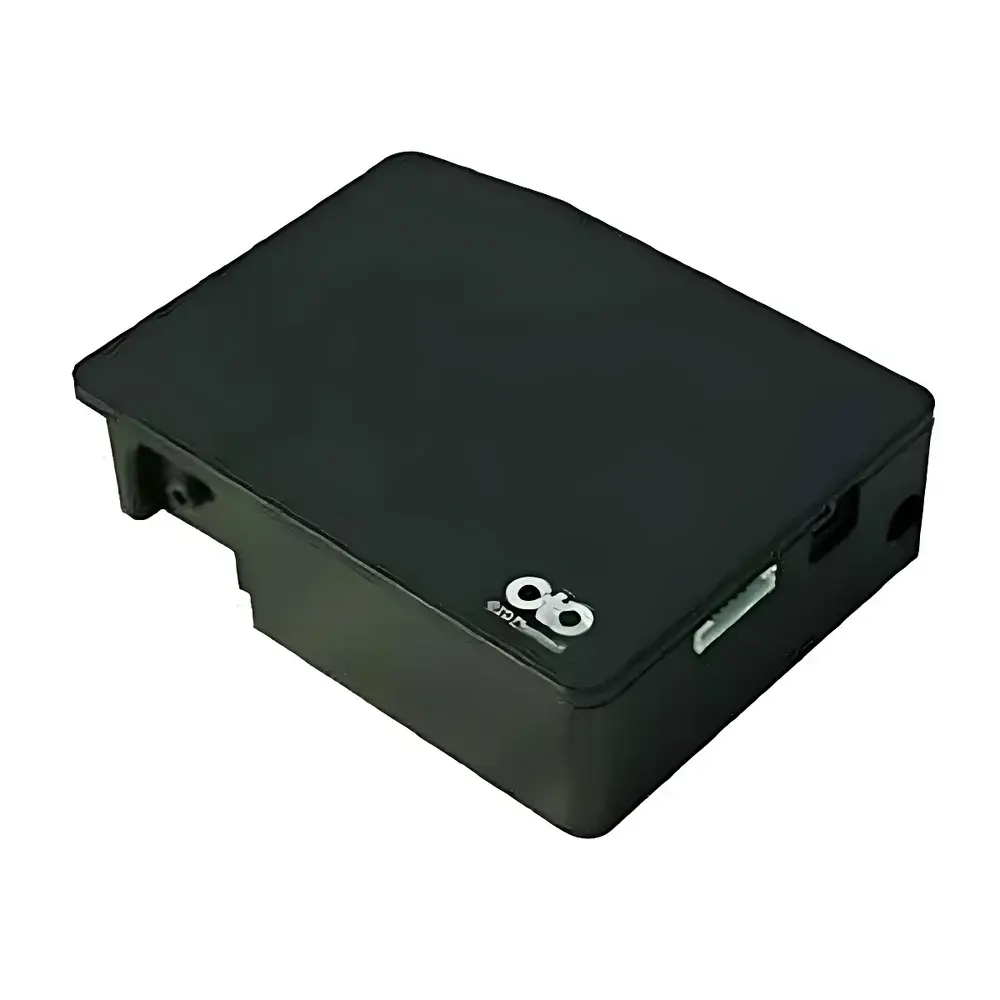
ZOLIX SW2860 & SW2870 Czerny-Turner InGaAs Fiber Optic Near-Infrared Spectrometers
| Brand | ZOLIX |
|---|---|
| Origin | Beijing, China |
| Manufacturer Type | OEM Manufacturer |
| Spectral Range | 900–1700 nm |
| Detector | InGaAs linear array |
| Optical Design | Czerny-Turner |
| Resolution | ~5 nm (SW2870 with 25 µm slit: ~2.5 nm) |
| A/D Converter | 16-bit, 15 MHz |
| Cooling | Single-stage thermoelectric (TEC), ΔT ≈ 25 °C below ambient (e.g., 0 °C at 25 °C ambient) |
| Interface | USB 2.0 (bus-powered) |
| I/O Ports | 6 configurable digital I/O lines |
| Data Buffer | Up to 4000 spectra (continuous multi-exposure mode) |
| Onboard Memory | Flash ROM for firmware and calibration data |
| Fiber Coupling | SMA 905 |
| Shutter Support | External shutter module compatible for dark reference acquisition |
Overview
The ZOLIX SW2860 and SW2870 are compact, high-stability near-infrared (NIR) fiber optic spectrometers engineered for precision spectral analysis in the 900–1700 nm range. Based on a robust Czerny-Turner optical architecture, these instruments utilize an InGaAs linear photodiode array detector and integrate a 32-bit RISC microcontroller for real-time spectral processing. Unlike simplified fixed-grating designs, the Czerny-Turner configuration delivers inherently low stray light (<0.05% typical), high wavelength fidelity, and excellent linearity—critical for quantitative NIR applications such as moisture, fat, protein, and polymer content analysis. The optical bench is mechanically isolated and thermally stabilized via single-stage thermoelectric cooling (TEC), enabling sub-0.02 nm/°C wavelength drift performance across operating temperatures from 10–40 °C. This thermal and mechanical stability ensures reproducible measurements under field-deployable conditions—including laboratory benches subject to ambient fluctuations, portable process monitoring setups, and embedded OEM integration.
Key Features
- Czerny-Turner optical layout with optimized f/4 imaging optics, delivering high spectral resolution and minimal aberration across the full NIR band
- InGaAs linear array detector (256 or 512 pixels, depending on model variant) with thermoelectric cooling to 0 °C at 25 °C ambient—reducing dark current by >90% versus uncooled operation
- Configurable entrance slits: standard options include 50, 100, 150, and 200 µm; SW2870 supports optional 25 µm slit for enhanced resolution (~2.5 nm FWHM)
- 16-bit, 15 MHz analog-to-digital conversion with oversampling and hardware-level baseline correction for improved dynamic range (>6000:1 SNR at 1 s integration)
- USB 2.0 bus-powered interface with plug-and-play compatibility under Windows, Linux, and macOS—no external power supply required
- Six general-purpose digital I/O lines (TTL-compatible) for synchronized triggering, external shutter control, LED illumination gating, or PLC handshake
- Onboard Flash ROM stores factory calibration coefficients, wavelength mapping, and nonlinearity correction tables—ensuring traceable, repeatable results without host dependency
- Continuous multi-exposure acquisition mode buffers up to 4000 consecutive spectra in onboard memory, enabling real-time kinetic monitoring and post-acquisition averaging
Sample Compatibility & Compliance
The SW28xx series interfaces seamlessly with standard SMA 905 fiber-optic probes (e.g., reflection probes, transmission cells, flow-through cuvettes) and supports both free-space and fiber-coupled configurations. It complies with IEC 61326-1 (EMC for laboratory equipment) and meets RoHS 2 directive requirements. While not certified for hazardous locations, its ruggedized aluminum housing and shock-resistant optical alignment make it suitable for GLP-compliant QC labs and industrial environments where vibration and thermal cycling are present. Firmware supports NIST-traceable wavelength calibration using certified rare-earth oxide filters (e.g., Holmium Oxide). For regulated industries, raw spectral data export (ASCII, CSV, HDF5) enables integration into LIMS or ELN systems compliant with FDA 21 CFR Part 11 when paired with validated third-party software platforms.
Software & Data Management
ZOLIX provides a cross-platform SDK (C/C++, Python, LabVIEW, MATLAB) with full low-level register access and real-time spectrum streaming APIs. The included SpectraView application offers dark/light reference acquisition, spectral smoothing (Savitzky-Golay), peak detection, and basic chemometric preprocessing (baseline correction, vector normalization). All calibration metadata—including slit width, grating groove density, pixel-to-wavelength mapping, and TEC temperature logs—are embedded in exported spectra headers. Data files support timestamped audit trails, and the SDK allows implementation of electronic signatures and user-access controls required for GMP/GLP workflows. Firmware updates are performed via signed binary over USB, preserving calibration integrity during maintenance cycles.
Applications
- Pharmaceutical solid dosage analysis (tablet coating thickness, API uniformity, excipient identification)
- Agricultural product grading (grain moisture, oil content in seeds, sugar concentration in fruit)
- Polymer characterization (additive concentration, degradation monitoring, crystallinity index)
- Industrial process control (ethylene glycol/water ratio in heat transfer fluids, ethanol content in fermentation broth)
- Recycling sorting (plastic polymer ID via NIR fingerprinting: PET, HDPE, PP, PS)
- OEM integration into handheld analyzers, inline process sensors, and robotic lab automation systems
FAQ
What is the typical wavelength accuracy and long-term stability of the SW2870?
Wavelength accuracy is ±0.5 nm (calibrated against NIST-traceable sources); thermal drift is ≤±0.015 nm/°C over 10–40 °C ambient range with active TEC stabilization.
Can the SW28xx be used with pulsed light sources such as LEDs or lasers?
Yes—the 6-channel digital I/O supports TTL-level external trigger input with programmable delay (1 µs resolution) and gate width control, enabling synchronization with nanosecond-scale light pulses.
Is spectral calibration transferable between units?
No—each unit undergoes individual factory calibration due to grating and detector tolerances; however, ZOLIX provides calibration report documentation and supports user re-calibration using optional reference standards.
Does the spectrometer support Ethernet or wireless connectivity?
Not natively—only USB 2.0 is provided; however, USB-to-Ethernet adapters or embedded gateway modules may be integrated at system level using the open SDK.
What is the minimum integration time and maximum frame rate?
Minimum integration time is 1 ms; maximum sustained frame rate is 120 Hz (full 512-pixel spectrum) at 16-bit resolution with USB 2.0 bandwidth constraints.
Related Products





