
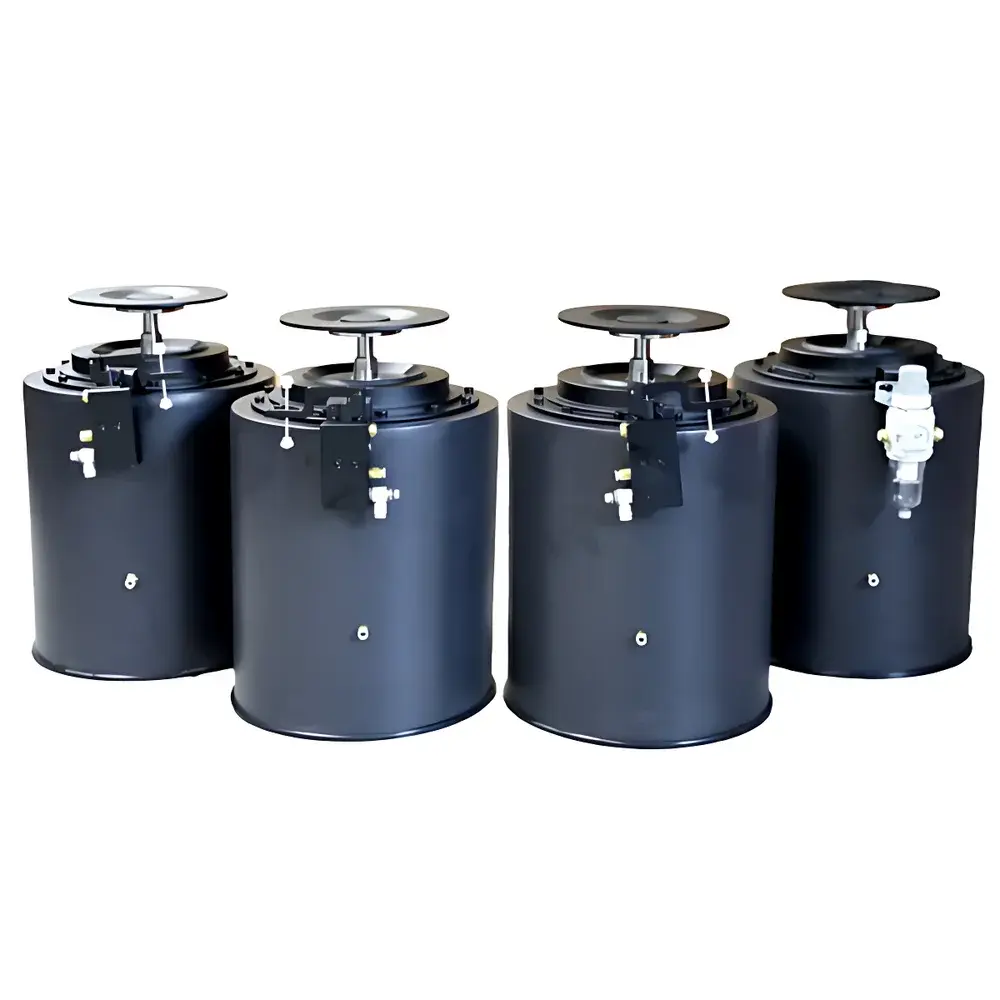
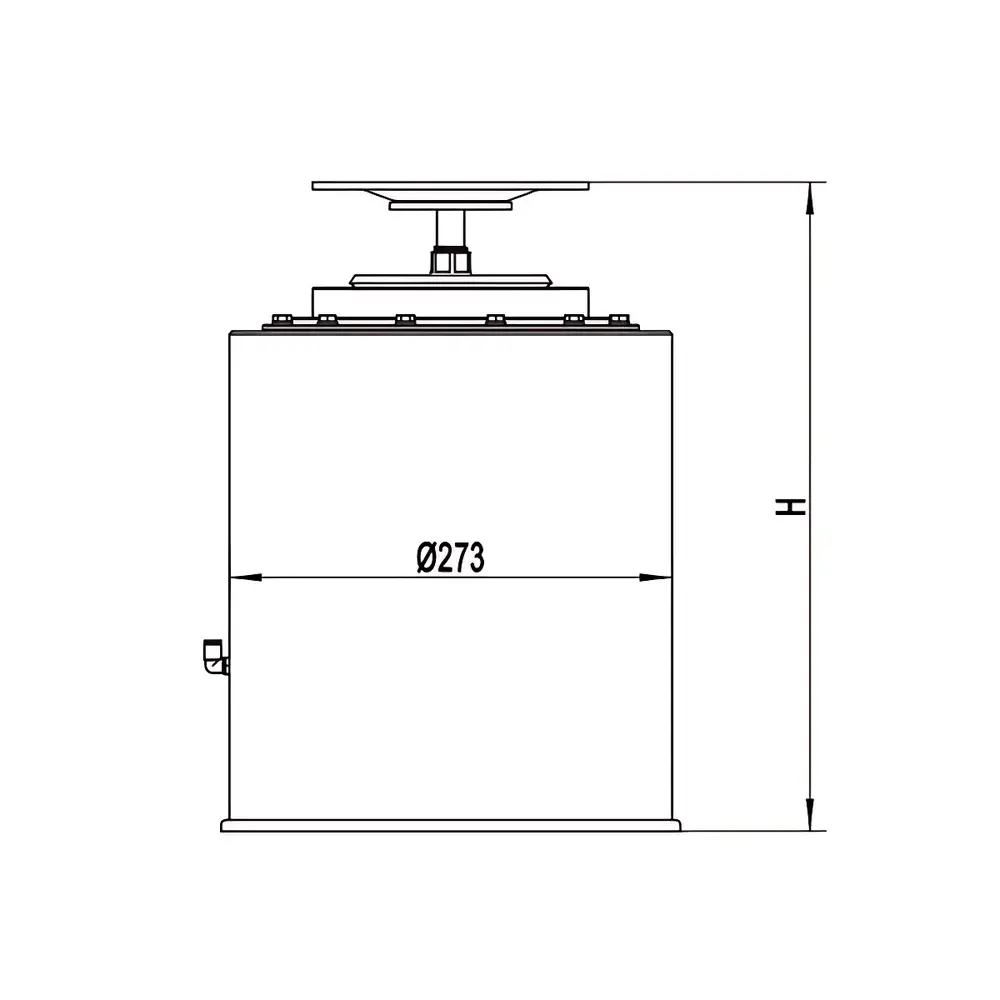
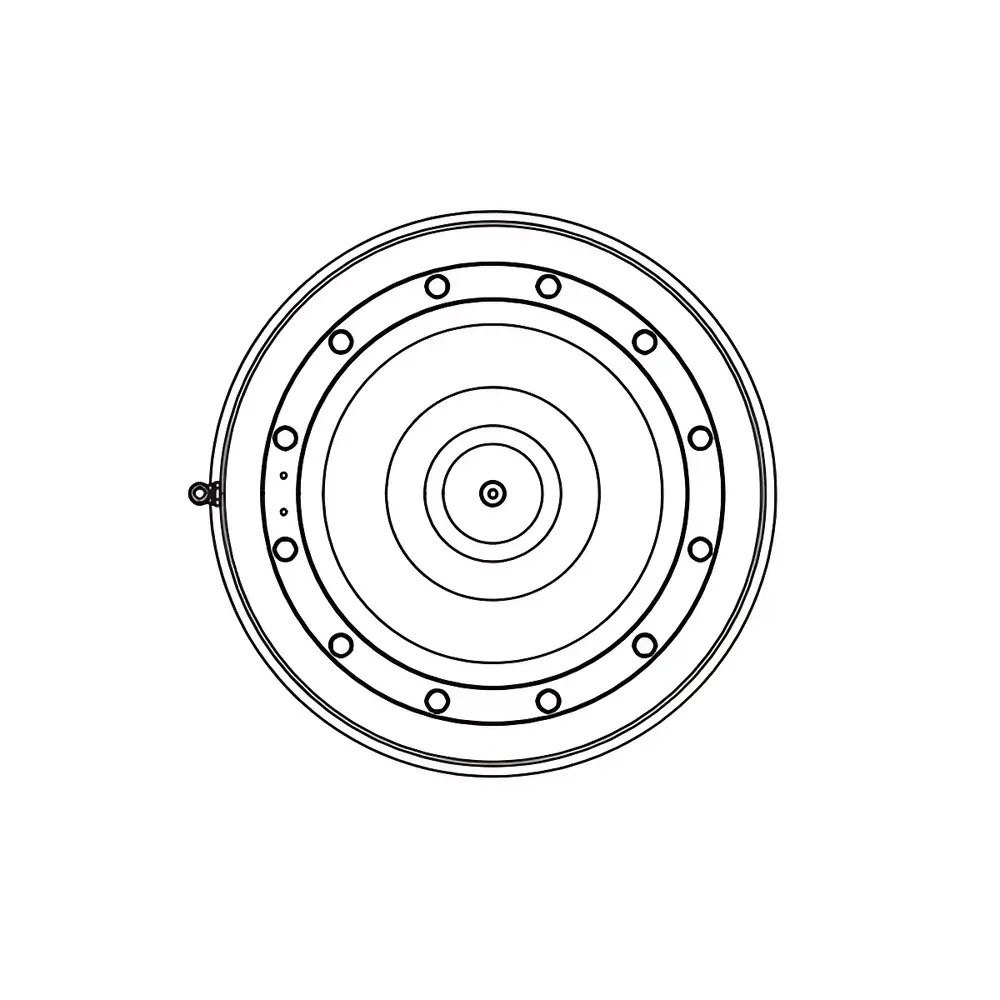
ZOLIX ZDH Series High-Performance Isolated Air-Spring Optical Support Legs
| Brand | ZOLIX |
|---|---|
| Origin | Beijing, China |
| Manufacturer Type | Direct Manufacturer |
| Product Category | Optical Instrument Component |
| Model | ZDH Series |
| Mounting Configuration | Independent Air-Supported Leg |
| Load Capacity (per leg) | 850 kg |
| Total System Load (4-leg) | 3000 kg |
| Total System Load (6-leg) | 4500 kg |
| Natural Frequency | Vertical < 1.5–2.0 Hz |
| Vibration Isolation Efficiency | Vertical — 75–85% @ 5 Hz, 90–95% @ 10 Hz |
| Isolation Mechanism | Tri-wire Pendulum System |
| Damping Mechanism | Laminar Flow Damping + Internal Oil Damping |
| Adjustable Height Range | −10 to +15 mm |
| Max Operating Air Pressure | 0.6 MPa |
| Recommended Air Pressure | 0.3–0.4 MPa |
| Leveling Repeatability | ±0.5 mm |
| Compatible Tabletops | Stainless Steel or Granite |
Overview
The ZOLIX ZDH Series High-Performance Isolated Air-Spring Optical Support Legs are precision-engineered passive vibration isolation systems designed for ultra-stable optical platforms in demanding research and industrial environments. Based on the tri-wire pendulum principle—a geometrically constrained low-frequency suspension mechanism—the ZDH legs decouple sensitive optical assemblies from floor-borne vibrations across both vertical and horizontal axes. Unlike conventional air tables or single-stage isolators, the ZDH system integrates laminar flow damping with internal oil-damped compliance to suppress resonant amplification while preserving broadband attenuation performance. Its sub-2 Hz vertical natural frequency and sub-1.5 Hz horizontal natural frequency meet stringent requirements for interferometry, quantum optics, ultrafast laser diagnostics, and high-resolution microscopy—where nanometer-scale stability is non-negotiable. The modular, independent-leg architecture allows flexible platform configuration (4-leg or 6-leg), enabling custom integration with stainless steel or granite tabletops of varying dimensions and mass distribution.
Key Features
- Tri-wire pendulum suspension geometry delivering ultra-low natural frequencies: <1.5–2.0 Hz (vertical), <1.0–1.5 Hz (horizontal)
- Hybrid damping design combining laminar airflow resistance and internal viscous oil damping to minimize resonance peaks without compromising isolation bandwidth
- Independent leg architecture with ±0.5 mm leveling repeatability and −10 to +15 mm fine-height adjustment per leg
- Rated load capacity of 850 kg per leg; scalable configurations support 3000 kg (4-leg) or 4500 kg (6-leg) total platform mass
- Optimized pneumatic interface operating at 0.3–0.4 MPa (recommended), with maximum pressure tolerance up to 0.6 MPa
- Mechanically robust aluminum alloy housing with corrosion-resistant surface treatment, compatible with cleanroom and Class 1000 laboratory environments
Sample Compatibility & Compliance
The ZDH Series is compatible with standard optical breadboards, custom-machined stainless steel platforms (304/316 grade), and precision-ground granite surfaces (grade G0/G1). Each leg interfaces via M8 or M10 threaded inserts, allowing secure mechanical coupling without adhesive or secondary fasteners. While the ZDH system itself is a passive mechanical component and not subject to electromagnetic compatibility (EMC) or electrical safety directives, its deployment aligns with ISO 20483 (vibration isolation for precision equipment), ASTM E1776 (standard guide for vibration isolation of optical instruments), and best practices outlined in ISO 10816-1 for machinery vibration assessment. When integrated into GLP- or GMP-regulated optical metrology workflows—such as semiconductor wafer inspection or photonic device characterization—the ZDH’s mechanical stability supports audit-ready platform integrity documentation.
Software & Data Management
As a purely mechanical, pneumatically actuated passive isolation component, the ZDH Series requires no embedded firmware, control software, or digital connectivity. All operational parameters—including air pressure regulation, height calibration, and leveling verification—are managed manually using calibrated pressure gauges, digital inclinometers, and micrometer-based height indicators. However, the system is fully compatible with third-party platform monitoring solutions: analog pressure transducers (0–10 V or 4–20 mA output) can be installed inline with the air supply manifold for real-time pressure logging; optional capacitive displacement sensors (e.g., Micro-Epsilon CAPA series) may be mounted adjacent to each leg to track dynamic settling behavior during environmental perturbation studies. No proprietary drivers or vendor-specific data protocols are required.
Applications
- Long-path interferometric setups requiring sub-wavelength path-length stability over hours (e.g., gravitational wave detector prototypes, coherence length validation)
- Ultrafast optical parametric amplifiers (OPA) and pump-probe spectrometers where timing jitter must remain below 10 fs RMS
- Quantum optics experiments involving trapped ions, cold atoms, or superconducting qubit readout optics
- Nanophotonic fabrication alignment stations used in photomask metrology and EUV lithography development
- Confocal and STED microscopy platforms where stage drift must be limited to <5 nm/min under ambient lab conditions
- Free-space optical communication testbeds operating in vibration-prone industrial facilities or university basements
FAQ
What is the recommended air supply quality for optimal ZDH performance?
Dry, oil-free compressed air filtered to ISO 8573-1 Class 2:2:2 (solid particles ≤0.1 µm, dew point ≤−40 °C, oil content ≤0.01 mg/m³) is strongly advised to prevent valve clogging and ensure long-term diaphragm integrity.
Can ZDH legs be retrofitted onto an existing optical table?
Yes—provided the table base features sufficient structural rigidity and mounting thread patterns matching the ZDH’s M8/M10 interface. Finite element analysis is recommended for tables exceeding 2 m in span to verify modal response under isolated loading.
Is active feedback control available for the ZDH Series?
No—the ZDH is a passive isolation system. For hybrid active-passive applications, ZOLIX offers complementary active inertial cancellation modules (e.g., ZAC-100 series) that integrate mechanically with ZDH-mounted platforms.
How does temperature variation affect ZDH performance?
Ambient temperature fluctuations between 15–30 °C have negligible impact on natural frequency or damping ratio. However, rapid thermal transients (>2 °C/hour) may induce transient leveling drift due to differential expansion; stabilization time is typically <15 minutes after thermal equilibrium is reached.
Are seismic qualification reports available for ZDH installations?
ZOLIX provides static load certification per EN 1090-2 and dynamic response simulation reports (ANSYS Modal + Harmonic analyses) upon request for facility seismic retrofit planning. Field vibration surveys are recommended prior to installation in earthquake-prone zones.





