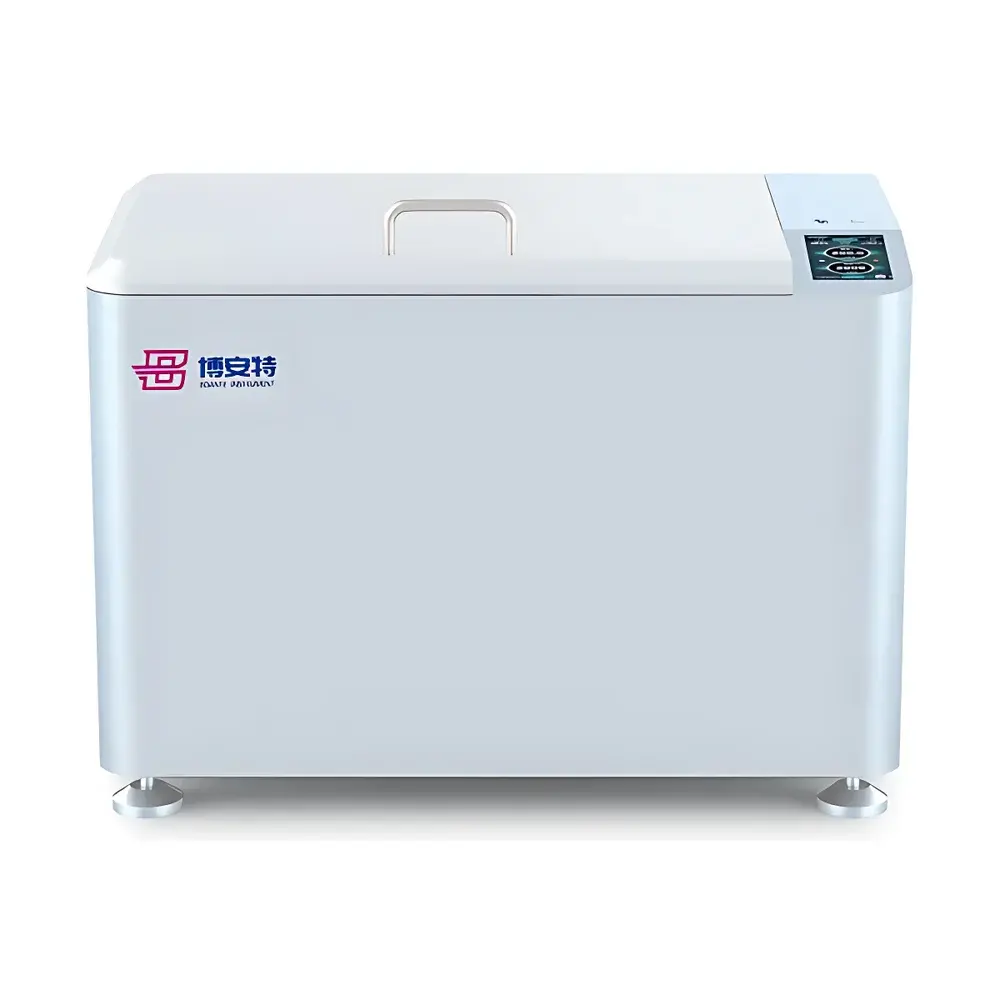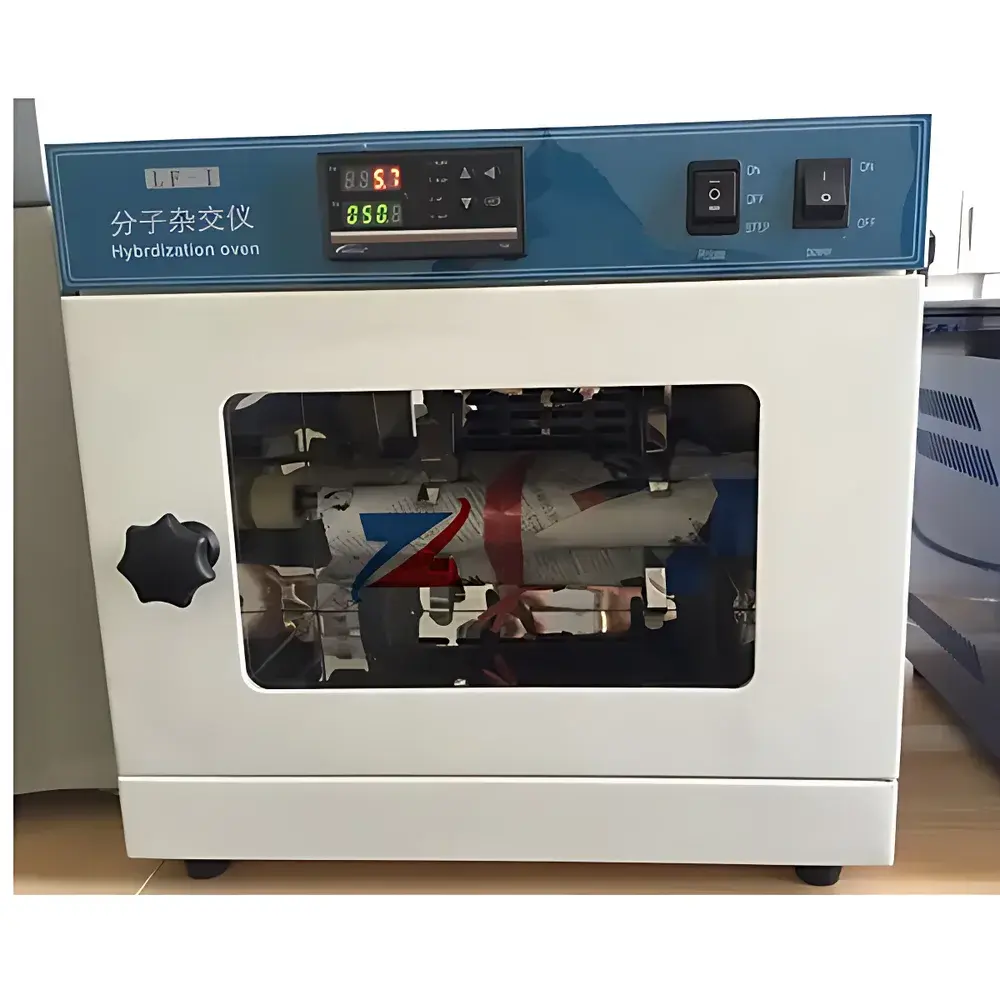
ZOLLO LF-III Molecular Hybridization Instrument
| Brand | ZOLLO |
|---|---|
| Origin | Shanghai, China |
| Manufacturer Type | Direct Manufacturer |
| Instrument Category | Domestic (China-made) |
| Model | LF-III |
| Instrument Type | Nucleic Acid Molecular Hybridization Instrument |
| Temperature Range | Ambient +5°C to 100°C |
| Temperature Uniformity | ±0.5°C |
| Rotation Speed | 6.5 ± 0.5 rpm |
| Capacity | 1 membrane/slide/plate per run |
| Buffer Volume | 200 mL |
| Temperature Display Resolution | 0.1°C |
| Temperature Equilibration Time | <20 min |
| Adjustable Oscillation Mode (for ELISA plates) | 5–20 rpm, amplitude adjustable |
| Hybridization Tube Dimensions | Ø35 × 220 mm (customizable) |
| Power Supply | 220 VAC, 50 Hz |
Overview
The ZOLLO LF-III Molecular Hybridization Instrument is an engineered platform designed for controlled nucleic acid hybridization under precisely regulated thermal and mechanical conditions. It operates on the fundamental principle of thermal denaturation and sequence-specific annealing between complementary DNA or RNA strands—enabling detection, quantification, and mapping of target nucleic acid sequences in solid-phase assays. Unlike traditional bag-based hybridization methods, the LF-III employs continuous low-speed rotation within a sealed cylindrical tube, ensuring uniform probe-target interaction across immobilized membranes (e.g., nitrocellulose or nylon), glass slides, or microtiter plates. Its integrated temperature control system maintains stability across the full operational range (ambient +5°C to 100°C), supporting applications from stringent high-temperature washes to low-stringency pre-hybridization steps. The instrument is routinely deployed in clinical molecular diagnostics laboratories performing viral/bacterial pathogen detection, gene expression profiling, and Southern/Northern blot validation workflows.
Key Features
- Modular architecture with compact footprint and intuitive front-panel interface for rapid setup and protocol recall.
- Digital PID temperature controller delivering ±0.5°C accuracy and ±0.5°C uniformity across the chamber volume—validated per ISO/IEC 17025 calibration practices.
- Stable rotational drive mechanism operating at 6.5 ± 0.5 rpm, independent of line voltage fluctuations, ensuring reproducible mixing kinetics critical for hybridization efficiency.
- Integrated oscillation mode (5–20 rpm, amplitude adjustable) compatible with standard 96-well ELISA plates—enabling dual-use as an incubation shaker for immunoassays or enzymatic reactions.
- Radiation-shielded chamber design compliant with IEC 61000-4 electromagnetic compatibility standards; suitable for use with non-isotopic (e.g., DIG-, biotin-, or fluorescent-labeled) probes without additional shielding infrastructure.
- Customizable hybridization tube geometry (standard: Ø35 × 220 mm) accommodates varied sample formats—including blot membranes, spotted arrays, and gel-transfer supports—while maintaining optimal buffer-to-surface ratio (200 mL nominal volume).
Sample Compatibility & Compliance
The LF-III supports hybridization on nitrocellulose, nylon, PVDF, and chemically modified glass substrates. It is compatible with both chemiluminescent and colorimetric detection systems, including alkaline phosphatase– and horseradish peroxidase–conjugated secondary reagents. The instrument meets general safety requirements outlined in IEC 61010-1 for laboratory electrical equipment and conforms to GB/T 14710–2009 (Chinese national standard for environmental adaptability of medical electronic instruments). While not certified for FDA 21 CFR Part 11 compliance out-of-the-box, its operation log and parameter settings can be manually documented to support GLP/GMP-aligned quality records in regulated environments.
Software & Data Management
The LF-III operates via embedded firmware with no external PC dependency. All parameters—including setpoint temperature, rotation speed, oscillation mode, and runtime—are configured and stored locally using push-button navigation and LED display. No proprietary software, drivers, or cloud connectivity are required. For audit-trail purposes, users may record instrument ID, batch numbers, operator initials, and cycle timestamps in laboratory notebooks or LIMS-integrated forms. Optional RS-232 or USB-to-serial adapters (sold separately) enable basic data logging to third-party acquisition platforms.
Applications
- Southern and Northern blot hybridization for genomic DNA and total RNA analysis.
- In situ hybridization (ISH) probe incubation on tissue sections mounted on glass slides.
- Microarray hybridization under controlled stringency for transcriptome screening.
- Enzyme-linked immunosorbent assay (ELISA) plate incubation with gentle agitation to reduce edge effects and improve antigen-antibody binding kinetics.
- Pre-hybridization blocking and post-hybridization wash protocols requiring precise thermal ramping and agitation.
- Development and validation of PCR-based diagnostic assays integrating hybridization-based signal amplification (e.g., real-time PCR endpoint confirmation).
FAQ
What types of membranes are compatible with the LF-III?
Nitrocellulose, nylon, PVDF, and charged glass slides—provided they fit within the Ø35 × 220 mm tube dimensions and do not obstruct rotation.
Can the instrument perform hybridization with radioactive probes?
While the chamber includes radiation shielding, the LF-III is optimized for non-isotopic detection systems; handling of ³²P or other radionuclides requires institutional radiation safety approval and supplemental containment measures.
Is temperature calibration traceable to national standards?
Yes—calibration certificates issued by accredited third-party labs (e.g., CNAS-accredited facilities in China) are available upon request and conform to ISO/IEC 17025 requirements.
Does the LF-III support programmable multi-step temperature profiles?
No—the device operates with single-setpoint temperature control; multi-stage protocols require manual intervention between steps.
What maintenance is required for long-term reliability?
Annual verification of temperature sensor drift and motor torque output is recommended; no consumables or routine lubrication are specified in the service manual.