
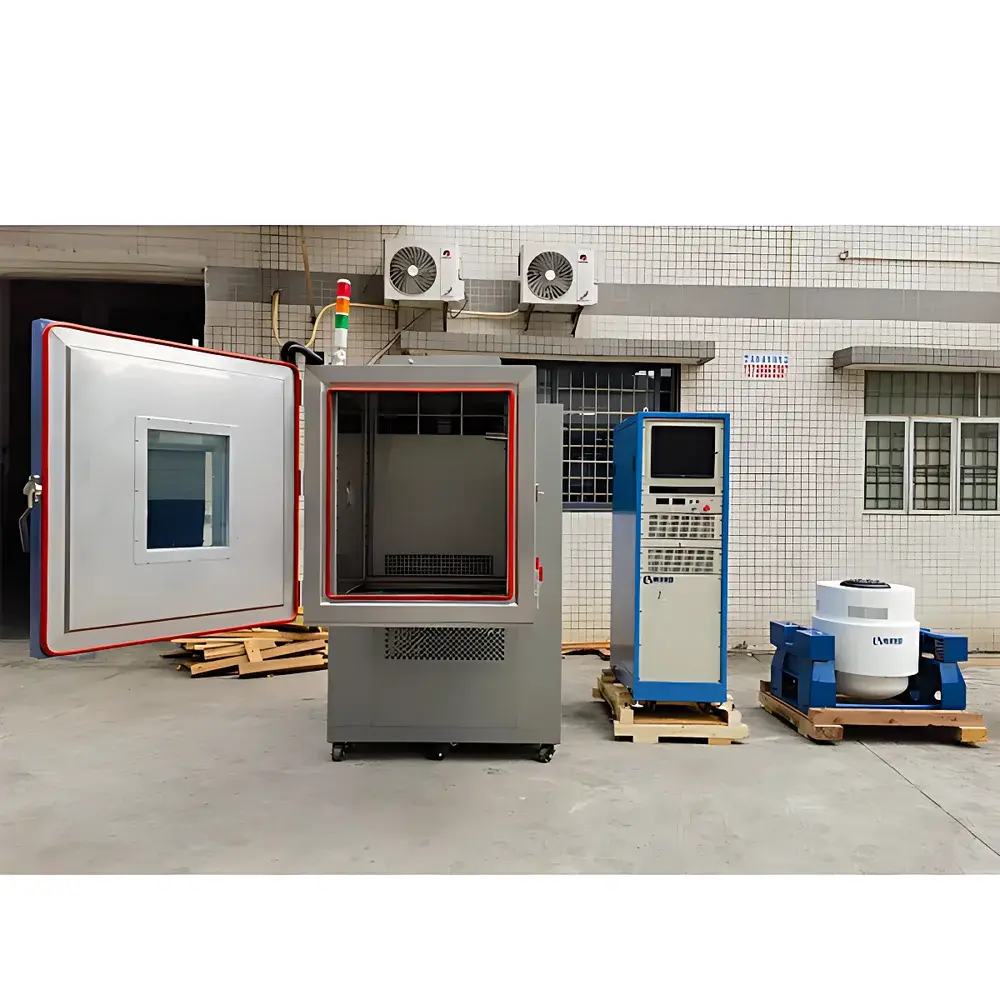
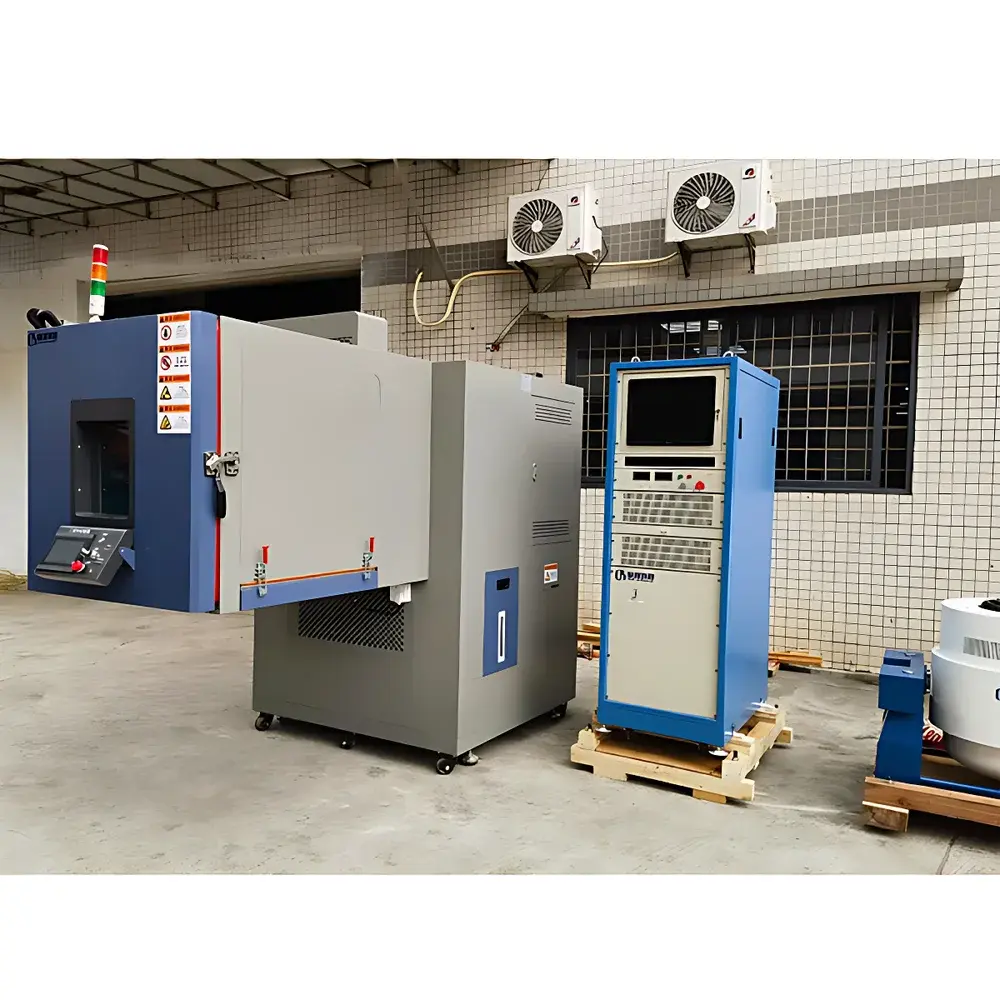
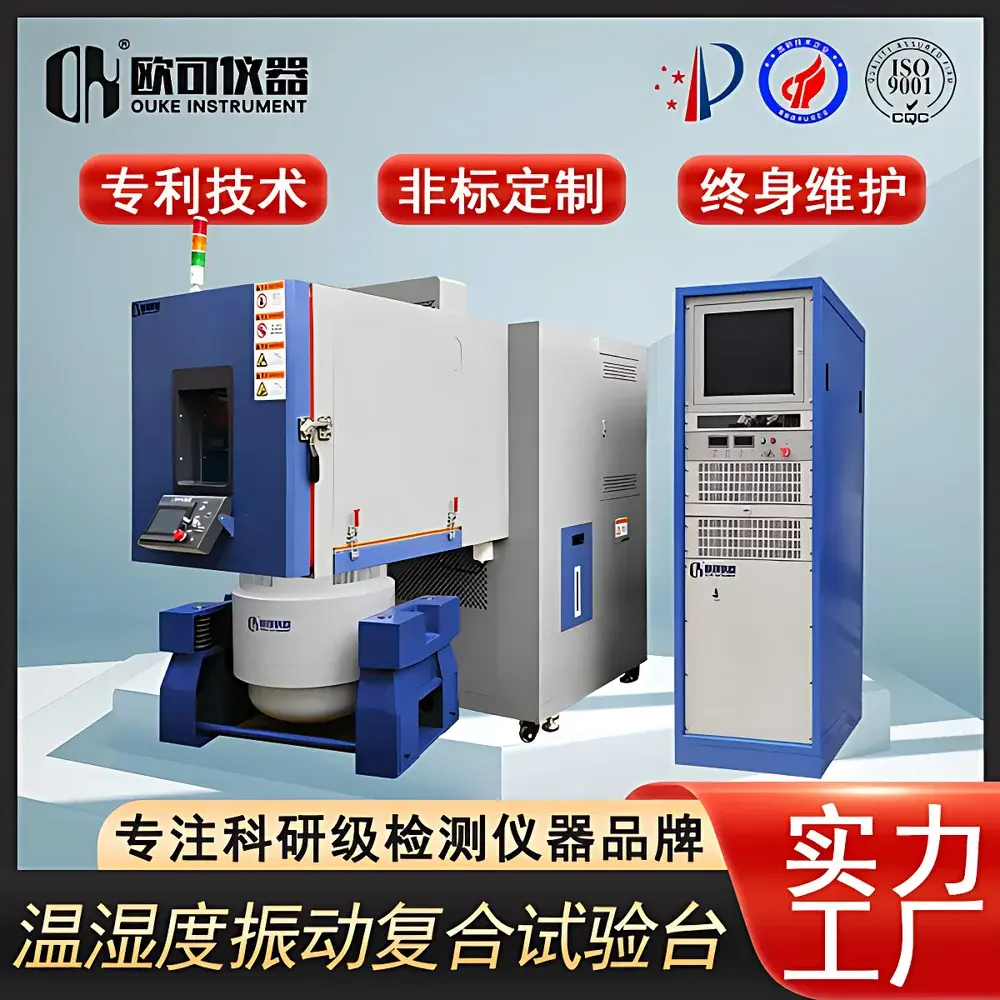
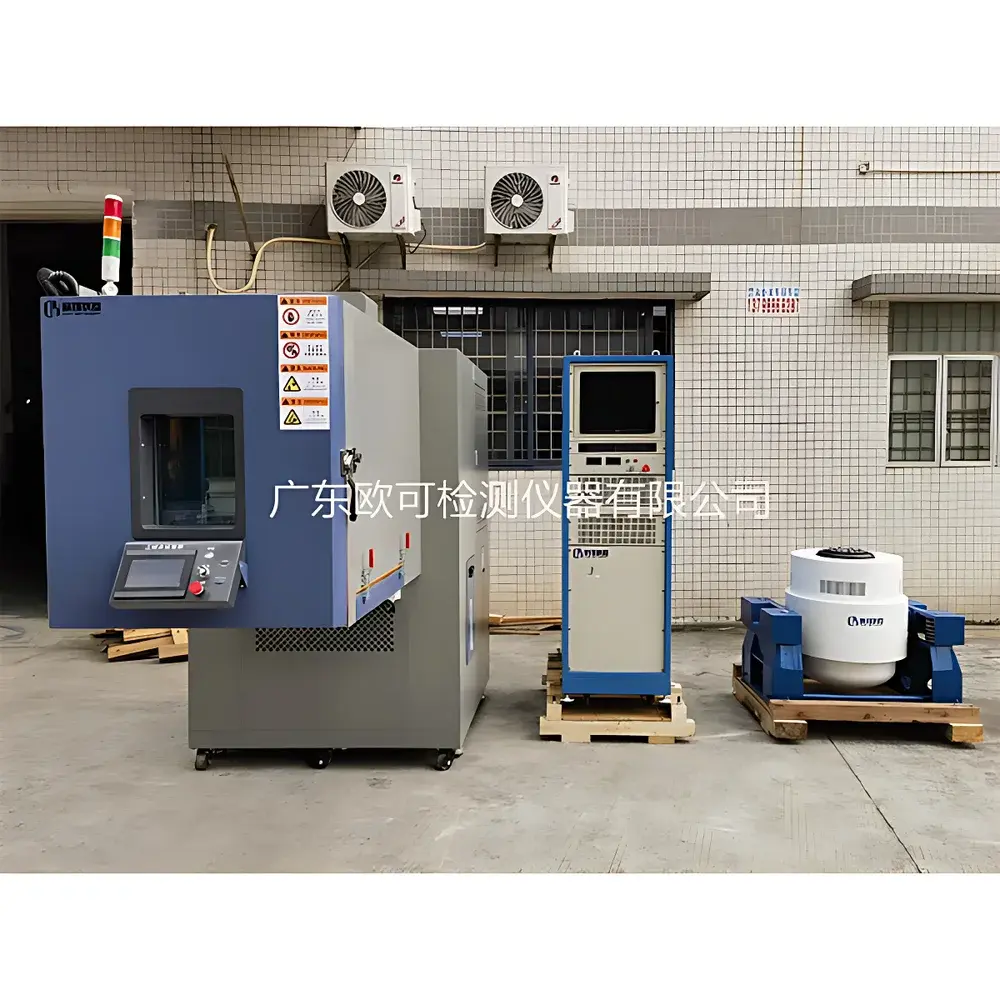
OK-ZTH-1000.001 Combined Temperature, Humidity, and Vibration Test Chamber
| Brand | OK Instruments |
|---|---|
| Origin | Guangdong, China |
| Manufacturer Type | Direct Manufacturer |
| Model | OK-ZTH-1000.001 |
| Temperature Range | -70 °C to +150 °C |
| Humidity Range | 20–98 %RH at 20–85 °C |
| Temperature Ramp Rate | 5 / 10 / 15 °C/min (selectable) |
| Temperature Uniformity | ≤ ±0.5 °C |
| Standard Load Capacity | 15 kg aluminum mass, 350 W internal heat dissipation |
Overview
The OK-ZTH-1000.001 Combined Temperature, Humidity, and Vibration Test Chamber is an engineered platform for accelerated environmental reliability testing under multi-stress conditions. It integrates three orthogonal physical stress domains—thermal (controlled temperature and humidity), mechanical (electrodynamic vibration), and temporal (programmable sequencing)—to replicate real-world operational extremes encountered by critical components in aerospace, automotive, electronics, and industrial screening systems. Its core measurement architecture adheres to the principles of combined stress testing as defined in IEC 60068-2-64 (random vibration), IEC 60068-2-1/2 (cold/hot tests), and ISO 16750-4 (road vehicle environmental conditions). Unlike sequential single-stress testing, this chamber enables simultaneous or phase-synchronized application of thermal transients and mechanical excitation—enabling detection of thermally induced resonance shifts, cold-brittle failure modes, and humidity-accelerated corrosion under dynamic load.
Key Features
- Triple-domain integration: Independent yet synchronized control of temperature, relative humidity, and electrodynamic vibration within a single chamber enclosure.
- Wide thermal operating envelope: Achieves -70 °C to +150 °C using a cascade refrigeration system with dual-stage compressors, high-efficiency evaporators, and precision PID-controlled resistive heating elements.
- Humidity capability: Maintains 20–98 %RH across 20–85 °C via steam injection and dehumidification through chilled mirror condensation, compliant with ASTM E104-02 for hygrometric control.
- Selectably programmable ramp rates: Offers 5, 10, or 15 °C/min linear cooling/heating profiles—enabling HALT (Highly Accelerated Life Testing) protocols requiring rapid thermal transitions.
- Vibration subsystem: Integrated vertical-axis electrodynamic shaker with force-rated moving coil, water-cooled amplifier, and closed-loop acceleration feedback; supports sine, random, and shock test profiles per MIL-STD-810H and ISO 10326-1.
- Structural integrity: Inner chamber constructed from SUS304 stainless steel; outer shell of powder-coated cold-rolled steel; 150 mm thick polyurethane insulation (λ ≤ 0.022 W/m·K) ensures thermal stability and energy efficiency.
- Robust safety architecture: Dual independent overtemperature cutoffs, vibration over-acceleration shutdown, door interlock, ground-fault circuit interruption, and real-time fault logging.
Sample Compatibility & Compliance
The chamber accommodates standard test specimens up to 15 kg (aluminum reference mass), with dimensional constraints optimized for industrial vibratory equipment, PCB assemblies, ECU modules, and aerospace avionics housings. Fixture design must comply with ISO 5344 for vibration mounting interface flatness and moment balance. All thermal and vibrational performance specifications are validated per ISO/IEC 17025-accredited calibration procedures. The system supports audit-ready documentation for GLP and GMP environments, including full traceability of sensor calibrations (NIST-traceable RTDs and piezoelectric accelerometers), test sequence logs, and deviation reporting. Humidity control meets the uncertainty requirements of ISO 12193 for psychrometric validation.
Software & Data Management
Control is executed via a CE-certified industrial PLC paired with a 10.1″ capacitive touchscreen HMI running OK’s proprietary T-V-Sync™ software. The interface enables graphical programming of multi-step composite profiles—including nested loops, conditional branching (e.g., “if temperature reaches -40 °C, initiate 20 Hz sine sweep”), and real-time parameter overrides. All test data—including chamber temperature, humidity, chamber air velocity, shaker armature acceleration (m/s²), displacement (mm p-p), and drive current—are timestamped and logged at ≥100 Hz resolution. Export formats include CSV, PDF test reports, and XML-compatible structured logs. Optional FDA 21 CFR Part 11 compliance package includes electronic signatures, audit trails, role-based access control, and encrypted database storage.
Applications
- Vibratory screening equipment validation: Fatigue life assessment of sieve frames, rubber isolators, and electromagnetic exciters under cryogenic (-70 °C) and high-temperature (+150 °C) vibration loading.
- Automotive electronics: Thermal-vibrational qualification of ADAS sensors, battery management systems, and infotainment controllers per LV-124 and GMW3172 standards.
- Aerospace components: Environmental stress screening (ESS) of flight-critical actuators, inertial measurement units (IMUs), and satellite deployable mechanisms per ECSS-Q-ST-30C.
- Electronics manufacturing: Identification of solder joint weaknesses, capacitor microcracking, and connector fretting corrosion during temperature-cycled random vibration.
- Materials R&D: Evaluation of polymer damping behavior, elastomer hysteresis, and composite delamination onset under coupled thermo-mechanical strain.
FAQ
What vibration standards does the OK-ZTH-1000.001 support?
It fully implements test profiles defined in ISO 10326-1 (sine), ISO 10816-1 (vibration severity), and MIL-STD-810H Method 514.8 (vibration), with optional waveform synthesis for transient shock per ISO 18431-4.
Can the chamber perform temperature-humidity-vibration tri-combined testing simultaneously?
Yes—temperature, humidity, and vibration can be actively controlled and synchronized in real time using the T-V-Sync™ engine; humidity operation is limited to 20–85 °C range during vibration.
Is third-party calibration documentation provided with delivery?
Each unit ships with a factory calibration certificate covering temperature uniformity, humidity accuracy, and shaker acceleration linearity, all traceable to national metrology institutes (e.g., CNAS-accredited labs).
What is the maximum allowable payload when operating at -70 °C?
The rated 15 kg load applies across the full temperature range; however, thermal mass effects require derating of vibration amplitude above 100 Hz below -40 °C to maintain closed-loop stability.
Does the system support remote monitoring and alarm notification?
Yes—via Ethernet/IP with Modbus TCP and optional MQTT integration; configurable email/SMS alerts trigger on safety limit breaches, program completion, or communication loss.



