
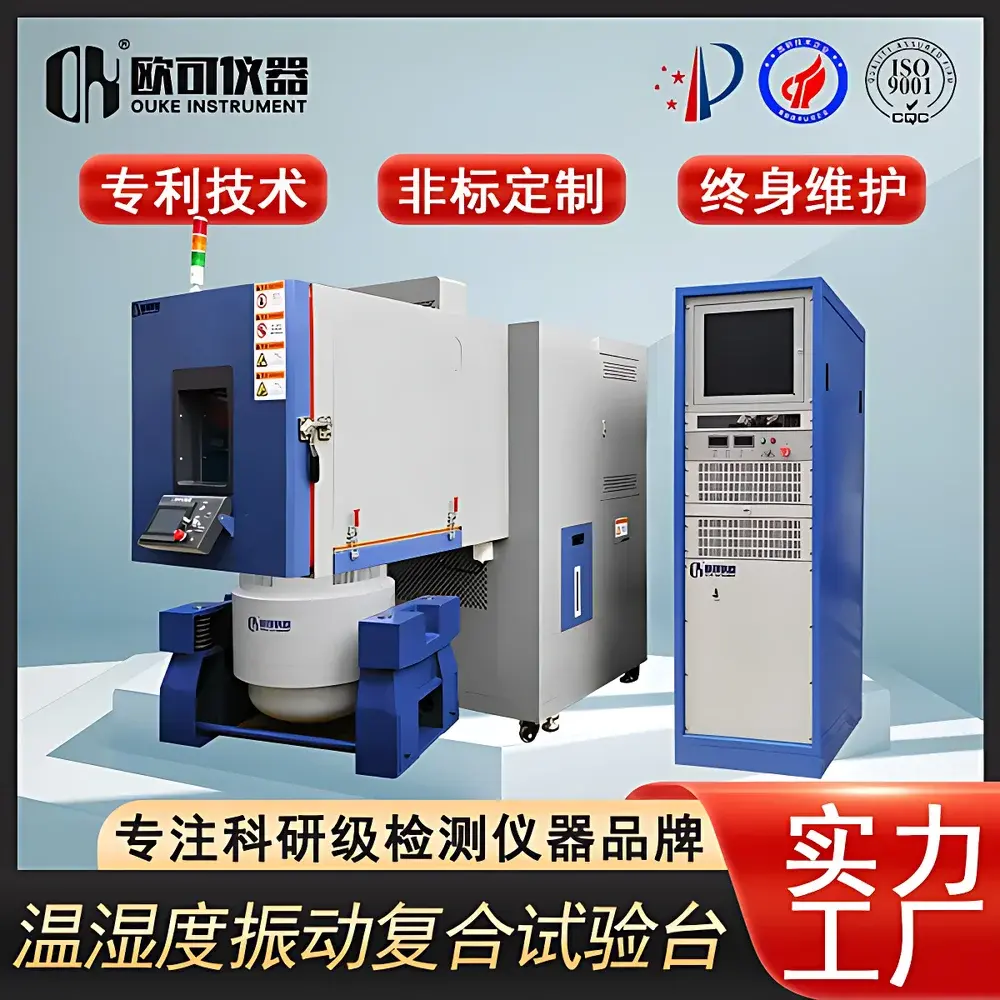
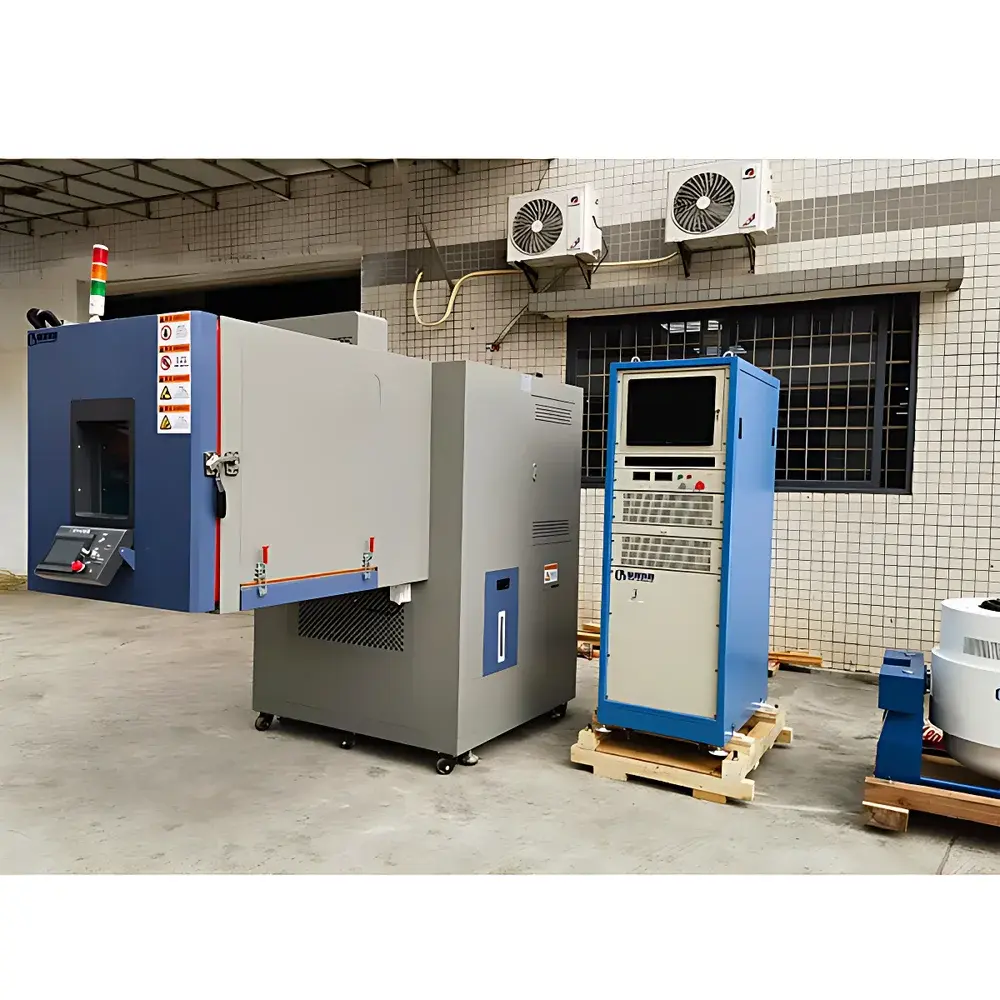
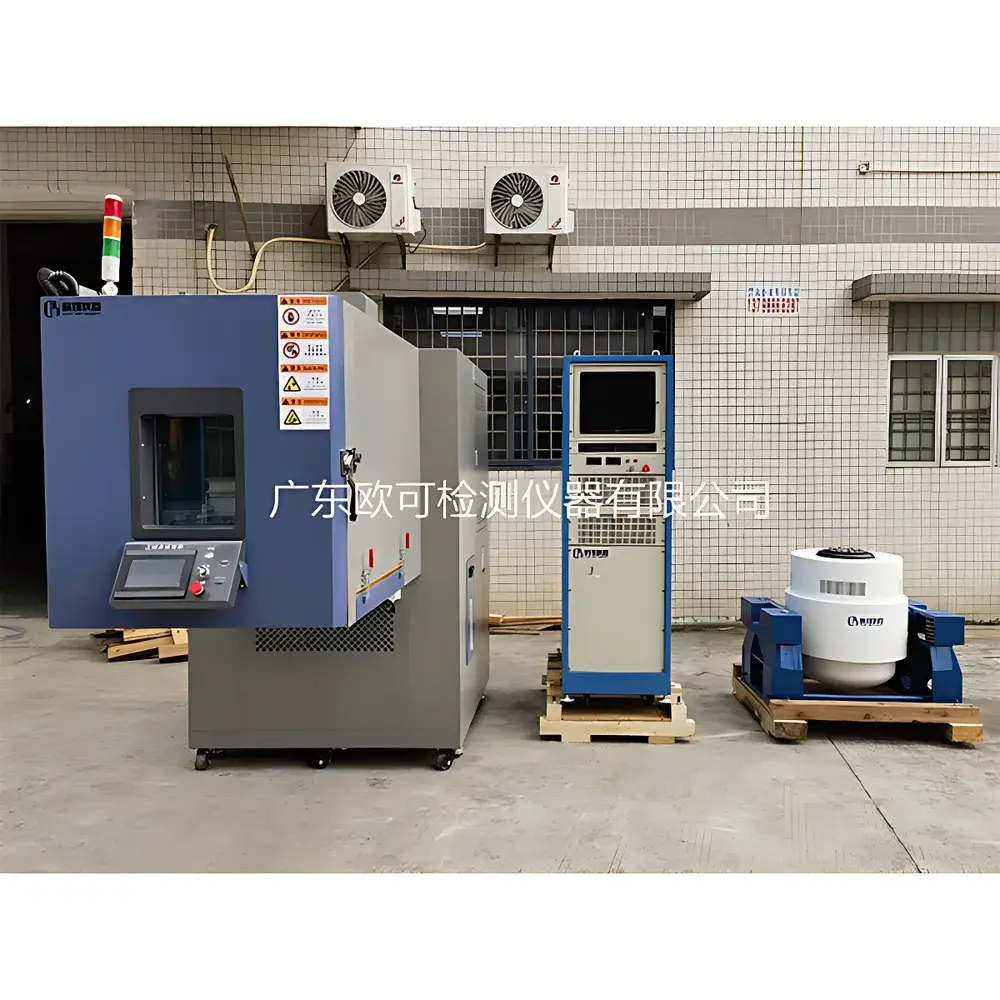
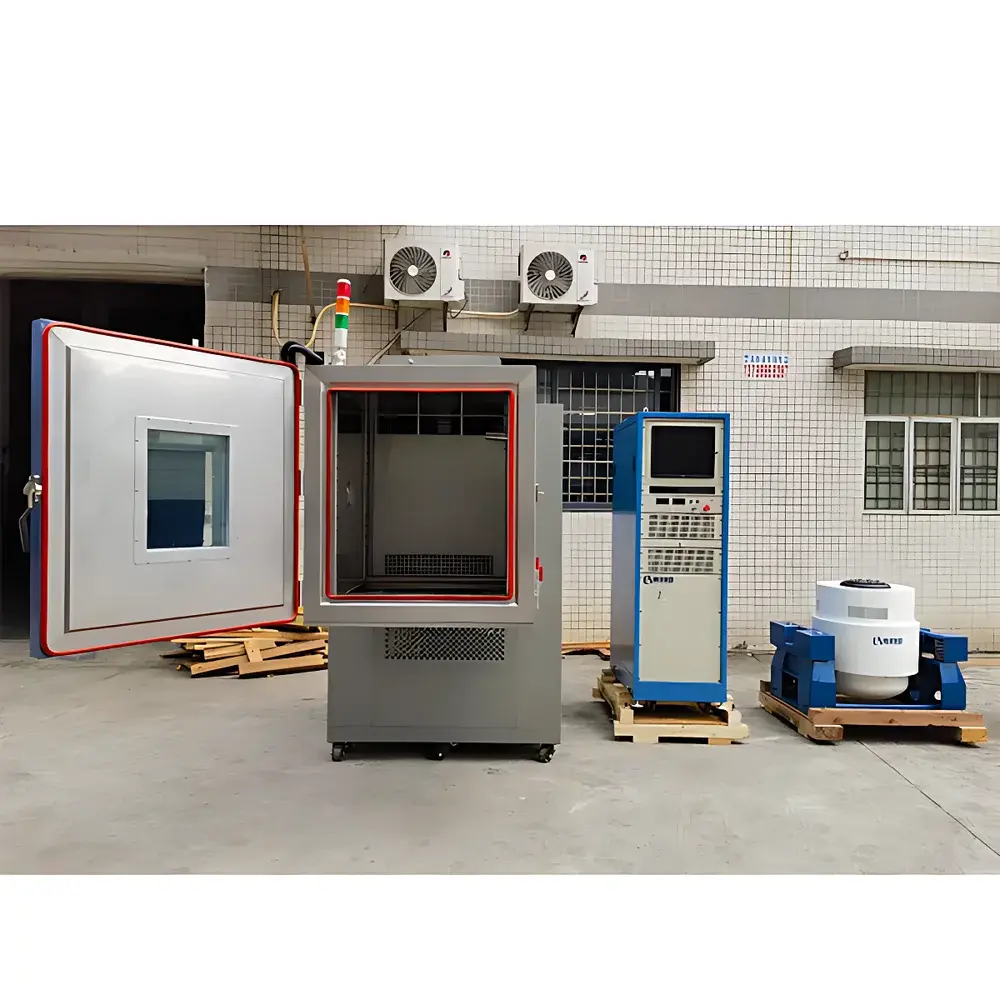
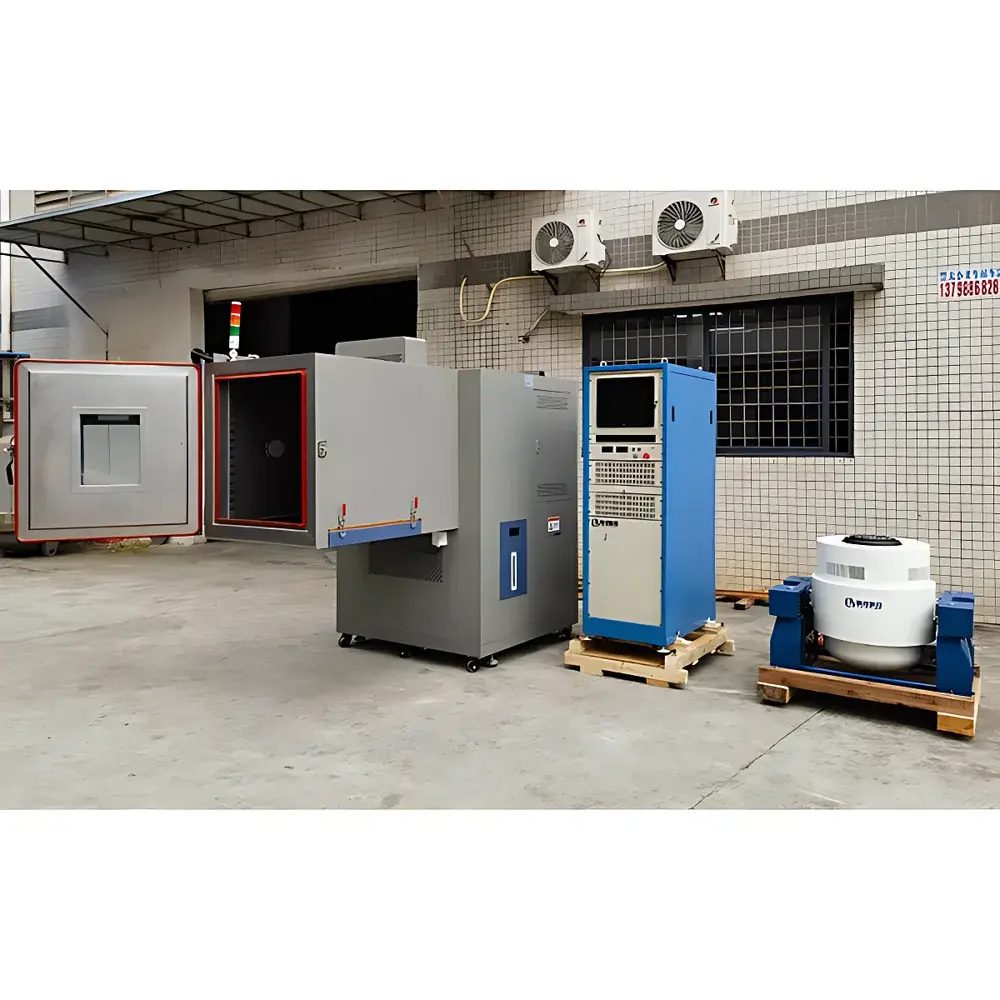
OK-ZTH-1009 Combined Temperature-Humidity-Vibration Environmental Test Chamber
| Brand | OK Instruments |
|---|---|
| Origin | Guangdong, China |
| Manufacturer Type | Direct Manufacturer |
| Product Origin | Domestic (China) |
| Model | OK-ZTH-1009 |
| Temperature Range | −70 °C to +150 °C |
| Humidity Range | 20–98 %RH at 20–85 °C |
| Temperature Ramp Rate | 5 / 10 / 15 °C/min |
| Temperature Uniformity | ≤ ±0.5 °C |
| Standard Load Capacity | 15 kg aluminum mass, 350 W heat dissipation |
Overview
The OK-ZTH-1009 Combined Temperature-Humidity-Vibration Environmental Test Chamber is an integrated reliability testing system engineered for simultaneous application of thermal, hygric, and mechanical (vibrational) stress profiles. It operates on the principle of multi-stress synergistic acceleration—reproducing real-world environmental service conditions where temperature cycling, moisture exposure, and dynamic mechanical loading co-occur. Unlike sequential single-stress tests, this chamber enables true concurrent stress application under programmable, synchronized control—essential for revealing coupling-induced failure mechanisms such as thermo-mechanical fatigue, humidity-assisted crack propagation, and vibration-enhanced condensation ingress. Its design adheres to core principles of environmental engineering and reliability physics, supporting qualification per MIL-STD-810H, IEC 60068-2 series, and automotive standards including ISO 16750-4 and SAE J2345.
Key Features
- Triple-stress synchronization engine: Independent yet coordinated control of temperature, relative humidity, and 3-axis electrodynamic vibration—enabling complex test profiles such as “hold at 85 °C/85 %RH while applying random vibration (0.04 g²/Hz, 10–2000 Hz)”
- Structurally reinforced chamber architecture: Heavy-duty stainless-steel inner chamber with vibration-damped mounting interface; welded seams and reinforced door sealing designed for continuous operation under 10 g peak acceleration without fatigue or leakage
- Integrated bottom-mounted electrodynamic shaker: 1000 kgf force capacity, equipped with a high-temperature-compatible moving coil and ceramic-coated suspension components rated for −70 °C to +150 °C ambient exposure
- Advanced thermal-hygric management: Dual-stage cascade refrigeration, steam-based humidification with PID-controlled saturated steam generator, and dew-point referenced humidity calibration traceable to NIST standards
- Dynamic thermal isolation: Floating vibration table mounted on active pneumatic isolators; thermally decoupled feedthroughs for power, signal, and sensor cables featuring low-conductivity composite bushings
- Real-time multi-channel data acquisition: Up to 32 analog/digital channels synchronized with chamber and shaker controllers; supports external DUT monitoring (e.g., voltage, current, impedance, acoustic emission)
Sample Compatibility & Compliance
The OK-ZTH-1009 accommodates samples up to 15 kg mass on standard aluminum test fixtures, with optional custom fixture design support for aerospace avionics, automotive ECUs, and medical electronics enclosures. Chamber interior dimensions (W×H×D: 600 × 600 × 600 mm) comply with IEC 60068-3-3 for test volume-to-sample ratio requirements. All control algorithms and data logging functions meet GLP/GMP traceability requirements—including full audit trail, user access levels, electronic signatures, and FDA 21 CFR Part 11–compliant software configuration (optional). Humidity sensors are calibrated per ISO/IEC 17025-accredited procedures; temperature uniformity verified per ASTM E145 Class A specifications.
Software & Data Management
Control and analysis are executed via OK-TestSuite™ v4.2—a Windows-based platform supporting ISO/IEC 17025-compliant test method definition, profile sequencing, and automated report generation. The software implements hierarchical test scripting (TSL), enabling nested loops, conditional branching, and event-triggered actions (e.g., initiate vibration upon reaching target humidity). All raw data—including chamber setpoints, actual sensor readings, shaker drive signals, and external DUT telemetry—are timestamped with microsecond resolution and stored in HDF5 format for long-term archival and third-party post-processing (MATLAB, Python, LabVIEW). Built-in compliance modules support automatic generation of test evidence packages aligned with AS9100 Rev D, IATF 16949, and ISO 9001:2015 quality system documentation requirements.
Applications
- Automotive electronics: Validation of ADAS modules under combined desert heat (+85 °C), monsoon humidity (95 %RH), and road-spectrum vibration (ISO 10326-1)
- Aerospace subsystems: Mission-profile simulation covering ground hold (35 °C/60 %RH), climb (−40 °C), cruise (−55 °C/low RH), and turbulence-induced broadband vibration (DO-160 Section 8)
- Consumer IoT devices: Wearable endurance testing under body-heat-equivalent thermal load (37 °C), perspiration-level humidity (80 %RH), and walking-induced harmonic excitation (1.5–3 Hz)
- Medical device packaging: Accelerated aging of sterile barrier systems under cold-chain transport conditions (2 °C/95 %RH) combined with ISTA 3A vibration spectra
- Power electronics: Thermal cycling fatigue assessment of SiC inverters subjected to rapid ramping (15 °C/min) while vibrating at resonant frequencies identified via pre-test modal analysis
FAQ
What standards does the OK-ZTH-1009 support for test method validation?
It supports execution and documentation per MIL-STD-810H Method 520.5 (Combined Environments), IEC 60068-2-68 (Combined Temp/Humidity/Vibe), and ISO 16750-4 Annex C (Road Vehicle Environmental Conditions).
Can the chamber perform HALT-like profiles?
No—it is not configured for highly accelerated life testing; its control architecture prioritizes fidelity to real-world environmental profiles over extreme stress overdrive.
Is remote monitoring and alarm notification available?
Yes—via secure HTTPS web interface with configurable SNMP traps, email alerts, and integration into enterprise CMMS platforms using OPC UA protocol.
How is vibration isolation maintained during rapid temperature transitions?
Through a dual-layer isolation strategy: passive pneumatic mounts beneath the shaker base and active thermal compensation in the chamber’s structural frame to minimize differential expansion effects.
Does the system support third-party sensor integration?
Yes—IEEE 1451.4 TEDS-compliant transducer support is built-in; analog inputs accept ±10 V, 4–20 mA, and thermocouple types J/K/T/E/R/S/B with cold-junction compensation.



