
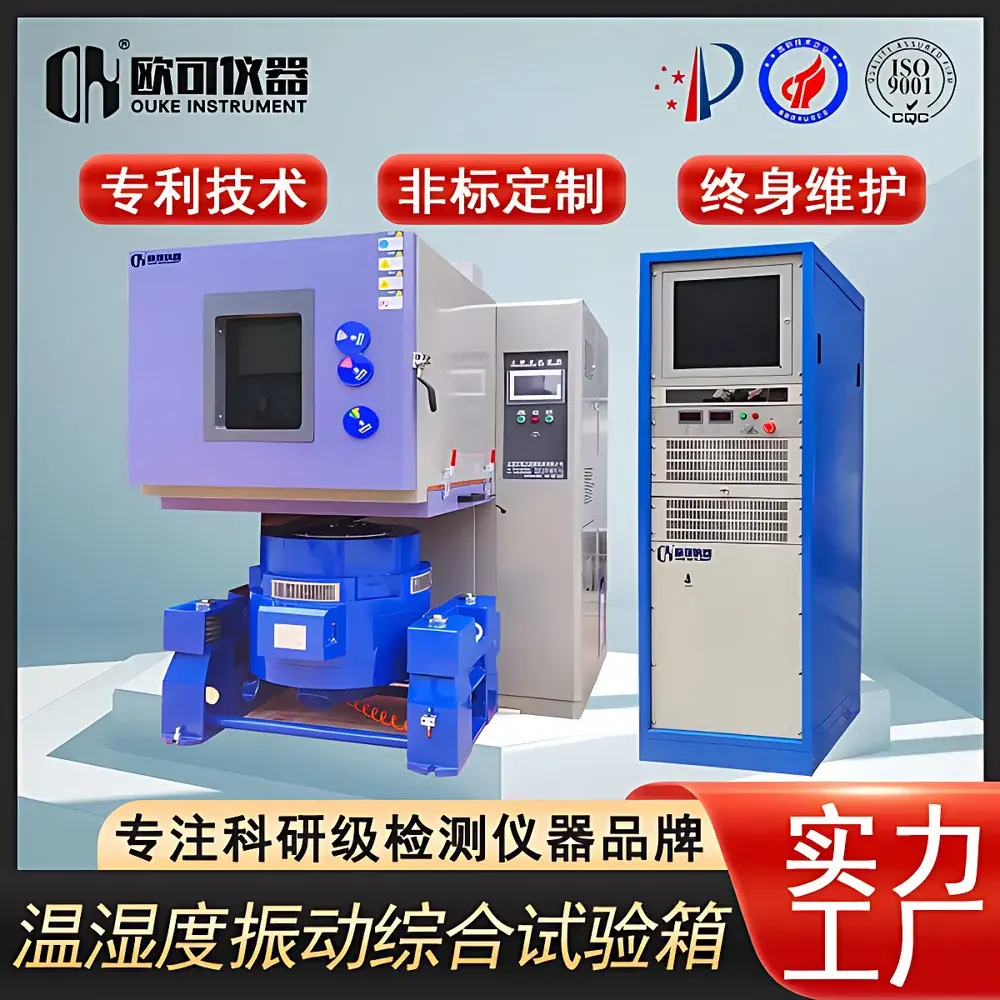
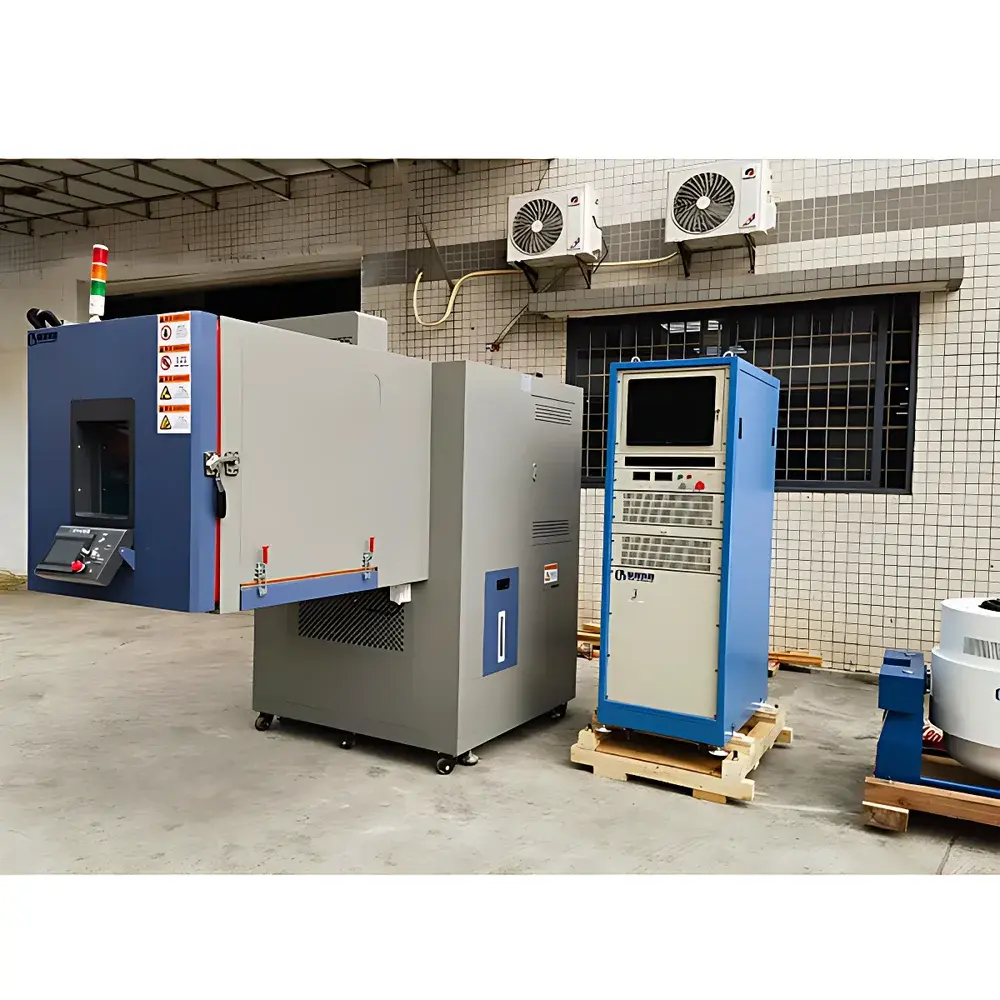
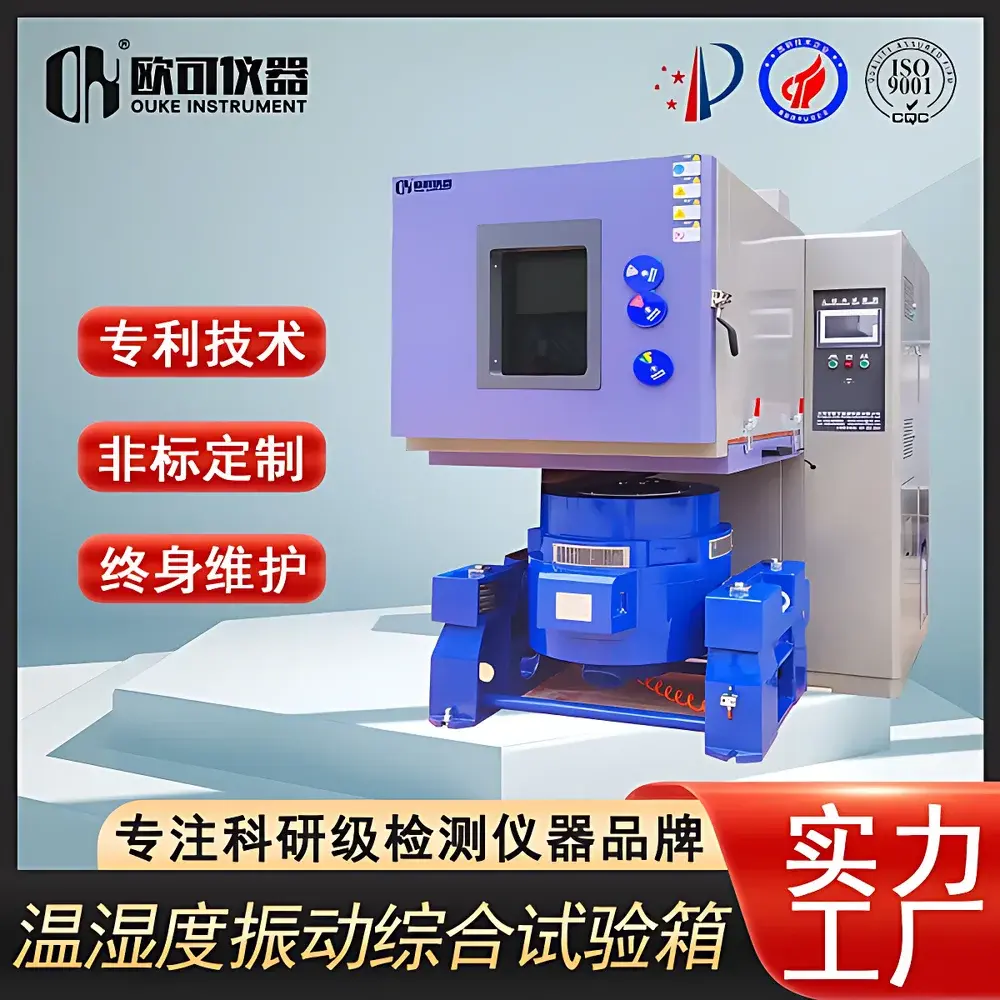
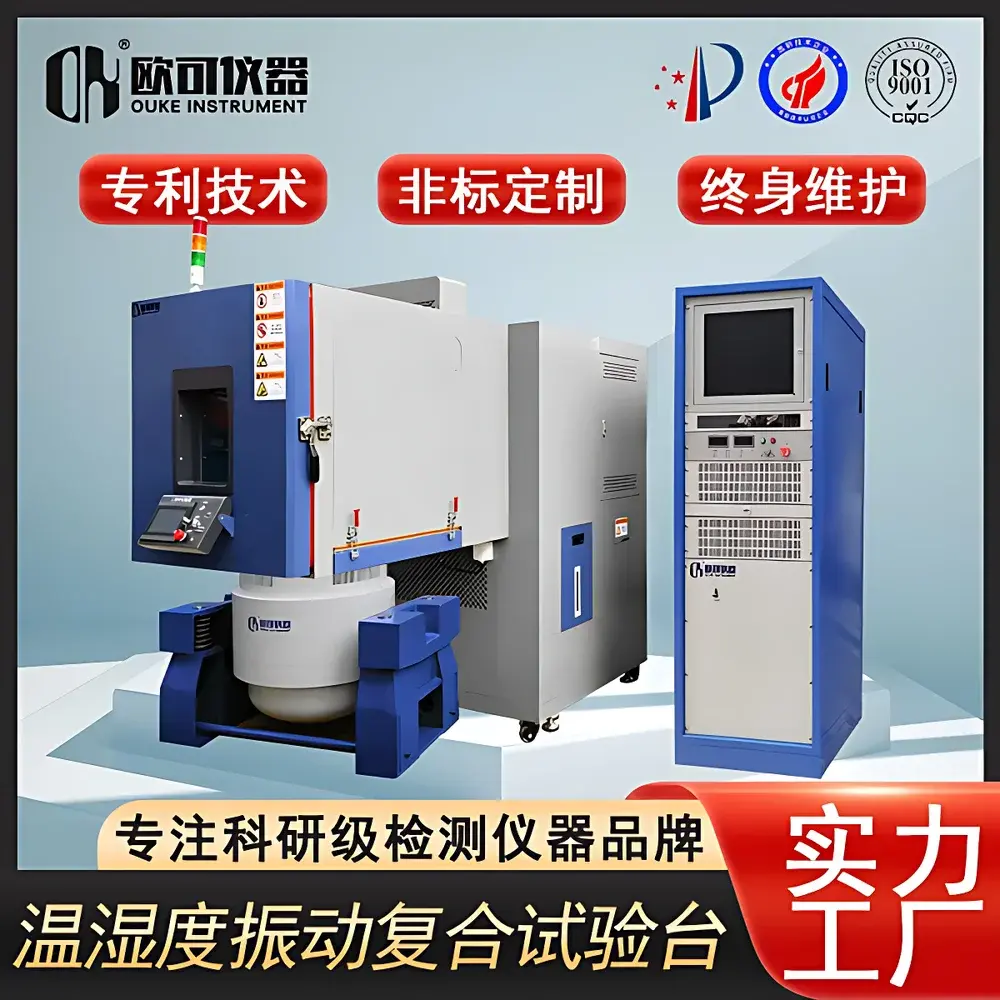
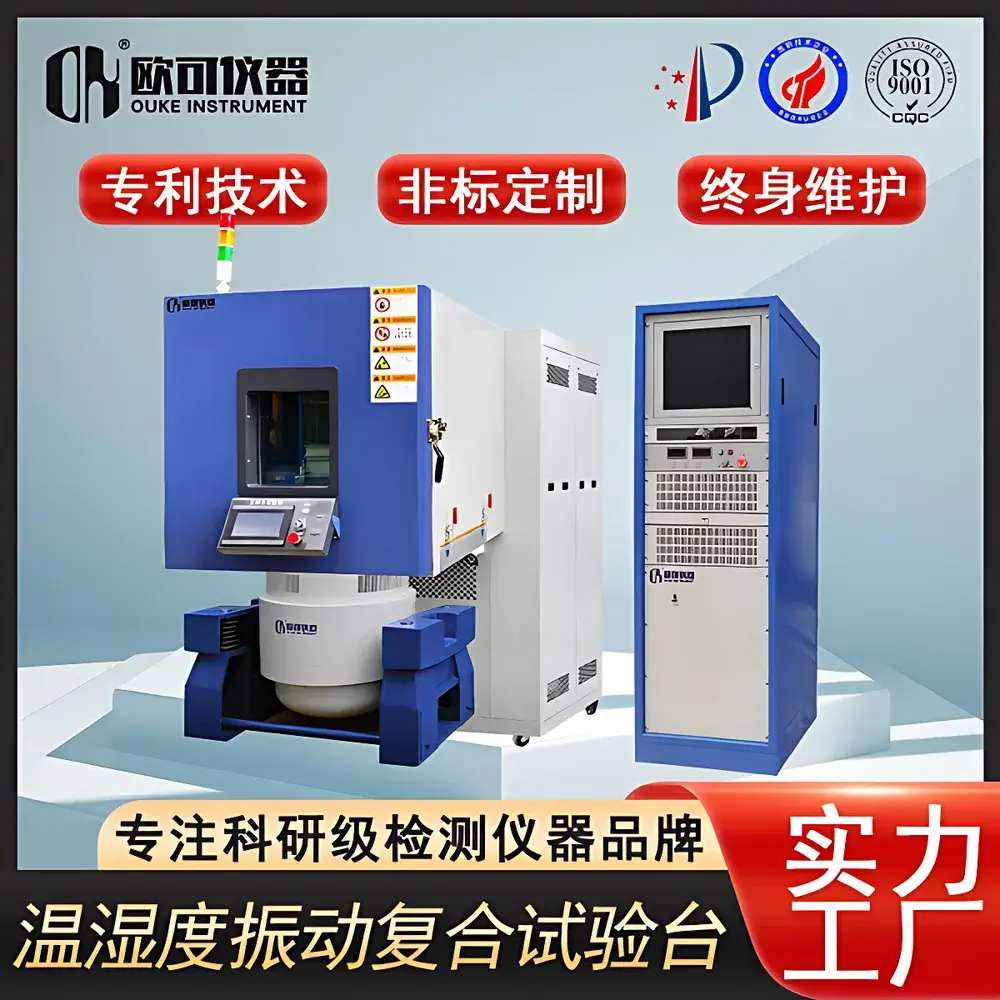
OK-ZTH-1440 Combined Temperature, Humidity and Vibration Environmental Test Chamber
| Brand | OK Instruments |
|---|---|
| Origin | Guangdong, China |
| Manufacturer Type | Direct Manufacturer |
| Product Category | Domestic |
| Model | OK-ZTH-1440 |
| Temperature Range | −70 °C to +150 °C |
| Humidity Range | 20–98 %RH at 20–85 °C |
| Temperature Ramp Rate | 5 / 10 / 15 °C/min |
| Temperature Uniformity | ≤ ±0.5 °C |
| Standard Load Capacity | 15 kg aluminum mass (350 W thermal dissipation) |
Overview
The OK-ZTH-1440 Combined Temperature, Humidity and Vibration Environmental Test Chamber is an integrated reliability testing platform engineered for simultaneous application of three fundamental environmental stressors: controlled temperature, regulated relative humidity, and mechanically induced vibration. Unlike sequential or single-stress test systems, this chamber implements true concurrent multi-stress exposure based on Couette-type thermal-hygrometric control and electrodynamic vibration excitation synchronized via a deterministic real-time control architecture. Its core function lies in replicating the synergistic environmental conditions encountered during real-world operation—such as automotive components enduring high-temperature desert driving while subjected to road-induced vibration, or avionics experiencing rapid thermal transients during ascent/descent coupled with atmospheric turbulence-induced mechanical excitation. By enabling precise temporal alignment of thermal cycling, moisture ingress, and dynamic mechanical loading, the system reveals coupled failure mechanisms—including hygrothermal cracking propagation under cyclic strain, condensation-driven electrical leakage accelerated by micro-vibratory displacement, and interfacial delamination triggered by differential thermal expansion under vibratory shear. This capability positions the OK-ZTH-1440 within the framework of MIL-STD-810H Method 520.5 (Combined Environments), IEC 60068-2-60 (Vibration and Damp Heat), and ISO 16750-4 (Road Vehicles – Environmental Conditions).
Key Features
- Triple-stress synchronization engine supporting programmable phase-aligned profiles: e.g., random vibration applied exclusively during high-humidity dwell segments or sinusoidal sweep superimposed on linear thermal ramping.
- Structurally reinforced chamber housing with vibration-damped base frame and fatigue-resistant welded stainless-steel interior; optimized for long-term dynamic load endurance without resonant amplification.
- Dynamic sealing system featuring dual-lip silicone gaskets with compression-compensating geometry, ensuring leak integrity (<0.5 Pa·m³/s helium leak rate) across full temperature/humidity/vibration operating envelope.
- Integrated bottom-mounted electrodynamic shaker (capable of 1000 N peak force, 50 mm stroke) with thermally isolated drive shaft and moisture-resistant armature assembly rated for continuous operation from −70 °C to +150 °C.
- High-fidelity climate control subsystem utilizing cascade refrigeration, steam-based humidification with PID-controlled saturation chamber, and precision dew-point monitoring via chilled-mirror hygrometer (±1.5 %RH accuracy).
- Real-time multi-channel data acquisition interface supporting up to 16 analog inputs (e.g., thermocouples, strain gauges, voltage outputs) time-synchronized to vibration waveform and environmental setpoints at 10 kHz sampling rate.
Sample Compatibility & Compliance
The OK-ZTH-1440 accommodates test specimens up to 15 kg mounted on standardized aluminum mass plates, with provisions for cable feedthroughs (IP65-rated quick-connect ports), optical access windows (fused silica, AR-coated), and optional inert gas purging (N₂ or dry air) for oxygen-sensitive applications. It complies with structural and safety requirements outlined in IEC 61000-4-27 (immunity to combined AC power frequency and RF fields), UL 61010-1 (safety of laboratory equipment), and meets electromagnetic compatibility (EMC) Class B limits per CISPR 11. All operational software logs include timestamped audit trails meeting FDA 21 CFR Part 11 requirements for electronic records and signatures when configured with user authentication and role-based access control.
Software & Data Management
Control and analysis are executed via OK-TestSuite™ v4.2—a Windows-based application built on LabVIEW Real-Time and SQL Server Express backend. The software supports ASTM E1823-defined test profile scripting, including nested loops, conditional branching (e.g., “if temperature deviation > ±0.3 °C, pause vibration until stabilization”), and automatic pass/fail evaluation against user-defined acceptance criteria. Raw sensor data (temperature, RH, acceleration, sample telemetry) are stored in HDF5 format with embedded metadata (test ID, operator, calibration certificates, environmental setpoint history). Export options include CSV, MATLAB .mat, and PDF-compliant test reports compliant with ISO/IEC 17025 documentation standards. Optional integration with enterprise quality management systems (QMS) via RESTful API enables automated defect reporting to TrackWise or ETQ Reliance.
Applications
- Automotive electronics: Validation of ADAS ECUs under combined thermal cycling (−40 °C ↔ +85 °C), 85 %RH soak, and road-spectrum vibration (ISO 16750-3) to assess solder joint fatigue and conformal coating integrity.
- Aerospace components: Mission-profile simulation for UAV flight controllers—covering ground hold (35 °C/60 %RH), climb (−30 °C/30 %RH + 0.1–2 kHz random vibration), cruise (−55 °C/10 %RH), and descent—with onboard telemetry logging.
- Medical device packaging: Accelerated aging of sterile barrier systems under 40 °C/75 %RH with 5 g RMS broadband vibration to evaluate seal integrity per ASTM F1980 and ISO 11607-1.
- Consumer electronics: Smartphone reliability assessment simulating pocket environment: body-heat-induced ambient rise (37 °C), perspiration-level humidity (60–80 %RH), and walking-induced vibration (0.5–5 Hz harmonic content).
- Industrial battery modules: Cycle-life testing of Li-ion packs under −20 °C ↔ +60 °C ramps, 90 %RH, and 10–2000 Hz swept-sine vibration to monitor impedance growth and thermal runaway onset.
FAQ
What standards does the OK-ZTH-1440 support for combined environment testing?
It natively supports test method definitions from MIL-STD-810H Method 520.5, IEC 60068-2-60, ISO 16750-4, and ASTM D4332 (conditioning of packages), with configurable profiles aligned to customer-specific qualification protocols.
Can the system perform HALT-style overstress testing?
No—the OK-ZTH-1440 is designed for environment-representative reliability validation, not failure-accelerated development testing. Its temperature ramp rates (max 15 °C/min) and vibration spectra adhere to field-realistic bounds; HALT requires higher gradients (>60 °C/min) and broader bandwidth excitation beyond its specification envelope.
Is remote monitoring and control supported?
Yes—via secure TLS 1.2 encrypted web interface accessible through modern browsers; includes live video feed (optional IP camera integration), real-time parameter dashboards, alarm notification via SMTP/SMS, and historical trend replay.
How is vibration isolation maintained during extreme thermal transitions?
The shaker mount incorporates a three-stage passive isolation system: elastomeric decoupling pads, vacuum-gap thermal breaks, and actively cooled mounting flanges—all validated to maintain <±0.1 mm positional stability during −70 °C → +150 °C transitions.
What calibration traceability is provided?
Each unit ships with NIST-traceable calibration certificates for temperature (PT100 sensors), humidity (chilled-mirror hygrometer), and acceleration (reference-grade piezoelectric transducer), valid for 12 months under standard operating conditions.



