
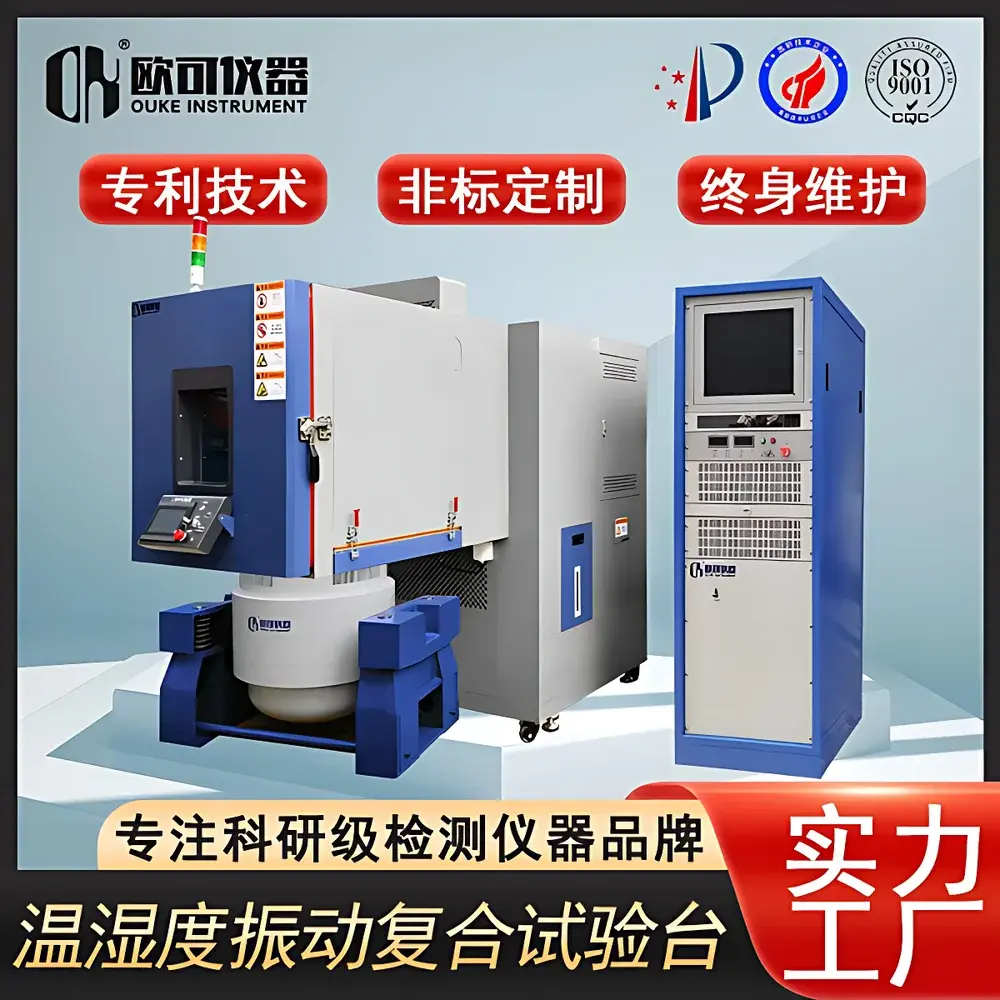
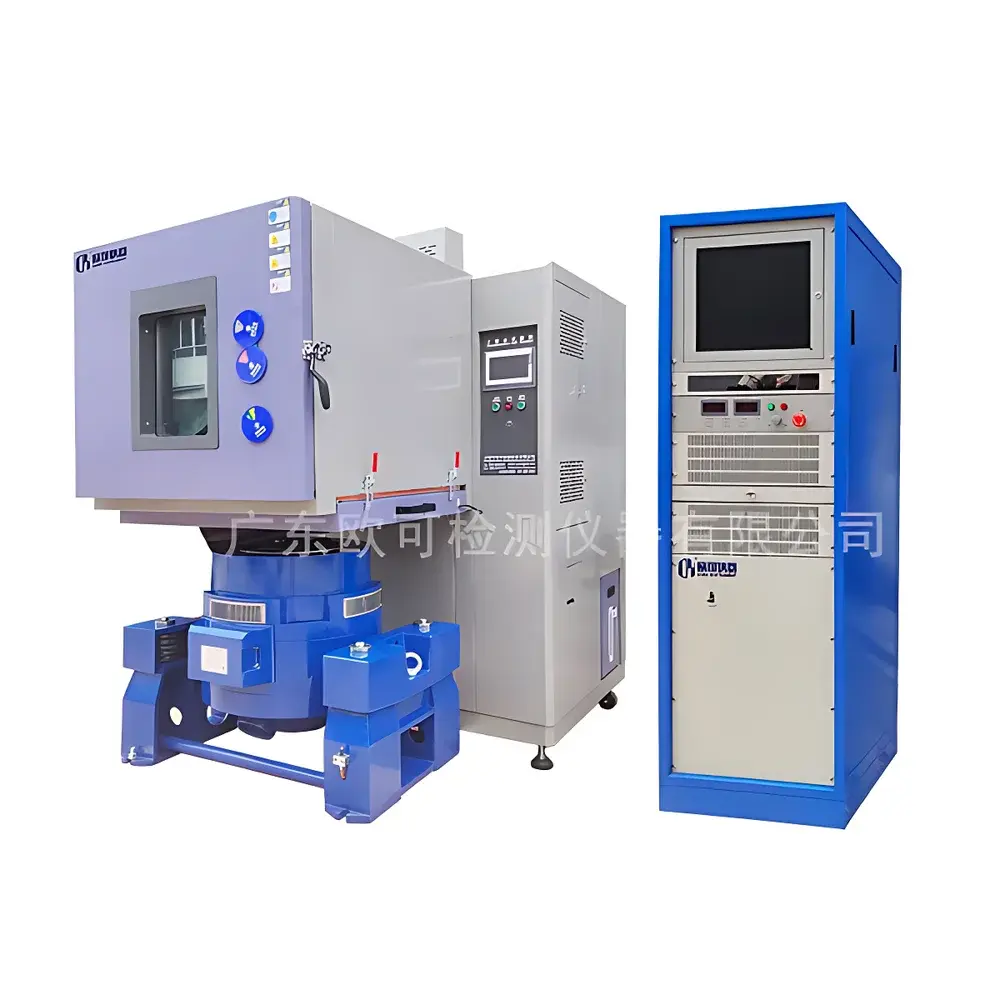
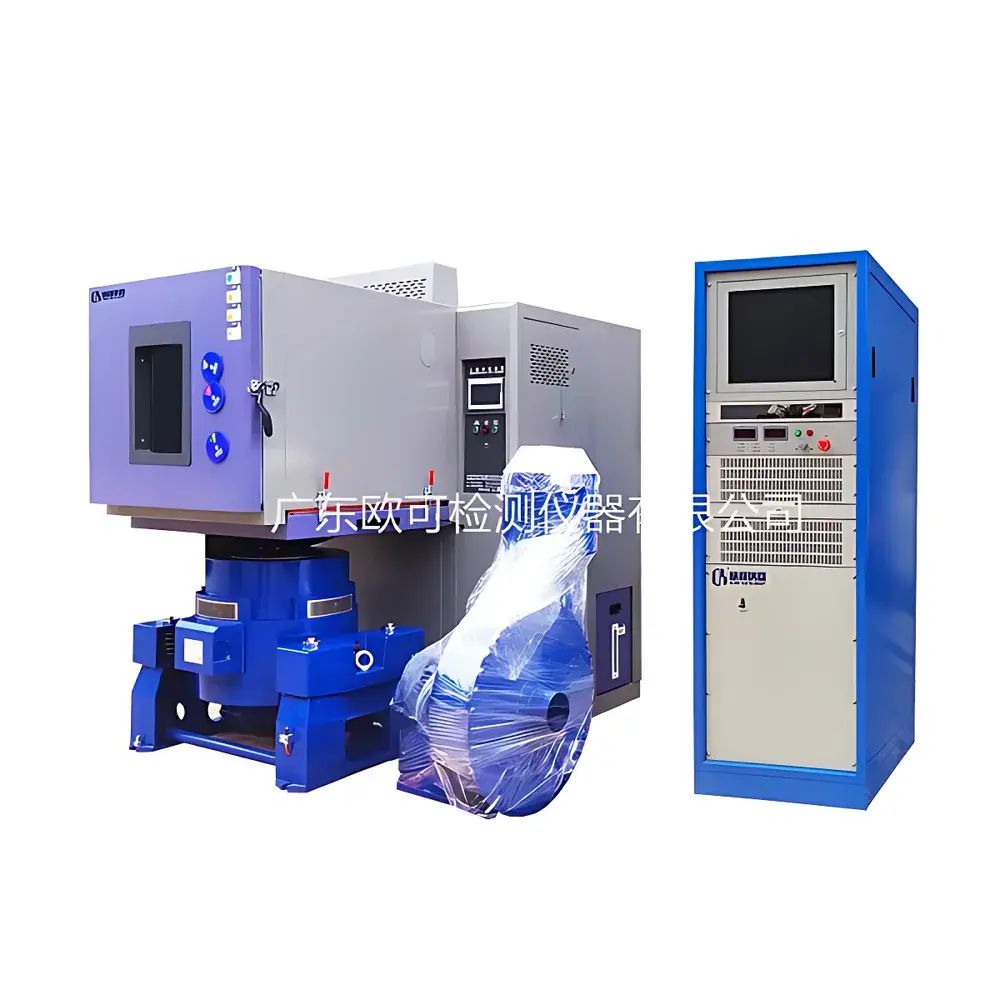
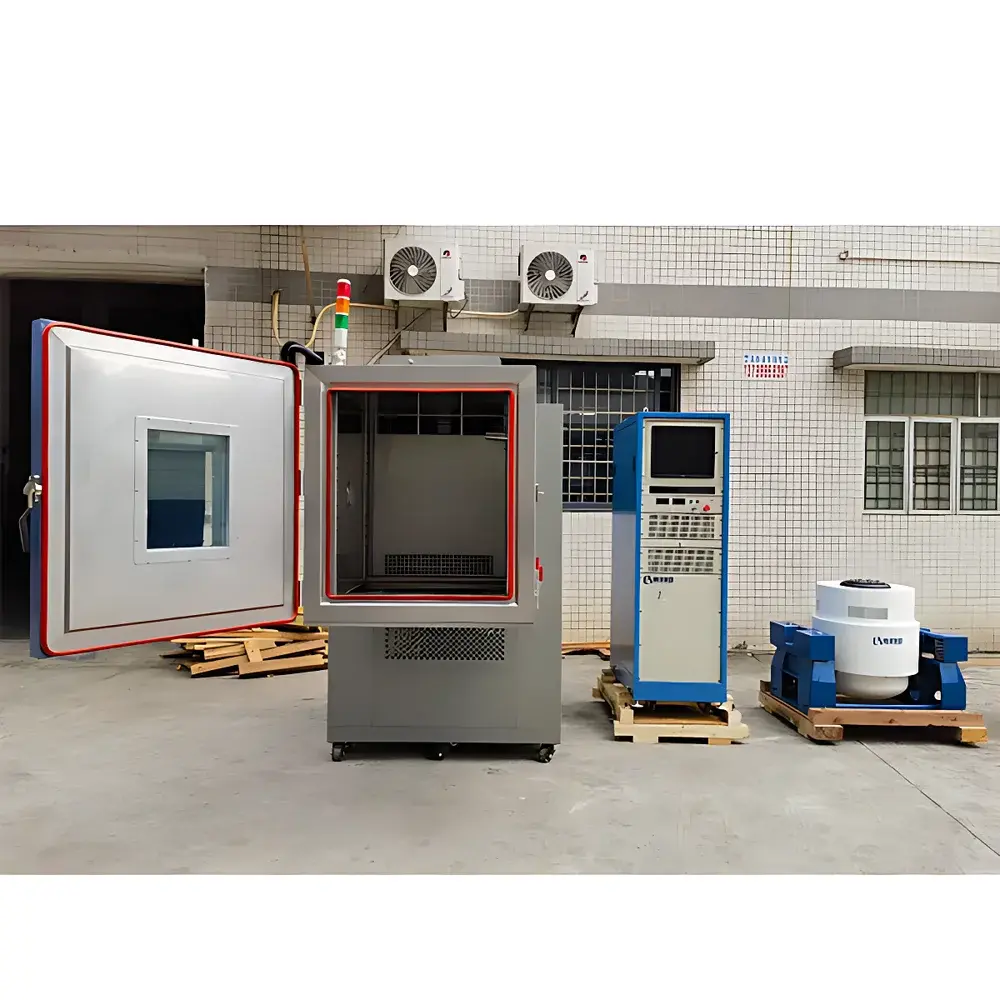
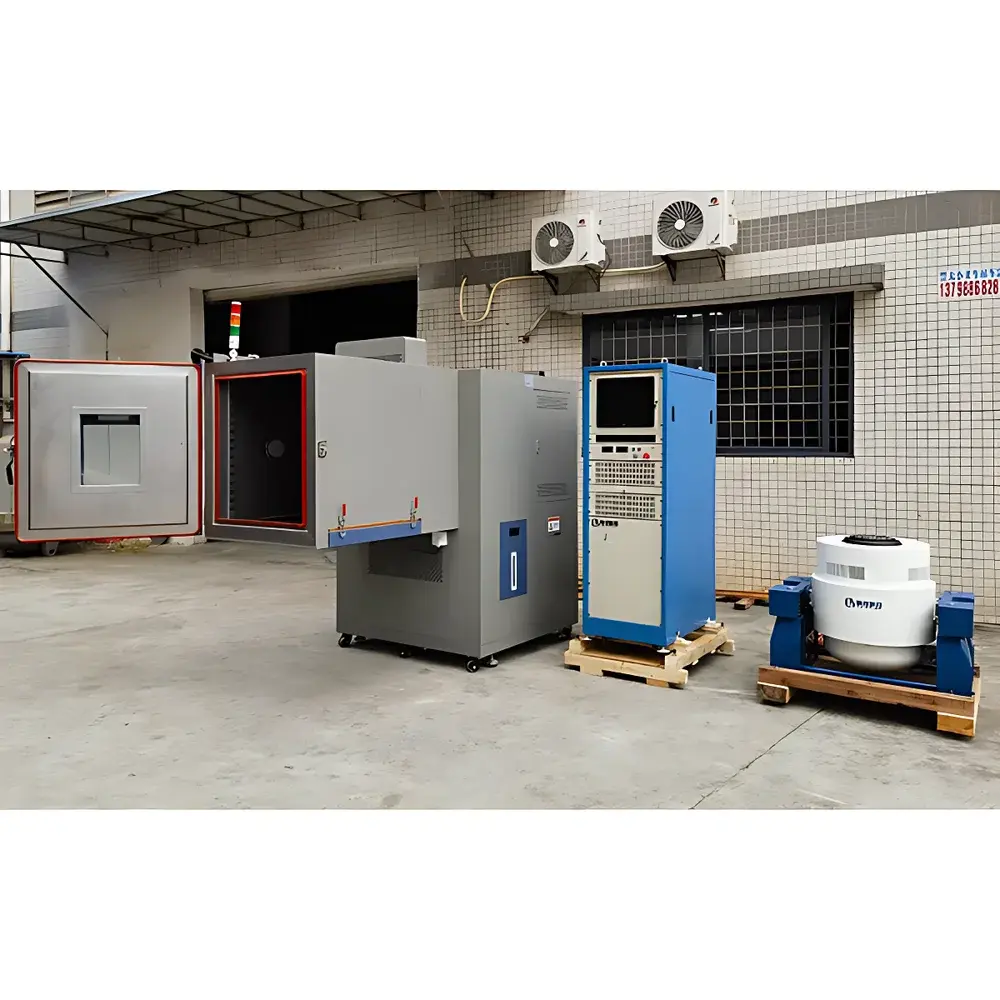
OK-ZTH-1441 Combined Temperature-Humidity-Vibration Test System
| Brand | OK Instruments |
|---|---|
| Origin | Guangdong, China |
| Manufacturer Type | OEM/ODM Manufacturer |
| Country of Origin | China |
| Model | OK-ZTH-1441 |
| Temperature Range | −70 °C to +150 °C |
| Humidity Range | 20–98 %RH at 20–85 °C |
| Temperature Ramp Rate | 5 / 10 / 15 °C/min |
| Temperature Uniformity | ≤ ±0.5 °C |
| Standard Load Capacity | 15 kg aluminum mass (350 W thermal dissipation) |
Overview
The OK-ZTH-1441 Combined Temperature-Humidity-Vibration Test System is an engineered platform for simultaneous application of thermal, hygric, and mechanical stress stimuli—designed to replicate real-world environmental service conditions with high fidelity. It operates on the principle of multi-stress synergistic acceleration: unlike sequential or single-factor testing, this system applies temperature cycling, controlled relative humidity, and broadband random or programmed sinusoidal vibration in precise temporal coordination. This capability enables detection of coupling failure mechanisms—such as moisture-assisted crack propagation under thermal expansion-induced strain and concurrent vibratory fatigue—that remain undetectable in isolated environmental tests. As a core tool in environmental reliability engineering, the OK-ZTH-1441 supports qualification per MIL-STD-810H, IEC 60068-2 series, and ISO 16750-4, serving as a critical verification instrument for product design validation, HALT pre-screening support, and compliance-driven certification workflows.
Key Features
- Triple-stress synchronization engine: Independent yet coordinated control of chamber temperature/humidity and electrodynamic shaker motion via integrated real-time controller with sub-second latency
- Structurally reinforced test chamber: Welded stainless-steel inner chamber with vibration-damped mounting interface; dynamic sealing system maintains integrity under 10–2000 Hz vibration spectra
- Down-mounted shaker configuration: 15 kg payload capacity electrodynamic shaker installed beneath chamber base, with thermally isolated feedthrough plate and flexible conduit routing for sensor cables
- High-fidelity thermal management: Dual-stage cascade refrigeration system with liquid nitrogen assist option; precision PID-controlled steam humidification and desiccant dehumidification
- Programmable test profiles: Supports nested loops, conditional triggers (e.g., “initiate 0.5 g RMS random vibration upon reaching 85 °C/85 %RH”), and ramp-hold-soak sequences with user-defined dwell times
- Extended environmental envelope: Achieves −70 °C to +150 °C temperature range with ramp rates up to 15 °C/min; humidity control from 20–98 %RH across 20–85 °C operating band
Sample Compatibility & Compliance
The OK-ZTH-1441 accommodates DUTs (Devices Under Test) up to 15 kg mounted on standard aluminum test fixtures, with thermal load tolerance of 350 W. Its chamber geometry permits integration of external instrumentation—such as data loggers, power analyzers, or functional testers—via shielded, vibration-isolated feedthroughs. The system complies with electromagnetic compatibility requirements per EN 61326-1 and meets structural safety standards under ISO 13849-1 PL e. All operational parameters—including temperature setpoint accuracy, humidity stability, and vibration amplitude linearity—are traceably calibrated to NIST-traceable references. Test records include full audit trails compliant with FDA 21 CFR Part 11 when paired with optional validated software modules, supporting GLP/GMP-regulated environments.
Software & Data Management
Control and monitoring are executed via OK-TestSuite™ v4.2—a Windows-based application featuring dual-mode operation: manual mode for rapid setup and automated mode for unattended execution of complex multi-phase profiles. The software logs synchronized time-series data from up to 16 analog/digital channels (including chamber sensors, shaker armature temperature, and user-connected transducers), with timestamp resolution ≤10 ms. Export formats include CSV, MATLAB .mat, and ASAM MDF 4.2. Optional features include remote access via TLS-secured web interface, electronic signature workflow, and automated report generation aligned with ASTM E2925-21 template structures. All configuration changes, operator actions, and alarm events are recorded with immutable timestamps for regulatory review.
Applications
- Automotive electronics: Validation of ADAS ECUs under combined desert heat (+85 °C/95 %RH) and road-spectrum vibration (0.2–0.8 g RMS)
- Aerospace avionics: Mission-profile simulation including ground hold (25 °C/60 %RH), climb (−40 °C, low RH), cruise (−55 °C, turbulence-induced vibration), and descent
- Consumer electronics: Reliability screening of wearables subjected to body-heat-induced condensation cycles while undergoing walking-induced vibration (1.5–3 Hz)
- Medical device packaging: Accelerated aging of sterile barrier systems under cold-chain transport conditions (2 °C/95 %RH) with simulated truck-bed vibration
- Industrial IoT sensors: Long-duration endurance testing under cyclic thermal shock (−40 ↔ +85 °C) with simultaneous 5–500 Hz random excitation
FAQ
What distinguishes a three-combined test system from sequential environmental testing?
Sequential testing applies stresses one at a time, missing interaction effects such as hygrothermal swelling accelerating vibratory fatigue. The OK-ZTH-1441 applies all three stresses concurrently with programmable phase alignment—enabling identification of coupled degradation pathways.
Can the system perform HALT-like profiles?
While not optimized for ultra-rapid thermal transitions (>50 °C/min) or multi-axis vibration, the OK-ZTH-1441 supports aggressive but controllable profiles suitable for design margin assessment and early-life failure screening when used with appropriate DUT monitoring.
Is humidity control maintained during active vibration?
Yes—the chamber employs active humidity compensation algorithms that adjust steam injection and condensate removal in real time to maintain setpoint stability within ±2 %RH despite mechanical disturbance to internal airflow patterns.
How is calibration traceability ensured?
Each unit ships with factory calibration certificates for temperature, humidity, and vibration sensors, all traceable to national metrology institutes (NIM, China) and cross-verified against PTB/NIST reference standards.
What safety interlocks are implemented?
Hardware-level safeguards include shaker over-temperature cutoff, chamber door open/vibration inhibit, refrigerant pressure monitoring, and emergency stop circuitry meeting SIL2 requirements per IEC 62061.



