
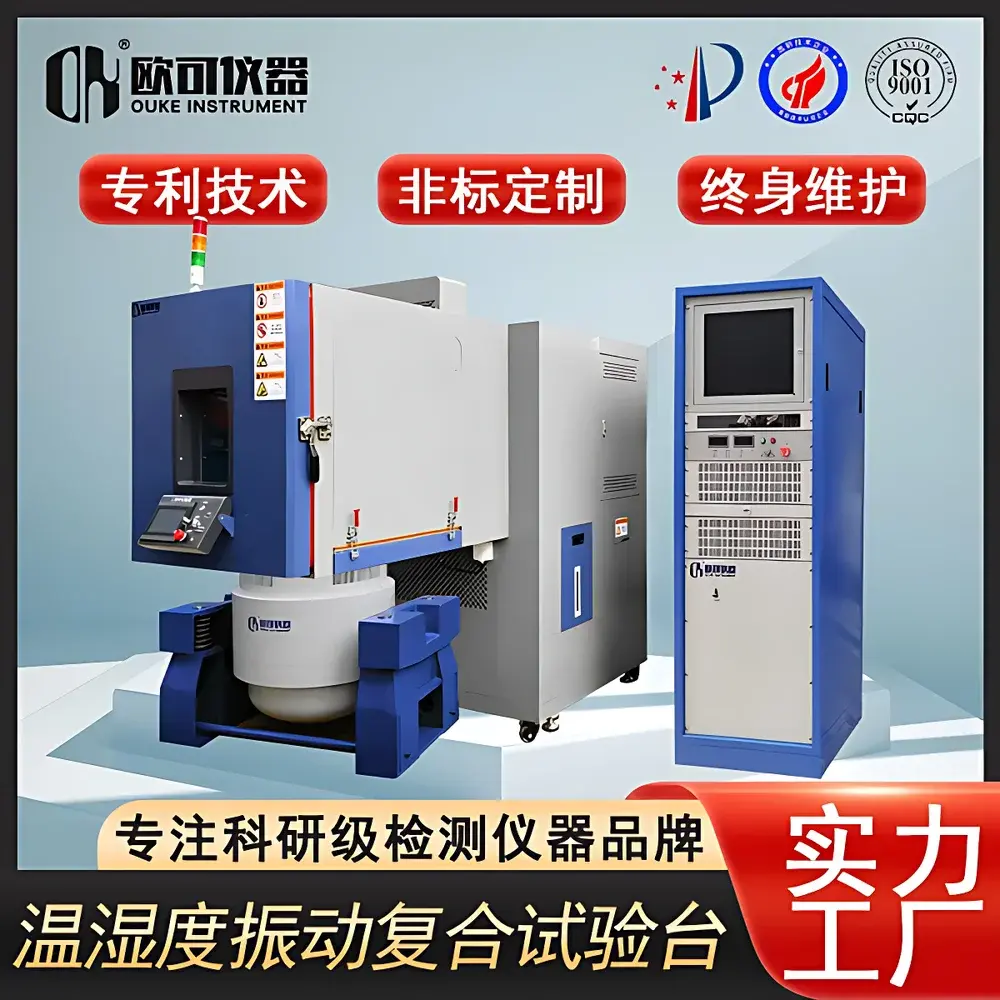
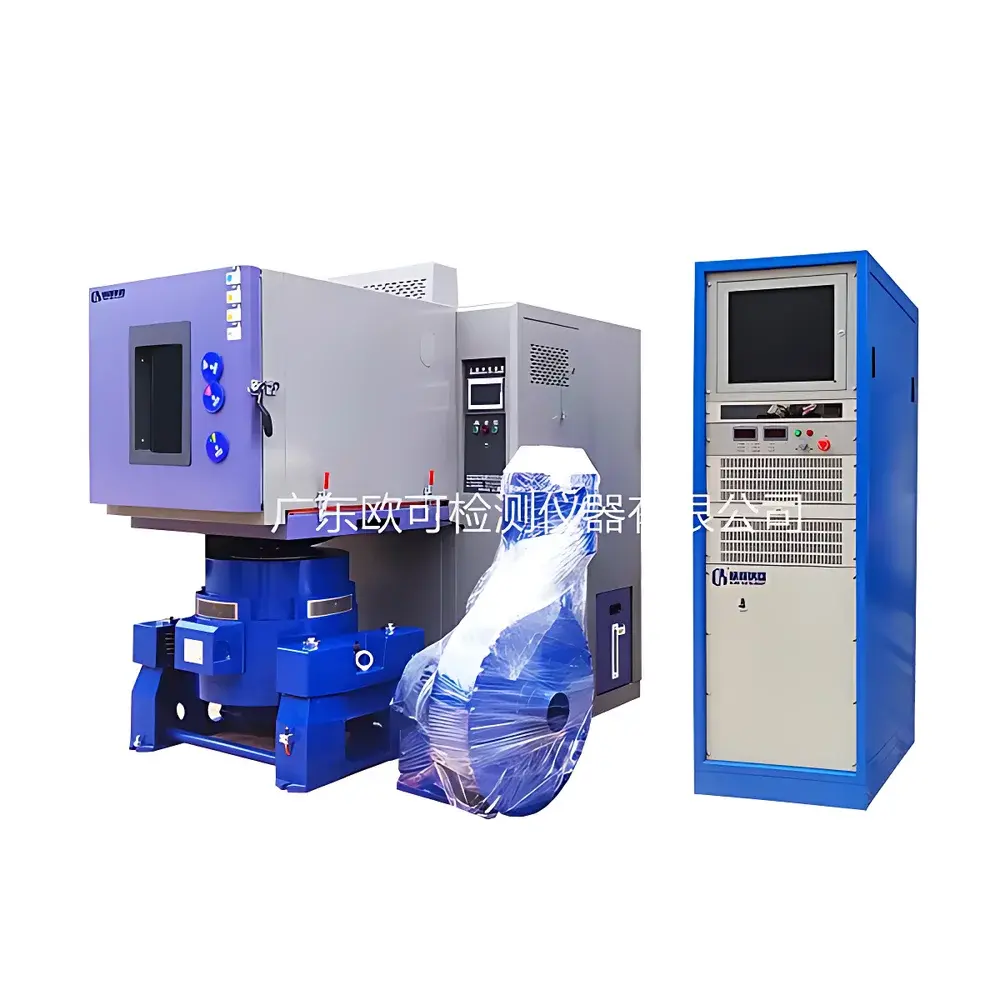
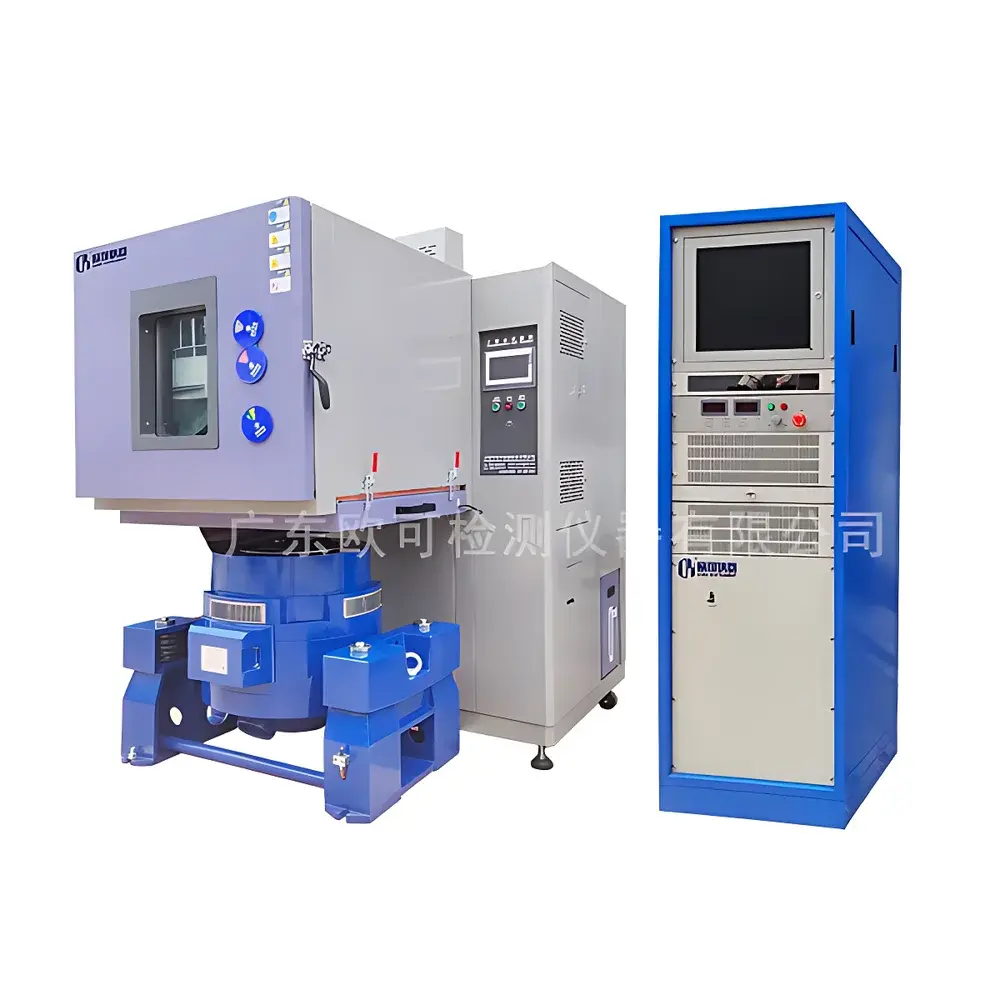
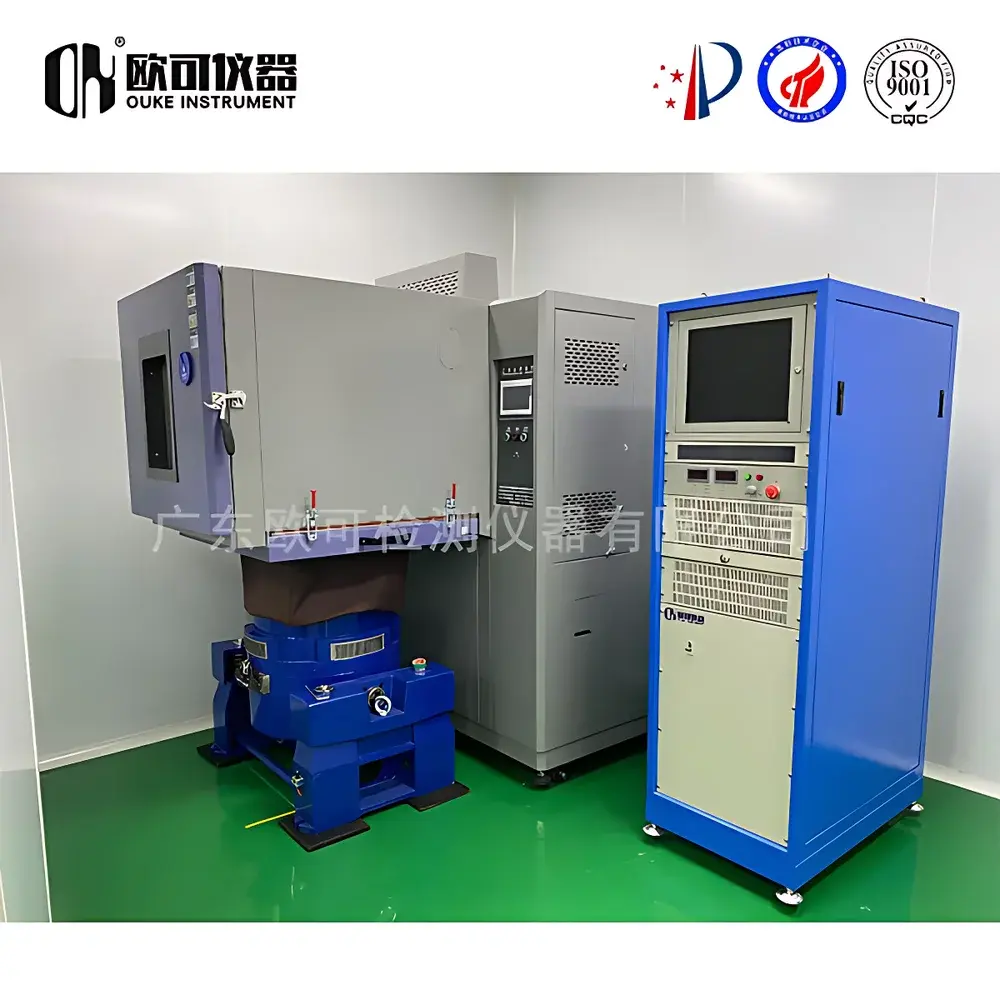
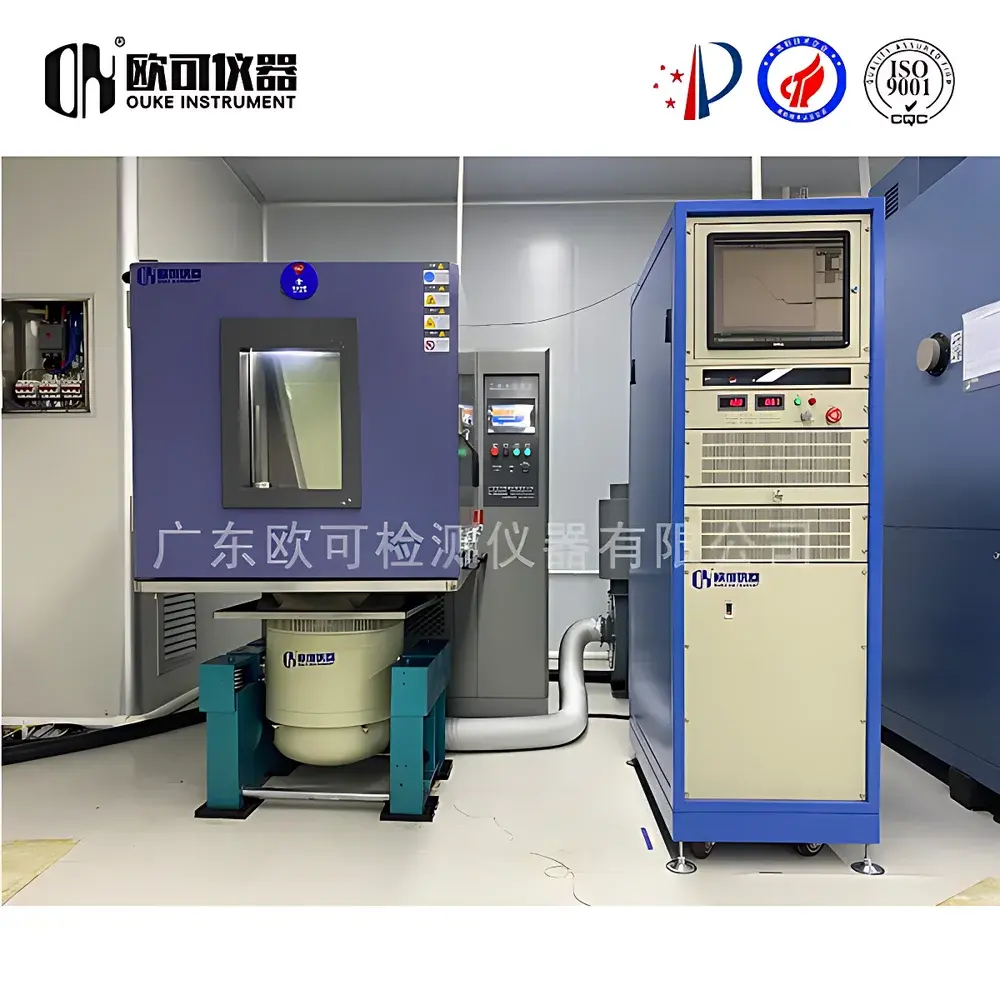
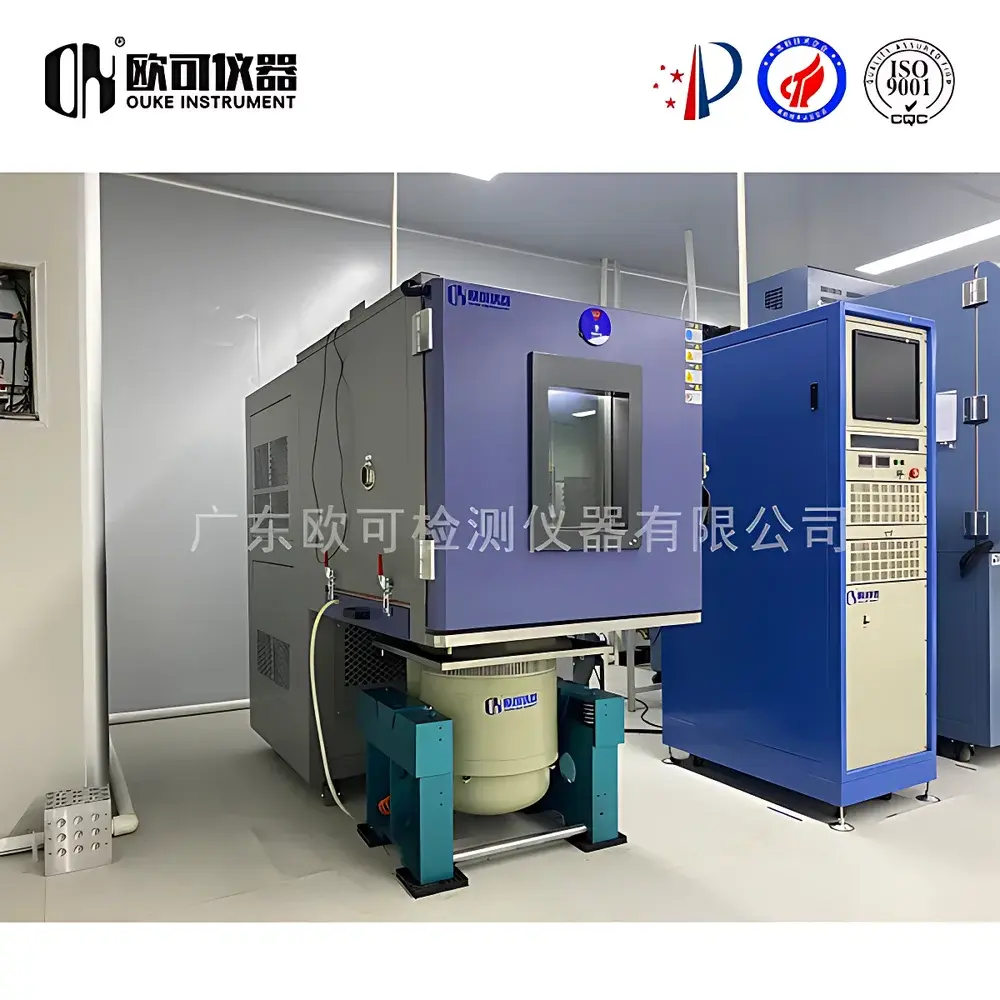
OK-ZTH-390.125 Combined Temperature-Humidity-Vibration Test System
| Brand | OK Instruments |
|---|---|
| Origin | Guangdong, China |
| Manufacturer Type | Direct Manufacturer |
| Product Origin | Domestic (China) |
| Model | OK-ZTH-390.125 |
| Temperature Range | −70 °C to +150 °C |
| Humidity Range | 20–98 %RH at 20–85 °C |
| Temperature Ramp Rate | 5 / 10 / 15 °C/min |
| Temperature Uniformity | ≤ ±0.5 °C |
| Standard Load Capacity | 15 kg aluminum mass, 350 W internal heat dissipation |
Overview
The OK-ZTH-390.125 Combined Temperature-Humidity-Vibration Test System is an integrated environmental reliability test platform engineered for simultaneous application of thermal, hygric, and mechanical stress stimuli. It operates on the principle of multi-stress synergistic acceleration—leveraging coupled thermal expansion/contraction, moisture diffusion through micro-defects, and dynamic fatigue under vibration to expose failure mechanisms that remain undetected in single-factor testing. Unlike sequential or isolated environmental tests, this system replicates real-world operational profiles where temperature transients, humidity exposure, and broadband mechanical excitation co-occur—such as automotive ECUs operating under desert heat while traversing rough terrain, or avionics subjected to rapid altitude-induced cooling combined with atmospheric turbulence-induced shaking. Its design adheres to the foundational tenets of environmental engineering and reliability physics: fidelity to field-relevant stress spectra, reproducibility across test cycles, and traceable correlation between laboratory-induced degradation and in-service failure modes.
Key Features
- Triple-stress synchronization: Independent yet coordinated control of chamber temperature (−70 °C to +150 °C), relative humidity (20–98 %RH within 20–85 °C), and electrodynamic vibration (via integrated shaker with extended table penetrating the chamber floor)
- Structurally reinforced chamber architecture: High-rigidity stainless steel inner chamber with vibration-damped mounting interface; dynamic sealing at door gasket and cable feedthroughs ensures integrity under continuous 5–2000 Hz excitation
- Thermal isolation system: Multi-layer vacuum-insulated walls and active thermal compensation prevent shaker-generated heat and mechanical energy from compromising temperature stability (≤ ±0.5 °C uniformity)
- Programmable multi-phase test profiles: Supports nested sequences—including dwell-at-temperature with superimposed random vibration, ramp-and-hold humidity cycles synchronized to vibration PSD envelopes, and stepwise thermal shock with concurrent sinusoidal sweep
- Standardized load configuration: Validated for 15 kg aluminum reference mass with up to 350 W internal power dissipation, enabling repeatable thermal loading calibration per IEC 60068-3-10 and MIL-STD-810H Annex G
Sample Compatibility & Compliance
The OK-ZTH-390.125 accommodates samples up to 390 L internal volume (W×D×H: 800×600×800 mm) and supports standard instrumentation interfaces including thermocouple inputs (Type K/T/J), analog voltage/current channels (±10 V, 4–20 mA), and digital TTL triggers for external data acquisition. It meets structural and safety requirements of GB/T 2423.1–2423.4 (equivalent to IEC 60068-2-1, -2, -30), GB/T 2423.10 (IEC 60068-2-6), and GB/T 2423.34 (IEC 60068-2-38) for combined environmental testing. The control firmware implements audit-trail logging compliant with GLP principles, and optional 21 CFR Part 11–ready software packages support electronic signatures and user-access-level management for regulated industries.
Software & Data Management
The embedded test controller runs a deterministic real-time OS with dual-loop PID regulation for temperature/humidity and closed-loop feedback control for vibration amplitude and spectrum. The PC-based OK-TestSuite v4.x provides graphical profile editor, live multi-parameter overlay (e.g., chamber temp vs. sample surface temp vs. acceleration RMS), and automated pass/fail evaluation against user-defined thresholds. All raw sensor data—including time-stamped temperature, RH, acceleration (X/Y/Z), and auxiliary channel readings—are stored in IEEE-compliant .tdms format with metadata embedding (test ID, operator, calibration expiry, environmental setpoints). Export options include CSV, MATLAB .mat, and PDF compliance reports aligned with ISO/IEC 17025 documentation standards.
Applications
- Automotive: Validation of ADAS sensors, battery modules, and infotainment systems under combined high-temperature/high-humidity road vibration per ISO 16750-4 and SAE J2380
- Aerospace: Full-mission simulation for UAV flight controllers—from ground pre-flight soak (40 °C/85 %RH) through climb-cool phase (−40 °C) with broadband turbulence input (MIL-STD-810H Method 514.7)
- Consumer electronics: Accelerated life testing of wearables under body-heat-simulated thermal load (35–40 °C), perspiration-level humidity (60–90 %RH), and walking-induced vibration (0.5–5 g RMS, 1–100 Hz)
- Medical devices: Verification of implantable pulse generator housings per ISO 14708-1 under cyclic thermal-hygric stress combined with simulated transport vibration (ISTA 3A)
- Industrial IoT: Reliability assessment of edge computing nodes deployed in uncontrolled environments (e.g., outdoor telecom cabinets subject to diurnal cycling + coastal humidity + wind-induced resonance)
FAQ
What distinguishes a “combined” test from sequential environmental testing?
Sequential testing applies stresses one at a time and assumes independence—ignoring physical coupling effects such as moisture-assisted crack propagation accelerated by cyclic thermal strain and vibrational loading. Combined testing captures these interactions, revealing failure modes like interconnect delamination or sealant extrusion that only manifest under simultaneous stress.
Can the system perform HALT-style overstress profiling?
No—the OK-ZTH-390.125 is designed for environment-representative testing per IEC 60068 and MIL-STD-810, not for failure-finding at extreme margins. For HALT/HASS, dedicated high-acceleration systems with faster ramp rates (>50 °C/min) and full-axis vibration are required.
Is low-pressure (altitude) capability available?
The base model does not integrate vacuum or low-pressure control. A four-stress variant (temperature/humidity/vibration/low pressure) is offered separately as the OK-ZTHP-390.125 series, compliant with MIL-STD-810H Method 500.7.
How is vibration isolation maintained without compromising thermal performance?
The system employs a decoupled mechanical interface: the shaker is mounted externally beneath the chamber, with a rigid, thermally insulated extension table passing through a dynamically sealed aperture. Chamber wall thickness, multi-layer insulation, and active thermal compensation algorithms ensure vibration-induced heat transfer remains below ±0.1 °C impact on setpoint stability.
Does the system support third-party DAQ integration?
Yes—via Ethernet/IP, Modbus TCP, and analog/digital I/O ports. Synchronization is achieved using hardware-triggered start/stop signals and PTPv2 time stamping for sub-millisecond alignment across distributed measurement nodes.



